Introduction
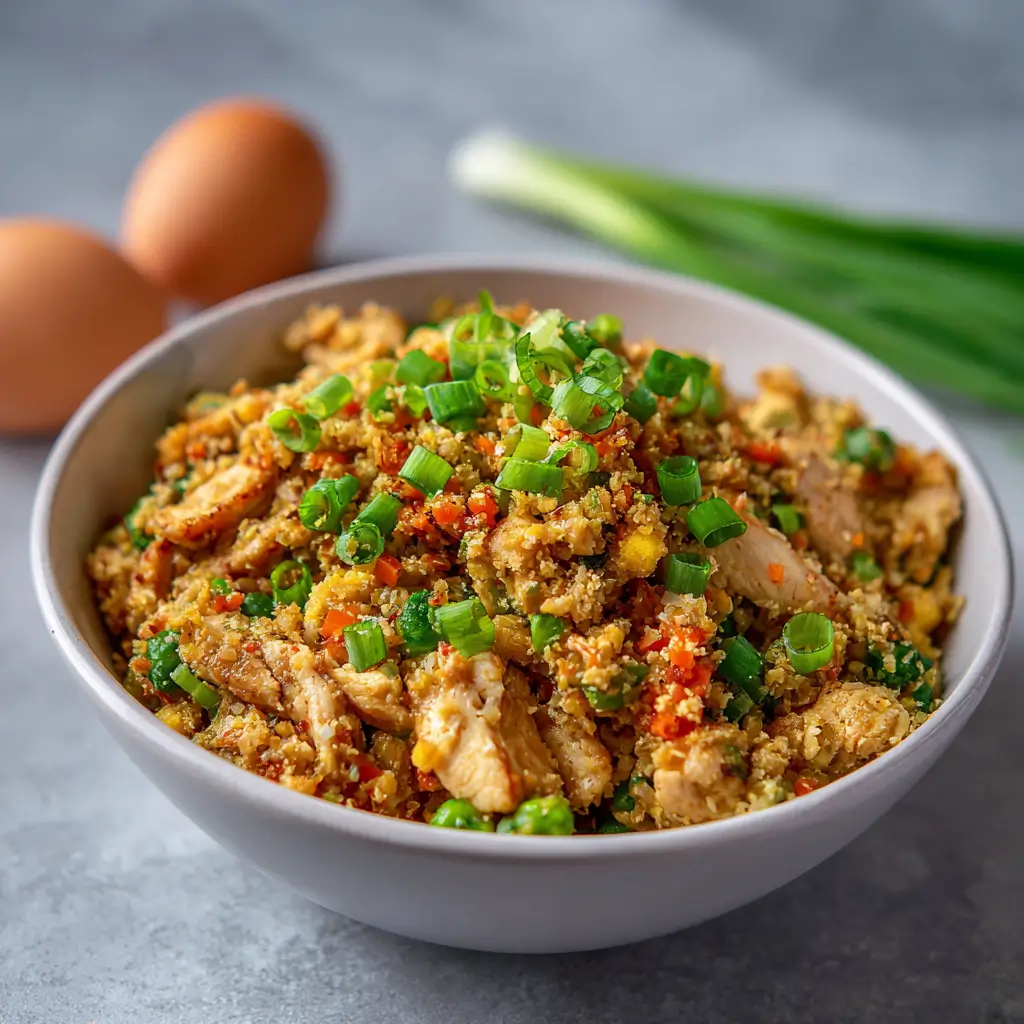
Cauliflower Fried Rice with Chicken is a delicious, healthier twist on the classic takeout favorite. Packed with lean protein, vibrant vegetables, and a fragrant blend of spices, this dish offers all the savory satisfaction of traditional fried rice—without the heavy carbs or excessive calories. By swapping out white rice for riced cauliflower, you get a nutrient-dense, low-carb alternative that’s perfect for anyone following a keto, paleo, gluten-free, or weight-conscious lifestyle. Whether you’re looking to boost your vegetable intake or simply enjoy a quick and wholesome weeknight meal, this recipe delivers bold flavors and impressive textures in under 30 minutes.
The History
Fried rice is believed to have originated in China over 1,500 years ago during the Sui Dynasty (589–618 AD), when leftover rice was stir-fried with other available ingredients to avoid waste. Over centuries, fried rice spread across Asia and evolved into countless regional variations, including Thai pineapple fried rice, Indonesian nasi goreng, and Japanese chāhan. In Western countries, Chinese-American fried rice became a staple in takeout menus, often made with generous amounts of oil, soy sauce, and white rice. As health consciousness grew in the late 20th and early 21st centuries, people began seeking lighter alternatives. Enter cauliflower rice—a game-changing innovation popularized in the 2010s as part of the low-carb and grain-free movements. Cauliflower’s mild flavor and rice-like texture when finely chopped made it an ideal substitute. The fusion of traditional Asian stir-fry techniques with modern dietary needs gave rise to today’s beloved Cauliflower Fried Rice with Chicken—a dish that honors culinary tradition while embracing contemporary wellness trends.
Ingredients Breakdown
- Riced Cauliflower: The base of the dish, providing fiber, vitamins C and K, and a neutral canvas for bold flavors. You can use fresh riced cauliflower or pre-riced frozen bags for convenience.
- Chicken Breast or Thighs: Lean chicken breast offers high-quality protein with minimal fat, while thighs provide richer flavor and moisture. Cut into small, bite-sized pieces for even cooking.
- Eggs: Scrambled into the mix, eggs add creaminess, protein, and a satisfying texture reminiscent of traditional fried rice.
- Vegetables: Carrots, peas, bell peppers, onions, and garlic are commonly used. They contribute color, crunch, antioxidants, and essential nutrients.
- Soy Sauce or Tamari: Adds umami and saltiness. Use reduced-sodium versions to control salt content, or tamari for a gluten-free option.
- Sesame Oil: A key flavor enhancer—just a drizzle adds a nutty, aromatic depth. Toasted sesame oil is preferred for its robust flavor.
- Ginger and Garlic: Freshly minced for maximum aroma and anti-inflammatory benefits.
- Green Onions: Used both during cooking and as garnish for freshness and mild onion flavor.
- Olive Oil or Avocado Oil: For sautéing; both have high smoke points and heart-healthy fats.
- Optional Add-ins: Sriracha for heat, fish sauce for complexity, lime juice for brightness, or hoisin sauce for sweetness.
Step-by-Step Recipe
- Prep the Ingredients: Dice chicken into ½-inch cubes. Grate or pulse cauliflower in a food processor until it resembles rice (avoid over-processing). Chop carrots, bell pepper, onion, and mince garlic and ginger. Beat eggs in a small bowl and set aside.
- Cook the Chicken: Heat 1 tablespoon of oil in a large skillet or wok over medium-high heat. Add chicken, season with salt and pepper, and cook until golden brown and cooked through (about 5–7 minutes). Remove and set aside.
- Scramble the Eggs: In the same pan, add a bit more oil if needed. Pour in beaten eggs and scramble until just set. Break into small pieces, then remove and set aside with the chicken.
- Sauté the Aromatics: Add another tablespoon of oil. Stir in onions, garlic, and ginger, cooking for 1 minute until fragrant. Add carrots and bell peppers, sautéing for 3–4 minutes until slightly tender but still crisp.
- Add the Cauliflower Rice: Stir in the riced cauliflower, breaking up any clumps. Cook for 5–7 minutes, stirring frequently, until softened but not mushy.
- Combine Everything: Return the chicken and eggs to the pan. Add peas (if using frozen, no need to thaw), green onions, soy sauce, and a splash of sesame oil. Stir well to combine and heat through for 2–3 minutes.
- Taste and Adjust: Season with additional soy sauce, salt, pepper, or a dash of sriracha to taste. Finish with a squeeze of fresh lime juice if desired.
- Serve Immediately: Plate hot, garnished with extra green onions and sesame seeds.
Tips
- Dry the Cauliflower: If using fresh riced cauliflower, pat it dry or microwave it briefly to remove excess moisture, which prevents a soggy texture.
- High Heat is Key: Use medium-high to high heat to achieve that “wok hei” (breath of the wok) effect—quick searing without steaming the ingredients.
- Don’t Overcrowd the Pan: Work in batches if necessary to ensure proper browning and avoid stewing the vegetables.
- Pre-Cook Components: Cook chicken and eggs first and keep them warm to prevent overcooking when combining at the end.
- Use Frozen Riced Cauliflower Wisely: Thaw and drain well before cooking to reduce water content. Some brands steam it, so it cooks faster—adjust timing accordingly.
- Boost Flavor: Add a splash of rice vinegar or fish sauce for depth, or a teaspoon of miso paste for umami richness.
- Meal Prep Friendly: This dish reheats well in a skillet (not microwave) to maintain texture. Store components separately for best results.
Variations and Customizations
- Vegetarian/Vegan: Omit chicken and eggs; use tofu or tempeh instead. Replace eggs with chickpea flour scramble or nutritional yeast for a cheesy note.
- Shrimp or Beef Option: Swap chicken for peeled shrimp (add at the very end) or thinly sliced flank steak (sear quickly).
- Pineapple Version: Add diced pineapple and cashews for a sweet-tangy twist inspired by Thai cuisine.
- Keto-Friendly: Skip peas (higher in carbs), increase healthy fats with avocado or extra sesame oil, and use coconut aminos instead of soy sauce.
- Spicy Kick: Mix in diced jalapeños, chili garlic sauce, or crushed red pepper flakes.
- Low-Sodium Diet: Use tamari or coconut aminos with no added salt and boost flavor with lemon zest, fresh herbs, or mushroom powder.
- Extra Veggies: Toss in broccoli florets, zucchini, mushrooms, or spinach for added nutrition and volume.
- Nutty Crunch: Top with toasted almonds, peanuts, or sunflower seeds for texture contrast.
Health Considerations and Nutritional Value
Cauliflower Fried Rice with Chicken is a powerhouse of nutrition. One serving (approximately 1.5 cups) contains roughly 280–320 calories, depending on ingredients and portion size. It provides about 25–30 grams of lean protein from chicken and eggs, supporting muscle repair and satiety. The dish is rich in dietary fiber (5–7 grams per serving) thanks to cauliflower and colorful vegetables, promoting digestive health and stable blood sugar levels. It’s naturally low in carbohydrates (8–12 grams net carbs), making it suitable for low-carb and diabetic diets. Cauliflower is loaded with vitamin C, vitamin K, folate, and antioxidants like glucosinolates, which may support detoxification and reduce inflammation. Using heart-healthy oils and limiting sodium helps maintain cardiovascular wellness. However, be mindful of soy sauce content—opt for reduced-sodium versions or coconut aminos to manage salt intake. Individuals with soy allergies should use tamari (gluten-free soy sauce) cautiously or switch to a soy-free alternative. Those on blood thinners should monitor vitamin K intake from cauliflower and greens. Overall, this dish exemplifies balanced eating: high in protein, fiber, and micronutrients, low in refined carbs, and adaptable to various dietary needs.
Ingredients
- 1 medium head of cauliflower (or 4 cups riced cauliflower)
- 1 lb boneless, skinless chicken breast or thighs, cubed
- 3 large eggs, beaten
- 2 tbsp olive oil or avocado oil, divided
- 1 small onion, finely chopped
- 2 cloves garlic, minced
- 1 tbsp fresh ginger, grated
- 1 medium carrot, diced
- 1/2 bell pepper (red or yellow), diced
- 1/2 cup frozen peas, thawed
- 4 green onions, sliced (white and green parts separated)
- 3 tbsp low-sodium soy sauce (or tamari for gluten-free)
- 1 tsp toasted sesame oil
- Salt and black pepper to taste
- Optional: 1/2 tsp sriracha, 1 tsp rice vinegar, lime wedges
- Garnish: sesame seeds, extra green onions
Directions
- Prepare the cauliflower by removing leaves and core. Pulse florets in a food processor until rice-sized. Set aside.
- In a large non-stick skillet or wok, heat 1 tablespoon of oil over medium-high heat. Add chicken, season with salt and pepper, and cook until no longer pink (5–7 minutes). Transfer to a plate.
- Add another teaspoon of oil to the pan. Pour in beaten eggs and scramble until softly set. Break into chunks, then remove and set aside with chicken.
- Heat remaining oil in the same pan. Add onion, garlic, and ginger; sauté for 1 minute until fragrant.
- Add carrots and bell pepper; cook for 3–4 minutes until beginning to soften.
- Stir in the riced cauliflower and cook for 5–7 minutes, stirring occasionally, until tender but not mushy.
- Add peas, cooked chicken, scrambled eggs, white parts of green onions, soy sauce, and sesame oil. Stir to combine and heat through for 2–3 minutes.
- Taste and adjust seasoning—add more soy sauce, a pinch of pepper, or a splash of rice vinegar for balance.
- Remove from heat. Stir in the green parts of the onions and optional sriracha or lime juice.
- Serve immediately, garnished with sesame seeds and extra green onions. Enjoy hot!
FAQ
Can I make cauliflower fried rice ahead of time?
Yes! You can prep ingredients in advance and store them separately. Cooked cauliflower rice doesn’t reheat as well as traditional rice, so reheat in a skillet over medium heat with a splash of water or broth to refresh the texture.
Why is my cauliflower fried rice soggy?
This usually happens due to excess moisture. Always dry fresh riced cauliflower and avoid overcrowding the pan. Cook in batches if needed and ensure high heat for proper evaporation.
Is cauliflower rice really healthier than white rice?
Yes, in most cases. Cauliflower rice has fewer calories and carbs, more fiber, and is rich in vitamins. However, white rice provides more energy and certain B vitamins. The choice depends on your dietary goals.
Can I freeze cauliflower fried rice?
It’s not recommended. Freezing can make the cauliflower mushy upon thawing. Instead, store leftovers in the fridge for up to 3–4 days.
What can I use instead of soy sauce?
Coconut aminos is a great soy-free, lower-sodium alternative with a slightly sweet flavor. Liquid aminos or homemade mushroom-based sauces also work.
Can I use a bag of frozen riced cauliflower?
Absolutely! It’s convenient and pre-riced. Just thaw and drain well before cooking to avoid excess water in the dish.
How do I add more flavor without adding calories?
Use citrus zest, fresh herbs (cilantro, Thai basil), chili flakes, garlic, ginger, or a splash of rice vinegar. These boost taste without significant calories.
Summary
Cauliflower Fried Rice with Chicken is a nutritious, flavorful, and quick-to-make dish that transforms a takeout classic into a wholesome home-cooked meal. Packed with protein, veggies, and bold Asian-inspired flavors, it’s a versatile recipe that fits into keto, gluten-free, and healthy eating plans effortlessly.