Introduction
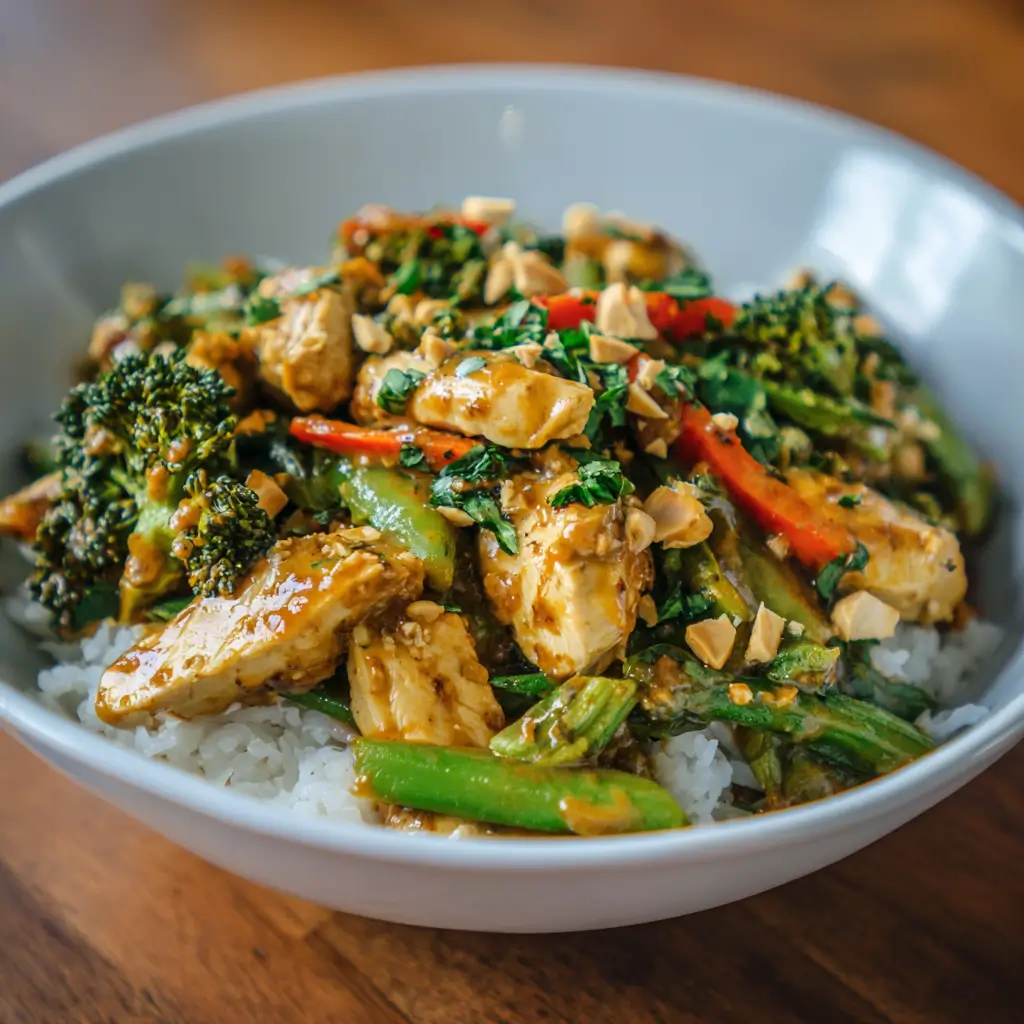
A Healthy Chicken Stir-Fry with Peanut Sauce is a delicious, nutrient-packed meal that combines lean protein, colorful vegetables, and a rich, creamy sauce—all in one quick and easy dish. Perfect for busy weeknights or meal prepping, this stir-fry delivers bold flavors while supporting your wellness goals. Whether you’re looking to maintain a balanced diet, build muscle, or simply enjoy a satisfying homemade meal, this recipe offers the ideal harmony of taste and nutrition. With its roots in Asian cuisine and modern health-conscious adaptations, this dish has become a staple in kitchens around the world.
The History
Stir-frying as a cooking technique originated in China over 2,000 years ago during the Han Dynasty, where the use of a wok allowed for rapid cooking over high heat—preserving nutrients and enhancing flavor. Over time, stir-frying spread across Southeast Asia, influencing Thai, Vietnamese, Indonesian, and Malaysian cuisines. The addition of peanut-based sauces can be traced to regions like Indonesia and Thailand, where peanuts have long been a dietary staple. Traditional dishes such as Gado Gado (Indonesian vegetable salad with peanut dressing) and Satay (grilled meat skewers with peanut sauce) showcase the versatility and popularity of peanut-based condiments. In recent decades, Western culinary adaptations have embraced these flavors, reimagining them in healthier formats. The Healthy Chicken Stir-Fry with Peanut Sauce reflects this fusion: honoring ancient techniques while aligning with modern nutritional standards, making it a global favorite.
Ingredients Breakdown
The success of this stir-fry lies in the quality and synergy of its ingredients. Each component contributes not only to flavor but also to overall health benefits:
- Chicken Breast: A lean source of high-quality protein essential for muscle repair and satiety. Skinless chicken breast is low in saturated fat and calories, making it ideal for weight management.
- Vegetables (bell peppers, broccoli, carrots, snap peas, mushrooms): These provide fiber, antioxidants, vitamins A and C, and phytonutrients that support immune function and reduce inflammation.
- Garlic and Ginger: Known for their anti-inflammatory and antimicrobial properties, they add depth and warmth to the dish.
- Green Onions and Red Chili (optional): For freshness and a touch of heat, boosting metabolism and circulation.
- Soy Sauce or Tamari: Adds umami; opt for low-sodium versions to control salt intake. Tamari is gluten-free, suitable for those with sensitivities.
- Rice Vinegar: Provides tanginess and aids digestion while balancing the richness of the peanut butter.
- Natural Creamy Peanut Butter: The base of the sauce—rich in healthy monounsaturated fats, protein, and vitamin E. Choose unsweetened, additive-free varieties to avoid excess sugar and hydrogenated oils.
- Lime Juice: Freshly squeezed lime adds brightness and enhances iron absorption from plant-based foods in the meal.
- Maple Syrup or Honey: A small amount of natural sweetener balances the savory and tangy notes without spiking blood sugar drastically.
- Sesame Oil: Used sparingly for its aromatic, nutty flavor and heart-healthy fats.
- Cooking Oil (avocado or olive oil): High smoke point oils are ideal for stir-frying, preserving integrity at high temperatures.
- Cooked Brown Rice or Quinoa (serving base): Complex carbohydrates rich in fiber and B vitamins, providing sustained energy.
This thoughtful combination ensures a well-rounded meal that fuels the body and delights the palate.
Step-by-Step Recipe
- Prepare Ingredients: Slice 1 lb (450g) boneless, skinless chicken breast into thin strips. Chop 1 red bell pepper, 1 cup broccoli florets, 1 medium carrot (julienned), 1/2 cup snap peas, and 1/2 cup sliced mushrooms. Mince 2 cloves garlic and 1 tbsp fresh ginger. Slice 2 green onions for garnish. If using chili, finely chop 1/2 red chili pepper.
- Cook Protein: Heat 1 tbsp avocado oil in a large non-stick skillet or wok over medium-high heat. Add chicken strips, season lightly with salt and pepper, and cook for 5–6 minutes until golden and cooked through. Remove and set aside.
- Stir-Fry Vegetables: In the same pan, add another 1 tsp oil if needed. Add garlic and ginger, sauté for 30 seconds until fragrant. Toss in harder vegetables first (carrots, broccoli), stir-fry for 2–3 minutes. Then add softer ones (bell peppers, snap peas, mushrooms) and cook an additional 3–4 minutes until crisp-tender. Avoid overcooking to retain texture and nutrients.
- Make Peanut Sauce: While chicken and veggies cook, prepare the sauce. In a mixing bowl, whisk together 1/4 cup natural creamy peanut butter, 3 tbsp low-sodium soy sauce (or tamari), 2 tbsp rice vinegar, juice of 1/2 lime, 1 tbsp maple syrup (or honey), 1 tsp sesame oil, and 2–4 tbsp warm water until smooth and pourable. Adjust thickness with more water as needed.
- Combine: Return cooked chicken to the skillet with vegetables. Pour the peanut sauce over the mixture and toss gently to coat everything evenly. Cook for 1–2 minutes on low heat to warm through and allow flavors to meld.
- Serve: Divide cooked brown rice or quinoa among bowls. Top generously with the chicken stir-fry. Garnish with sliced green onions, crushed peanuts, and optional chili flakes or sesame seeds. Serve immediately with extra lime wedges on the side.
Tips
- Prep Ahead: Chop all ingredients before starting, as stir-frying happens quickly. This ensures even cooking and prevents burning.
- Don’t Crowd the Pan: Cook chicken in batches if necessary to avoid steaming instead of searing. High heat and space promote browning.
- Use Fresh Peanut Butter: Old or separated peanut butter may require more stirring. Stir the jar thoroughly before measuring.
- Balance the Sauce: Taste the sauce before adding—it should be savory, slightly sweet, tangy, and nutty. Adjust with more lime for acidity, soy for saltiness, or sweetener for balance.
- Keep Veggies Crisp: Undercook slightly if meal prepping, as reheating softens them further.
- Low-Sodium Option: Use coconut aminos instead of soy sauce for a milder, lower-sodium alternative.
- Thicken or Thin: If sauce thickens upon standing, loosen with a splash of warm water or vegetable broth when reheating.
- High-Heat Cooking: Ensure your stove and pan are hot enough before adding ingredients to achieve that authentic stir-fry sear.
Variations and Customizations
This recipe is highly adaptable to suit different tastes, dietary needs, and ingredient availability:
- Protein Swaps: Replace chicken with tofu, tempeh, shrimp, turkey, or thinly sliced beef for variety.
- Vegan Version: Use tofu or edamame and substitute honey with maple syrup or agave.
- Gluten-Free: Use tamari or certified gluten-free soy sauce. Confirm all other ingredients (like peanut butter) are GF-safe.
- Low-Carb/Keto: Skip the rice and serve over cauliflower rice or zucchini noodles (zoodles).
- Extra Veggies: Add bok choy, cabbage, spinach, bean sprouts, or zucchini for more volume and micronutrients.
- Nut-Free Alternative: Substitute peanut butter with sunflower seed butter or tahini (sesame paste), adjusting liquid and seasoning accordingly.
- Spicier Kick: Add sriracha, chili garlic paste, or red pepper flakes to the sauce for heat lovers.
- Herb Boost: Stir in fresh cilantro, Thai basil, or mint just before serving for aromatic freshness.
- Meal Prep Friendly: Portion into containers with separate sauce to prevent sogginess. Reheat in microwave or stovetop with a splash of water.
- Grain Variations: Try jasmine rice, wild rice blend, farro, or millet as alternatives to brown rice or quinoa.
Health Considerations and Nutritional Value
A typical serving (about 1.5 cups stir-fry over 1/2 cup brown rice) contains approximately:
- Calories: 450–520 kcal
- Protein: 30–35g (supports muscle maintenance and fullness)
- Fat: 18–22g (mostly healthy unsaturated fats from peanut butter and oils)
- Saturated Fat: ~4g (moderate, especially when using natural peanut butter)
- Carbohydrates: 40–45g (including 6–8g fiber from veggies and whole grains)
- Sodium: 500–700mg (can be reduced by using low-sodium soy sauce or coconut aminos)
- Sugars: 8–10g (primarily from natural sources like maple syrup and vegetables)
Key Health Benefits:
- High protein content promotes satiety and helps regulate appetite.
- Fiber-rich vegetables and whole grains support digestive health and stable blood sugar.
- Monounsaturated fats in peanut butter and oils contribute to heart health.
- Antioxidants from colorful produce help combat oxidative stress.
- Contains essential minerals like potassium, magnesium, and iron.
Considerations:
- Those with peanut allergies should avoid this recipe or use safe substitutes.
- Monitor portion sizes of peanut butter, as it’s calorie-dense.
- Individuals managing hypertension should carefully control sodium by choosing low-salt ingredients.
- Balancing macronutrients makes this dish suitable for many diets, including Mediterranean, flexitarian, and balanced weight-loss plans.
Ingredients
- 1 lb (450g) boneless, skinless chicken breast, thinly sliced
- 2 tbsp avocado oil or olive oil, divided
- 1 red bell pepper, sliced
- 1 cup broccoli florets
- 1 medium carrot, julienned or thinly sliced
- 1/2 cup sugar snap peas
- 1/2 cup sliced mushrooms (shiitake or cremini preferred)
- 2 cloves garlic, minced
- 1 tbsp fresh ginger, grated
- 2 green onions, sliced (white and green parts separated)
- 1/2 red chili pepper, finely chopped (optional)
- 1/4 cup natural creamy peanut butter (unsweetened, no hydrogenated oils)
- 3 tbsp low-sodium soy sauce or tamari (gluten-free if needed)
- 2 tbsp rice vinegar
- Juice of 1/2 lime (about 1 tbsp)
- 1 tbsp pure maple syrup or raw honey
- 1 tsp toasted sesame oil
- 2–4 tbsp warm water (to adjust sauce consistency)
- Freshly ground black pepper, to taste
- Cooked brown rice, quinoa, or cauliflower rice, for serving
- Optional garnishes: crushed roasted peanuts, sesame seeds, cilantro, lime wedges
Directions
- In a large skillet or wok, heat 1 tablespoon of avocado oil over medium-high heat. Add the sliced chicken, season with a pinch of salt and pepper, and stir-fry for 5–6 minutes until fully cooked and lightly browned. Transfer to a plate and set aside.
- Add the remaining 1 teaspoon of oil to the same pan. Sauté garlic, ginger, white parts of green onions, and chili (if using) for 30 seconds until aromatic.
- Add carrots and broccoli first; stir-fry for 2 minutes. Then add bell pepper, snap peas, and mushrooms. Cook for 3–4 minutes longer, stirring frequently, until vegetables are vibrant and crisp-tender.
- While the vegetables cook, prepare the sauce: In a small bowl, whisk together peanut butter, soy sauce, rice vinegar, lime juice, maple syrup, sesame oil, and warm water until smooth. Start with 2 tablespoons water and add more until desired consistency is reached—a silky, pourable texture.
- Return the cooked chicken to the skillet with the vegetables. Pour the peanut sauce over the mixture and stir well to coat. Simmer on low heat for 1–2 minutes to heat through and let flavors combine.
- Taste and adjust seasoning—add more lime for tang, soy for saltiness, or sweetener if needed.
- Serve hot over cooked brown rice or quinoa. Garnish with green onion tops, crushed peanuts, sesame seeds, and lime wedges.
- Enjoy immediately, or store for later consumption (see storage tips below).
FAQ
Can I make this stir-fry ahead of time?
Yes! Cook components separately and store them in airtight containers in the refrigerator for up to 4 days. Reheat in a skillet with a splash of water or broth to refresh the texture.
Is this recipe freezer-friendly?
While the cooked stir-fry can be frozen for up to 3 months, texture may change slightly upon thawing—especially vegetables. Thaw overnight in the fridge and reheat gently.
How can I make the sauce creamier without adding more peanut butter?
Add a tablespoon of Greek yogurt (for non-vegan) or coconut milk (for vegan) to enrich the sauce while keeping it light.
Can I use crunchy peanut butter?
Absolutely. Crunchy peanut butter adds pleasant texture, though it may make the sauce grainier. Whisk thoroughly and adjust water accordingly.
What if my sauce is too thick?
Gradually whisk in warm water, 1 tablespoon at a time, until it reaches a smooth, drizzling consistency.
Are there any allergens in this recipe?
Yes—peanuts and soy are common allergens. Always check labels on soy sauce and peanut butter if allergies are a concern.
Can I use frozen vegetables?
You can, but fresh vegetables yield better texture and flavor. If using frozen, thaw and drain excess moisture to prevent a soggy stir-fry.
How do I prevent the peanut butter from clumping in the sauce?
Always mix peanut butter with liquid ingredients first, and use warm water to help it emulsify smoothly. Whisk vigorously or blend briefly in a mini food processor if needed.
Summary
A Healthy Chicken Stir-Fry with Peanut Sauce blends lean protein, vibrant vegetables, and a creamy, flavorful sauce into a nourishing, family-friendly meal ready in under 30 minutes. Packed with nutrients and endlessly customizable, it’s a balanced dinner solution that satisfies both taste buds and wellness goals.