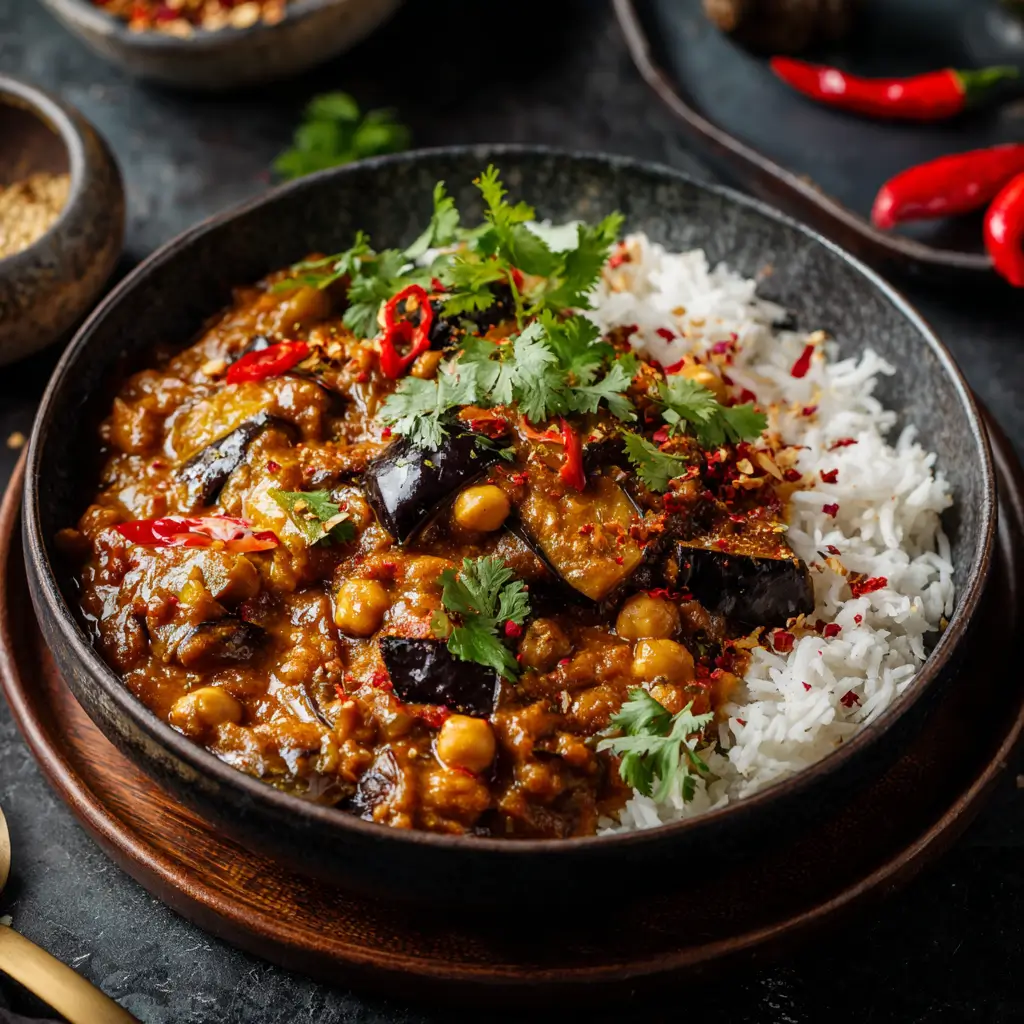
Vegan Eggplant & Chickpea Curry: A Flavorful, Wholesome Plant-Based Delight
The History of Vegan Eggplant & Chickpea Curry
The roots of eggplant and chickpea-based curries trace back centuries across the culinary traditions of South Asia, the Middle East, and North Africa. In India, eggplant—known as “baingan”—has long been a staple in regional cuisines, with dishes like Baingan Bharta and Chokha showcasing its smoky, tender texture. Chickpeas, or “chana,” are equally revered, particularly in dals and curries such as Chana Masala. Over time, these ingredients found their way into fusion-style curries influenced by Ayurvedic principles and vegetarian philosophies.
As veganism gained momentum globally in the 21st century, traditional recipes were reimagined to exclude dairy and animal products, giving rise to modern versions like this Vegan Eggplant & Chickpea Curry. The dish embodies the spirit of plant-powered eating while drawing from ancient spice wisdom. It reflects how global food cultures converge—where Indian masalas meet Mediterranean vegetables and legumes, creating a harmonious, nutrient-dense meal suitable for diverse palates and dietary preferences.
Ingredients Breakdown
This richly layered curry relies on a balance of aromatic spices, hearty legumes, and tender vegetables. Here’s a detailed look at each component:
- Eggplant (2 medium): Also known as aubergine, it provides a meaty texture that absorbs flavors beautifully. When cooked, it becomes creamy and luxurious without adding fat.
- Canned chickpeas (2 cups, drained and rinsed): A powerhouse of plant-based protein and fiber. They add body and help keep you full longer.
- Onion (1 large, finely chopped): Forms the flavor base, offering sweetness and depth when sautéed.
- Garlic (4 cloves, minced): Adds pungency and complexity, enhancing the overall aroma.
- Fresh ginger (1 tbsp grated): Brings warmth and a slight zing, balancing the richness of the sauce.
- Tomatoes (2 cups diced, fresh or canned): Provide acidity and natural sweetness, helping build the tangy-savory backbone of the curry.
- Coconut milk (1 can, full-fat preferred): Lends creaminess and a subtle tropical sweetness, replacing dairy without compromising texture.
- Olive oil or coconut oil (2–3 tbsp): Used for sautéing; adds richness and helps bloom the spices.
- Spices:
- Cumin seeds (1 tsp) – nutty and earthy, often used for tempering.
- Ground coriander (1 tbsp) – citrusy and floral, a key player in Indian spice blends.
- Turmeric powder (1 tsp) – golden-hued, anti-inflammatory, and essential for color and health benefits.
- Paprika or smoked paprika (1 tsp) – adds depth and mild heat; smoked version gives a barbecue-like nuance.
- Garam masala (1–2 tsp) – a warming blend typically containing cinnamon, cardamom, cloves, and pepper.
- Red chili powder (½–1 tsp, to taste) – adjusts the heat level based on preference.
- Vegetable broth (1 cup): Enhances moisture and amplifies savory notes without overpowering the dish.
- Fresh cilantro (¼ cup chopped): For garnish; adds brightness and freshness.
- Lime juice (1–2 tbsp): A finishing touch that lifts all the flavors and balances richness.
- Salt and black pepper (to taste): Crucial for seasoning and rounding out the taste profile.
Step-by-Step Recipe
- Prepare the Eggplant: Cut the eggplants into 1-inch cubes. To reduce bitterness and improve texture, sprinkle them with salt and let sit for 20–30 minutes. Rinse well and pat dry. This step also helps prevent excessive oil absorption during cooking.
- Sauté the Aromatics: Heat 2 tablespoons of oil in a large, heavy-bottomed pot or Dutch oven over medium heat. Add cumin seeds and toast until they begin to pop (about 30 seconds). Then add the chopped onion and cook until translucent and lightly golden (6–8 minutes).
- Add Garlic and Ginger: Stir in the minced garlic and grated ginger, cooking for another 1–2 minutes until fragrant but not burnt.
- Bloom the Spices: Lower the heat slightly and add ground coriander, turmeric, paprika, red chili powder, and a pinch of salt. Stir constantly for about 30 seconds to release the essential oils and deepen the flavor—be careful not to burn them.
- Incorporate Tomatoes: Add the diced tomatoes (with their juices), stirring well. Cook for 5–7 minutes, allowing the mixture to thicken and form a rich paste-like base (called a “masala”).
- Cook the Eggplant: Add the prepared eggplant cubes to the pot. Stir to coat them evenly with the spice mixture. Cook for 5 minutes, stirring occasionally.
- Add Chickpeas and Liquids: Pour in the rinsed chickpeas, vegetable broth, and coconut milk. Stir gently to combine. Bring the mixture to a gentle simmer.
- Simmer Until Tender: Reduce the heat to low, cover the pot, and let the curry simmer for 25–35 minutes, stirring occasionally. The eggplant should become very tender, and the sauce should thicken slightly. If it gets too thick, add a splash more broth or water.
- Season and Finish: Taste and adjust seasoning with salt, pepper, and additional spices if needed. Stir in 1 teaspoon of garam masala and lime juice. Let it simmer uncovered for another 5 minutes to meld the flavors.
- Garnish and Serve: Sprinkle with fresh chopped cilantro just before serving. A final drizzle of coconut milk or a wedge of lime on the side enhances presentation and taste.
Pro Tips for Perfecting Your Curry
- Prevent Sogginess: Salting and draining eggplant reduces moisture content, leading to a better texture after cooking. Alternatively, you can roast the eggplant cubes at 400°F (200°C) for 20–25 minutes before adding them to the curry for a deeper, caramelized flavor.
- Use Full-Fat Coconut Milk: Light coconut milk may result in a thinner sauce. For a luscious, creamy consistency, opt for full-fat canned coconut milk. Shake the can well before opening.
- Toast Whole Spices First: Blooming cumin seeds in hot oil before adding other ingredients significantly boosts the flavor dimension of the dish.
- Don’t Rush the Masala: Allowing the tomato-spice mixture to cook down properly ensures a concentrated, robust base rather than a watery sauce.
- Let It Rest: Like most curries, this dish tastes even better the next day. Flavors continue to develop as it sits, making leftovers incredibly satisfying.
- Freeze for Later: This curry freezes exceptionally well. Store in airtight containers for up to 3 months. Thaw overnight in the fridge and reheat gently on the stove.
Variations and Customizations
This recipe is highly adaptable. Feel free to personalize it to suit your taste or what’s available in your kitchen:
- Vegetable Additions: Try adding diced bell peppers, spinach, zucchini, sweet potatoes, or green beans during the last 10–15 minutes of cooking.
- Protein Swaps: Replace chickpeas with lentils (like brown or green lentils), white beans, or tofu for variety.
- Spice Level Control: Omit chili powder for a mild version, or add fresh green chilies, cayenne, or a dash of hot sauce for extra kick.
- Herb Variations: Swap cilantro with parsley or mint for a different herbal note, especially if you’re someone who finds cilantro soapy (due to genetic predisposition).
- Oil-Free Version: Sauté onions and spices using water or vegetable broth instead of oil for a lower-fat, whole-foods approach.
- Curry Style Twists:
- Thai-Inspired: Use red curry paste instead of Indian spices, add bamboo shoots and Thai basil.
- Middle Eastern Twist: Add cumin, cinnamon, and lemon juice; serve over couscous with pine nuts.
- Caribbean Fusion: Include allspice, thyme, and scotch bonnet pepper for a bold island flair.
- Creaminess Boosters: Blend half the cooked curry and mix it back in for a velvety texture. Or stir in a tablespoon of almond butter or tahini for added richness.
Health Considerations and Nutritional Value
This Vegan Eggplant & Chickpea Curry isn’t just delicious—it’s a nutritional powerhouse packed with plant-based goodness.
- High in Fiber: Both eggplant and chickpeas are excellent sources of dietary fiber, promoting digestive health, stabilizing blood sugar levels, and supporting gut microbiota.
- Rich in Plant Protein: Chickpeas provide approximately 15 grams of protein per cup, making this dish a satisfying option for vegetarians and vegans alike.
- Antioxidant-Rich: Eggplant contains nasunin, an anthocyanin found in its purple skin that supports brain health and fights oxidative stress.
- Anti-Inflammatory Spices: Turmeric contains curcumin, a potent anti-inflammatory compound. Pairing it with black pepper (which includes piperine) enhances its bioavailability.
- Heart-Healthy Fats: Coconut milk provides medium-chain triglycerides (MCTs), which some studies suggest can support metabolism. However, it is high in saturated fat, so moderation is advised, especially for those monitoring cholesterol.
- Low Glycemic Index: The combination of complex carbs, fiber, and healthy fats results in a slow release of energy, preventing spikes in blood glucose.
- Gluten-Free and Dairy-Free: Naturally compliant with many special diets including vegan, gluten-free, and soy-free (if using soy-free vegetable broth).
Nutritional Estimate (per serving, serves 6):
- Calories: ~280–320
- Protein: 9–11g
- Fat: 14–18g (mostly from coconut milk)
- Carbohydrates: 35–38g
- Fiber: 10–12g
- Sugar: 8–10g (naturally occurring)
- Sodium: Varies based on broth and added salt (~400–600mg if low-sodium ingredients used)
Full Ingredient List
- 2 medium eggplants, cubed
- 2 cups canned chickpeas, drained and rinsed
- 1 large onion, finely chopped
- 4 garlic cloves, minced
- 1 tbsp fresh ginger, grated
- 2 cups diced tomatoes (fresh or canned)
- 1 can (13.5 oz) full-fat coconut milk
- 1 cup vegetable broth (low sodium preferred)
- 2–3 tbsp olive oil or coconut oil
- 1 tsp cumin seeds
- 1 tbsp ground coriander
- 1 tsp ground turmeric
- 1 tsp paprika or smoked paprika
- ½–1 tsp red chili powder (adjust to taste)
- 1–2 tsp garam masala (divided)
- ¼ cup fresh cilantro, chopped
- 1–2 tbsp lime juice
- Salt and freshly ground black pepper, to taste
Detailed Directions
- Prep Eggplant: Cube eggplants and toss with 1 tsp salt. Let sit in a colander for 30 minutes. Rinse and pat dry.
- Heat Oil: In a large pot, warm oil over medium heat. Add cumin seeds and toast until fragrant (~30 seconds).
- Sauté Onion: Add onions and cook until soft and golden (6–8 min).
- Add Aromatics: Stir in garlic and ginger; cook 1–2 minutes until aromatic.
- Bloom Spices: Reduce heat, add coriander, turmeric, paprika, chili powder, and a pinch of salt. Stir 30 seconds.
- Add Tomatoes: Mix in tomatoes and cook 5–7 minutes until thickened and oil begins to separate.
- Incorporate Eggplant: Add eggplant cubes; stir to coat. Cook 5 minutes.
- Add Liquids and Legumes: Stir in chickpeas, coconut milk, and vegetable broth. Mix well.
- Simmer: Bring to a simmer, then reduce heat to low. Cover and cook 25–35 minutes, stirring occasionally.
- Final Seasoning: Uncover, stir in 1 tsp garam masala, lime juice, and additional salt/pepper to taste. Simmer 5 more minutes.
- Garnish and Serve: Top with fresh cilantro. Serve hot with rice, naan, or quinoa.
Frequently Asked Questions (FAQ)
Q: Can I use dried chickpeas instead of canned?
A: Absolutely! Soak ¾ cup dried chickpeas overnight, then boil until tender (about 1–1.5 hours). Using dried chickpeas gives you more control over texture and sodium content.
Q: Is this curry spicy?
A: It depends on your chili choice. The base recipe is moderately spiced. You can reduce or omit chili powder for a mild version, or add fresh chilies for more heat.
Q: How do I store leftovers?
A: Cool completely and refrigerate in an airtight container for up to 5 days. Reheat on the stove or microwave, adding a splash of water or broth if needed.
Q: Can I make this in a slow cooker?
A: Yes! Sauté onions, garlic, and spices first, then transfer to a slow cooker. Add remaining ingredients and cook on low for 6–8 hours or high for 3–4 hours.
Q: What can I serve with this curry?
A: Excellent with basmati rice, jasmine rice, quinoa, millet, or flatbreads like roti, naan (ensure vegan), or pita. A side of cucumber raita (use coconut yogurt) or mango chutney complements it perfectly.
Q: Why did my curry turn out watery?
A: This may happen if tomatoes were very juicy or if the masala wasn’t cooked long enough. Simmer uncovered for 10–15 extra minutes to reduce the liquid. Avoid over-stirring once simmering.
Q: Can I freeze this dish?
A: Yes! Freeze in portion-sized containers for up to 3 months. Thaw in the refrigerator and reheat gently to preserve texture.
Q: Is coconut milk necessary?
A: While it adds creaminess, you can substitute with cashew cream (blended soaked cashews + water) or unsweetened soy milk for a lighter option, though the flavor will differ slightly.
Summary
Vegan Eggplant & Chickpea Curry is a nourishing, aromatic dish that brings together the heartiness of legumes, the tenderness of eggplant, and the warmth of Indian spices—all in a creamy, dairy-free sauce. Packed with fiber, protein, and antioxidants, it’s a satisfying meal that’s as good for your body as it is for your taste buds.