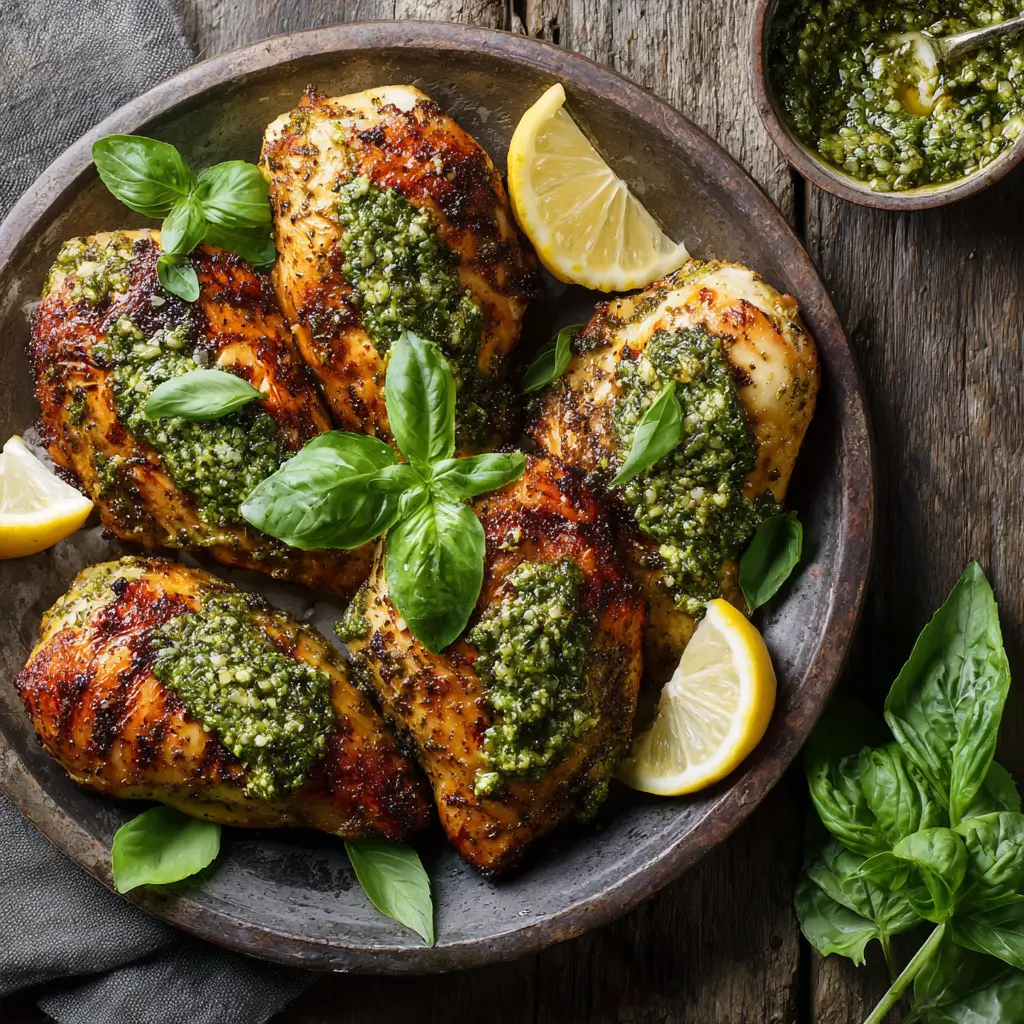
Lemon & Basil Pesto Chicken
Introduction
Lemon & Basil Pesto Chicken is a vibrant, aromatic dish that brings together the bright acidity of fresh lemons, the herbal freshness of basil, and the rich umami depth of pesto to create a culinary experience that’s both comforting and elegant. Perfect for weeknight dinners or weekend entertaining, this recipe balances bold Mediterranean flavors with tender, juicy chicken in a way that’s sure to impress your palate—and your guests. Whether you’re a seasoned home cook or just beginning to explore flavorful international cuisine, this dish offers an accessible yet sophisticated approach to healthy, gourmet cooking right in your own kitchen.
The History
The roots of Lemon & Basil Pesto Chicken stretch across multiple culinary traditions, combining elements from Italian, French, and Middle Eastern cuisines. Pesto, originating in Genoa, Italy, traditionally consists of fresh basil, garlic, pine nuts, Parmesan cheese, and olive oil—blended into a vibrant green sauce that celebrates the essence of summer herbs. Over time, variations of pesto have emerged worldwide, incorporating local ingredients and flavor profiles. The addition of lemon to pesto draws influence from Southern Italian and coastal Mediterranean cooking, where citrus is used generously to cut through richness and enhance freshness. Chicken, as a lean protein, has long been a staple in global diets, and its versatility makes it ideal for absorbing bold sauces like pesto. By marrying these traditions, Lemon & Basil Pesto Chicken represents a modern fusion dish—honoring heritage while embracing contemporary tastes and health-conscious preferences.
Ingredients Breakdown
The magic of this dish lies in the synergy of high-quality, fresh ingredients:
- Chicken breasts or thighs: Boneless, skin-on chicken breasts offer a lean option with excellent texture, while thighs provide more moisture and richness due to their higher fat content.
- Fresh basil: The star of the pesto, basil delivers a sweet, slightly peppery aroma essential for authentic flavor.
- Garlic: Adds pungency and depth; roasted garlic can be used for a milder taste.
- Pine nuts: Traditional in classic pesto, they lend a buttery crunch. Walnuts or almonds make great substitutes.
- Extra virgin olive oil: High-quality oil ensures a smooth, fruity base for the pesto.
- Parmesan cheese: Aged Parmigiano-Reggiano adds saltiness and umami; vegetarian alternatives are available if needed.
- Lemon: Both zest and juice contribute a zesty brightness that lifts the entire dish.
- Salt and black pepper: For seasoning balance.
- Olive oil (for searing): Used to cook the chicken, enhancing browning and flavor development.
- Optional additions: Red pepper flakes for heat, sun-dried tomatoes for tang, or spinach for added nutrition.
Step-by-Step Recipe
- Prepare the Lemon Basil Pesto: In a food processor, combine 2 cups packed fresh basil leaves, 1/4 cup pine nuts, 2 cloves garlic, 1/2 cup grated Parmesan cheese, 1/2 teaspoon salt, and 1/4 teaspoon black pepper. Pulse until coarsely chopped. With the machine running, slowly drizzle in 1/3 cup extra virgin olive oil until smooth. Add the zest of one lemon and 1 tablespoon lemon juice. Blend again. Taste and adjust seasoning. Set aside.
- Marinate the Chicken: Place 4 boneless, skin-on chicken breasts (or thighs) between plastic wrap and gently pound to an even thickness (about ¾ inch). This ensures even cooking. Season both sides with salt, pepper, and a pinch of lemon zest. Rub 1–2 tablespoons of the prepared pesto onto each piece of chicken, covering the surface evenly. Let marinate in the refrigerator for at least 30 minutes (up to 4 hours for deeper flavor).
- Preheat the Pan: Remove chicken from the fridge 15 minutes before cooking to bring it closer to room temperature. Heat 1 tablespoon olive oil in a large skillet over medium-high heat until shimmering but not smoking.
- Sear the Chicken: Place chicken in the pan, skin-side down. Cook undisturbed for 6–7 minutes, pressing lightly to ensure full contact. The skin should turn golden brown and crispy. Flip carefully using tongs and cook for another 5–6 minutes on the second side, or until the internal temperature reaches 165°F (74°C).
- Finish with Freshness: Transfer cooked chicken to a plate and let rest for 5 minutes. Spoon additional warm pesto over the top, then finish with a squeeze of fresh lemon juice and a sprinkle of chopped basil or microgreens for garnish.
- Serve Immediately: Plate with sides such as roasted vegetables, quinoa, grilled asparagus, or crusty bread to soak up the flavorful juices.
Tips
- Don’t skip the pounding step: Even thickness prevents dry spots and ensures uniform doneness.
- Use a meat thermometer: Prevents overcooking and guarantees juicy results every time.
- Reserve some pesto for serving: Adding fresh pesto after cooking preserves the vibrant color and volatile aromatics lost during heating.
- Cook skin-side down first: Maximizes crispiness and protects the meat from direct high heat.
- Let the chicken rest: Allows juices to redistribute, resulting in moister meat when sliced.
- Toast the nuts: Lightly toast pine nuts in a dry pan before blending for enhanced nutty depth.
- Make ahead: Pesto can be made 3–4 days in advance and stored in the fridge with a thin layer of oil on top to prevent oxidation.
Variations and Customizations
This recipe is highly adaptable to different dietary needs and flavor preferences:
- Vegan version: Use tofu, tempeh, or portobello mushrooms instead of chicken. Substitute nutritional yeast for Parmesan and use vegan pesto.
- Gluten-free: Naturally gluten-free—just ensure all packaged ingredients (like cheese) are certified GF if necessary.
- Dairy-free pesto: Omit Parmesan or use a plant-based alternative; add a splash of white miso paste for umami.
- Nut-free option: Replace pine nuts with sunflower seeds or pumpkin seeds.
- Herb swaps: Try cilantro, parsley, or mint instead of basil for a unique twist.
- Spicy kick: Add 1/4 teaspoon red pepper flakes to the pesto or serve with chili oil drizzle.
- Grilled version: Marinate and grill the chicken over medium heat for smoky notes.
- Baked version: Arrange marinated chicken on a baking sheet and bake at 375°F (190°C) for 20–25 minutes, basting halfway with pesto.
- Pasta pairing: Slice cooked chicken and serve over whole wheat or chickpea pasta tossed with warm pesto and cherry tomatoes.
- Meal prep friendly: Cook and slice chicken, store with pesto separately, and reheat gently for quick lunches.
Health Considerations and Nutritional Value
Lemon & Basil Pesto Chicken is not only delicious but also nutritionally balanced when prepared with wholesome ingredients:
- High-quality protein: Chicken provides about 26–30 grams of complete protein per 4 oz serving, supporting muscle repair and satiety.
- Heart-healthy fats: Olive oil and pine nuts contain monounsaturated fats and omega-3s (especially if walnuts are used), which support cardiovascular health.
- Antioxidant-rich herbs: Basil contains flavonoids and volatile oils with anti-inflammatory properties.
- Vitamin C boost: Fresh lemon juice enhances iron absorption from the chicken and supports immune function.
- Calcium source: Parmesan cheese contributes calcium and phosphorus for bone health (approx. 10% DV per 1/4 cup).
- Low in carbohydrates: Ideal for low-carb or keto diets when served with non-starchy vegetables.
- Mindful sodium: Store-bought pesto can be high in salt; making it fresh allows control over sodium levels.
- Allergen alert: Contains tree nuts (pine nuts) and dairy. Always label accordingly for guests.
- Calorie-conscious tip: Use less cheese and oil in pesto, or increase basil volume for lower-calorie density without sacrificing flavor.
A typical serving (chicken + 2 tbsp pesto) contains approximately: 320–380 calories, 28–32g protein, 20–25g fat (mostly unsaturated), 3–5g carbs, and 1–2g fiber.
Ingredients
For the Lemon Basil Pesto:
- 2 cups fresh basil leaves, tightly packed
- 1/4 cup pine nuts (or walnuts)
- 2 cloves garlic, peeled
- 1/2 cup freshly grated Parmesan cheese
- 1/3 cup extra virgin olive oil
- Zest of 1 lemon
- 1 tablespoon fresh lemon juice
- 1/2 teaspoon sea salt
- 1/4 teaspoon freshly ground black pepper
For the Chicken:
- 4 boneless, skin-on chicken breasts (or thighs), about 6 oz each
- 1 tablespoon olive oil (for searing)
- Salt and pepper to taste
- Additional lemon wedges and fresh basil for garnish
Directions
- In a food processor, combine basil, pine nuts, garlic, Parmesan, salt, and pepper. Pulse several times until coarsely chopped.
- With the motor running, slowly pour in olive oil in a steady stream until the mixture becomes smooth and emulsified.
- Add lemon zest and juice. Blend for another 10–15 seconds. Taste and adjust seasoning—add more salt, pepper, or lemon as desired. Transfer to a bowl and set aside 1/4 cup for final garnish.
- Prepare chicken by patting dry with paper towels. If uneven in thickness, place between parchment and gently pound to ¾ inch thick.
- Season chicken on both sides with salt, pepper, and a little extra lemon zest. Rub 1–2 tablespoons of pesto onto each piece, focusing on the top surface.
- Refrigerate, uncovered, for 30 minutes to 4 hours to allow flavors to penetrate.
- Remove chicken from fridge and let sit at room temperature for 10–15 minutes.
- Heat olive oil in a large oven-safe skillet over medium-high heat.
- Place chicken in the skillet, skin-side down. Sear without moving for 6–7 minutes until deep golden brown and crispy.
- Flip chicken using tongs and cook for another 5–6 minutes. If needed, transfer skillet to a preheated 375°F (190°C) oven and bake for 5–8 minutes until internal temperature reaches 165°F (74°C).
- Transfer chicken to a platter and let rest for 5 minutes.
- Drizzle with reserved fresh pesto, a squeeze of lemon juice, and garnish with chopped basil or microgreens.
- Serve immediately with your favorite sides.
FAQ
Can I use store-bought pesto?
Yes, though homemade pesto offers superior freshness and flavor control. If using store-bought, choose one with minimal additives and enhance it with fresh lemon zest and juice.
Can I make this recipe ahead of time?
Absolutely. Marinate the chicken and prepare the pesto up to one day in advance. Cook just before serving for best texture.
What sides go well with Lemon & Basil Pesto Chicken?
Excellent pairings include roasted potatoes, sautéed spinach, grilled zucchini, farro salad, arugula with shaved Parmesan, or lemon-herb rice.
Is this dish freezer-friendly?
Cooked chicken freezes well for up to 3 months. Cool completely, wrap tightly, and freeze. Reheat gently in the oven or skillet. Pesto can also be frozen in ice cube trays for portioned use later.
Why did my pesto turn brown?
Exposure to air causes oxidation. To prevent this, press plastic wrap directly onto the surface of the pesto or cover with a thin layer of olive oil before refrigerating.
Can I use dried basil?
Not recommended. Dried herbs lack the vibrancy and moisture needed for authentic pesto. Always use fresh basil for best results.
How do I keep the chicken from drying out?
Avoid overcooking—use a thermometer and remove at 160°F (71°C); residual heat will carry it to 165°F. Also, marinating and resting help retain moisture.
Can I grill this chicken?
Yes! Grill over medium heat (350–375°F) for 6–7 minutes per side, basting with pesto in the last few minutes to prevent burning.
Summary
Lemon & Basil Pesto Chicken is a harmonious blend of zesty citrus, fragrant herbs, and succulent poultry, delivering restaurant-quality flavor in a simple, wholesome meal. Elegant enough for guests yet easy enough for busy nights, it’s a versatile dish that celebrates fresh ingredients and bold Mediterranean flair.