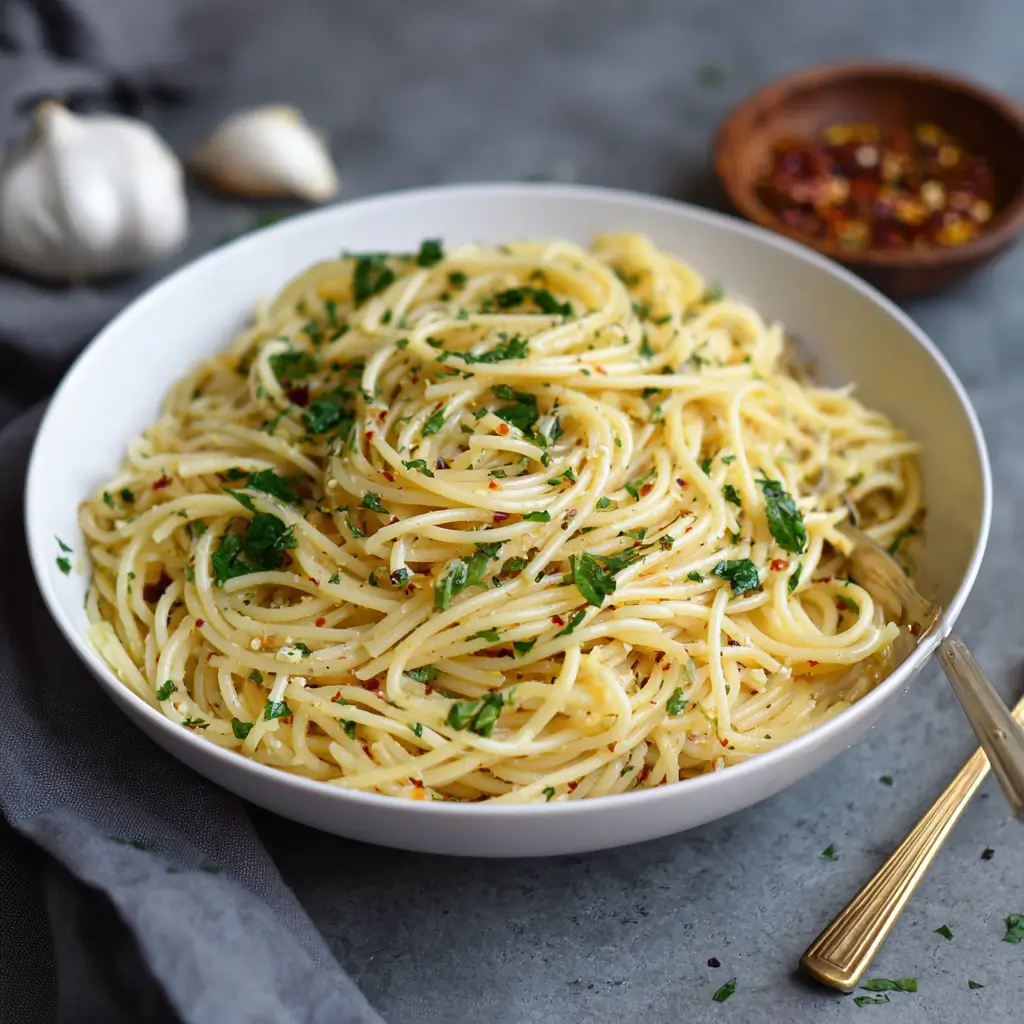
Spaghetti with Garlic & Olive Oil
Introduction
Spaghetti with Garlic and Olive Oil, known in Italian as Spaghetti Aglio e Olio, is a timeless classic that embodies the essence of Italian cuisine: simple ingredients prepared to perfection. This humble dish hails from Southern Italy, particularly Naples, and has become a beloved staple in homes and restaurants around the world. With just a few high-quality ingredients—pasta, olive oil, garlic, and chili flakes—it delivers bold flavor, comforting texture, and culinary elegance without the need for elaborate techniques or rare components.
Despite its simplicity, this dish holds a special place in the hearts of food lovers because it highlights the beauty of minimalism in cooking. It’s perfect for busy weeknights, last-minute dinners, or when you’re craving something satisfying yet light. Whether you’re a seasoned chef or a beginner in the kitchen, mastering Spaghetti Aglio e Olio is a rite of passage—a testament to how little can taste like so much.
The History
The origins of Spaghetti Aglio e Olio trace back centuries to the coastal regions of Campania in Southern Italy, where resourcefulness and flavor reigned supreme in home kitchens. Historically, many Italian families lived off modest means, relying on pantry staples rather than extravagant ingredients. Garlic, olive oil, dried pasta, and red pepper flakes were not only affordable but also packed with robust flavor and long shelf life—making them ideal for everyday meals.
Aglio e Olio, which translates to “garlic and oil,” was originally created as a quick, filling meal for fishermen and laborers who needed energy without spending hours preparing food. Over time, the dish evolved from a humble peasant meal into a celebrated representation of Italian culinary philosophy—where quality ingredients and precise technique elevate even the simplest recipes.
It gained international fame during the 20th century, especially after Italian immigrants brought their traditional recipes to the United States and other parts of the world. Today, variations appear on menus everywhere, often embellished with parsley, cheese, lemon zest, or seafood—but purists will tell you that the original version remains unbeatable in its clarity and balance.
Ingredients Breakdown
The magic of Spaghetti Aglio e Olio lies in its minimalism and the quality of each ingredient. Let’s take a closer look at what goes into this iconic dish:
- Spaghetti: Traditionally, bronze-die extruded spaghetti is preferred because it has a rougher surface that holds sauce better. The pasta should be cooked al dente (firm to the bite) to provide textural contrast.
- Extra Virgin Olive Oil: This is the soul of the dish. Use a high-quality, fruity extra virgin olive oil with a fresh aroma and smooth finish. Avoid using refined or “light” olive oils, as they lack flavor and depth.
- Garlic: Fresh garlic cloves are essential. Thinly sliced or finely minced, garlic infuses the oil with its aromatic essence. Be careful not to burn it—golden brown is perfect; blackened is bitter.
- Red Pepper Flakes (Peperoncino): These add a gentle heat and complexity. Adjust according to your spice tolerance. Some prefer whole dried chilies for a subtler kick.
- Fresh Parsley (optional but recommended): Flat-leaf parsley adds brightness and color. Chopped finely, it cuts through the richness of the oil.
- Pasta Water: Often overlooked, starchy pasta water is crucial for emulsifying the sauce and helping it cling to the noodles.
- Grated Cheese (controversial): Traditional Neapolitan versions do not include cheese, but some modern interpretations use Pecorino Romano or Parmigiano-Reggiano for added umami. Purists may object, but personal preference rules here.
- Salt: For seasoning both the pasta water and the final dish. Sea salt or kosher salt works best.
Step-by-Step Recipe
- Boil the Pasta: Fill a large pot with cold water, add a generous amount of salt (about 1–2 tablespoons per quart), and bring to a rolling boil. Add 12 ounces (340g) of spaghetti and cook according to package instructions until al dente—usually 8–10 minutes. Reserve at least 1 cup of starchy pasta water before draining.
- Prepare the Aromatics: While the pasta cooks, peel and thinly slice 4–6 garlic cloves (depending on size and desired intensity). Finely chop a small handful of fresh flat-leaf parsley. Measure out ½–1 teaspoon of red pepper flakes based on your heat preference.
- Warm the Oil: In a large skillet or sauté pan over medium-low heat, pour ½ cup (120ml) of high-quality extra virgin olive oil. Let it warm gently—do not let it smoke.
- Sauté the Garlic: Add the sliced garlic to the oil. Cook slowly, stirring frequently, until the slices turn golden brown—this takes about 3–5 minutes. Do not rush this step; burnt garlic will make the dish bitter.
- Add Heat: Stir in the red pepper flakes and cook for another 30 seconds to release their fragrance. The oil should now be shimmering with golden garlic and flecks of red chili.
- Combine Pasta and Sauce: Using tongs, transfer the cooked spaghetti directly from the pot into the skillet. Do not drain completely—wet pasta helps the sauce adhere. Toss vigorously to coat every strand in the garlicky oil.
- Emulsify with Pasta Water: Begin adding reserved pasta water, one ladleful at a time (start with ¼ cup), tossing continuously. The starch in the water combines with the oil to create a silky, cohesive sauce that clings to the pasta.
- Incorporate Parsley: Add the chopped parsley and continue tossing for another minute until the pasta is glossy and evenly coated.
- Taste and Adjust: Season with additional salt if needed. If desired, stir in grated cheese at this stage, though traditionalists would omit it.
- Serve Immediately: Plate the spaghetti while hot. Optionally, drizzle a touch more raw extra virgin olive oil on top for freshness, and garnish with extra parsley or a twist of lemon zest.
Tips
- Use High-Quality Olive Oil: Since this dish relies heavily on olive oil for flavor, invest in a good brand with a balanced, fruity profile. You’ll taste the difference.
- Don’t Burn the Garlic: Keep the heat low to medium when sautéing garlic. Burnt garlic turns bitter and ruins the entire dish. Remove the pan from heat momentarily if it starts browning too quickly.
- Cook Garlic Slices Evenly: Slice garlic uniformly so all pieces cook at the same rate. Some chefs prefer leaving them slightly thicker to prevent overcooking.
- Reserve Plenty of Pasta Water: Starchy water is your secret weapon. It helps bind the oil and pasta into a creamy emulsion. Don’t skip this step!
- Toss Vigorously: Use tongs and toss the pasta energetically in the pan. This motion coats the strands evenly and incorporates air for a lighter texture.
- Finish Cooking in the Sauce: Never fully drain the pasta. Transferring it wet ensures the sauce forms properly and prevents dryness.
- Time It Right: Have everything ready before starting—this dish comes together fast. Coordinate the pasta cooking time with the garlic sauté so both are done simultaneously.
- Optional Cheese Caution: If adding cheese, do so off direct heat to avoid clumping. Also note that dairy can mute the bright garlic and oil flavors.
- Lemon Zest Boost: A sprinkle of lemon zest just before serving lifts the dish with a citrusy note that balances the richness.
- Rest the Oil Infusion (Advanced Tip): For deeper flavor, let the garlic-infused oil cool and steep overnight. Reheat gently before tossing with pasta.
Variations and Customizations
While traditional Spaghetti Aglio e Olio sticks to the basics, there are countless creative ways to personalize this dish:
- Seafood Aglio e Olio: Add grilled shrimp, scallops, or clams for a luxurious twist. Sear the seafood separately and fold in at the end.
- Lemon Garlic Version: Incorporate juice and zest of one lemon for a bright, tangy variation that pairs beautifully with summer meals.
- Herb-Forward Style: Increase the amount of fresh herbs—try basil, oregano, or mint—for a garden-fresh take.
- Crispy Breadcrumbs (Mollica): Toast panko or rustic breadcrumbs in olive oil until golden and sprinkle on top for crunch and texture.
- Anchovy Infusion: Melt 1–2 anchovy fillets in the oil before adding garlic. They dissolve completely and add savory depth without tasting fishy.
- Roasted Garlic Option: Replace raw garlic with soft roasted cloves for a sweeter, mellower flavor profile.
- Vegetable Additions: Toss in sautéed spinach, cherry tomatoes, roasted peppers, or artichokes for added nutrition and color.
- Creamy Twist: For a richer version, stir in a splash of heavy cream or mascarpone—though this strays far from tradition.
- Gluten-Free Adaptation: Use high-quality gluten-free spaghetti made from rice, corn, or legumes. Ensure proper cooking time and reserve starchy alternatives if possible.
- Vegan Version: Naturally vegan (without cheese), this dish fits plant-based diets perfectly. Just confirm no animal-derived products in pasta ingredients.
- Garlic Confit Method: Slow-cook peeled garlic cloves in olive oil over low heat until tender and sweet. Use this infused oil and softened garlic for an ultra-smooth version.
Health Considerations and Nutritional Value
Spaghetti with Garlic and Olive Oil can be part of a healthy, balanced diet when enjoyed in moderation and made with wholesome ingredients.
Nutritional Highlights:
- Healthy Fats: Extra virgin olive oil is rich in monounsaturated fats and antioxidants like polyphenols, which support heart health and reduce inflammation.
- Low in Sodium (if controlled): By managing added salt, this dish can be lower in sodium compared to heavily processed sauces.
- Carbohydrates for Energy: Whole grain or legume-based pastas offer complex carbs, fiber, and protein for sustained energy.
- Antimicrobial Properties: Garlic contains allicin, a compound linked to immune support and potential cardiovascular benefits.
- Diet-Friendly Options: Easily adaptable for vegan, vegetarian, dairy-free, and gluten-free diets with appropriate substitutions.
Considerations:
- Calorie Density: Olive oil is calorie-dense (~120 calories per tablespoon), so portion control matters, especially for weight management goals.
- Refined Carbs: Regular semolina spaghetti is a refined grain, causing quicker blood sugar spikes. Opt for whole wheat, lentil, or chickpea pasta for higher fiber and protein.
- Digestive Sensitivity: Some individuals may experience bloating or discomfort from garlic due to FODMAPs. Low-FODMAP substitutes like chives (green part only) or garlic-infused oil (with solids removed) can help.
- Acidity & Heartburn: Spicy red pepper flakes and fatty oils may trigger acid reflux in sensitive individuals. Reduce or eliminate chili if necessary.
Overall, this dish shines when built on nutrient-rich ingredients and served alongside vegetables or lean proteins for a well-rounded meal.
Ingredients
- 12 oz (340g) dried spaghetti (preferably bronze-cut)
- ½ cup (120ml) high-quality extra virgin olive oil
- 4–6 large garlic cloves, thinly sliced
- ½–1 tsp red pepper flakes (adjust to taste)
- ½ cup fresh flat-leaf parsley, finely chopped
- Salt, to taste (plus 1–2 tbsp for pasta water)
- 1 cup reserved pasta cooking water
- Optional: Grated Pecorino Romano or Parmigiano-Reggiano (¼–½ cup)
- Optional: Zest of ½ lemon
Directions
- Bring a large pot of water to a boil. Add salt generously, then add spaghetti. Cook until al dente, about 8–10 minutes. Reserve 1 cup of pasta water, then set aside.
- In a large skillet over medium-low heat, warm the olive oil. Add sliced garlic and cook slowly, stirring often, until golden (3–5 minutes). Avoid browning too deeply.
- Stir in chopped parsley and remove from heat briefly if needed to prevent overcooking.
- Using tongs, transfer cooked spaghetti directly into the skillet. Toss thoroughly to coat with oil.
- Gradually add reserved pasta water, starting with ¼ cup, tossing constantly until a glossy, emulsified sauce forms.
- If using, stir in cheese off direct heat to prevent clumping.
- Taste and adjust seasoning with salt and additional pepper flakes if desired.
- Serve immediately, garnished with extra parsley, a drizzle of raw olive oil, or lemon zest.
<3>Add red pepper flakes and cook for 30 seconds until fragrant.
FAQ
- Can I use minced garlic instead of sliced?
- Yes, but minced garlic cooks faster and burns more easily. If using minced, reduce heat and monitor closely.
- Why is my sauce greasy?
- You likely didn’t use enough starchy pasta water or didn’t toss enough. The key is emulsification—add water gradually while mixing vigorously.
- Can I make this ahead of time?
- Best served fresh. However, you can prep ingredients in advance. Reheat gently with a splash of water to revive the sauce.
- Is cheese authentic in Aglio e Olio?
- Not traditionally. Classic Neapolitan versions exclude cheese to preserve the purity of garlic and oil. But feel free to add it if you enjoy the flavor.
- What pasta can I substitute for spaghetti?
- Any long pasta works—linguine, fettuccine, bucatini, or capellini. Bucatini’s hollow center holds sauce exceptionally well.
- How do I store leftovers?
- Cool quickly and refrigerate in an airtight container for up to 2 days. Reheat in a pan with a bit of water or broth to restore moisture.
- Can I freeze Spaghetti Aglio e Olio?
- Not recommended. Freezing alters the texture of both pasta and olive oil, leading to separation and sogginess upon reheating.
- My garlic burned! What went wrong?
- Heat was too high or garlic was left unattended. Always cook garlic slowly and remove from heat if browning too fast.
- Can I use butter instead of olive oil?
- This would change the character entirely. Butter isn’t traditional and lacks the fruitiness and stability of EVOO. If desired, blend a small amount with olive oil for richness.
- Is this dish suitable for vegans?
- Yes, as long as no cheese is added and the pasta doesn’t contain eggs. Always check labels for hidden animal products.
Summary
Spaghetti with Garlic & Olive Oil is a masterclass in simplicity—elevating basic ingredients into a flavorful, satisfying meal through technique and care. Rooted in Italian tradition, it proves that extraordinary taste doesn’t require complexity.