Introduction
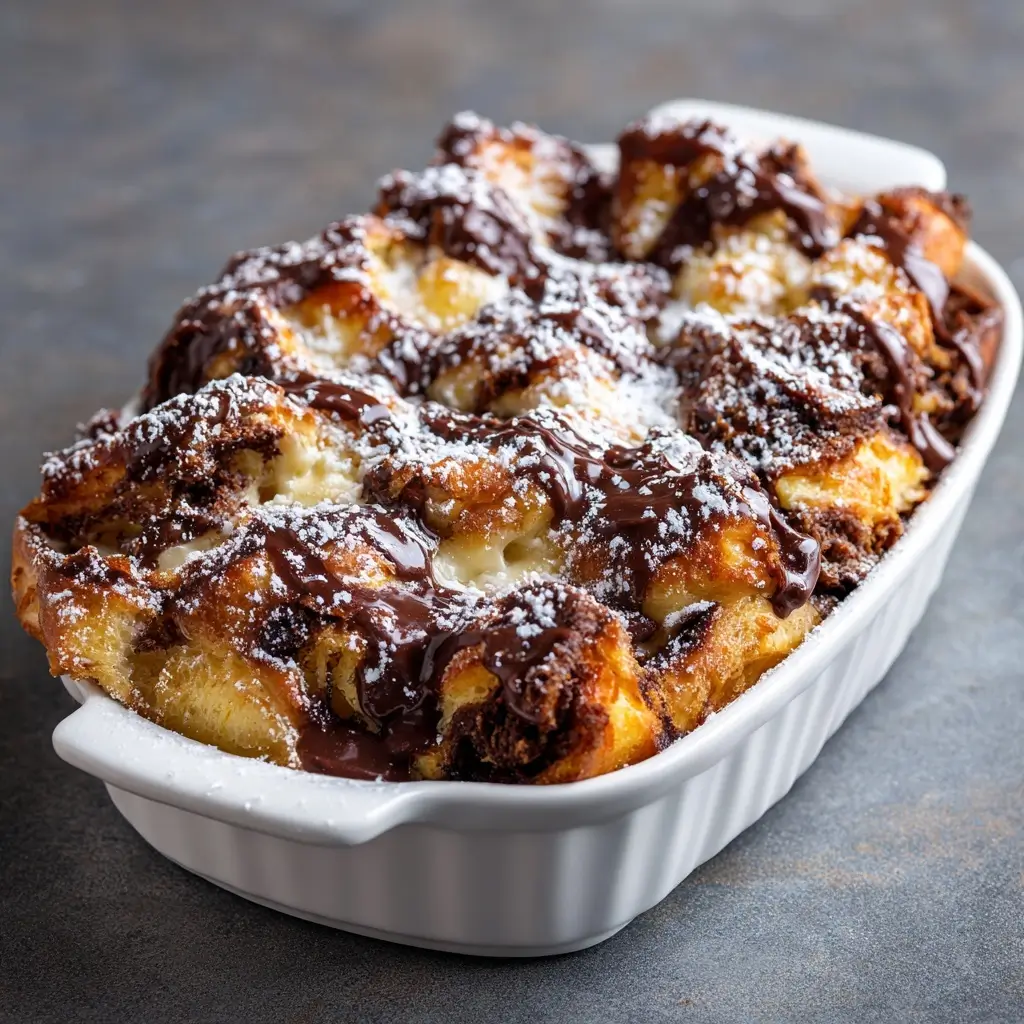
Indulge in the rich, decadent world of Chocolate Croissant Bread Pudding—a luxurious dessert that marries the buttery, flaky layers of chocolate croissants with the creamy comfort of classic bread pudding. This dessert is not just a treat; it’s an experience. Perfect for brunch gatherings, holiday feasts, or simply as a weekend indulgence, this dish transforms leftover croissants into a sumptuous masterpiece. Whether you’re using day-old bakery finds or intentionally baking extra croissants to save for this recipe, every bite delivers a harmonious blend of chocolate, custard, and golden toasted edges that will leave your taste buds singing.
The History
Bread pudding itself has ancient roots, dating back to 13th century Europe when frugal cooks sought ways to use up stale bread. Known originally as “poor man’s pudding,” it was a humble mixture of bread, milk, eggs, and whatever sweeteners were available. Over centuries, the dish evolved across cultures—from British spotted dog to Mexican cajeta de pan, and French clafoutis-inspired custards.
The modern twist of incorporating croissants, especially chocolate-filled ones, emerged in the late 20th century as artisanal bakeries popularized the pain au chocolat worldwide. Once a breakfast staple in Parisian cafés, the chocolate croissant found new life in upscale American brunch menus, where chefs began experimenting with fusion desserts. Chocolate Croissant Bread Pudding is a testament to culinary innovation—a gourmet evolution of a rustic dish, blending European tradition with contemporary decadence. Today, it stands as a favorite in food blogs, high-end diners, and home kitchens alike, symbolizing both comfort and sophistication.
Ingredients Breakdown
The magic of Chocolate Croissant Bread Pudding lies in its ingredients—each playing a vital role in texture, flavor, and richness. Here’s a detailed look:
- Chocolate Croissants (8–10 medium): The star of the show. These should be slightly stale for optimal absorption. Their buttery layers and pockets of melted chocolate create melty, gooey pockets throughout the pudding.
- Whole Milk (3 cups): Provides creaminess and helps carry flavors. You can substitute part with half-and-half for extra richness.
- Heavy Cream (1 cup): Adds luxurious silkiness to the custard base. Non-negotiable for that restaurant-quality mouthfeel.
- Large Eggs (6): Bind the custard together and provide structure. Room temperature eggs blend more smoothly.
- Granulated Sugar (¾ cup): Sweetens without overpowering. Adjust based on the sweetness of your croissants.
- Brown Sugar (¼ cup): Adds depth and a hint of molasses flavor, enhancing the caramelized crust.
- Vanilla Extract (2 tsp): Infuses warm, aromatic notes. Pure extract is recommended over imitation.
- Ground Cinnamon (½ tsp): A subtle spice that complements chocolate and adds warmth.
- Salt (¼ tsp): Balances sweetness and enhances all other flavors.
- Dark Chocolate Chunks (½ cup, optional): For extra chocolate intensity. Fold in before baking.
- Unsalted Butter (2 tbsp, for greasing): Ensures easy release and adds a delicate richness to the crust.
- Whipped Cream, Powdered Sugar, Fresh Berries (for garnish): Elevate presentation and add freshness to cut through richness.
Step-by-Step Recipe
- Preheat Oven & Prepare Pan: Preheat your oven to 350°F (175°C). Generously butter a 9×13-inch baking dish or a deep gratin dish to prevent sticking and promote browning.
- Cut the Croissants: Slice each chocolate croissant into 1.5-inch cubes. If they’re very fresh, let them sit out for 15–20 minutes to dry slightly. Place the pieces evenly in the prepared dish, ensuring even distribution of chocolate-filled sections.
- Heat Dairy Mixture: In a medium saucepan over medium heat, combine the whole milk and heavy cream. Warm until steaming (do not boil), about 4–5 minutes. Remove from heat.
- Whisk Wet Ingredients: In a large bowl, whisk together the eggs, granulated sugar, brown sugar, vanilla extract, cinnamon, and salt until smooth and lightly frothy.
- Temper the Eggs: Slowly pour the warm milk mixture into the egg mixture while whisking constantly to avoid curdling. This step is crucial for a silky custard.
- Pour Over Croissants: Gradually pour the custard over the croissant cubes, pressing down gently with a spatula to ensure all pieces are soaked. Let the mixture rest for 20–30 minutes, occasionally pressing down to help absorption. This allows the croissants to fully hydrate without disintegrating.
- Add Extra Chocolate (Optional): Sprinkle dark chocolate chunks over the top for an extra melty surprise after baking.
- Bake: Place the dish in the preheated oven and bake for 45–55 minutes, or until the center is set and a knife inserted comes out clean. The top should be golden brown and slightly puffed.
- Cool Slightly: Allow the pudding to rest for 10–15 minutes before serving. This helps the custard stabilize and improves sliceability.
- Garnish & Serve: Dust with powdered sugar, add a dollop of whipped cream, and serve with fresh berries or a drizzle of chocolate sauce.
Tips
- Use Stale Croissants: Fresh croissants can become soggy. Slightly dried-out ones absorb custard better and hold their structure.
- Don’t Skip the Resting Time: Allowing the bread to soak ensures even saturation. Rushing this step leads to a custardy bottom and dry top.
- Check Doneness Carefully: Insert a knife near the center—if it comes out mostly clean (with maybe a bit of melted chocolate), it’s done. Overbaking causes dryness.
- Rotate the Pan: Halfway through baking, rotate the dish for even browning, especially if your oven has hot spots.
- Protect the Edges: If the corners begin to over-brown, cover loosely with aluminum foil.
- Serve Warm: This pudding is best served within two hours of baking when the custard is still tender and the aroma is strongest.
- Room Temperature Ingredients: Using room temp eggs and milk prevents the butter from solidifying in the custard, which can cause separation.
Variations and Customizations
While classic Chocolate Croissant Bread Pudding is divine on its own, feel free to experiment:
- Alcohol Infusion: Add ¼ cup of Grand Marnier, Kahlúa, or Baileys to the custard for an adult twist. The orange notes in Grand Marnier pair beautifully with chocolate.
- Spice It Up: Add a pinch of nutmeg, cardamom, or cayenne for a complex flavor profile.
- Fruit Additions: Layer in fresh raspberries, sliced bananas, or sautéed apples before baking for fruity contrast.
- Nutty Crunch: Sprinkle chopped toasted pecans, walnuts, or hazelnuts on top before baking for added texture.
- Dairy-Free Version: Use full-fat coconut milk and almond milk instead of dairy, and a flax egg substitute (1 tbsp ground flax + 3 tbsp water per egg).
- Gluten-Free Option: While traditional croissants aren’t gluten-free, you can use gluten-free brioche or challah with chocolate chips for a similar effect.
- Mini Individual Puddings: Bake in ramekins for elegant single servings—reduce baking time to 25–30 minutes.
- Savory-Sweet Twist: Add a sprinkle of sea salt on top before serving, or layer in crumbled bacon for a sweet-salty contrast (inspired by chocolate-covered bacon trends).
Health Considerations and Nutritional Value
Chocolate Croissant Bread Pudding is undeniably rich and calorie-dense, but understanding its nutritional profile helps with mindful enjoyment.
Nutritional Breakdown (per serving, serves 10):
- Calories: ~450–520 kcal
- Fat: 28–35g (mostly unsaturated from butter and cream)
- Saturated Fat: 16–20g (moderation advised for heart health)
- Carbohydrates: 40–48g (including 20–25g sugars)
- Protein: 8–10g (from eggs and dairy)
- Cholesterol: ~180mg (due to eggs and cream)
- Sodium: ~200–250mg
Considerations:
- This dessert is high in saturated fat and sugar, so it’s best enjoyed occasionally, especially for those managing cholesterol, diabetes, or weight.
- The butter and eggs provide essential fat-soluble vitamins (A, D, E, K) and choline, beneficial for brain health.
- Dark chocolate (if used) contains antioxidants like flavonoids, which may support heart health in moderation.
- To lighten the recipe: substitute half the cream with evaporated skim milk, reduce sugar by 25%, and use egg whites only.
- Pair with fiber-rich sides like mixed berries to balance blood sugar response.
Ingredients
- 8–10 stale chocolate croissants, cubed
- 3 cups whole milk
- 1 cup heavy cream
- 6 large eggs
- ¾ cup granulated sugar
- ¼ cup brown sugar
- 2 teaspoons pure vanilla extract
- ½ teaspoon ground cinnamon
- ¼ teaspoon salt
- ½ cup dark chocolate chunks (optional)
- 2 tablespoons unsalted butter, for greasing
- For serving: whipped cream, powdered sugar, fresh berries, chocolate sauce
Directions
- Preheat oven to 350°F (175°C). Butter a 9×13-inch baking dish thoroughly.
- Cut croissants into 1.5-inch cubes and spread evenly in the dish.
- In a saucepan, heat milk and cream until steaming. Do not boil.
- In a large bowl, whisk eggs, granulated sugar, brown sugar, vanilla, cinnamon, and salt until smooth.
- Slowly pour warm milk mixture into egg mixture, whisking constantly.
- Pour custard over croissants, pressing down gently to submerge all pieces.
- Let soak for 20–30 minutes at room temperature.
- Scatter dark chocolate chunks on top if using.
- Bake for 45–55 minutes, until center is set and top is golden brown.
- Cool for 10–15 minutes. Garnish and serve warm.
FAQ
Can I make this ahead of time?
Yes! Assemble the pudding (after soaking), cover, and refrigerate overnight. Bake the next day, adding 5–10 minutes to the cook time. This actually improves flavor infusion.
Can I freeze Chocolate Croissant Bread Pudding?
Yes, though texture may soften slightly. Cool completely, wrap tightly, and freeze for up to 2 months. Thaw in fridge and reheat in oven at 325°F until warmed through.
What if my custard doesn’t set?
It may need more baking time. If still runny, return to oven in 5-minute increments. Ensure your oven is properly calibrated.
Can I use plain croissants instead?
Absolutely. Add ½ cup chocolate chips to the custard or layer them between the croissant cubes for a DIY chocolate version.
Is this recipe suitable for a crowd?
Definitely. Double the recipe for a larger pan or prepare two dishes. It’s a hit at potlucks, Easter brunches, and Christmas mornings.
Can I make it vegan?
Yes, with substitutions: use plant-based croissants (check for chocolate content), flax eggs, coconut cream, and non-dairy milk. Opt for vegan dark chocolate.
Why did my bread pudding turn out dry?
Likely causes: overbaking, insufficient soaking time, or too many fresh croissants that didn’t absorb enough liquid. Always err on the side of extra soak time.
Summary
Chocolate Croissant Bread Pudding is a decadent fusion of French pastry and classic comfort dessert, transforming rich, chocolate-stuffed croissants into a creamy, custard-soaked delight. Baked to golden perfection, it’s ideal for brunch, holidays, or whenever you crave a luxurious treat that feels both nostalgic and extraordinary.