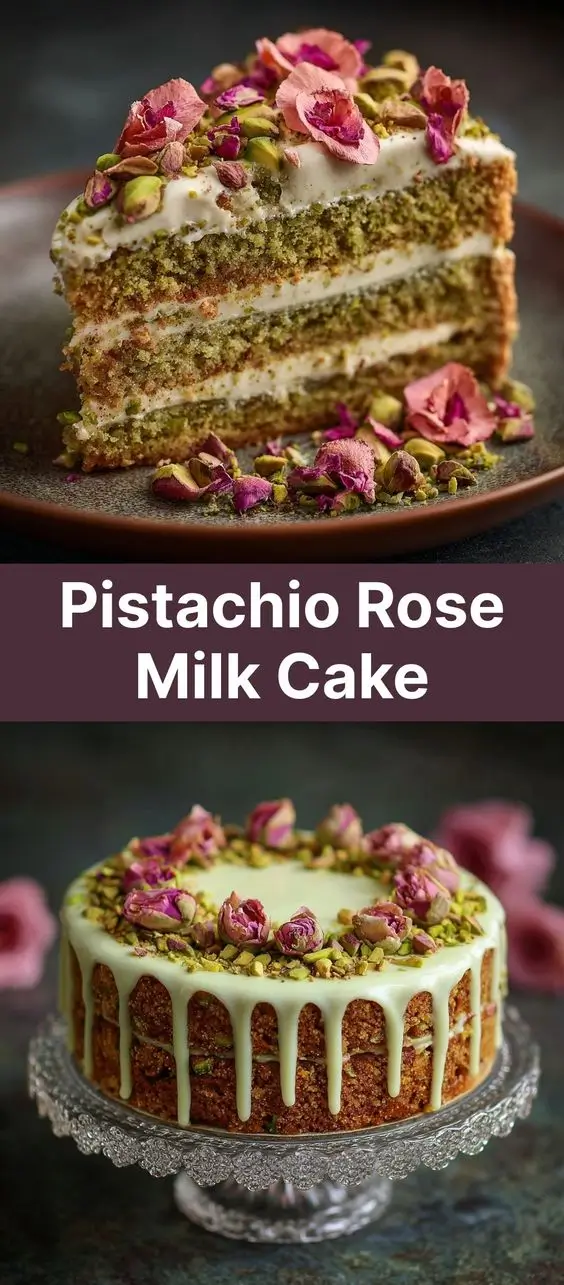
Pistachio Rose Milk Cake: A Fragrant Delight from Persian-Inspired Baking
The Pistachio Rose Milk Cake is an elegant fusion of Middle Eastern and European baking traditions, blending the nutty richness of pistachios with the delicate floral aroma of rose water. Revered for its luxurious texture and aromatic profile, this cake has become a symbol of celebration, often featured at weddings, Nowruz (Persian New Year), and festive gatherings across Iran, Turkey, and parts of South Asia. While cakes as we know them today originated in Europe, the use of rose water and nuts in sweets dates back thousands of years to ancient Persia, where confectioners used natural ingredients like saffron, cardamom, and rose distillate to create desserts fit for royalty.
The History of Pistachio Rose Milk Cake
The roots of this cake can be traced to the royal kitchens of the Sassanid Empire, where elaborate desserts made with ground nuts, honey, and floral waters were served during courtly banquets. Rose water, extracted through steam distillation of fresh rose petals—particularly the Damask rose (Rosa damascena)—has been produced in the Fars province of Iran for over 4,000 years. The addition of pistachios, native to the Middle East and especially abundant in Kerman, Iran, brought a vibrant green hue and buttery crunch that complemented the floral notes perfectly.
Over time, as trade routes expanded, these flavors traveled westward into Mediterranean cuisines and eastward into Indian Mughlai desserts such as sholezard and barfi. In the modern era, bakers began incorporating dairy elements like milk, cream, and yogurt into traditional nut-based sweets, giving rise to moist, tender cakes that retained the essence of their ancestors but appealed to contemporary palates. The “milk” in Pistachio Rose Milk Cake refers not only to the liquid ingredient but also to the milky glaze or syrup often drizzled on top—a nod to shirini, the Persian term for sweet treats soaked in fragrant syrups.
Ingredients Breakdown: Crafting Flavor and Texture
- Pistachios: Fresh, unsalted shelled pistachios are essential. They provide structure, flavor, and color. When finely ground, they act as a gluten-free flour substitute and lend a rich, earthy taste.
- Rose Water: This distilled essence imparts a distinctive floral note. Authentic rose water should be pure and food-grade—avoid perfumed varieties. It’s potent, so a little goes a long way.
- Milk: Whole milk is preferred for its creamy consistency and ability to activate leavening agents. Some variations use reduced-fat milk, but full-fat ensures maximum moisture.
- All-Purpose Flour: Provides structural integrity. Can be partially replaced with almond flour or oat flour for a nuttier profile or gluten-free version.
- Butter: Unsalted butter adds richness and helps create a tender crumb. Must be softened before creaming.
- Sugar: Granulated sugar contributes sweetness and aids in aeration during creaming. For subtle complexity, consider replacing part of it with brown sugar or honey.
- Eggs: Large eggs bind the batter and add lift. Room temperature eggs integrate better and reduce curdling risk.
- Baking Powder & Baking Soda: Leavening agents that help the cake rise. Ensure they’re fresh for optimal volume.
- Salt: Balances sweetness and enhances overall flavor depth.
- Heavy Cream or Whipped Topping (optional): Used in frosting or garnish for added decadence.
- Crushed Pistachios (for topping): Adds visual appeal and textural contrast.
- Edible Dried Rose Petals (optional): For decoration and intensified floral aroma.
Step-by-Step Recipe: How to Make Pistachio Rose Milk Cake
Ingredients
- 1½ cups (180g) all-purpose flour
- ¾ cup (75g) finely ground unsalted pistachios (plus extra for garnish)
- 1½ tsp baking powder
- ¼ tsp baking soda
- ½ tsp salt
- ¾ cup (170g) unsalted butter, softened
- 1 cup (200g) granulated sugar
- 3 large eggs, room temperature
- 1 tsp vanilla extract
- ½ tsp almond extract (optional, enhances nuttiness)
- 2 tsp pure rose water (adjust to taste)
- 1 cup (240ml) whole milk, room temperature
- 1 tbsp lemon juice or apple cider vinegar (to activate baking soda)
Directions
- Preheat Oven & Prepare Pan: Preheat your oven to 350°F (175°C). Grease and flour a 9-inch round springform pan or line a loaf pan with parchment paper.
- Dry Ingredients: In a medium bowl, whisk together flour, ground pistachios, baking powder, baking soda, and salt. Set aside.
- Cream Butter & Sugar: In a large mixing bowl, beat softened butter and sugar together using a hand mixer or stand mixer until light and fluffy (about 3–5 minutes).
- Add Eggs: Add eggs one at a time, beating well after each addition. Scrape down the sides of the bowl as needed.
- Incorporate Extracts: Mix in vanilla, almond extract (if using), and rose water. Be cautious—rose water is potent; start with 1 tsp and increase only if desired.
- Alternate Wet & Dry Ingredients: Begin by adding one-third of the dry mixture to the batter, followed by half of the milk mixed with lemon juice. Alternate until all ingredients are incorporated, ending with dry ingredients. Do not overmix.
- Pour & Smooth: Pour the thick batter into the prepared pan and smooth the top with a spatula.
- Bake: Bake for 45–55 minutes, or until a toothpick inserted into the center comes out clean. If the top browns too quickly, tent loosely with aluminum foil.
- Cool: Allow the cake to cool in the pan for 15 minutes, then transfer to a wire rack to cool completely.
- Optional Glaze: Drizzle with a simple rose-milk glaze made from powdered sugar, rose water, and milk. Sprinkle crushed pistachios and dried rose petals on top before serving.
Tips for the Perfect Pistachio Rose Milk Cake
- Use High-Quality Rose Water: Cheap or synthetic rose water can taste soapy. Opt for brands like Cortas, Al Wadi, or Frontier Co-op for authentic flavor.
- Grind Your Own Pistachios: Pre-ground pistachio flour may contain additives. Pulse raw, unsalted pistachios in a food processor until fine but not oily.
- Room Temperature Ingredients: Cold eggs or milk can cause the batter to split. Let everything sit out for at least 30 minutes before baking.
- Don’t Overbake: This cake is meant to be moist. Check for doneness starting at 40 minutes. A slight spring-back means it’s done.
- Enhance Moisture: Brush the cooled cake with a rose-scented simple syrup (equal parts sugar and water, simmered with a few drops of rose water) for extra succulence.
- Storage: Store in an airtight container at room temperature for up to 2 days or refrigerate for up to 5 days. Bring to room temperature before serving.
- Freezing: Wrap unfrosted cake tightly in plastic wrap and freeze for up to 3 months. Thaw overnight in the refrigerator.
Variations and Customizations
- Gluten-Free Version: Replace all-purpose flour with a gluten-free blend containing xanthan gum, or use a combination of almond flour and tapioca starch.
- Dairy-Free Option: Substitute butter with vegan margarine and milk with oat or almond milk. Use coconut cream for frosting.
- Vegan Adaptation: Use flax eggs (1 tbsp ground flaxseed + 3 tbsp water per egg), plant-based butter, and non-dairy milk. Adjust sugar to ensure it’s vegan-certified.
- Layered Cake: Bake in two 8-inch pans and assemble with rose-flavored whipped cream or mascarpone filling. Top with candied pistachios.
- Citrus Twist: Add zest of one orange or lime to brighten the floral notes and balance sweetness.
- Saffron Infusion: Steep a pinch of saffron threads in warm milk for 10 minutes before adding to the batter for a golden hue and exotic aroma.
- No-Bake Cheesecake Version: Create a crust from crushed pistachios and dates, then fill with a mixture of cream cheese, rose water, condensed milk, and whipped cream. Chill for 6+ hours.
- Mini Cupcakes: Bake in muffin tins for 20–25 minutes. Perfect for parties and gift-giving.
Health Considerations and Nutritional Value
Pistachios are nutritional powerhouses, rich in healthy monounsaturated fats, protein, fiber, antioxidants, vitamin B6, and potassium. They support heart health, aid digestion, and promote satiety. However, they are calorie-dense, so moderation is key. This cake, while healthier than many traditional desserts due to its nut content, still contains significant amounts of sugar and fat.
A typical slice (1/10th of the cake) contains approximately:
- Calories: ~320 kcal
- Fat: 20g (mostly unsaturated)
- Carbohydrates: 32g
- Sugars: 22g
- Protein: 6g
- Fiber: 2g
- Vitamin B6: 15% DV
- Potassium: 10% DV
Rose water has anti-inflammatory and antioxidant properties and is traditionally used to soothe digestive issues and anxiety. However, it offers minimal nutritional value in culinary quantities.
Considerations:
- High sugar content may not suit diabetics—consider reducing sugar or using a natural alternative like monk fruit or erythritol.
- Nuts are common allergens. Always label dishes containing pistachios clearly.
- Lactose-intolerant individuals should opt for dairy-free substitutions.
- For lower-calorie versions, reduce butter and sugar by 25%, and use applesauce or Greek yogurt to maintain moisture.
Frequently Asked Questions (FAQ)
Can I make this cake without rose water?
Yes, though you’ll lose its signature fragrance. Substitute with orange blossom water or omit entirely, but consider adding more almond or vanilla extract for flavor depth.
Why did my cake turn out dry?
Overbaking, incorrect flour measurement (too much), or insufficient fat/moisture can cause dryness. Use a kitchen scale for accuracy and avoid overmixing once flour is added.
Can I use salted pistachios?
It’s best to use unsalted ones to control sodium levels. If using salted, reduce added salt in the recipe by half or omit entirely.
How do I prevent the cake from sticking?
Grease the pan thoroughly, use parchment paper, and let it cool slightly before removing. A springform pan makes release easier.
Is this cake suitable for special diets?
With modifications, yes. Gluten-free, vegan, and dairy-free versions are achievable with appropriate substitutes.
Can I double the recipe?
Yes, but be mindful of oven space and baking time. Double batches may require rotating pans halfway through.
What does rose water taste like?
It has a perfumed, floral, slightly sweet aroma reminiscent of perfume—but when used correctly, it enhances rather than overwhelms.
Can I use rose syrup instead of rose water?
Rose syrup (like Rooh Afza) can be used, but it’s sweeter and less concentrated. Replace 1 tsp rose water with ½ tsp syrup and adjust sugar accordingly.
Can I add fruit?
Yes! Poached pears, figs, or raspberries pair beautifully with the floral and nutty flavors.
How far in advance can I bake this cake?
Up to 2 days ahead at room temperature, or freeze for longer storage. Frost just before serving for best appearance.
Summary
The Pistachio Rose Milk Cake is a harmonious blend of nutty richness and delicate floral elegance, rooted in ancient Persian culinary traditions and elevated for modern tastes. With its moist crumb, vibrant color, and intoxicating aroma, it’s a show-stopping dessert perfect for celebrations or quiet moments of indulgence.