Mediterranean Chickpea Power Bowls: A Wholesome, Flavor-Packed Meal for Every Occasion
If you’re searching for a nutritious, vibrant, and satisfying meal that’s as delicious as it is healthy, look no further than Mediterranean Chickpea Power Bowls. This plant-based powerhouse combines the earthy richness of chickpeas with fresh vegetables, zesty herbs, and creamy sauces to create a bowl that fuels your body and delights your taste buds. Whether you’re a seasoned vegan, a busy professional looking for meal prep ideas, or simply someone who loves bold Mediterranean flavors, this dish is a must-try.
The History Behind the Bowl
The concept of the “power bowl” has roots in global culinary traditions where balanced, nutrient-dense meals are served in a single vessel—think of grain bowls in Asia, mezze platters in the Middle East, or poke bowls in Hawaii. The modern power bowl trend gained popularity in the U.S. during the 2010s as health-conscious eaters sought out customizable, whole-food meals rich in protein, fiber, and colorful produce.
The Mediterranean twist on the power bowl draws inspiration from the traditional diets of countries bordering the Mediterranean Sea—Greece, Italy, Turkey, Lebanon, and others—where legumes, olive oil, whole grains, and seasonal vegetables form the backbone of daily eating. Chickpeas, in particular, have been a staple in Mediterranean cuisine for thousands of years. Archaeological evidence traces their cultivation back to the Neolithic period, around 7500 BCE in the Middle East. Known for their versatility, they appear in dishes like hummus, falafel, stews, and salads across the region.
By combining ancient ingredients with contemporary food trends, the Mediterranean Chickpea Power Bowl represents both tradition and innovation—a celebration of time-tested nutrition wrapped in a modern, Instagram-worthy format.
Ingredients Breakdown: What Makes This Bowl So Powerful?
The strength of this recipe lies in its balance of macronutrients and micronutrients, achieved through thoughtfully selected ingredients. Each component contributes not only flavor and texture but also significant health benefits.
- Chickpeas: The star of the show. Packed with plant-based protein (about 15g per cup) and dietary fiber (12g per cup), chickpeas help regulate blood sugar, support gut health, and promote satiety. They’re also rich in folate, iron, phosphorus, and manganese.
- Quinoa or Brown Rice: These complex carbohydrates provide sustained energy and essential amino acids. Quinoa is a complete protein, meaning it contains all nine essential amino acids—rare for plant foods.
- Cucumber: Adds cool crunch and hydration. High in water content and antioxidants like vitamin C and beta-carotene.
- Cherry Tomatoes: Bursting with lycopene, an antioxidant linked to reduced risk of heart disease and certain cancers. Also rich in vitamin C and potassium.
- Red Onion: Provides sharpness and depth. Contains quercetin, a flavonoid with anti-inflammatory properties.
- Kalamata Olives: A hallmark of Mediterranean cuisine. Rich in heart-healthy monounsaturated fats and polyphenols that support cardiovascular wellness.
- Feta Cheese (optional): Offers a tangy, salty kick. While high in sodium, it’s a good source of calcium and protein. For a dairy-free version, use marinated tofu or omit entirely.
- Fresh Herbs (parsley, mint): Not just garnish—these herbs deliver powerful phytonutrients and aid digestion. Mint can soothe the stomach, while parsley is one of the richest sources of vitamin K.
- Lemon Juice & Extra Virgin Olive Oil: The dynamic duo of Mediterranean dressing. Lemon adds brightness and vitamin C; olive oil provides anti-inflammatory fats and enhances absorption of fat-soluble vitamins.
- Hummus (or Tahini Drizzle): Adds creaminess and extra protein. Hummus made from chickpeas, tahini, lemon, and garlic complements the bowl perfectly.
- Pickled Red Onions or Peppers (optional): Introduce a tangy contrast and probiotic benefits if fermented.
Step-by-Step Recipe: How to Build the Perfect Mediterranean Chickpea Power Bowl
Follow these detailed steps to assemble a restaurant-quality bowl at home.
- Cook the Base Grain: Rinse 1 cup of quinoa under cold water. In a saucepan, combine with 2 cups of water or vegetable broth. Bring to a boil, then reduce heat to low, cover, and simmer for 15 minutes or until water is absorbed and quinoa is fluffy. Remove from heat, let sit covered for 5 minutes, then fluff with a fork. (For brown rice, use a 1:2.5 ratio of rice to water and cook for 40–45 minutes.) Set aside to cool slightly.
- Prepare the Chickpeas: Drain and rinse 2 cans (15 oz each) of chickpeas. Pat dry. For enhanced flavor and texture, roast them: Preheat oven to 400°F (200°C). Toss chickpeas with 1 tbsp olive oil, ½ tsp cumin, ½ tsp smoked paprika, ¼ tsp garlic powder, salt, and pepper. Spread on a baking sheet and roast for 25–30 minutes, shaking halfway, until golden and slightly crispy. Alternatively, use them raw or lightly sautéed for a softer texture.
- Chop the Vegetables: Dice 1 large cucumber, halve 1 pint of cherry tomatoes, thinly slice ½ red onion, and pit and chop ¼ cup of Kalamata olives. Chop a generous handful of fresh parsley and mint.
- Make the Dressing: In a small bowl, whisk together ¼ cup extra virgin olive oil, juice of 1 large lemon (about 3 tbsp), 1 minced garlic clove, ½ tsp dried oregano, salt, and black pepper to taste. Optionally, add 1 tsp Dijon mustard for emulsification and depth.
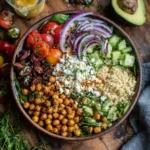
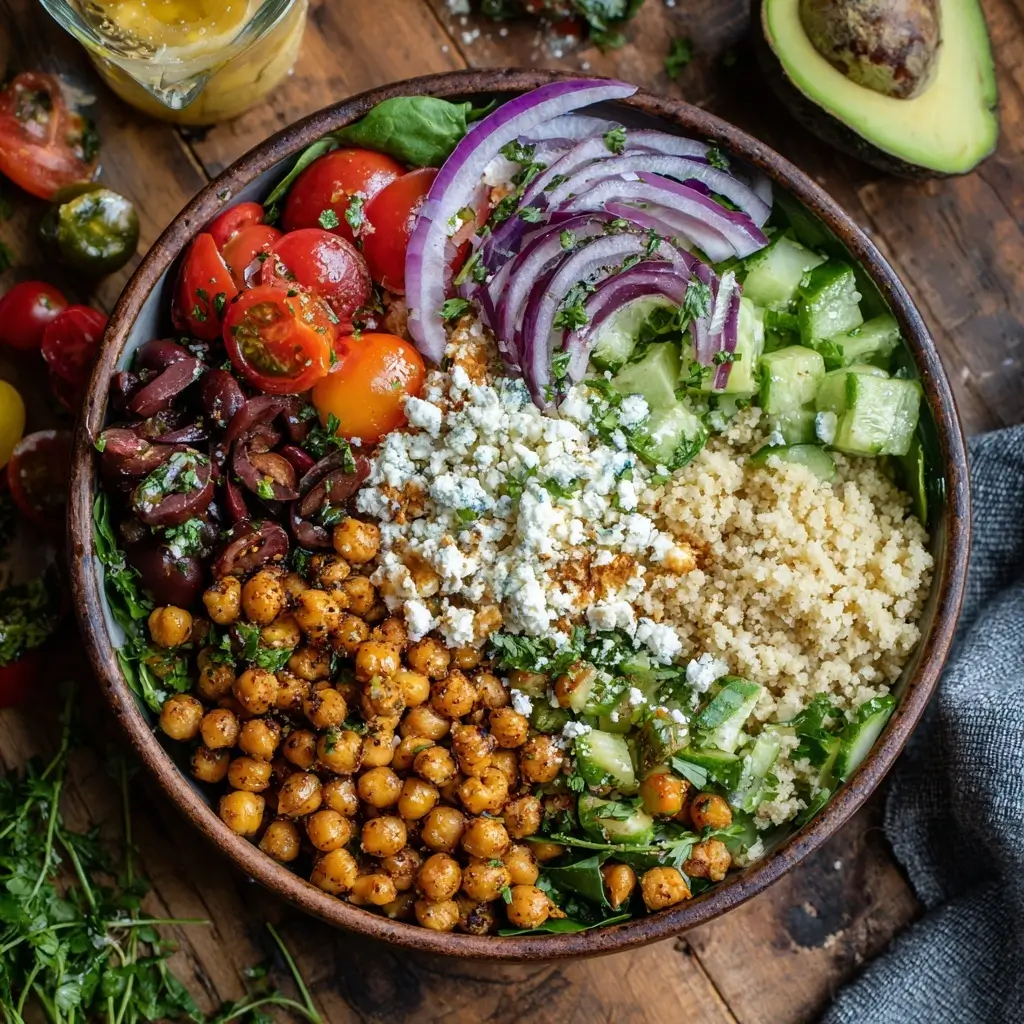
- Assemble the Bowls: Choose wide, shallow bowls for optimal presentation. Start with a base of ¾ cup cooked quinoa or brown rice per serving. Top with ½ cup roasted chickpeas. Arrange cucumber, tomatoes, red onion, olives, and herbs in sections over the grain for visual appeal.
- Add Creaminess: Dollop 2–3 tablespoons of hummus on the side or drizzle with tahini sauce (mix 2 tbsp tahini with 1 tbsp lemon juice, 1 tsp maple syrup, and enough water to reach pourable consistency).
- Dress and Garnish: Drizzle generously with the lemon-olive oil dressing. Crumble 2–3 tbsp feta cheese over each bowl if using. Add a pinch of sumac or za’atar for extra authenticity and flavor.
- Serve: Enjoy immediately at room temperature or chilled. For meal prep, store components separately and assemble before eating.
Tips for the Best Results
- Meal Prep Friendly: Cook grains and roast chickpeas in advance. Store in airtight containers in the fridge for up to 5 days. Chop vegetables 2–3 days ahead and keep them crisp by storing in containers lined with paper towels.
- Texture Matters: Roasting chickpeas gives them a satisfying crunch. If you prefer softer chickpeas, skip roasting but consider marinating them in the dressing for 10–15 minutes to absorb flavor.
- Dressing on the Side: To prevent sogginess when prepping meals, pack dressing separately and add just before eating.
- Boost Protein: Add hard-boiled eggs, grilled chicken, baked tofu, or falafel for extra protein.
- Use Seasonal Produce: Swap in roasted bell peppers in summer, shaved Brussels sprouts in winter, or artichoke hearts when available.
- Warm Components: For a comforting meal, serve everything warm. Heat the quinoa, chickpeas, and even the vegetables slightly before assembling.
- Layer Smartly: Place heavier, denser ingredients at the bottom and delicate items like herbs on top to maintain structure.
Variations and Customizations
The beauty of power bowls is their adaptability. Here are some creative twists to keep your meals exciting:
- Vegan Version: Skip feta or replace with crumbled tofu marinated in lemon juice, nutritional yeast, and salt.
- Gluten-Free: Naturally gluten-free as written—just ensure all packaged ingredients (like hummus) are certified GF.
- Low-Carb/Keto: Replace grains with cauliflower rice or shredded kale. Increase healthy fats with avocado slices and extra olives.
- Mediterranean Mezze Bowl: Add dolmas (stuffed grape leaves), roasted eggplant, and tzatziki sauce.
- Harvest Bowl: Incorporate roasted sweet potatoes, pomegranate seeds, and pumpkin seeds for a fall-inspired twist.
- Protein-Powered: Mix in lentils, white beans, or edamame alongside chickpeas for a triple-legume boost.
- Grain Swaps: Try farro, freekeh, bulgur, or couscous instead of quinoa for different textures and flavors.
- Spicy Kick: Add harissa paste to the dressing or include pickled jalapeños for heat.
- Breakfast Bowl: Top with a poached or fried egg, swap chickpeas for white beans, and add a dash of hot sauce.
- Deconstructed Gyro Bowl: Use spiced ground turkey or lamb, tzatziki, tomato, onion, and a pita wedge on the side.
Health Considerations and Nutritional Value
This bowl isn’t just tasty—it’s a nutritional powerhouse designed to support long-term health.
- Heart Health: The Mediterranean diet is renowned for reducing cardiovascular risk. Monounsaturated fats from olive oil and olives, fiber from chickpeas and whole grains, and antioxidants from colorful vegetables all contribute to improved cholesterol levels and blood pressure regulation.
- Blood Sugar Control: With a low glycemic index and high fiber content, this bowl helps stabilize blood glucose, making it suitable for individuals with type 2 diabetes or insulin resistance.
- Weight Management: High fiber and protein content increase fullness and reduce cravings. Studies show that legume-rich diets are associated with lower body weight and waist circumference.
- Gut Health: Chickpeas contain resistant starch, which feeds beneficial gut bacteria. Combined with fiber and fermented options (like pickled onions), this bowl supports a healthy microbiome.
- Anti-Inflammatory Effects: Ingredients like olive oil, garlic, tomatoes (lycopene), and herbs (parsley, mint) have well-documented anti-inflammatory properties, potentially reducing chronic disease risk.
- Nutrient Density: This bowl delivers a wide array of vitamins and minerals: vitamin C (tomatoes, lemon), vitamin K (parsley, greens), folate (chickpeas), iron (quinoa, chickpeas), calcium (feta, greens), and potassium (cucumber, tomatoes).
- Calorie Range: A typical serving ranges from 450–600 calories depending on portion sizes and additions. It’s easily adjustable for calorie goals—scale back grains or fats for lower intake, or add avocado and nuts for more energy.
- Allergen Notes: Contains sesame (tahini/hummus); can be modified by using sunflower seed butter. Dairy-free option available without feta.
Complete Ingredients List
Makes 4 generous servings
- 1 cup uncooked quinoa (or 2 cups cooked)
- 2 (15 oz) cans chickpeas, drained and rinsed
- 2 tbsp extra virgin olive oil, divided
- 1 tsp ground cumin
- 1 tsp smoked paprika
- ½ tsp garlic powder
- Salt and black pepper to taste
- 1 large cucumber, diced
- 1 pint cherry tomatoes, halved
- ½ red onion, thinly sliced
- ¼ cup Kalamata olives, pitted and chopped
- ½ cup fresh parsley, chopped
- ¼ cup fresh mint, chopped
- 4 oz feta cheese, crumbled (optional)
- ½ cup hummus (store-bought or homemade)
- Juice of 1 large lemon (about 3 tbsp)
- 1 clove garlic, minced
- ½ tsp dried oregano
- Za’atar or sumac (optional, for garnish)
Detailed Directions
- Cook the Quinoa: Rinse quinoa thoroughly to remove saponins (which can cause bitterness). Combine with 2 cups water or broth in a saucepan. Bring to a boil, reduce heat, cover, and simmer for 15 minutes. Turn off heat and let steam for 5 minutes. Fluff and set aside.
- Roast the Chickpeas: Preheat oven to 400°F (200°C). Dry chickpeas with a clean towel. In a bowl, toss with 1 tbsp olive oil, cumin, paprika, garlic powder, salt, and pepper. Spread on a parchment-lined baking sheet. Roast 25–30 minutes, stirring once, until golden and crisp. Let cool slightly.
- Prep Vegetables: While grains and chickpeas cook, chop cucumber, tomatoes, red onion, olives, parsley, and mint. Store in separate containers if prepping ahead.
- Make the Dressing: In a jar or bowl, combine 1 tbsp olive oil, lemon juice, minced garlic, oregano, salt, and pepper. Shake or whisk until emulsified.
- Assemble Each Bowl: Divide quinoa among four bowls. Top with roasted chickpeas. Arrange vegetables and herbs in colorful sections. Add a spoonful of hummus. Drizzle with dressing. Sprinkle with feta and a pinch of za’atar or sumac if desired.
- Serve: Enjoy immediately. For best texture, mix gently at the table to distribute the dressing evenly.
Frequently Asked Questions (FAQ)
Can I make this ahead of time?
Yes! This bowl is ideal for meal prep. Store components separately in airtight containers in the refrigerator for up to 4–5 days. Assemble just before eating to maintain freshness and texture.
Are canned chickpeas okay, or should I use dried?
Canned chickpeas are perfectly fine and save time. Just be sure to rinse them well to reduce sodium. If using dried, soak ½ cup overnight, then cook until tender (about 1–1.5 hours).
How can I make this higher in protein?
Add grilled chicken, salmon, hard-boiled eggs, lentils, or baked tofu. You can also double the chickpeas or include a scoop of Greek yogurt on the side.
Is this recipe kid-friendly?
Absolutely! Kids often love the colorful layout and mild flavors. Serve with pita bread for dipping, and consider skipping strong herbs or onions if preferred.
Can I freeze this?
It’s not recommended to freeze the assembled bowl. However, cooked quinoa and roasted chickpeas can be frozen separately for up to 3 months. Thaw in the fridge and reheat before use.
What can I use instead of hummus?
Try tzatziki, baba ganoush, tahini sauce, or a simple avocado mash. All add creaminess and complement the Mediterranean flavors.
Is this gluten-free?
Yes, provided you use certified gluten-free quinoa and check labels on packaged items like hummus and spices.
Can I serve this warm or cold?
Both ways work! Warm is cozy and comforting; chilled is refreshing for lunchboxes or summer days. Some people enjoy it at room temperature for optimal flavor release.
Summary
Mediterranean Chickpea Power Bowls are a vibrant, nutrient-rich meal that celebrates the flavors and health benefits of the Mediterranean diet. Packed with plant-based protein, fiber, and antioxidants, they’re perfect for meal prep, weeknight dinners, or impressing guests.
Customizable, delicious, and deeply satisfying, this bowl proves that eating well doesn’t have to be complicated—it just takes a few wholesome ingredients arranged with care.