Creamy Coconut Curry Chickpeas: A Flavorful Plant-Based Delight
Indulge in the rich, aromatic world of Creamy Coconut Curry Chickpeas—a luscious, plant-based dish that brings together the earthy depth of chickpeas with the velvety sweetness of coconut milk and a symphony of warm spices. Whether you’re a seasoned vegan chef or just beginning to explore meatless meals, this recipe is both approachable and deeply satisfying. With its roots in South Asian culinary traditions and its modern popularity in global vegetarian cuisine, this dish offers a perfect balance of comfort and nutrition. Let’s dive into everything you need to know about creating a bowl of creamy, dreamy coconut curry chickpeas that will tantalize your taste buds and nourish your body.
The History of Coconut Curry Chickpeas
The origins of coconut curry chickpeas can be traced back to the vibrant cuisines of South Asia, particularly India, Sri Lanka, and Southern Thailand, where chickpeas (also known as garbanzo beans) and coconut have been dietary staples for centuries. In Indian cooking, chickpeas are often used in dishes like chana masala, where they are simmered in a spiced tomato-based gravy. Meanwhile, in coastal regions of India and throughout Southeast Asia, coconut milk is widely used to create rich, creamy curries that temper the heat of bold spices.
The fusion of these two culinary traditions—spiced legumes and coconut-based sauces—gave rise to what we now celebrate as Creamy Coconut Curry Chickpeas. Over time, this dish has evolved beyond regional boundaries, becoming a favorite among vegetarians, vegans, and health-conscious eaters worldwide. Its adaptability, ease of preparation, and incredible flavor profile have made it a staple in modern plant-based diets. Today, variations of this dish appear in cookbooks, food blogs, and restaurant menus across continents, each adding a personal twist while honoring its cultural heritage.
Ingredients Breakdown
What makes Creamy Coconut Curry Chickpeas so delicious is not just the harmony of flavors but also the quality and function of each ingredient. Here’s a detailed look at what goes into this dish:
- Chickpeas: The star of the show. Packed with protein and fiber, canned or cooked dried chickpeas provide a hearty, meaty texture that absorbs the curry sauce beautifully.
- Coconut Milk: Full-fat coconut milk delivers a luxuriously creamy base with a subtle sweetness that balances the spices. Light coconut milk can be used, but it results in a thinner consistency.
- Onion & Garlic: These aromatics form the flavor foundation. Sautéed until golden, they add depth and complexity to the curry.
- Fresh Ginger: Grated or minced ginger introduces a zesty warmth that enhances the overall spice profile.
- Turmeric: Known for its vibrant yellow color and anti-inflammatory properties, turmeric adds both visual appeal and health benefits.
- Cumin & Coriander: Ground cumin offers an earthy, slightly smoky note, while coriander brings a citrusy, floral balance.
- Paprika or Kashmiri Chili Powder: Adds color and mild heat. For a spicier kick, use cayenne pepper or fresh green chilies.
- Tomato Paste or Diced Tomatoes: Contributes acidity and body to the sauce. Tomato paste intensifies flavor, while fresh tomatoes add juiciness.
- Vegetable Broth: Helps thin the curry to the desired consistency and enhances savory notes.
- Lime Juice: A splash at the end brightens the entire dish, cutting through the richness.
- Fresh Cilantro: Used as a garnish, it adds a refreshing herbal finish.
- Oil: Coconut oil or neutral vegetable oil is used for sautéing. Coconut oil complements the flavor profile especially well.
Step-by-Step Recipe
Follow this easy-to-follow guide to make a sumptuous batch of Creamy Coconut Curry Chickpeas from scratch:
- Sauté the Aromatics: Heat 2 tablespoons of coconut oil in a large pot or deep skillet over medium heat. Add 1 chopped onion and cook for 5–7 minutes until soft and translucent. Stir in 3 minced garlic cloves and 1 tablespoon of freshly grated ginger, cooking for another minute until fragrant.
- Bloom the Spices: Add 1 teaspoon ground turmeric, 1 teaspoon ground cumin, 1 teaspoon ground coriander, ½ teaspoon paprika (or chili powder), and a pinch of salt. Stir constantly for about 30 seconds to toast the spices and release their essential oils—this step is crucial for maximum flavor.
- Add Tomato Base: Stir in 2 tablespoons of tomato paste or ½ cup of diced tomatoes. Cook for 2–3 minutes to deepen the flavor and eliminate any raw taste.
- Incorporate Liquids: Pour in 1 can (13.5 oz) of full-fat coconut milk and ½ cup of vegetable broth. Whisk to combine and bring the mixture to a gentle simmer.
- Add Chickpeas: Drain and rinse 2 cans (15 oz each) of chickpeas, then add them to the pot. Alternatively, use 3 cups of cooked dried chickpeas. Stir well to coat them in the sauce.
- Simmer to Perfection: Reduce the heat to low and let the curry simmer uncovered for 20–25 minutes, stirring occasionally. This allows the flavors to meld and the sauce to thicken slightly.
- Season and Finish: Taste and adjust seasoning with salt and black pepper. Squeeze in the juice of half a lime and stir in a handful of chopped fresh cilantro just before serving.
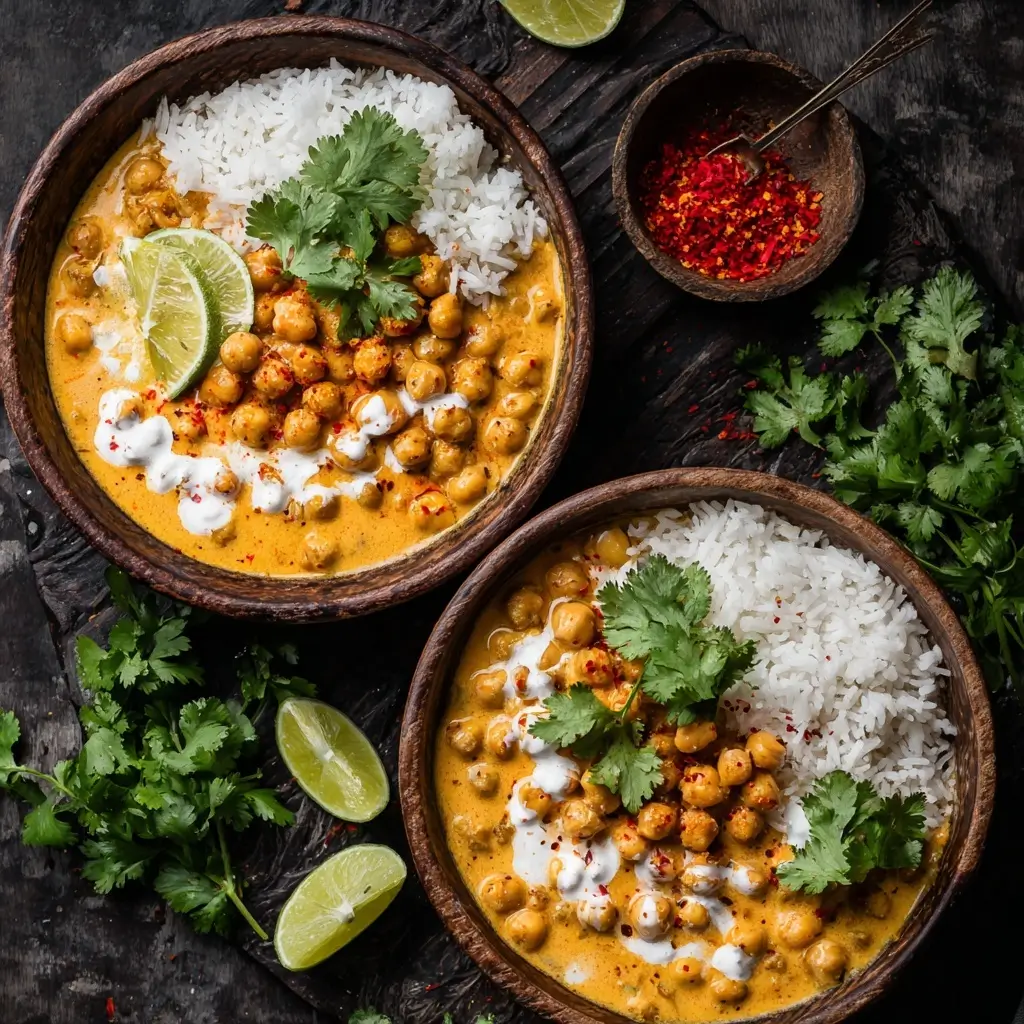
- Serve Warm: Ladle the curry into bowls over steamed basmati rice, quinoa, or with warm naan bread. Garnish with extra cilantro, a drizzle of coconut milk, or a sprinkle of red chili flakes for heat.
Tips for the Best Creamy Coconut Curry Chickpeas
- Use Full-Fat Coconut Milk: It provides the richest texture and most authentic mouthfeel. Shake the can well before opening, or blend it briefly if separation occurs.
- Toast Your Spices: Never skip blooming the spices in oil—it unlocks their full potential and prevents a raw, dusty taste.
- Don’t Rush the Simmer: Allowing the curry to simmer gently ensures deeper flavor development and better integration of ingredients.
- Balance Acidity: If the curry tastes too rich, a bit more lime juice or a splash of apple cider vinegar can restore brightness.
- Thicken Naturally: If the sauce is too thin, continue simmering to reduce. For a thicker curry, mash a small portion of the chickpeas with a spoon during cooking.
- Make Ahead Friendly: This dish tastes even better the next day as the flavors continue to develop. Store in the fridge for up to 4 days or freeze for up to 3 months.
- Prevent Curdling: Avoid boiling the coconut milk vigorously, especially when reheating, as high heat can cause separation. Warm gently over low heat instead.
Variations and Customizations
One of the greatest strengths of Creamy Coconut Curry Chickpeas is its versatility. Here are some popular ways to customize the recipe to suit your taste or dietary needs:
- Add Vegetables: Toss in spinach, kale, sweet potatoes, bell peppers, cauliflower, or zucchini during the last 10 minutes of cooking for added nutrition and texture.
- Protein Boost: Stir in cubed tofu, tempeh, or cooked lentils for extra protein. For non-vegans, shredded chicken or shrimp can also be incorporated.
- Spice Level: Adjust the heat by adding fresh green chilies, cayenne pepper, or a dash of hot sauce. For a milder version, omit chili powders entirely.
- Herb Variations: Try using Thai basil, mint, or parsley instead of cilantro for a different aromatic profile.
- Curry Style Twists:
- Thai-Inspired: Add lemongrass, kaffir lime leaves, and a spoonful of red curry paste.
- Indian-Style: Include garam masala and serve with raita and mango chutney.
- Caribbean Fusion: Add allspice, thyme, and Scotch bonnet pepper for a tropical twist.
- Dairy-Free Creaminess: For an even richer texture without dairy, blend in a quarter-cup of cashew butter or silken tofu.
- Low-Fat Option: Use light coconut milk and reduce added oil, though this may affect creaminess and flavor depth.
Health Considerations and Nutritional Value
Creamy Coconut Curry Chickpeas isn’t just delicious—it’s a powerhouse of nutrition. Here’s why this dish deserves a regular spot on your plate:
- High in Plant-Based Protein: Chickpeas provide approximately 15 grams of protein per cup, making this dish ideal for vegetarians and vegans.
- Rich in Fiber: With around 12 grams of fiber per serving, this curry supports digestive health, helps regulate blood sugar, and promotes satiety.
- Healthy Fats: Coconut milk contains medium-chain triglycerides (MCTs), which are metabolized differently than other fats and may support energy and metabolism.
- Anti-Inflammatory Properties: Turmeric contains curcumin, a compound with potent anti-inflammatory and antioxidant effects. Pair it with black pepper (which enhances absorption) for maximum benefit.
- Gluten-Free & Dairy-Free: Naturally free from gluten and dairy, this recipe is suitable for those with common food sensitivities (just ensure your broth and spices are certified gluten-free if needed).
- Vitamins & Minerals: Chickpeas are rich in iron, folate, phosphorus, and B vitamins, while coconut milk contributes manganese and copper.
- Heart Health: Despite being higher in saturated fat due to coconut milk, studies suggest that moderate consumption of coconut products may not negatively impact heart health when part of a balanced diet.
Nutritional Estimate (per serving, serves 4):
- Calories: ~380 kcal
- Protein: ~14g
- Fat: ~22g (mostly from coconut)
- Carbohydrates: ~36g
- Fiber: ~10g
- Sugar: ~6g (naturally occurring)
- Sodium: ~600mg (varies based on broth and added salt)
Ingredients
- 2 tablespoons coconut oil (or vegetable oil)
- 1 large yellow onion, finely chopped
- 3 garlic cloves, minced
- 1 tablespoon fresh ginger, grated
- 1 teaspoon ground turmeric
- 1 teaspoon ground cumin
- 1 teaspoon ground coriander
- ½ teaspoon paprika (or Kashmiri chili powder)
- Pinch of cayenne pepper (optional)
- 2 tablespoons tomato paste (or ½ cup diced tomatoes)
- 1 can (13.5 oz) full-fat coconut milk
- ½ cup vegetable broth
- 2 cans (15 oz each) chickpeas, drained and rinsed
- 1 teaspoon sea salt (adjust to taste)
- Black pepper to taste
- Juice of ½ lime
- ½ cup fresh cilantro, chopped
Directions
- In a large pot or Dutch oven, heat coconut oil over medium heat. Add chopped onion and sauté for 5–7 minutes until soft and golden.
- Add minced garlic and grated ginger; cook for 1 minute until fragrant.
- Stir in turmeric, cumin, coriander, paprika, and cayenne (if using). Toast the spices for 30 seconds, stirring constantly.
- Add tomato paste and cook for 2–3 minutes, allowing it to darken slightly and deepen in flavor.
- Pour in coconut milk and vegetable broth. Whisk to combine and bring to a gentle simmer.
- Add drained chickpeas, salt, and black pepper. Stir well to coat the chickpeas in the sauce.
- Reduce heat to low and simmer uncovered for 20–25 minutes, stirring occasionally, until the sauce thickens and flavors meld.
- Remove from heat. Stir in lime juice and chopped cilantro.
- Taste and adjust seasoning as needed—add more salt, lime, or spice to preference.
- Serve warm over rice, quinoa, or with naan. Garnish with extra cilantro, a swirl of coconut milk, or sliced green onions.
FAQ
Can I use dried chickpeas instead of canned?
Yes! Soak 1 cup of dried chickpeas overnight, then boil until tender (about 1–1.5 hours). Use 3 cups cooked chickpeas in place of canned.
How do I store leftovers?
Store in an airtight container in the refrigerator for up to 4 days. Reheat gently on the stove with a splash of water or broth to loosen the sauce.
Can I freeze Creamy Coconut Curry Chickpeas?
Absolutely. Freeze in portion-sized containers for up to 3 months. Thaw overnight in the fridge and reheat slowly to prevent coconut milk separation.
Is this curry spicy?
It depends on your spice level. The base recipe is mildly spiced. Add cayenne, fresh chilies, or hot sauce to increase heat.
Why did my coconut milk separate?
High heat or rapid boiling can cause separation. To prevent this, keep the curry at a gentle simmer and avoid overheating when reheating.
Can I make this oil-free?
Yes. Sauté the onions and spices in water or vegetable broth using a non-stick pan to prevent sticking.
What can I serve with this curry?
Excellent pairings include basmati rice, jasmine rice, quinoa, couscous, roti, naan, or even roasted vegetables.
Summary
Creamy Coconut Curry Chickpeas is a wholesome, flavorful dish that blends the heartiness of chickpeas with the luxurious texture of coconut milk and a medley of aromatic spices. Easy to prepare, endlessly customizable, and packed with nutrition, it’s a must-have recipe for anyone seeking a comforting, plant-powered meal.