Sesame Ginger Salmon Bowls: A Flavorful, Nutrient-Packed Meal
The Sesame Ginger Salmon Bowl is a modern culinary masterpiece that combines the rich traditions of Asian cuisine with the vibrant, health-conscious food culture of today. This dish has quickly gained popularity among home cooks and health enthusiasts alike for its perfect balance of bold flavors, fresh ingredients, and nutritional excellence. Whether you’re meal prepping for the week or enjoying a cozy dinner at home, this bowl delivers on every level—taste, texture, and wellness.
The History Behind the Dish
While salmon has long been a staple in Nordic and Pacific Northwest diets, its fusion with Asian-inspired flavors like ginger, sesame, and soy sauce reflects the growing global influence of East Asian cooking techniques. The concept of the “bowl meal” emerged strongly in the 2010s as part of the clean eating and fast-casual dining trends, popularized by restaurants offering customizable grain bowls with lean proteins, vegetables, and flavorful sauces. The Sesame Ginger Salmon Bowl evolved from this movement, combining the omega-3-rich benefits of salmon with the zesty, aromatic qualities of traditional Asian marinades. It’s a testament to how cultural exchange continues to shape contemporary cuisine into something both delicious and nourishing.
Ingredients Breakdown: What Makes This Bowl Shine
The magic of the Sesame Ginger Salmon Bowl lies in its thoughtfully chosen ingredients, each contributing unique textures, flavors, and health benefits:
- Salmon Fillets: High in protein and heart-healthy omega-3 fatty acids, wild-caught salmon provides a rich, buttery base for the bowl.
- Soy Sauce (or Tamari): Adds umami depth; tamari is a gluten-free alternative with a smoother taste.
- Fresh Ginger: Grated ginger brings a warm, spicy kick and natural anti-inflammatory properties.
- Garlic: Enhances flavor complexity and supports immune health.
- Rice Vinegar: Offers a mild tang that balances the richness of the salmon.
- Honey or Maple Syrup: Natural sweeteners that caramelize beautifully during cooking.
- Sesame Oil: A fragrant oil used sparingly for its intense nutty aroma—key to authentic Asian flavor.
- Sesame Seeds: Provide crunch and a boost of healthy fats and minerals like calcium and magnesium.
- Brown Rice or Quinoa: Whole grains that add fiber and sustained energy.
- Vegetables: Typically includes shredded carrots, cucumber ribbons, red cabbage, edamame, and sliced green onions for color, freshness, and nutrients.
- Avocado: Creamy texture and heart-healthy monounsaturated fats.
- Lime Wedges: For a final burst of citrus brightness.
- Optional Toppings: Sriracha, pickled ginger, nori strips, or chili flakes for heat and extra flair.
Step-by-Step Recipe: How to Make Perfect Sesame Ginger Salmon Bowls
- Prepare the Marinade: In a medium bowl, whisk together ¼ cup soy sauce, 2 tablespoons rice vinegar, 1 tablespoon honey (or maple syrup), 1 tablespoon sesame oil, 1 tablespoon grated fresh ginger, 2 minced garlic cloves, and a pinch of black pepper. Set aside 2–3 tablespoons for drizzling later.
- Marinate the Salmon: Place 2 salmon fillets (about 6 oz each) in a shallow dish and pour the marinade over them. Cover and refrigerate for at least 30 minutes (up to 2 hours for deeper flavor).
- Cook the Grain Base: While the salmon marinates, cook 1 cup of brown rice or quinoa according to package instructions. Fluff with a fork and let cool slightly.
- Cook the Salmon: Preheat oven to 400°F (200°C). Line a baking sheet with parchment paper. Remove salmon from marinade (discard used marinade) and place on the sheet. Bake for 12–15 minutes, or until salmon flakes easily with a fork and reaches an internal temperature of 145°F. For a crispier finish, broil for the last 2 minutes.
- Prep the Vegetables: While the salmon cooks, slice or shred your vegetables: julienne carrots, thinly slice cucumber, chop red cabbage, halve edamame, dice avocado, and slice green onions.
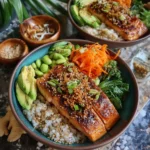
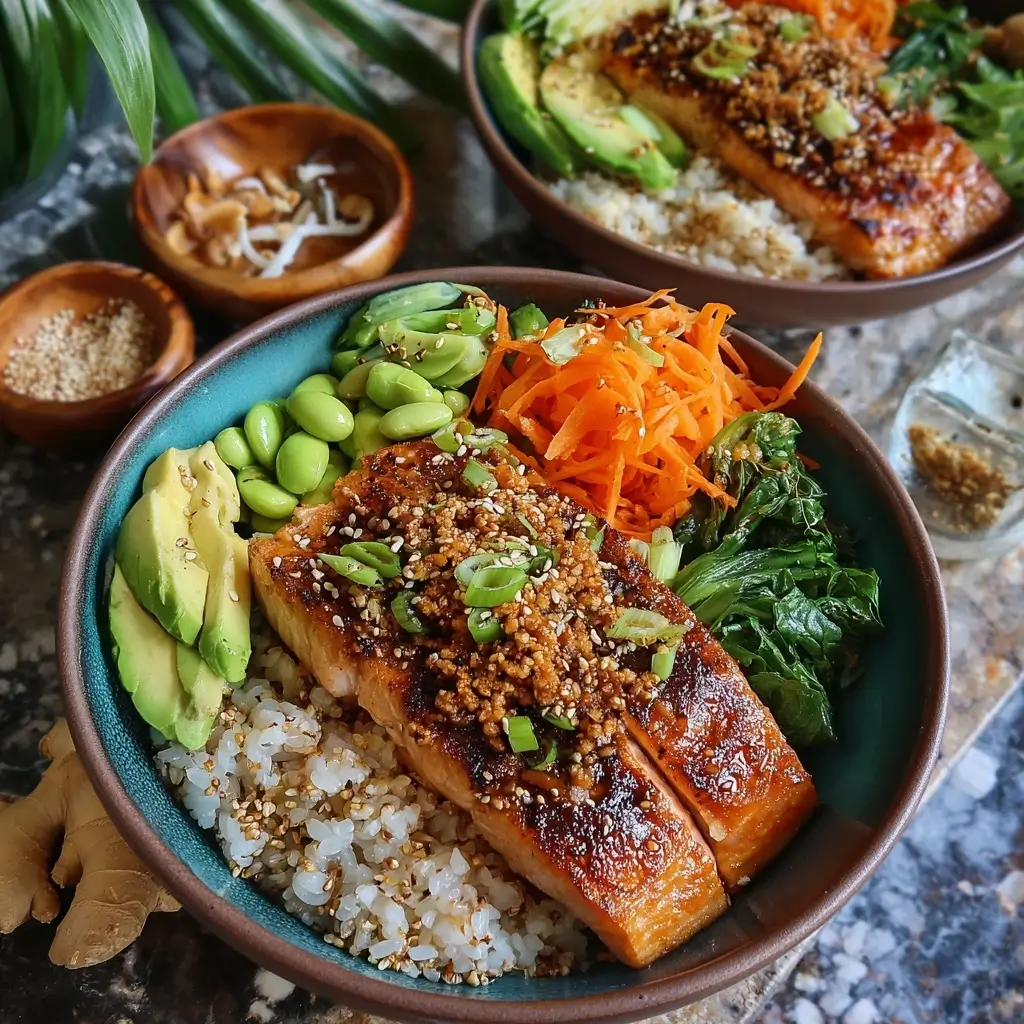
- Assemble the Bowls: Divide the cooked grains among four bowls. Arrange salmon and an array of vegetables attractively on top. Sprinkle with sesame seeds and green onions.
- Finish with Flavor: Drizzle reserved marinade (heated briefly if desired) over the bowls. Add a squeeze of fresh lime juice and optional sriracha or chili oil for spice.
Tips for the Best Results
- Don’t Over-Marinate: Acidic ingredients can start to “cook” the salmon if left too long. Stick to 30 minutes–2 hours max.
- Pat Salmon Dry Before Cooking: This ensures better browning and prevents steaming.
- Use Fresh Ginger: Ground ginger lacks the bright, zesty punch of freshly grated root.
- Basting Option: During the last few minutes of baking, brush the salmon with a little extra honey-sesame glaze for a glossy finish.
- Meal Prep Friendly: Cook grains and chop veggies ahead of time. Store components separately and assemble when ready to eat.
- Pan-Seared Alternative: For a crispier crust, sear salmon in a hot skillet with a little oil for 4–5 minutes per side.
- Rest the Salmon: Let it rest 2–3 minutes after cooking for juicier results.
Variations and Customizations
This bowl is highly adaptable to dietary needs and personal taste preferences:
- Protein Swaps: Replace salmon with grilled chicken, shrimp, tofu, or tempeh for variety.
- Grain-Free Option: Use cauliflower rice or a bed of mixed greens instead of grains.
- Vegan Version: Use marinated baked tofu, swap honey for maple syrup, and omit fish-based toppings.
- Low-Sodium: Use low-sodium soy sauce or coconut aminos, which are gentler on blood pressure.
- Keto-Friendly: Skip grains and double up on non-starchy veggies like broccoli, zucchini, and spinach.
- Extra Crunch: Top with crushed peanuts, crispy wonton strips, or fried shallots.
- Spicy Kick: Add gochujang, sambal oelek, or a spicy mayo drizzle made with sriracha and Greek yogurt.
- Fruit Twist: Add mango, pineapple, or mandarin oranges for a tropical flair.
Health Considerations and Nutritional Value
The Sesame Ginger Salmon Bowl isn’t just delicious—it’s a powerhouse of nutrition:
- Omega-3 Fatty Acids: Found abundantly in salmon, these support brain function, reduce inflammation, and promote heart health.
- High-Quality Protein: Essential for muscle repair and satiety, helping maintain energy throughout the day.
- Fiber-Rich Carbohydrates: Brown rice and vegetables provide steady energy and aid digestion.
- Antioxidants and Phytonutrients: Colorful vegetables offer vitamins A, C, K, and compounds like anthocyanins and lutein.
- Healthy Fats: From avocado, sesame oil, and salmon, supporting hormone balance and nutrient absorption.
- Ginger Benefits: Known for aiding digestion and reducing nausea and muscle pain.
Nutritional Estimate (per serving, with brown rice and full toppings):
- Calories: ~550–650
- Protein: 30–35g
- Fat: 25–30g (mostly unsaturated)
- Carbohydrates: 45–55g
- Fiber: 8–10g
- Sodium: 700–900mg (adjustable with low-sodium ingredients)
Note: Values vary based on ingredient choices and portion sizes. Ideal for balanced diets including Mediterranean, flexitarian, and pescatarian lifestyles.
Ingredients
- 2 salmon fillets (6 oz each), skin-on or skinless
- ¼ cup low-sodium soy sauce (or tamari for gluten-free)
- 2 tbsp rice vinegar
- 1 tbsp honey (or pure maple syrup for vegan option)
- 1 tbsp toasted sesame oil
- 1 tbsp fresh ginger, finely grated
- 2 cloves garlic, minced
- 1 cup uncooked brown rice or quinoa (yields about 3 cups cooked)
- 1 cup water or broth (for cooking grains)
- 1 large carrot, julienned or shredded
- 1 cucumber, thinly sliced or ribboned
- 1 cup red cabbage, thinly sliced
- ½ cup shelled edamame (thawed if frozen)
- 1 ripe avocado, diced
- 2 green onions, sliced diagonally
- 1 tbsp sesame seeds (white or black)
- 1 lime, cut into wedges
- Optional: sriracha, chili oil, pickled ginger, nori strips
Directions
- In a mixing bowl, combine soy sauce, rice vinegar, honey, sesame oil, grated ginger, minced garlic, and black pepper. Whisk until well blended. Reserve 2–3 tablespoons in a small container and set aside.
- Place salmon fillets in a glass dish and pour the remaining marinade over them. Turn to coat evenly. Cover and refrigerate for 30 minutes to 2 hours.
- Meanwhile, rinse the brown rice or quinoa under cold water. In a saucepan, bring 2 cups of water or broth to a boil. Add the grain, reduce heat to low, cover, and simmer for 30–40 minutes (rice) or 15–20 minutes (quinoa), until tender and liquid is absorbed. Remove from heat and let stand for 5 minutes. Fluff with a fork.
- Preheat oven to 400°F (200°C). Line a baking sheet with parchment paper or foil for easy cleanup.
- Remove salmon from marinade and place on the prepared baking sheet. Discard used marinade. Bake for 12–15 minutes, depending on thickness, until salmon is opaque and flakes easily. For a golden top, broil 1–2 minutes at the end, watching closely.
- While salmon cooks, prepare all vegetables: julienne the carrot, slice the cucumber, thinly chop the cabbage, halve the edamame, dice the avocado, and slice the green onions.
- To assemble, divide cooked grains among four bowls. Top with a salmon fillet (or flaked half-fillet per bowl), and arrange vegetables in sections for visual appeal.
- Sprinkle each bowl with green onions and sesame seeds. Drizzle with the reserved sauce and a squeeze of fresh lime juice.
- Serve immediately, offering extra lime wedges and optional hot sauce on the side.
FAQ
Can I make this bowl ahead of time?
Yes! Cook the grains and chop the vegetables up to 3 days in advance. Marinate and cook the salmon the night before and reheat gently or serve cold. Assemble just before eating to maintain texture.
Is it safe to eat raw ginger in the marinade?
Absolutely. Fresh grated ginger is commonly used in raw form in dressings and marinades. It adds a bright, spicy note without any safety concerns.
Can I use frozen salmon?
Yes, but thaw it completely in the refrigerator before marinating to ensure even flavor absorption and proper cooking.
What can I substitute for soy sauce?
Coconut aminos are a great low-sodium, soy-free alternative with a similar umami flavor. Tamari works well for gluten-free needs.
How do I store leftovers?
Keep components separate in airtight containers in the fridge for up to 3 days. Reheat salmon and grains gently; keep avocado and greens fresh for assembly.
Can I grill the salmon instead?
Definitely! Grill over medium heat for 4–6 minutes per side, depending on thickness. Baste with extra marinade during the last minute for shine.
Summary
The Sesame Ginger Salmon Bowl is a harmonious blend of savory, sweet, and umami flavors, featuring perfectly glazed salmon atop a colorful bed of whole grains and fresh vegetables. Packed with nutrients and endlessly customizable, it’s a satisfying meal that nourishes the body and delights the palate.