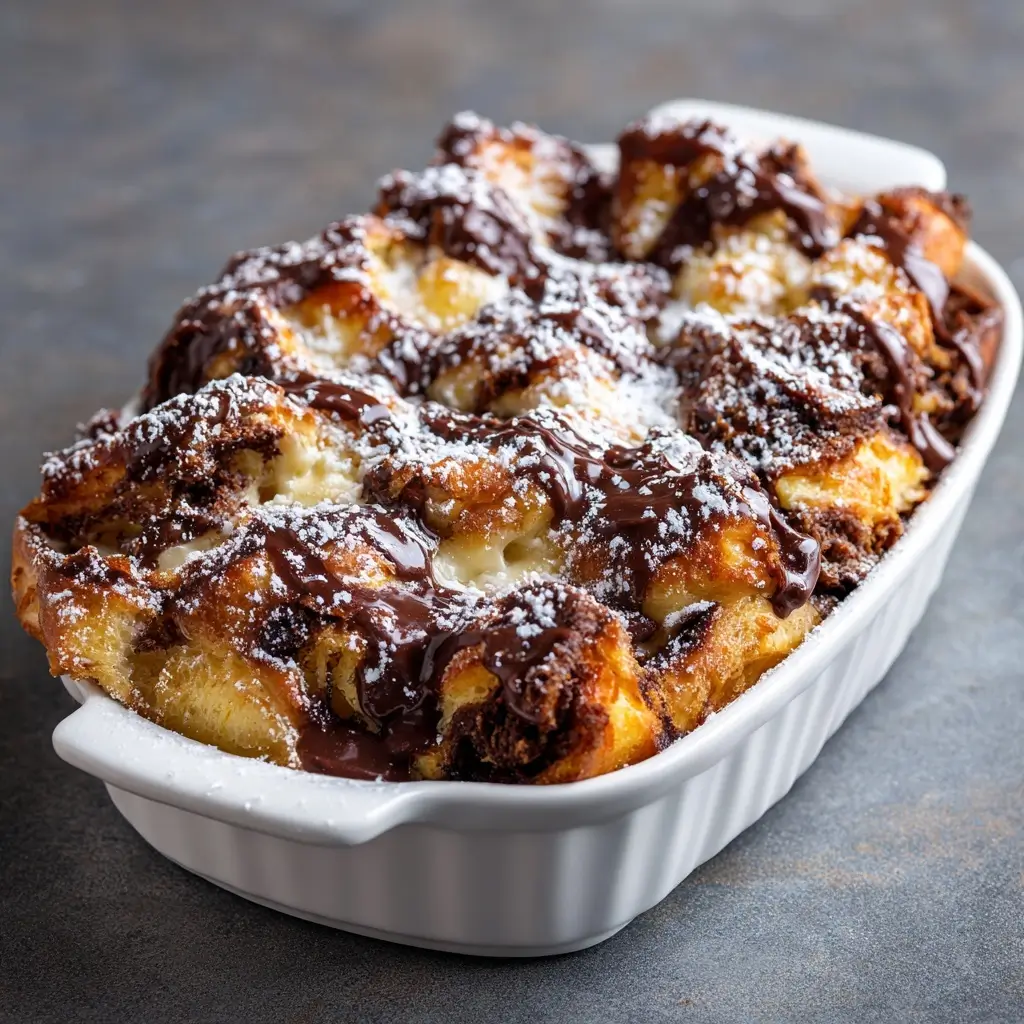
Chocolate Croissant Bread Pudding: A Decadent Breakfast or Dessert Delight
Indulge in the rich, velvety comfort of chocolate croissant bread pudding—a luxurious twist on a classic dessert that transforms buttery, flaky croissants into a creamy, chocolate-infused masterpiece. Perfect for brunch, dessert, or even a special weekend treat, this dish combines the elegance of French pastries with the homely warmth of traditional bread pudding. Whether you’re using leftover croissants or purchasing fresh ones specifically for this recipe, you’re in for an unforgettable culinary experience.
The History Behind the Dish
Bread pudding has humble origins, dating back to 13th-century England as a way to use stale bread and prevent waste. Known then as “poor man’s pudding,” it was made by soaking old bread in milk, eggs, and spices before baking. Over time, the dish evolved across Europe and the Americas, adapting to local ingredients and tastes. In France, where the croissant reigns supreme, bakers began incorporating their beloved viennoiserie into sweet dishes.
The idea of using croissants in bread pudding emerged in the late 20th century, particularly popularized by upscale American brunch menus. The buttery, layered texture of croissants lends itself beautifully to custard-based desserts, creating a richer, more decadent version than traditional bread puddings. Adding chocolate elevates the dish further—melding European patisserie tradition with modern indulgence. Today, chocolate croissant bread pudding is a staple in gourmet cafes and home kitchens alike, celebrated for its luscious texture and nostalgic flavor.
Ingredients Breakdown: Why Each Component Matters
The magic of chocolate croissant bread pudding lies in the quality and synergy of its ingredients. Here’s a detailed look at each component and its role in building flavor, texture, and richness:
- Stale Chocolate Croissants (8–10 medium-sized): The star of the dish. Slightly stale croissants absorb the custard better without disintegrating. Their high butter content adds richness, while the chocolate centers melt into gooey pockets throughout the pudding.
- Whole Milk (2 cups): Provides creaminess and helps carry flavors. Whole milk ensures a smooth, rich custard base without curdling.
- Heavy Cream (1 cup): Adds luxurious thickness and enhances mouthfeel. This ingredient gives the pudding its signature silkiness.
- Large Eggs (4): Act as a binder and leavening agent, helping the custard set during baking. They also contribute to the golden color and tender crumb.
- Granulated Sugar (3/4 cup): Sweetens the custard and balances the bitterness of dark chocolate. You can adjust based on preference or use brown sugar for a caramel note.
- Vanilla Extract (2 teaspoons): Enhances overall flavor and adds aromatic warmth. Pure extract is preferred over imitation for depth.
- Semi-Sweet Chocolate Chips (1 cup): Reinforces the chocolate presence and creates melty bursts in every bite. Dark chocolate lovers can substitute with 70% cacao chips.
- Dark Chocolate Chunks (1/2 cup): For added texture and visual appeal, these create larger molten zones when baked.
- Unsalted Butter (2 tablespoons, melted): Brushed on the baking dish to prevent sticking and add a subtle nutty flavor.
- Pinch of Salt: Critical for balancing sweetness and enhancing all other flavors.
- Optional Add-ins: Orange zest, cinnamon, espresso powder, or a splash of liqueur like Grand Marnier or Kahlúa can elevate complexity.
Step-by-Step Recipe
Prep Time: 20 minutes
Cook Time: 50–60 minutes
Total Time: 1 hour 10 minutes (plus optional chilling time)
Servings: 8–10
- Preheat Oven & Prepare Pan: Preheat your oven to 350°F (175°C). Generously brush a 9×13-inch baking dish with melted butter, ensuring all corners are coated to prevent sticking.
- Cut the Croissants: Slice each chocolate croissant into 1-inch cubes. If they’re very fresh, let them sit out for 30 minutes to dry slightly. Spread the cubes evenly in the prepared baking dish. Sprinkle half the chocolate chips and all the chocolate chunks over the top, gently pressing some into gaps.
- Heat Dairy Mixture: In a medium saucepan over medium heat, combine the milk and heavy cream. Warm until just steaming (do not boil), about 4–5 minutes. Remove from heat.
- Whisk Wet Ingredients: In a large mixing bowl, whisk together the eggs, sugar, vanilla extract, and salt until smooth and slightly pale. Slowly pour the warm milk mixture into the egg mixture while whisking constantly to temper the eggs (this prevents scrambling).
- Pour Custard Over Croissants: Gradually pour the custard mixture evenly over the croissant cubes. Use a spatula to gently press down any pieces poking up so they’re fully submerged. Let the mixture soak for 20–30 minutes at room temperature. For deeper infusion, cover and refrigerate for 1–2 hours.
- Bake: Place the dish in the preheated oven and bake for 50–60 minutes, or until the center is set and a knife inserted comes out clean. The top should be golden brown and slightly puffed. If the top browns too quickly, tent with aluminum foil after 30 minutes.
- Cool Slightly: Remove from oven and let rest for 10–15 minutes before serving. This allows the custard to firm up slightly for cleaner slicing.
- Serve: Scoop warm servings into bowls or plates. Top with whipped cream, powdered sugar, chocolate drizzle, or fresh berries.
Tips for the Perfect Chocolate Croissant Bread Pudding
- Use Stale Croissants: Fresh croissants can become soggy. If using same-day croissants, slice them and leave them uncovered for 1–2 hours to dry out slightly.
- Don’t Rush the Soak: Allowing the croissants to soak thoroughly ensures even saturation and prevents dry spots. Overnight refrigeration yields the most custardy texture.
- Avoid Overbaking: Overbaking leads to a dry, eggy texture. The pudding should jiggle slightly in the center when done—it will continue to set as it cools.
- Check Oven Temperature: Use an oven thermometer to ensure accuracy. Hot spots or incorrect temps can affect consistency.
- Add Depth with Espresso: Stirring in 1 teaspoon of instant espresso powder into the custard enhances chocolate flavor without making it taste like coffee.
- Uniform Cubes: Cut croissants into consistent sizes so they absorb custard evenly and bake uniformly.
- Double the Recipe? Yes! Use two 9×13 pans or divide between a 9×13 and an 8×8 for gifting or freezing.
Variations and Customizations
One of the joys of chocolate croissant bread pudding is its versatility. Try these creative twists:
- Fruit-Infused: Add raspberries, sliced bananas, or diced apples between the layers for a fruity contrast.
- Nutty Crunch: Fold in toasted pecans, walnuts, or almonds for texture and earthiness.
- Spiced Version: Add 1/2 teaspoon ground cinnamon, a pinch of nutmeg, or cardamom for warmth.
- Gluten-Free Option: Use gluten-free chocolate-filled pastries or brioche-style GF bread (though texture will differ).
- Dairy-Free/Lighter: Substitute coconut milk and coconut cream for dairy; use flax eggs (1 tbsp ground flax + 3 tbsp water per egg) though results may be less rich.
- Adult Version: Add 1/4 cup of Baileys, Amaretto, or Frangelico to the custard for a boozy kick.
- Mini Puddings: Bake in ramekins for individual servings—adjust time to 30–35 minutes.
- Savory-Sweet Twist: Sprinkle sea salt flakes on top before serving for a gourmet salted chocolate effect.
Health Considerations and Nutritional Value
While undeniably indulgent, understanding the nutritional profile helps balance enjoyment with dietary needs.
Per Serving (1/10 of recipe, approx. 200g):
- Calories: ~420–480 kcal
- Fat: 28–32g (mostly from butter, cream, and croissant dough)
- Saturated Fat: 16–18g
- Carbohydrates: 38–42g
- Sugars: 22–26g
- Protein: 8–10g
- Cholesterol: ~120mg
- Sodium: ~200–250mg
Considerations:
- This dish is high in saturated fat and sugar, best enjoyed in moderation, especially for those managing cholesterol, diabetes, or weight.
- The eggs and dairy provide protein and calcium, while the croissants offer quick energy from refined carbs.
- To lighten: Reduce sugar by 1/4 cup, use low-fat milk, and reduce cream to 1/2 cup. However, texture and richness will be affected.
- Free from common allergens? No—contains gluten, dairy, eggs, and wheat. Not suitable for vegan or allergen-sensitive diets without major substitutions.
Ingredients
- 8–10 stale chocolate croissants, cubed
- 2 cups whole milk
- 1 cup heavy cream
- 4 large eggs
- 3/4 cup granulated sugar
- 2 teaspoons pure vanilla extract
- 1 cup semi-sweet chocolate chips
- 1/2 cup dark chocolate chunks
- 2 tablespoons unsalted butter, melted (for greasing)
- Pinch of salt
- (Optional) 1 tsp espresso powder, 1/2 tsp cinnamon, or 1/4 cup liqueur
Directions
- Preheat oven to 350°F (175°C). Grease a 9×13-inch baking dish with melted butter.
- Cut croissants into 1-inch cubes and arrange in the dish. Scatter chocolate chips and chunks over the top.
- In a saucepan, heat milk and cream until steaming. Do not boil.
- In a bowl, whisk eggs, sugar, vanilla, and salt. Slowly add warm milk mixture while whisking.
- Pour custard over croissants. Press down to submerge. Let soak 20–30 minutes (or refrigerate 1–2 hours).
- Bake 50–60 minutes until set and golden. Cool 10–15 minutes before serving.
- Serve warm with toppings of choice.
FAQ
Can I make this ahead of time?
Yes! Assemble the pudding the night before, cover, and refrigerate. Bake straight from the fridge—add 5–10 minutes to baking time.
Can I freeze chocolate croissant bread pudding?
Absolutely. Cool completely, wrap tightly, and freeze for up to 3 months. Thaw overnight in the fridge and reheat at 325°F until warmed through.
What if I don’t have chocolate croissants?
Use plain croissants and increase chocolate chips to 1.5 cups. Or add 2 chopped chocolate bars for intense flavor.
Why is my bread pudding runny?
It may need more baking time. Also, ensure you’re using enough eggs and not skipping the soak time. High moisture content from fresh croissants can also cause sogginess.
Can I use almond or oat milk?
Yes, but the pudding will be less rich. Combine with full-fat coconut milk for better texture. Avoid overly thin plant milks.
Is bread pudding supposed to be jiggly?
Slight jiggle in the center is normal—it sets as it cools. If liquid seeps out, it may be underbaked or overloaded with custard.
Can I add fruit?
Yes! Berries, bananas, or apples work well. Add them between layers or fold into custard. Toss fruit in a little cornstarch if very juicy.
Summary
Chocolate croissant bread pudding is a sumptuous fusion of French pastry and classic comfort food, turning rich, buttery croissants into a creamy, chocolate-studded delight. Baked to golden perfection, it’s ideal for brunch, dessert, or using up leftovers in the most delicious way possible.