Creamy Tomato Basil Chicken: A Comforting Culinary Masterpiece
Introduction
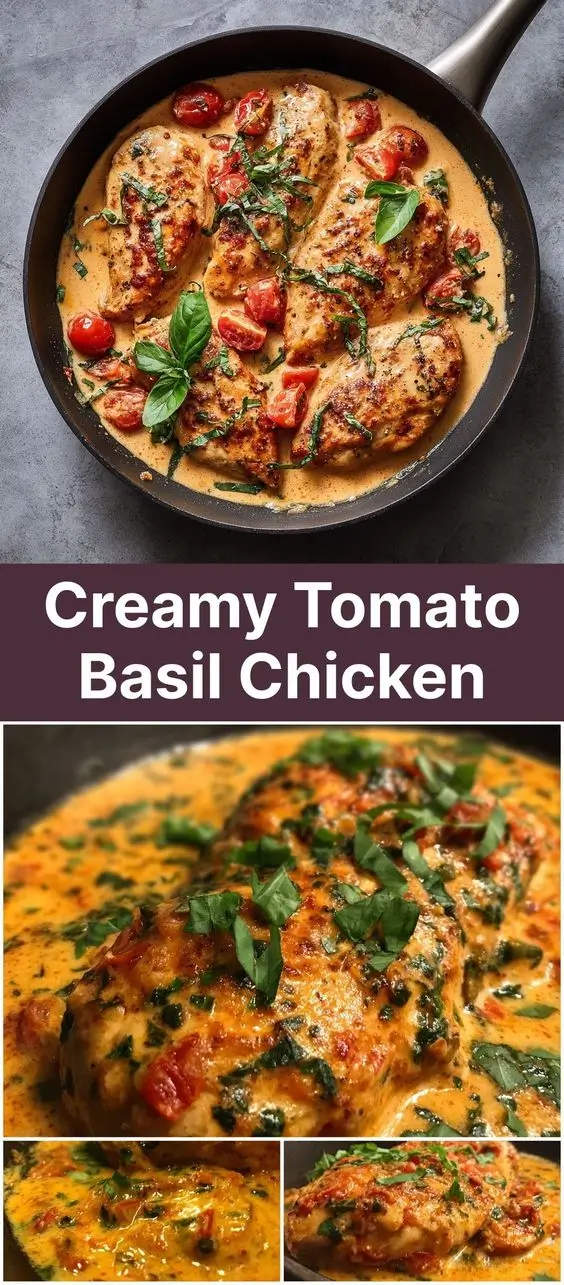
Creamy Tomato Basil Chicken is a luscious, aromatic dish that brings together the bold tang of ripe tomatoes, the subtle sweetness of fresh basil, and the rich tenderness of perfectly cooked chicken—all enveloped in a velvety cream sauce. This dish strikes the perfect balance between comfort food and gourmet elegance, making it ideal for weeknight dinners, romantic evenings, or impressing guests at dinner parties. With its vibrant red hue, fragrant herbs, and creamy texture, Creamy Tomato Basil Chicken delights all the senses. Whether you’re a seasoned home cook or just beginning your culinary journey, this recipe offers an accessible yet sophisticated way to elevate simple ingredients into something truly extraordinary.
The History
While Creamy Tomato Basil Chicken as we know it today is a modern fusion dish, its roots trace back to both Italian and French culinary traditions. The use of tomatoes in European cuisine began in the 16th century after their introduction from the Americas. Initially met with suspicion, tomatoes gradually became central to Mediterranean cooking, especially in Italy, where they formed the base of countless sauces, soups, and stews. Basil, native to India and widely cultivated in Italy, has long been cherished for its sweet, slightly peppery flavor and is a cornerstone of classic pesto and tomato-based dishes like Caprese salad and Margherita pizza.
The concept of combining chicken with tomatoes and cream likely emerged during the 19th and early 20th centuries, influenced by French techniques such as crémeuse (creaming) sauces and Italian sformato or scaloppine preparations. American home cooks in the mid-20th century embraced these flavors, adapting them into quick, family-friendly meals using pantry staples like canned tomatoes and heavy cream. Today, Creamy Tomato Basil Chicken stands as a testament to global gastronomy—a harmonious blend of Old World tradition and New World convenience, continuously reinvented across kitchens worldwide.
Ingredients Breakdown
The magic of Creamy Tomato Basil Chicken lies in the synergy of its components. Each ingredient plays a crucial role in building layers of flavor, texture, and aroma:
- Chicken Breasts or Thighs: Boneless, skinless chicken breasts are most commonly used for their lean profile and mild taste, which absorbs the sauce beautifully. For richer flavor and juicier texture, boneless thighs can be substituted.
- Olive Oil or Butter: Used for searing the chicken, providing a golden crust and depth of flavor. Olive oil adds a fruity note, while butter contributes richness and helps create a fond for deglazing.
- Garlic: Freshly minced garlic is essential—its pungency mellows when sautéed, releasing a warm, savory backbone to the dish.
- Onion: Yellow or white onions add sweetness and complexity. Slowly caramelizing them enhances the sauce’s depth.
- Canned Diced Tomatoes or Tomato Puree: High-quality canned tomatoes offer consistent flavor year-round. Diced tomatoes provide texture, while puree creates a smoother sauce. San Marzano tomatoes are preferred for their low acidity and sweetness.
- Fresh Basil: The star herb, added both during cooking and at the end for brightness. Its floral, slightly minty essence cuts through the richness of the cream.
- Heavy Cream: Adds luxurious body and silkiness. Alternatives like half-and-half or coconut milk can be used but may alter thickness and richness.
- Chicken Broth: Enhances moisture and amplifies umami, helping to loosen the sauce without diluting flavor.
- Dry White Wine (optional): Deglazes the pan, lifting flavorful browned bits and adding a subtle acidity that balances the sweetness of tomatoes.
- Italian Seasoning or Red Pepper Flakes: Optional additions for herbal complexity or gentle heat.
- Parmesan Cheese (optional): Grated Parmesan stirred in at the end boosts savoriness and adds a slight saltiness.
- Salt and Black Pepper: Crucial for seasoning throughout the cooking process to layer flavors properly.
Step-by-Step Recipe
- Prepare the Ingredients: Pat 4 boneless, skinless chicken breasts dry with paper towels. Season both sides generously with salt, black pepper, and a pinch of garlic powder. Mince 4 cloves of garlic. Dice 1 medium onion. Chop 1 cup of fresh basil, reserving a small handful for garnish.
- Sear the Chicken: Heat 2 tablespoons of olive oil in a large skillet over medium-high heat. Once shimmering, add the chicken breasts and cook for 5–6 minutes per side until golden brown and cooked through (internal temperature should reach 165°F). Transfer to a plate and cover loosely with foil to rest.
- Sauté Aromatics: In the same skillet, reduce heat to medium. Add 1 tablespoon of butter and the diced onion. Cook for 4–5 minutes until translucent and soft. Add the minced garlic and sauté for 30 seconds until fragrant—do not let it burn.
- Build the Sauce Base: Pour in ½ cup of dry white wine (optional) to deglaze the pan, scraping up any browned bits with a wooden spoon. Allow it to simmer for 2 minutes until reduced by half.
- Add Tomatoes: Stir in two 14.5-ounce cans of diced tomatoes (with juices) or 1½ cups of tomato puree. Bring to a gentle simmer and cook for 8–10 minutes, allowing the flavors to meld and the sauce to thicken slightly.
- Incorporate Liquids: Pour in ¾ cup of chicken broth and 1 cup of heavy cream. Stir well to combine. If desired, add 1 teaspoon of Italian seasoning and a pinch of red pepper flakes for heat. Simmer gently for another 5 minutes—do not boil vigorously to prevent curdling.
- Return Chicken to Pan: Nestle the seared chicken breasts back into the sauce, spooning some over the top. Cover the skillet and let simmer for 8–10 minutes, allowing the chicken to absorb the flavors and ensuring it’s fully cooked.
- Finish with Basil and Cheese: Remove from heat. Stir in ¾ cup of chopped fresh basil. For extra richness, sprinkle in ¼ cup of grated Parmesan cheese and stir until melted.
- Taste and Adjust: Sample the sauce and adjust seasoning with additional salt, pepper, or a splash of lemon juice if needed to brighten the flavors.
- Serve: Plate the chicken and generously ladle the creamy tomato basil sauce over each piece. Garnish with reserved fresh basil and extra Parmesan if desired.
Tips
- Don’t Overcook the Chicken: Use a meat thermometer to ensure precision. Overcooked chicken becomes dry, especially in a moist environment.
- Brown the Chicken Well: Proper searing creates fond (browned bits), which adds immense flavor to the sauce when deglazed.
- Use Fresh Basil: Dried basil lacks the vibrancy and aromatic punch of fresh. Add it at the end to preserve its essential oils.
- Simmer Gently: Avoid boiling the cream sauce rapidly, as high heat can cause separation. Keep the heat low to medium after adding dairy.
- Enhance Umami: Add a tablespoon of tomato paste with the onions and garlic for deeper flavor, or a splash of Worcestershire sauce for complexity.
- Thicken the Sauce: If the sauce is too thin, mix 1 teaspoon of cornstarch with 1 tablespoon of cold water and stir it in, then simmer for 2–3 minutes until thickened.
- Rest the Chicken: Letting the chicken rest before slicing retains its juices, especially if serving sliced.
- Make Ahead: The sauce can be prepared in advance and refrigerated for up to 2 days. Reheat gently and add freshly cooked chicken just before serving.
Variations and Customizations
Creamy Tomato Basil Chicken is wonderfully adaptable to different tastes, dietary needs, and kitchen inventories. Here are several creative twists:
- Dairy-Free Version: Replace heavy cream with full-fat coconut milk and omit Parmesan. Add a splash of nutritional yeast for cheesy flavor.
- Gluten-Free: This recipe is naturally gluten-free, but always verify labels on broth and canned tomatoes to ensure no additives contain gluten.
- Vegetarian Option: Substitute chicken with hearty portobello mushrooms, tofu, or chickpeas. Sauté until golden before adding to the sauce.
- Spicy Kick: Increase red pepper flakes or add diced jalapeños with the onions. A dash of hot sauce at the end also works well.
- Creamy Tomato Basil Pasta: Toss the sauce with fettuccine, penne, or gnocchi for a decadent pasta version. Reserve pasta water to adjust consistency.
- One-Pot Meal: Cook short-grain rice or quinoa directly in the sauce for a complete dish—adjust liquid ratios accordingly.
- Slow Cooker Method: After searing, transfer everything to a slow cooker and cook on low for 4–6 hours. Stir in cream and basil at the end.
- Air Fryer Chicken: Air fry seasoned chicken breasts at 375°F for 18–20 minutes instead of pan-searing for a lighter option.
- Herb Variations: Swap or supplement basil with oregano, thyme, or parsley for different flavor profiles.
- Lemon Zest Finish: Add a teaspoon of lemon zest at the end to brighten the entire dish and cut through the creaminess.
Health Considerations and Nutritional Value
While undeniably rich, Creamy Tomato Basil Chicken can be adapted to support various health goals:
- Caloric Content: One serving (chicken breast with ¾ cup sauce) contains approximately 450–550 calories, depending on cream and oil amounts.
- Protein: Chicken provides about 35–40 grams of high-quality protein per breast, supporting muscle maintenance and satiety.
- Fat: Heavy cream and olive oil contribute healthy unsaturated fats, but portion control is key for heart health. Using low-fat alternatives reduces saturated fat content.
- Vitamins and Antioxidants: Tomatoes are rich in vitamin C, potassium, and lycopene—an antioxidant linked to reduced risk of heart disease and certain cancers. Basil contains vitamin K, magnesium, and anti-inflammatory compounds.
- Sodium: Store-bought broths and canned tomatoes can be high in sodium. Opt for low-sodium versions and season with herbs instead of excess salt.
- Balanced Meal Tip: Serve with steamed vegetables, a green salad, or whole grains like quinoa or farro to increase fiber and nutrient density.
- Keto-Friendly: This dish fits well within a ketogenic diet due to its high fat and moderate protein content. Just monitor tomato quantity if strict on carbs.
Ingredients
- 4 boneless, skinless chicken breasts (about 6 oz each)
- Salt and freshly ground black pepper to taste
- 2 tablespoons olive oil (plus more if needed)
- 1 tablespoon unsalted butter
- 1 medium yellow onion, finely diced
- 4 cloves garlic, minced
- ½ cup dry white wine (such as Sauvignon Blanc or Pinot Grigio; optional)
- 2 (14.5 oz) cans diced tomatoes (preferably fire-roasted or San Marzano)
- 1 cup chicken broth (low-sodium preferred)
- 1 cup heavy cream
- 1 teaspoon Italian seasoning
- ¼ teaspoon red pepper flakes (optional)
- 1 cup fresh basil leaves, chopped (plus extra for garnish)
- ¼ cup grated Parmesan cheese (optional)
- 1 teaspoon lemon juice (optional, for brightness)
Directions
- Season chicken breasts with salt, pepper, and a pinch of garlic powder on both sides.
- Heat olive oil in a large, deep skillet or Dutch oven over medium-high heat. Add chicken and sear for 5–6 minutes per side until golden and cooked through. Transfer to a plate and cover.
- Melt butter in the same skillet. Add onion and cook for 4–5 minutes until soft. Stir in garlic and cook for 30 seconds.
- Pour in white wine, scrape the bottom of the pan, and simmer for 2 minutes until reduced.
- Add canned tomatoes with their juice. Simmer for 8–10 minutes, stirring occasionally.
- Stir in chicken broth, heavy cream, Italian seasoning, and red pepper flakes. Bring to a gentle simmer.
- Return chicken to the skillet, nestling it into the sauce. Cover and cook for 8–10 minutes.
- Remove from heat. Stir in chopped basil and Parmesan (if using). Add lemon juice for brightness if desired.
- Taste and adjust seasoning. Serve immediately over pasta, rice, mashed potatoes, or with crusty bread.
FAQ
Can I use frozen chicken?
Yes, but it’s best to thaw it first for even cooking. If cooking from frozen, increase searing time and ensure internal temperature reaches 165°F.
How do I store leftovers?
Cool completely and store in an airtight container in the refrigerator for up to 3–4 days. Reheat gently on the stove to prevent cream separation.
Can I freeze Creamy Tomato Basil Chicken?
Yes, though dairy-based sauces may separate slightly upon thawing. Freeze without cream, then add fresh cream when reheating for best results. Otherwise, freeze for up to 2 months and reheat slowly.
Why did my sauce curdle?
Cream can curdle if boiled too vigorously or exposed to high acidity. Always simmer gently and avoid rapid temperature changes. Adding cream last and off direct high heat helps.
What can I serve with this dish?
Excellent pairings include garlic mashed potatoes, risotto, spaghetti, roasted vegetables, a crisp green salad, or warm artisan bread for soaking up the sauce.
Can I make this in advance?
Absolutely. Prepare the sauce ahead and refrigerate. Cook the chicken fresh and combine just before serving to maintain texture.
Is this dish spicy?
Only if you add red pepper flakes. It’s naturally mild, so adjust heat to your preference.
Can I use dried basil instead of fresh?
You can, but use only 1 tablespoon of dried basil (since dried herbs are more concentrated) and add it earlier in the cooking process. Fresh basil added at the end gives superior flavor.
Summary
Creamy Tomato Basil Chicken is a sumptuous, aromatic dish that combines tender chicken in a rich, velvety sauce of tomatoes, garlic, cream, and fresh basil—offering comfort and elegance in every bite.
Easily customizable for various diets and occasions, it’s a versatile favorite that brings the warmth of Italian-inspired cuisine to your table with minimal effort and maximum flavor.