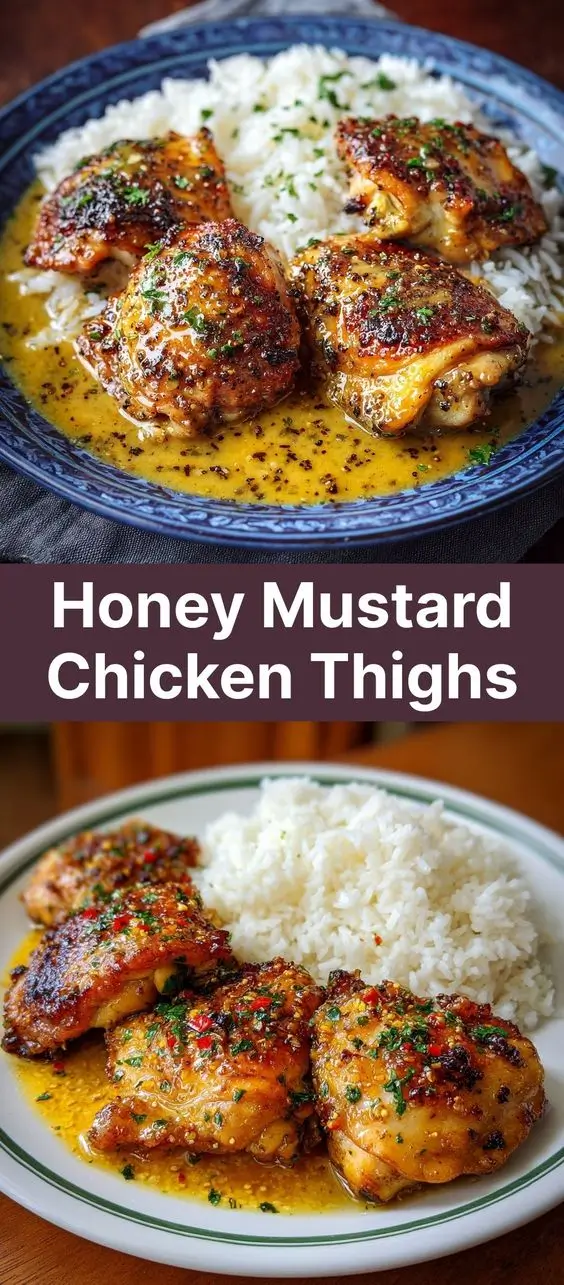
Honey Mustard Chicken Thighs: A Sweet, Tangy, and Juicy Delight
Introduction
If you’re searching for a dish that strikes the perfect balance between sweet, tangy, and savory, look no further than Honey Mustard Chicken Thighs. This crowd-pleasing recipe transforms simple chicken thighs into a succulent, flavorful meal that’s ideal for weeknight dinners, weekend family gatherings, or even elegant dinner parties. With its glossy glaze, tender meat, and aromatic undertones, honey mustard chicken is both comforting and sophisticated. Whether baked, grilled, or pan-seared, this dish consistently delivers on taste and texture. In this comprehensive guide, we’ll dive deep into every aspect of making the ultimate honey mustard chicken thighs—from their historical roots to detailed preparation steps, ingredient insights, health benefits, variations, and expert tips to ensure your culinary success.
The History
The origins of combining honey and mustard in cooking trace back centuries and span multiple cultures. Honey has long been prized as a natural sweetener across ancient civilizations, including Egypt, Greece, and Rome. It was used not only for its sweetness but also for its preservative qualities and medicinal properties. Mustard, derived from the seeds of the Brassica plant, was cultivated by early Europeans and widely used in Roman cuisine. The Romans were known to mix ground mustard seeds with grape juice (called “must”), giving rise to the term “mustum ardens,” meaning “burning must”—the root of the word “mustard.”
The combination of honey and mustard as a sauce likely emerged in European kitchens during the Middle Ages, where cooks began experimenting with balancing sweet and pungent flavors. By the 18th and 19th centuries, honey mustard sauces became popular condiments in French and British cuisines, often served with meats, especially pork and poultry. In modern times, particularly in North America, honey mustard gained widespread popularity as a salad dressing and dipping sauce in the mid-20th century. Its application to roasted or grilled chicken—especially bone-in, skin-on thighs—became a staple in home cooking due to its ease, bold flavor, and universal appeal. Today, honey mustard chicken thighs are celebrated globally as a comfort food classic that bridges traditional techniques with contemporary tastes.
Ingredients Breakdown
The magic of honey mustard chicken thighs lies in the harmony of its ingredients. Each component plays a crucial role in building layers of flavor, moisture, and texture:
- Chicken Thighs (bone-in, skin-on): Preferred over breasts for their higher fat content, which ensures juiciness and rich flavor during cooking. The skin crisps beautifully when roasted or grilled, adding textural contrast.
- Honey: Adds natural sweetness and helps create a caramelized glaze. Raw or local honey enhances depth with floral notes.
- Dijon Mustard: Provides tanginess and emulsifying properties. Its smooth texture blends well with other liquids and helps the marinade adhere to the chicken.
- Whole Grain Mustard: Optional but recommended for added complexity and slight crunch. It introduces visible seeds that burst with flavor.
- Olive Oil: Helps carry flavors, promotes browning, and prevents sticking. Extra virgin olive oil adds a fruity note.
- Garlic (freshly minced): Imparts a pungent, aromatic backbone essential for depth.
- Fresh Lemon Juice: Brightens the sauce, balances sweetness, and aids in tenderizing the meat.
- Worcestershire Sauce: A umami-rich ingredient that deepens the savory profile with hints of tamarind, anchovies, and vinegar.
- Soy Sauce or Tamari: Enhances saltiness and adds glutamates for enhanced savoriness without overpowering.
- Smoked Paprika: Contributes subtle smokiness and vibrant color. Can be swapped with sweet or hot paprika depending on preference.
- Onion Powder & Garlic Powder: Reinforce allium flavors and ensure consistency, especially if fresh garlic is limited.
- Dried Thyme or Rosemary: Earthy herbs that complement poultry and stand up well to high heat.
- Salt and Black Pepper: Fundamental seasonings that enhance overall taste and bring balance.
- Butter (optional): Added at the end for richness and gloss, especially in pan sauces.
Step-by-Step Recipe
Follow these detailed instructions to achieve perfectly cooked honey mustard chicken thighs every time:
- Preparation: Preheat your oven to 400°F (200°C). If using a grill or stovetop, prepare accordingly. Pat the chicken thighs dry with paper towels—this step is critical for achieving crispy skin.
- Prepare the Marinade/Sauce: In a medium bowl, whisk together 1/3 cup honey, 3 tablespoons Dijon mustard, 1 tablespoon whole grain mustard, 2 tablespoons olive oil, 2 tablespoons lemon juice, 1 tablespoon Worcestershire sauce, 1 tablespoon soy sauce, 3 cloves minced garlic, 1 teaspoon smoked paprika, 1/2 teaspoon onion powder, 1/2 teaspoon dried thyme, 1/2 teaspoon black pepper, and 1 teaspoon salt.
- Season the Chicken: Lightly season both sides of the chicken thighs with salt and pepper. For deeper flavor penetration, make small slits in the thicker parts of the meat.
- Sear the Chicken (Optional for Oven Method): Heat an oven-safe skillet over medium-high heat. Add 1 tablespoon olive oil. Place chicken thighs skin-side down and sear for 5–6 minutes until golden brown. Flip and sear the other side for 2–3 minutes. This step locks in juices and builds flavor through the Maillard reaction.
- Roast: Transfer the skillet to the preheated oven. Roast for 35–40 minutes, basting halfway with the pan sauce. The internal temperature should reach 175°F (80°C) for dark meat, ensuring tenderness and safety.
- Glaze and Finish: During the last 10 minutes, brush additional honey mustard sauce over the chicken to build a sticky, caramelized crust. Watch closely to prevent burning, as honey can scorch at high temperatures.
- Rest: Remove from oven and let rest for 5–10 minutes. This allows juices to redistribute, resulting in moist, flavorful meat.
- Serve: Optionally, deglaze the pan with a splash of chicken broth or white wine, simmer for 2–3 minutes, and stir in a knob of butter for a luscious finishing sauce.
<4>Marinate (Optional but Recommended): Place the chicken in a resealable bag or shallow dish and coat thoroughly with the honey mustard mixture. Marinate for at least 30 minutes at room temperature or up to 8 hours in the refrigerator. If refrigerated, allow the chicken to come to room temperature before cooking for even results.
Tips for Perfect Honey Mustard Chicken Thighs
- Use Bone-In, Skin-On Thighs: They retain moisture better and develop superior texture compared to boneless or skinless cuts.
- Don’t Skip the Searing: Pan-searing before baking creates a restaurant-quality finish with crisp skin and deep color.
- Baste Frequently: Basting every 10–15 minutes boosts flavor and ensures an even glaze.
- Monitor Temperature: Use a meat thermometer to avoid undercooking or drying out the meat. Target 175°F for optimal juiciness.
- Adjust Sweetness: If the sauce becomes too sweet, balance with extra lemon juice or mustard.
- Prevent Burning: If the glaze starts to darken too quickly, tent loosely with foil.
- Room Temperature Start: Let marinated chicken sit out for 20–30 minutes before cooking to ensure even heat distribution.
- Double the Sauce: Make extra sauce—one for marinating, one for serving—to avoid cross-contamination and enhance presentation.
Variations and Customizations
This versatile recipe adapts beautifully to different tastes, dietary needs, and cooking methods:
- Spicy Honey Mustard: Add 1/2 teaspoon cayenne pepper, a diced jalapeño, or 1 tablespoon sriracha to the marinade for heat.
- Herb-Infused: Stir in chopped fresh rosemary, thyme, or sage for a garden-fresh twist.
- Citrus Variation: Replace lemon juice with orange or lime juice for a brighter, tropical flair.
- Maple Substitute: Swap honey with pure maple syrup for a fall-inspired version.
- Grilled Version: Cook on a preheated grill over medium indirect heat. Baste frequently and cook 6–8 minutes per side. Great for summer barbecues.
- Air Fryer Option: Cook at 380°F for 22–26 minutes, flipping halfway and brushing with sauce in the last 5 minutes.
- Slow Cooker Adaptation: Brown thighs first, then place in a slow cooker with half the sauce. Cook on low for 5–6 hours. Finish under the broiler for crispiness.
- Dairy-Free & Gluten-Free: Use tamari instead of soy sauce and verify mustard labels to ensure gluten-free compliance.
- Keto-Friendly Version: Replace honey with sugar-free maple syrup or monk fruit-based honey alternative and reduce quantity.
- Sheet Pan Dinner: Arrange chicken thighs alongside potatoes, carrots, and Brussels sprouts. Toss veggies in olive oil and roast together for a complete meal.
Health Considerations and Nutritional Value
Honey mustard chicken thighs offer a balanced nutritional profile when prepared mindfully:
- Protein Powerhouse: Chicken thighs provide about 26g of protein per 100g, supporting muscle repair and satiety.
- Healthy Fats: Thighs contain monounsaturated fats, similar to those in olive oil, which support heart health.
- Honey Benefits: While high in natural sugars, honey contains antioxidants and antimicrobial properties. Use in moderation, especially for diabetics.
- Mustard Advantages: Low in calories and rich in selenium and glucosinolates, compounds linked to anti-inflammatory and cancer-preventive effects.
- Sodium Awareness: Soy sauce and Worcestershire contribute sodium. Opt for low-sodium versions if managing blood pressure.
- Caloric Content: One average-sized skin-on, bone-in thigh (approx. 200g) with sauce contains roughly 450–550 calories, depending on preparation.
- Dietary Tips: Skinning the chicken post-cooking reduces fat and calories. Pair with steamed vegetables, quinoa, or salad for a lighter meal.
Ingredients
- 6 bone-in, skin-on chicken thighs (about 2.5 lbs / 1.1 kg)
- 1/3 cup honey (preferably raw)
- 3 tablespoons Dijon mustard
- 1 tablespoon whole grain mustard
- 2 tablespoons olive oil
- 2 tablespoons fresh lemon juice
- 1 tablespoon Worcestershire sauce
- 1 tablespoon soy sauce (or tamari for gluten-free)
- 3 cloves garlic, minced
- 1 teaspoon smoked paprika
- 1/2 teaspoon onion powder
- 1/2 teaspoon dried thyme
- 1 teaspoon salt (divided)
- 1/2 teaspoon freshly ground black pepper
- Optional: 1 tablespoon butter (for finishing sauce)
Directions
- Preheat oven to 400°F (200°C). Place an oven-safe skillet in the oven to heat up (optional).
- In a bowl, whisk together honey, Dijon mustard, whole grain mustard, olive oil, lemon juice, Worcestershire sauce, soy sauce, garlic, smoked paprika, onion powder, thyme, 1/2 teaspoon salt, and black pepper.
- Pat chicken thighs dry and season with remaining salt and pepper.
- Coat chicken thoroughly with the honey mustard mixture. Marinate for 30 minutes at room temperature or refrigerate for up to 8 hours.
- Heat 1 tablespoon olive oil in an oven-safe skillet over medium-high heat. Sear chicken skin-side down for 5–6 minutes until golden and crisp. Flip and sear opposite side for 2–3 minutes.
- Transfer skillet to the oven. Roast for 35–40 minutes, basting with pan juices every 10–15 minutes.
- During the last 10 minutes, brush with extra sauce to glaze. Check internal temperature—it should read 175°F (80°C).
- Remove from oven, tent loosely with foil, and rest for 5–10 minutes.
- Optional: Deglaze pan with 1/4 cup chicken broth, simmer for 2 minutes, and swirl in butter for a silky sauce.
- Serve hot, drizzled with sauce and garnished with fresh herbs like parsley or chives.
FAQ
Can I use chicken breasts instead of thighs?
Yes, but adjust cooking time—breasts cook faster (20–25 minutes) and can dry out more easily. Consider brining beforehand and basting frequently.
How do I store leftovers?
Cool completely and store in an airtight container in the refrigerator for up to 4 days. Reheat gently in the oven or skillet to preserve texture.
Can I freeze honey mustard chicken thighs?
Yes. Freeze cooked or uncooked (marinated) thighs for up to 3 months. Thaw overnight in the fridge before cooking or reheating.
Why is my sauce too thin/thick?
If too thin, simmer on the stove to reduce. If too thick, whisk in warm water or broth, 1 tablespoon at a time.
Is honey mustard chicken healthy?
It can be part of a balanced diet. Focus on portion control, use less honey if needed, and pair with vegetables or whole grains.
Can I make this dairy-free or gluten-free?
Yes. Ensure mustard and Worcestershire sauce are certified gluten-free (some brands contain malt vinegar). Use tamari instead of soy sauce.
What sides go well with this dish?
Excellent pairings include mashed potatoes, roasted vegetables, wild rice, coleslaw, green beans, or a crisp garden salad.
Summary
Honey Mustard Chicken Thighs deliver a perfect harmony of sweet, tangy, and savory flavors with juicy, tender meat and a glossy, caramelized crust. Easy to customize and suitable for various cooking methods, this dish is a timeless favorite for any occasion.