Beef Bulgogi Bowls: A Flavorful Korean Classic Made Simple
The History of Beef Bulgogi
Beef Bulgogi, a beloved staple of Korean cuisine, traces its origins back to the Goguryeo era (37 BCE–668 CE), where it was originally known as “maekjeok”, meaning grilled meat. Historically, only the wealthy could afford beef, so this dish was often reserved for special occasions and royal feasts. The word “bulgogi” itself comes from the Korean words “bul” (fire) and “gogi” (meat), translating literally to “fire meat,” highlighting the traditional method of grilling thin slices of marinated beef over an open flame.
During the Joseon Dynasty, bulgogi evolved with the introduction of soy sauce and other seasonings that enriched its flavor profile. However, it wasn’t until the 20th century—particularly after the Korean War—that bulgogi became more accessible to the general public. With the modernization of agriculture and refrigeration, beef became more widely available, and street vendors began popularizing the dish across Korea.
Today, bulgogi is one of the most internationally recognized Korean dishes, celebrated for its sweet-savory marinade and tender texture. It has become a centerpiece not only in Korean households but also in restaurants worldwide. The adaptation into bowl form—served over rice with fresh vegetables and sauces—reflects both convenience and modern eating trends, making Beef Bulgogi Bowls a favorite among health-conscious diners and food lovers alike.
Ingredients Breakdown
The magic of Beef Bulgogi Bowls lies in the harmonious balance of flavors achieved through its carefully curated ingredients. Each component contributes to the overall taste, texture, and aroma of the dish, ensuring a deeply satisfying culinary experience.
- Sirloin or Ribeye Steak: These cuts are ideal due to their tenderness and marbling, which ensures juiciness even after quick cooking. Flank steak can also be used for a leaner option, though it benefits from slightly longer marination.
- Soy Sauce: Provides the foundational umami and saltiness. Use low-sodium soy sauce if you prefer better control over salt content.
- Brown Sugar or Honey: Adds sweetness that counterbalances the salt and helps create a caramelized glaze during cooking.
- Sesame Oil: Imparts a nutty, aromatic depth that’s quintessential to Korean flavors.
- Garlic and Ginger: Freshly minced garlic and grated ginger deliver pungency and warmth, enhancing the marinade’s complexity.
- Pear or Asian Pear Puree: Often overlooked but crucial—pear contains natural enzymes that tenderize the meat. Grated apple can substitute in a pinch.
- Rice Vinegar: Adds a mild tang that brightens the marinade and prevents it from being overly heavy.
- Sesame Seeds: Used both in the marinade and as garnish, they add crunch and visual appeal.
- Green Onions: Provide freshness and a mild onion bite; sliced thinly and added toward the end of cooking or used raw as topping.
For the bowl components:
- Steamed White or Brown Rice: Acts as the base, absorbing the flavorful juices from the beef.
- Kimchi: Fermented spicy cabbage adds probiotics, heat, and tang—essential for authenticity.
- Spinach or Mixed Greens: Lightly blanched spinach (sigeumchi namul) is traditional, but any leafy green works.
- Shredded Carrots and Cucumber: Add color, crunch, and freshness.
- Avocado Slices (Optional): For creaminess and healthy fats, especially in Western adaptations.
- Fried or Soft-Boiled Egg: Adds richness and makes the bowl more filling.
- Gochujang or Sriracha Mayo: Spicy condiments to drizzle on top for extra kick.
Step-by-Step Recipe
Marinating the Beef
- Thinly slice 1.5 lbs (700g) of ribeye or sirloin against the grain into ¼-inch thick strips. Place in a large mixing bowl.
- In a separate bowl, whisk together:
- ½ cup soy sauce
- ¼ cup brown sugar (or honey)
- 3 tbsp sesame oil
- 4 cloves garlic, minced
- 1 tbsp fresh ginger, grated
- ½ medium pear, finely grated (about ¼ cup)
- 1 tbsp rice vinegar
- 1 tsp black pepper
- 1 tbsp toasted sesame seeds
- Pour the marinade over the beef and mix thoroughly. Cover and refrigerate for at least 2 hours, preferably overnight for maximum flavor infusion.
Cooking the Bulgogi
- Heat 1 tbsp vegetable oil in a large skillet or wok over medium-high heat.
- Add the marinated beef in batches, reserving excess marinade. Avoid overcrowding to ensure proper searing.
- Sear for 2–3 minutes per side until edges caramelize and center remains tender. Do not overcook.
- Pour in 2–3 tablespoons of reserved marinade while cooking to enhance glaze. Cook for another minute until sauce reduces slightly.
- Stir in 3–4 sliced green onions during the last 30 seconds. Remove from heat.
Assembling the Bowl
- Divide 2 cups of hot steamed rice among four serving bowls.
- Top each with ½ cup of cooked bulgogi beef.
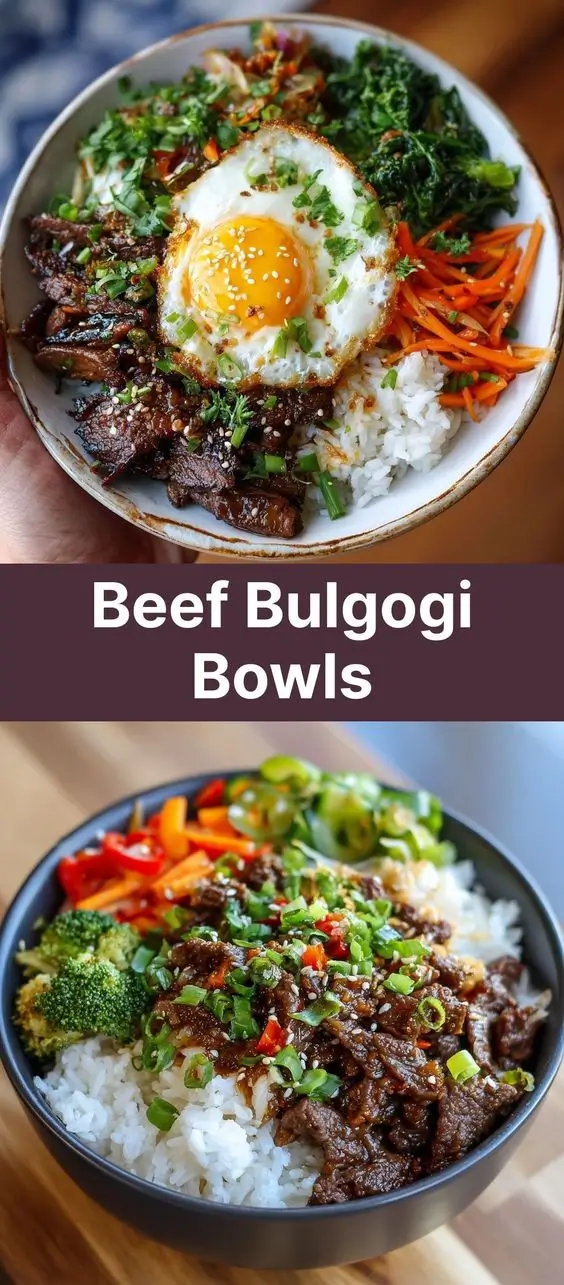
- Arrange kimchi, blanched spinach, shredded carrots, cucumber ribbons, and avocado slices around the beef.
- Place a fried or soft-boiled egg in the center of each bowl.
- Drizzle with gochujang mayo (mix 1 tbsp gochujang with 2 tbsp mayonnaise and 1 tsp honey).
- Garnish with extra sesame seeds and green onion curls.
- Serve immediately with extra kimchi and soy sauce on the side.
Expert Tips for Perfect Beef Bulgogi Bowls
- Slice Against the Grain: This breaks up muscle fibers, resulting in more tender bites.
- Freeze Meat Slightly: For paper-thin slicing, place the beef in the freezer for 30–45 minutes before cutting.
- Don’t Skip the Pear: The enzymes in pear naturally tenderize the beef—this isn’t just for sweetness!
- Reserve Marinade: Keep some aside before adding to raw meat to use as a basting sauce.
- High Heat is Key: Cook quickly over high heat to achieve caramelization without drying out the meat.
- Baste While Cooking: Adding reserved marinade during the final minute boosts flavor and shine.
- Prep Components Ahead: Marinate beef up to 2 days in advance, and pre-chop veggies for easy weekday assembly.
- Use a Grill Pan: For authentic smoky flavor, grill the beef instead of pan-frying.
Variations and Customizations
While traditional beef bulgogi is timeless, there are countless ways to personalize your bowl to suit dietary needs, flavor preferences, or seasonal ingredients.
Protein Variations
- Chicken Bulgogi: Substitute beef with boneless chicken thighs. Adjust marination time to 1–2 hours to avoid mushiness.
- Pork Bulgogi: Use pork shoulder or Boston butt for a richer alternative.
- Tofu or Mushroom Bulgogi: For a vegan version, use extra-firm tofu or king oyster mushrooms. Press tofu well and marinate for 1 hour before pan-searing.
Grain Base Alternatives
- Quinoa or Cauliflower Rice: Lower-carb options that still absorb flavors beautifully.
- Forbidden Black Rice: Adds dramatic color and antioxidants.
- Noodle Bowls: Serve over glass noodles (japchae) for a hybrid dish.
Toppings & Add-Ons
- Quick-Pickled Radishes: Thinly sliced daikon pickled in rice vinegar, sugar, and salt for 30 minutes.
- Seaweed Salad: Store-bought or homemade wakame salad adds oceanic umami.
- Microgreens or Sprouts: Alfalfa, radish, or broccoli sprouts for freshness and crunch.
- Mango or Pineapple Chunks: Tropical sweetness complements the savory beef.
- Crispy Shallots: Store-bought or fried at home for added texture.
Sauce Swaps
- Spicy Gochujang Glaze: Simmer 2 tbsp gochujang with 1 tbsp honey, 1 tsp soy sauce, and water to desired consistency.
- Tamari-Miso Drizzle: Mix white miso paste with tamari and a touch of mirin.
- Lime Tahini Sauce: For a Middle Eastern twist, blend tahini, lime juice, garlic, and water.
Health Considerations and Nutritional Value
Beef Bulgogi Bowls can be both nutritious and balanced when prepared with mindful ingredient choices. Here’s a breakdown of the health aspects:
Nutritional Highlights (Per Serving, Approximate)
| Nutrient | Amount |
|---|---|
| Calories | 580 kcal |
| Protein | 35g |
| Total Fat | 22g |
| Saturated Fat | 7g |
| Carbohydrates | 55g |
| Dietary Fiber | 5g |
| Sugars | 18g |
| Sodium | 980mg |
Health Benefits
- High-Quality Protein: Beef provides complete protein essential for muscle repair and immune function.
- Iron-Rich: Heme iron in beef is highly bioavailable, helping prevent anemia.
- Zinc and B Vitamins: Supports metabolism, brain function, and immunity.
- Antioxidants from Vegetables: Colorful toppings like carrots, spinach, and kimchi offer vitamins A, C, K, and phytonutrients.
- Probiotics: Kimchi introduces beneficial gut bacteria, supporting digestive health.
Considerations & Modifications
- Sodium Content: Traditional soy sauce is high in sodium. Use reduced-sodium soy sauce or coconut aminos for a lower-salt version.
- Sugar Levels: The marinade contains natural and added sugars. Reduce honey or use monk fruit sweetener for a low-glycemic option.
- Saturated Fat: Opt for leaner cuts like sirloin or flank to reduce saturated fat intake.
- Balanced Macros: Increase veggie volume and reduce rice portion for a higher fiber, lower carb meal.
- Allergies: Contains soy, sesame, and gluten (in soy sauce). Use tamari (gluten-free) and omit sesame if needed.
Frequently Asked Questions (FAQ)
Can I make bulgogi ahead of time?
Yes! Marinate the beef up to 2 days in advance. Cooked bulgogi can be stored in the fridge for 3–4 days and reheated gently in a skillet with a splash of water.
Can I freeze bulgogi?
Absolutely. Freeze raw marinated beef in sealed bags for up to 3 months. Thaw in the refrigerator before cooking. Cooked bulgogi also freezes well for 2–3 months.
What cut of beef is best for bulgogi?
Ribeye, sirloin, and tenderloin are excellent due to tenderness. Flank steak works too but should be sliced very thin and not overcooked.
Why is pear used in the marinade?
Pear contains proteolytic enzymes like papain and actinidin (also found in pineapple and kiwi) that break down proteins, naturally tenderizing the meat. It also adds subtle sweetness.
Is bulgogi spicy?
Traditional bulgogi is not spicy—it’s sweet and savory. However, many modern versions include gochujang or chili flakes. Adjust to taste or serve spice on the side.
Can I cook bulgogi in the oven?
Yes. Preheat oven to 400°F (200°C). Place marinated beef on a lined baking sheet and broil for 4–5 minutes per side until caramelized.
How do I prevent the meat from becoming chewy?
Always slice against the grain, don’t over-marinate (max 24 hours), and avoid overcooking. Sear quickly over high heat.
Are there vegetarian alternatives?
Yes. Use tofu, mushrooms, or seitan. Marinate similarly and pan-fry until golden. Add smoked paprika for a meaty depth.
What rice goes best with bulgogi bowls?
Short-grain white rice is traditional, but brown rice, jasmine, or forbidden black rice work well for added nutrition and texture.
Can I use store-bought marinade?
Yes, but check labels for preservatives and excess sugar. Homemade allows full control over ingredients and flavor balance.
Summary
Beef Bulgogi Bowls combine tender, marinated grilled beef with vibrant vegetables, steamed rice, and bold sauces for a satisfying and culturally rich meal. Easy to customize and packed with flavor, this dish brings the heart of Korean cuisine to your dinner table.