Salmon with Mango Salsa: A Tropical Fusion of Flavors
Introduction
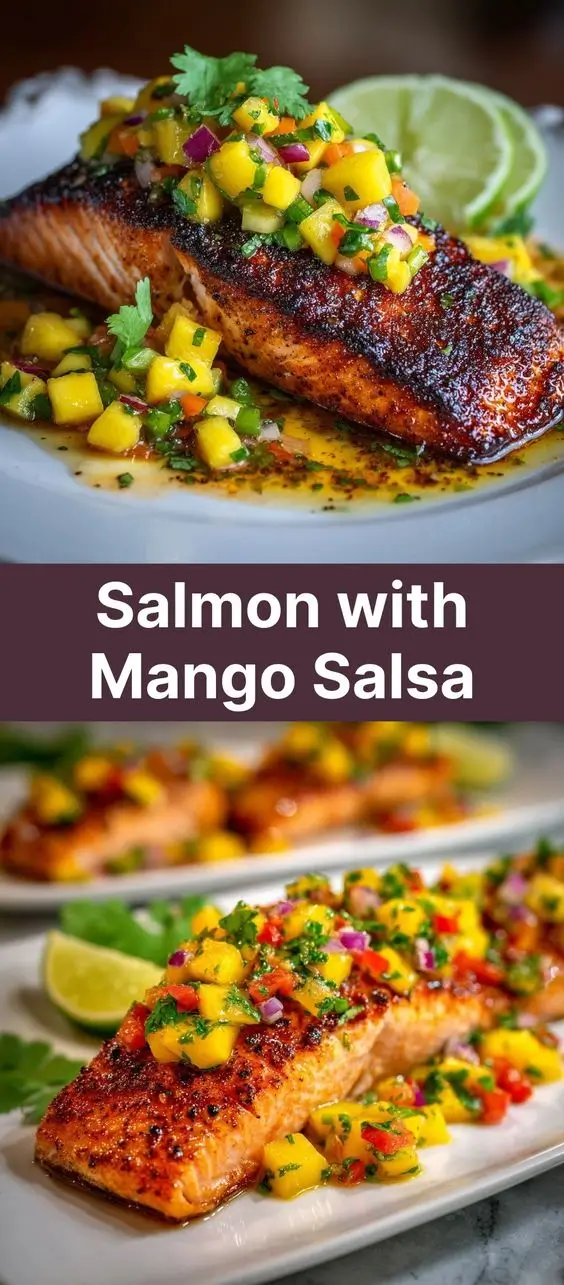
Salmon with mango salsa is a vibrant, refreshing dish that marries the rich, buttery texture of wild-caught salmon with the bright, zesty sweetness of ripe mango. This recipe is not only a feast for the palate but also a visual delight—its colorful presentation makes it perfect for summer barbecues, romantic dinners, or elegant weekend meals. The natural oils in salmon pair beautifully with the tangy freshness of the mango salsa, creating a balanced flavor profile that’s both satisfying and light. Whether you’re an experienced home cook or just beginning your culinary journey, this dish offers a simple yet sophisticated way to impress guests or treat yourself to a gourmet-style meal at home.
The History
The origins of combining fish with fruit-based salsas can be traced back to Latin American and Caribbean cuisines, where fresh ingredients like mango, lime, cilantro, and chili peppers have long been used to enhance seafood dishes. In coastal regions of Mexico, Central America, and the northern parts of South America, fishermen would often serve their daily catch with a quick-fresh salsa made from whatever produce was in season. Mangoes, native to South Asia but widely cultivated in tropical climates around the world since ancient times, found their way into these recipes through global trade routes established during the colonial era. Over time, chefs began experimenting with pairing these fruity salsas with richer proteins such as grilled fish, shrimp, and especially salmon—a fatty fish prized for its ability to stand up to bold flavors without being overpowered. The modern version of salmon with mango salsa emerged prominently in California cuisine during the 1980s and 1990s, when fusion cooking became popular and chefs emphasized fresh, local, and seasonal ingredients. Today, it’s a staple on many upscale restaurant menus and a favorite among health-conscious food lovers seeking delicious meals that are both nutritious and flavorful.
Ingredients Breakdown
For the Salmon:
- Salmon fillets (6 oz each): Opt for wild-caught Pacific salmon if possible, as it has a superior flavor and better nutritional profile compared to farmed varieties. Look for firm, bright-orange flesh with no fishy smell.
- Olive oil: Extra virgin olive oil adds richness and helps create a beautiful sear on the salmon while keeping it moist during cooking.
- Sea salt and freshly ground black pepper: These foundational seasonings enhance the natural taste of the salmon without overpowering it.
- Lemon juice: Adds a touch of acidity that brightens the overall flavor and complements the fatty nature of the fish.
- Garlic powder (optional): For a subtle depth of flavor without the sharpness of raw garlic.
For the Mango Salsa:
- Ripe mango: Choose a fragrant, slightly soft mango with golden-yellow skin. Ataulfo or Kent varieties work best—they’re sweet, juicy, and less fibrous than others.
- Red bell pepper: Adds crunch and a mild sweetness that balances the tartness of lime and heat from chili.
- Red onion: Provides a sharp, pungent contrast; soaking in cold water before mixing reduces its bite.
- Fresh cilantro: Essential for authentic flavor—its citrusy, herbal notes elevate the entire salsa.
- Jalapeño pepper (seeded and finely diced): Brings gentle heat; adjust amount based on spice preference.
- Lime juice (freshly squeezed): Critical for brightness and acts as a natural preservative in the salsa.
- Honey or agave nectar (optional): A tiny drizzle enhances sweetness if the mango isn’t quite ripe enough.
- Pinch of sea salt: Balances and intensifies all the other flavors.
Step-by-Step Recipe
- Prepare the Mango Salsa First: Dice one large ripe mango (about 1½ cups) into small cubes. Finely chop ½ red bell pepper, ¼ cup red onion, 1–2 tablespoons chopped jalapeño (depending on desired heat), and ⅓ cup fresh cilantro leaves. Place all ingredients in a medium bowl.
- Add the juice of one fresh lime (about 2 tablespoons), a pinch of sea salt, and a half-teaspoon of honey if needed. Gently toss everything together until well combined. Cover and refrigerate for at least 30 minutes to allow the flavors to meld. This resting period is crucial—it softens the raw edge of the onion and lets the mango absorb the citrusy tang.
- Preheat Your Cooking Surface: While the salsa chills, preheat a non-stick skillet, grill pan, or outdoor grill over medium-high heat. Lightly brush with olive oil to prevent sticking.
- Season the Salmon Fillets: Pat the salmon fillets dry with paper towels—this ensures a good sear. Season both sides generously with sea salt, freshly cracked black pepper, a squeeze of lemon juice, and a light drizzle of olive oil. You may also rub a pinch of garlic powder onto the surface for extra aroma.
- Cook the Salmon: Place the fillets skin-side down (if skin-on) on the hot surface. Cook undisturbed for 4–5 minutes to develop a golden crust. Using a wide spatula, carefully flip the fillets and cook for another 3–5 minutes, depending on thickness. The salmon is done when it flakes easily with a fork and reaches an internal temperature of 145°F (63°C). Avoid overcooking to preserve moisture and tenderness.
- Rest Before Serving: Remove the salmon from heat and let it rest for 2–3 minutes. This allows juices to redistribute, ensuring every bite remains succulent.
- Assemble and Serve: Spoon a generous portion of chilled mango salsa over each salmon fillet. Garnish with additional cilantro leaves, a lime wedge, or microgreens for elegance. Serve immediately alongside steamed rice, quinoa, grilled vegetables, or a crisp green salad.
Tips
- Don’t Overcook the Salmon: The most common mistake is leaving the fish on the heat too long. Remember that carryover cooking continues even after removal from the pan. Aim for slightly translucent in the very center when checking doneness—it will finish cooking off the heat.
- Skin Crispiness Tip: If using skin-on fillets and aiming for crispy skin, ensure the pan is properly heated before adding the fish and avoid moving it until ready to flip.
- Use Fresh Ingredients: The success of this dish hinges on ingredient quality. Use only fresh lime juice—not bottled—and hand-chopped herbs rather than dried ones.
- Balance the Salsa: Taste your salsa before serving. Need more zing? Add lime. Too tart? A few drops of honey help. Not spicy enough? Toss in some reserved jalapeño seeds.
- Make Ahead Friendly: The mango salsa can be made up to 4 hours in advance and stored covered in the refrigerator. However, wait to add cilantro and lime juice until right before serving if preparing earlier to maintain freshness.
- Grilling Option: For smoky depth, grill the salmon over indirect heat. Oil the grates well and consider using a cedar plank for added flavor.
- Even Thickness: If your fillets vary in thickness, fold the thinner end under slightly so they cook evenly.
Variations and Customizations
This versatile recipe lends itself to numerous creative twists based on dietary preferences, seasonal availability, or cultural influences:
- Pineapple-Mango Salsa: Replace half the mango with fresh pineapple for a more tropical flair.
- Mediterranean Twist: Swap mango with peaches or nectarines during late summer, and add crumbled feta cheese and mint to the salsa.
- Spicy Chipotle Version: Blend in a bit of canned chipotle in adobo sauce to give the salsa a smoky kick.
- Asian-Inspired Fusion: Use sesame oil instead of olive oil on the salmon, glaze with teriyaki during the last minute of cooking, and top with a mango-avocado relish featuring rice vinegar, ginger, and scallions.
- Citrus Swap: Try orange or yuzu juice in place of lime for a mellower acidity.
- Herb Alternatives: Basil or parsley can substitute cilantro for those who dislike its polarizing flavor.
- Vegan Adaptation: Replace salmon with grilled tofu or portobello mushrooms and use the same mango salsa for a plant-based powerhouse dish.
- Dessert Crossover: Serve a sweeter version of the salsa (with berries and mint) over vanilla ice cream for an unexpected dessert.
- Kid-Friendly Version: Omit jalapeño entirely and mix in diced apple or banana for a milder, sweeter topping kids love.
Health Considerations and Nutritional Value
Salmon with mango salsa isn’t just delicious—it’s a nutritionally balanced meal packed with essential vitamins, healthy fats, and antioxidants.
- Omega-3 Fatty Acids: Salmon is one of the best sources of EPA and DHA omega-3s, which support heart health, reduce inflammation, and promote brain function.
- High-Quality Protein: Each 6-ounce fillet provides about 34 grams of complete protein, aiding muscle repair and satiety.
- Vitamin D and B12: Salmon is rich in these vital nutrients, supporting immune function, energy metabolism, and nerve health.
- Mango Benefits: High in vitamin C, A, and fiber, mango aids digestion and boosts immunity. Its natural sugars are offset by fiber content, making it suitable even for moderate sugar intake diets.
- Low Saturated Fat: When cooked with minimal oil, this dish remains low in unhealthy fats while delivering monounsaturated fats from olive oil.
- Antioxidant-Rich Salsa: Cilantro, red peppers, onions, and lime contribute polyphenols and flavonoids linked to reduced oxidative stress.
- Glycemic Index: Despite containing fruit, the overall glycemic load is low due to high protein and fat content slowing glucose absorption.
- Allergen Notes: Naturally gluten-free, dairy-free, and nut-free, this dish suits many restricted diets. Always confirm sourcing if cross-contamination is a concern.
- Pregnancy Safety: Wild salmon is generally safe during pregnancy due to lower mercury levels compared to larger predatory fish. Ensure it’s fully cooked to 145°F. Mango is safe but wash thoroughly to remove any residues.
- Portion Control: One fillet (6 oz) paired with ½ cup salsa makes a hearty main course. Ideal for weight management plans when served with whole grains or leafy greens.
Ingredients
Serves: 4
For the Salmon:
- 4 wild-caught salmon fillets (6 ounces each)
- 2 tablespoons extra virgin olive oil
- Juice of ½ lemon
- 1 teaspoon sea salt
- ½ teaspoon freshly ground black pepper
- ½ teaspoon garlic powder (optional)
For the Mango Salsa:
- 2 large ripe mangoes, peeled and diced (about 3 cups)
- 1 red bell pepper, finely diced
- ½ cup finely chopped red onion
- 1–2 jalapeños, seeded and minced (adjust to taste)
- ⅓ cup fresh cilantro, chopped
- Juice of 2 limes (about ¼ cup)
- 1 teaspoon honey or agave nectar (optional)
- ½ teaspoon sea salt
Directions
- In a large mixing bowl, combine the diced mango, red bell pepper, red onion, jalapeño, and cilantro. Mix gently to avoid crushing the mango pieces.
- Pour in the fresh lime juice, add honey (if using), and sprinkle with sea salt. Stir again until evenly distributed.
- Cover the bowl with plastic wrap or transfer to an airtight container and chill in the refrigerator for 30 minutes to 2 hours to enhance flavor integration.
- While the salsa chills, prepare the salmon. Pat fillets dry with paper towels to remove excess moisture.
- Place fillets on a plate and drizzle with olive oil and lemon juice. Sprinkle both sides with sea salt, black pepper, and garlic powder. Let sit at room temperature for 10–15 minutes to come to temp for even cooking.
- Heat a large non-stick skillet or grill pan over medium-high heat. Once hot, lightly oil the surface.
- Place salmon fillets skin-side down (if applicable) in the pan. Press gently with a spatula for first 10 seconds to ensure full contact and prevent curling.
- Cook undisturbed for 4–5 minutes until the bottom develops a deep golden-brown crust.
- Flip carefully using a wide spatula and cook for an additional 3–5 minutes, depending on thickness. Reduce heat slightly if browning too quickly.
- Check for doneness: Insert a fork at the thickest part and twist gently. If the flesh flakes easily and appears opaque throughout with a hint of translucency in the center, it’s ready.
- Remove from heat and let rest for 3 minutes.
- To serve, place each salmon fillet on a warmed plate and top generously with chilled mango salsa. Garnish with lime wedges and extra cilantro sprigs.
- Optional side pairings: coconut rice, grilled asparagus, sautéed spinach, or cucumber avocado salad.
FAQ
Can I bake the salmon instead of pan-searing?
Yes! Preheat oven to 400°F (200°C). Place seasoned fillets on a parchment-lined baking sheet and bake for 12–15 minutes, or until flaky. For extra browning, broil for the last 2–3 minutes.
Is frozen salmon okay to use?
Absolutely. Thaw overnight in the refrigerator in a sealed container to preserve texture. Never refreeze once thawed.
How long does leftover mango salsa last?
Up to 3 days in an airtight container in the fridge. Note: Texture becomes softer over time as the fruit breaks down.
Can I make this recipe ahead of time?
You can prep the salsa and season the salmon up to a day in advance. Store separately and bring salmon to room temp before cooking.
What if I don’t like cilantro?
No problem! Substitute with flat-leaf parsley, mint, or omit entirely. Some people genetically perceive cilantro as soapy—parsley offers a neutral alternative.
Can I grill this dish?
Definitely. Grill over medium heat (around 375°F) for 4–6 minutes per side. Use a fish basket or cedar plank to prevent sticking.
Is this dish keto-friendly?
The salmon is ideal for keto, but mango contains natural sugars (~13g per cup). For a keto version, replace mango with diced cucumber, avocado, and tomato for a “faux-salsa” option.
Can I freeze the cooked salmon?
While possible, freezing cooked salmon may result in a mushier texture upon reheating. Best enjoyed fresh or refrigerated up to two days.
Why did my salsa turn brown?
Enzymatic browning occurs when mango is exposed to air. Adding ample lime juice slows this process. Always store with plastic wrap pressed directly onto the salsa surface.
Are there sustainability concerns with salmon?
Yes. Choose salmon certified by organizations like MSC (Marine Stewardship Council) or Seafood Watch-approved sources. Wild Alaskan sockeye or pink salmon are excellent sustainable choices.
Summary
Salmon with mango salsa combines nutrient-rich wild salmon with a vibrant, citrusy fruit salsa for a dish that’s as healthy as it is delicious. Perfect for warm weather entertaining or a nourishing weeknight dinner, this recipe celebrates fresh flavors and simple techniques.