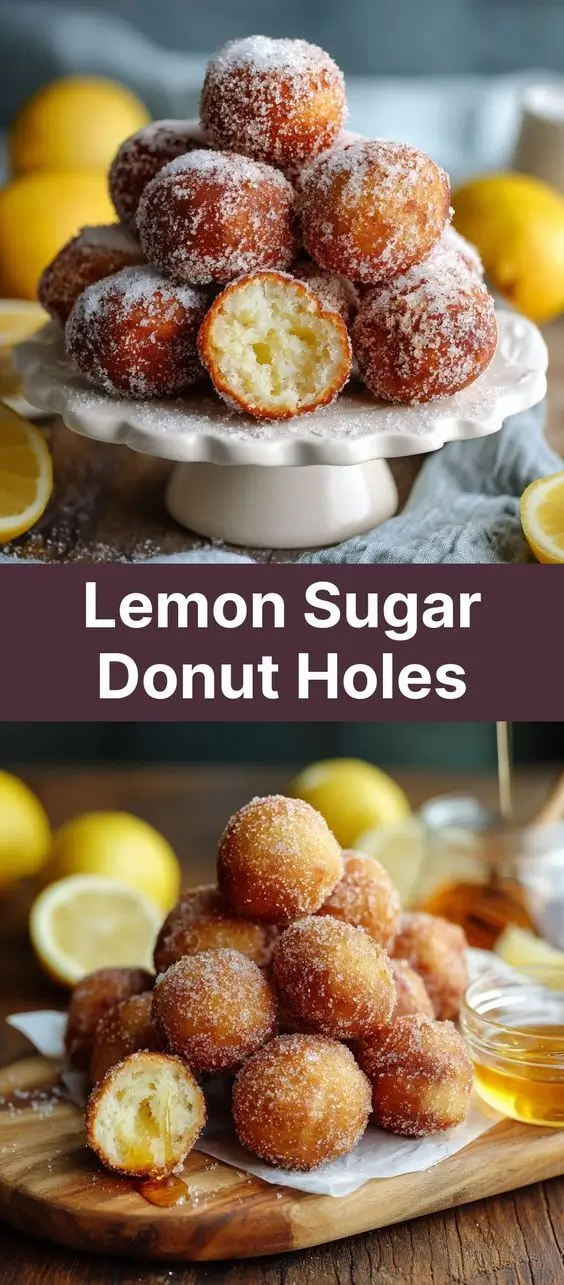
Lemon Sugar Donut Holes: A Zesty, Fluffy Delight
There’s something undeniably comforting about warm, pillowy donut holes fresh from the fryer—especially when they’re bursting with bright citrus flavor. Lemon sugar donut holes offer a perfect balance of tangy lemon zest and sweet, sugary coating, making them an irresistible treat for breakfast, brunch, or dessert. These bite-sized morsels are not only easy to make but also bring a refreshing twist to the classic donut. Whether you’re hosting a weekend gathering or just craving a homemade indulgence, this recipe will satisfy your sweet tooth with every golden-brown bite.
The History of Donut Holes and Citrus in Baking
Donuts have a rich history that traces back centuries, with early versions appearing in Dutch cuisine as “olykoeks” or “oily cakes” brought to America by settlers in the 18th century. The familiar ring-shaped donut is said to have been popularized in the mid-1800s, while the center cut-out evolved into what we now know as donut holes. Originally considered scraps, these small rounds were later embraced for their dense, cake-like texture and even cooking.
Citrus fruits, particularly lemons, have long been used in baking across Mediterranean, Middle Eastern, and European cuisines. Their bright acidity cuts through richness and enhances sweetness, making them ideal companions to buttery, fried doughs. The combination of lemon and sugar has been a staple in desserts like lemon bars, tarts, and pound cakes for generations. Bringing lemon into donut recipes is a natural evolution—adding vibrancy to traditionally heavy pastries and offering a modern twist on a beloved classic.
Today, lemon sugar donut holes represent the fusion of historical deep-frying traditions and contemporary flavor innovation, combining nostalgic comfort with a refreshing zing that appeals to modern palates.
Ingredients Breakdown: What Makes Lemon Sugar Donut Holes Shine
The magic of lemon sugar donut holes lies in the harmony of simple pantry staples elevated by fresh citrus. Each ingredient plays a crucial role in achieving the perfect texture and flavor profile:
- All-Purpose Flour: Provides structure to the dough. It gives the donut holes their soft yet slightly chewy interior.
- Granulated Sugar: Sweetens the batter and helps create a crisp outer crust when combined with melted butter in the coating.
- Baking Powder & Baking Soda: Leavening agents that help the donut holes rise and become fluffy without requiring yeast.
- Salt: Balances sweetness and enhances overall flavor.
- Ground Nutmeg (optional): Adds warmth and depth, complementing the lemon’s brightness.
- Eggs: Bind ingredients together and contribute richness and moisture.
- Buttermilk: Reacts with baking soda to create lift and tenderness. Its slight tang enhances the citrus notes.
- Unsalted Butter (melted): Adds fat for richness and a soft crumb. Using melted rather than creamed butter keeps the texture more cake-like.
- Vanilla Extract: Deepens flavor complexity and pairs beautifully with lemon.
- Fresh Lemon Juice: Provides acidity and unmistakable citrus punch. Always use freshly squeezed for best results.
- Lemon Zest: The star ingredient! Contains aromatic oils that deliver intense lemon flavor without adding excess liquid.
- Vegetable Oil (for frying): Neutral in flavor and high in smoke point, ideal for deep-frying to golden perfection.
- Additional Butter and Sugar (for coating): Melted butter brushed on hot donut holes helps the sugar adhere, creating a sweet, glossy finish. Caster sugar or superfine sugar works best for a smooth, even coat.
Step-by-Step Recipe: How to Make Perfect Lemon Sugar Donut Holes at Home
Follow this detailed guide to create light, fluffy, and irresistibly zesty lemon sugar donut holes in your own kitchen.
Ingredients
- 2 cups (250g) all-purpose flour
- ¾ cup (150g) granulated sugar
- 2 teaspoons baking powder
- ½ teaspoon baking soda
- ¼ teaspoon salt
- ¼ teaspoon ground nutmeg (optional)
- 2 large eggs
- ½ cup (120ml) buttermilk
- ¼ cup (60g) unsalted butter, melted and cooled
- 1 teaspoon vanilla extract
- 3 tablespoons fresh lemon juice (about 1 large lemon)
- 1 tablespoon finely grated lemon zest (from 1–2 lemons)
- 4–6 cups vegetable oil (or canola oil), for frying
- ½ cup (100g) granulated sugar (for coating)
- 3 tablespoons unsalted butter, melted (for coating)
Directions
- Prepare Your Workspace: Set up a wire rack over a baking sheet lined with paper towels to drain the fried donut holes. Have a slotted spoon or spider strainer ready.
- Mix Dry Ingredients: In a large mixing bowl, whisk together the flour, ¾ cup sugar, baking powder, baking soda, salt, and nutmeg (if using). Ensure even distribution of leaveners.
- Combine Wet Ingredients: In a separate bowl, whisk the eggs until smooth. Add buttermilk, melted butter, vanilla extract, lemon juice, and lemon zest. Stir well until fully combined.
- Create the Batter: Pour the wet mixture into the dry ingredients. Gently fold together using a spatula until just combined. Do not overmix—small lumps are okay. Overmixing leads to tough donut holes.
- Heat the Oil: Pour oil into a heavy-bottomed pot or Dutch oven to a depth of about 2–3 inches. Heat over medium heat until it reaches 350°F–360°F (175°C–180°C). Use a deep-fry or candy thermometer for accuracy.
- Form the Donut Holes: Once the oil is hot, carefully drop rounded tablespoons of batter into the oil using two spoons or a small cookie scoop. Work in batches, avoiding overcrowding the pot (this lowers oil temperature and causes greasy donuts).
- Fry Until Golden: Fry the donut holes for 2–3 minutes per side, turning occasionally with a slotted spoon, until they are puffed and golden brown all over. They should float to the surface shortly after being added.
- Drain Excess Oil: Remove donut holes from the oil and place them on the prepared wire rack to drain. Let cool for 1–2 minutes—they should still be warm when coated.
- Coat in Butter and Sugar: While still warm, brush each donut hole generously with melted butter using a pastry brush, then roll or toss in the ½ cup granulated sugar until fully coated.
- Serve Warm: Enjoy immediately for the best flavor and texture. These are best eaten fresh but can be stored for short periods (see tips below).
Tips for Making the Best Lemon Sugar Donut Holes
- Use Fresh Lemons: Bottled lemon juice lacks the bright, aromatic quality of fresh. Always zest the lemon before juicing it.
- Control Oil Temperature: Maintaining a steady 350°F–360°F is critical. Too cool, and the donuts absorb oil; too hot, and they brown too quickly while staying raw inside.
- Don’t Overmix the Batter: Stir until just combined. Overmixing develops gluten, leading to dense, chewy donut holes instead of tender ones.
- Work in Small Batches: Frying too many at once drops the oil temperature and results in uneven cooking.
- Keep Them Warm: If making a large batch, place finished donut holes on a wire rack in a 200°F (95°C) oven to keep warm while continuing to fry.
- Double-Coat for Extra Sweetness: For an extra-sweet treat, re-dip in melted butter and sugar after the first coat has set.
- Sift Sugar for Finer Coating: Sifting granulated sugar removes clumps and creates a smoother, more luxurious finish.
Variations and Customizations
These lemon sugar donut holes are incredibly versatile. Here are some creative ways to customize them:
- Lemon Glaze Variation: Skip the sugar coating and dip warm donut holes in a glaze made from powdered sugar, lemon juice, and a splash of milk. Add a pinch of salt for balance.
- Lavender-Infused Sugar: Mix dried culinary lavender into the coating sugar for a floral, gourmet twist.
- Lemon Blueberry Donut Holes: Fold ½ cup fresh blueberries (tossed in flour) into the batter for fruity bursts in every bite.
- Gluten-Free Version: Substitute all-purpose flour with a 1:1 gluten-free baking blend. Add ½ teaspoon xanthan gum if not included in the mix.
- Dairy-Free Option: Replace buttermilk with a dairy-free alternative (e.g., almond milk + ½ tablespoon vinegar) and use vegan butter.
- Mini Muffin Pan Baked Version: For a healthier take, spoon batter into a greased mini muffin tin and bake at 350°F for 10–12 minutes. Brush with butter and sugar after cooling slightly.
- Other Citrus Varieties: Try orange zest and juice for a sweeter citrus note, or lime for a tropical kick. Grapefruit zest adds a sophisticated, slightly bitter edge.
- Spiced Lemon: Add a pinch of cinnamon or cardamom to the batter for warmth and complexity.
Health Considerations and Nutritional Value
While lemon sugar donut holes are undeniably indulgent, understanding their nutritional profile can help you enjoy them mindfully.
Nutritional Highlights (per serving, approx. 3–4 donut holes):
- Calories: ~280–320 kcal
- Total Fat: ~14–18g (mostly from frying and butter)
- Saturated Fat: ~5–7g
- Carbohydrates: ~40–45g
- Sugars: ~20–25g (naturally occurring and added)
- Protein: ~4–5g
- Sodium: ~150–200mg
Positive Aspects:
- Lemons provide vitamin C, antioxidants, and support digestion.
- Eggs contribute high-quality protein and essential nutrients like choline.
- Buttermilk contains probiotics and less fat than cream.
Considerations:
- Deep-frying increases fat and calorie content significantly. Baking reduces fat by up to 50%.
- High sugar content makes these best enjoyed occasionally or in moderation.
- Refined flour offers fewer nutrients than whole grains. Consider substituting up to ½ cup with whole wheat pastry flour for added fiber.
To make a healthier version, try air-frying (if using a donut mold) or baking. You can also reduce sugar in the batter slightly and rely on the coating for sweetness. Pairing with fruit or Greek yogurt balances the meal.
Frequently Asked Questions (FAQ)
Q: Can I bake lemon sugar donut holes instead of frying?
A: Yes! Spoon the batter into a greased or silicone mini muffin pan and bake at 350°F for 10–12 minutes, or until a toothpick comes out clean. Brush with butter and coat in sugar while warm.
Q: How do I store leftover donut holes?
A: Store in an airtight container at room temperature for up to 1 day. They’re best eaten fresh. For longer storage, freeze uncoated donut holes for up to 1 month. Thaw, reheat in oven, then coat.
Q: Why did my donut holes come out greasy?
A: This usually happens when the oil temperature is too low. Use a thermometer and allow oil to reheat between batches.
Q: Can I make the batter ahead of time?
A: It’s best to fry immediately after mixing, as the leavening agents start working right away. However, you can refrigerate the batter for up to 30 minutes if needed.
Q: Can I use lemon extract instead of zest?
A: While extract adds flavor, it doesn’t replicate the fresh, aromatic oils in zest. Use ½–1 teaspoon extract in addition to (not instead of) zest for best results.
Q: Are these suitable for kids?
A: Absolutely! Kids love the sweet-tart flavor. Just ensure they stay clear of hot oil during preparation.
Q: Can I use honey or maple syrup instead of sugar?
A: Substituting liquid sweeteners may alter texture and browning. Stick to granulated sugar in the batter for reliable results, but you can use coconut sugar for a less refined option.
Summary
Lemon sugar donut holes are a delightful fusion of fluffy cake donuts and vibrant citrus flavor, finished with a sweet, buttery sugar coating. Easy to make and impossible to resist, they bring sunshine to any table—one bite-sized piece at a time.