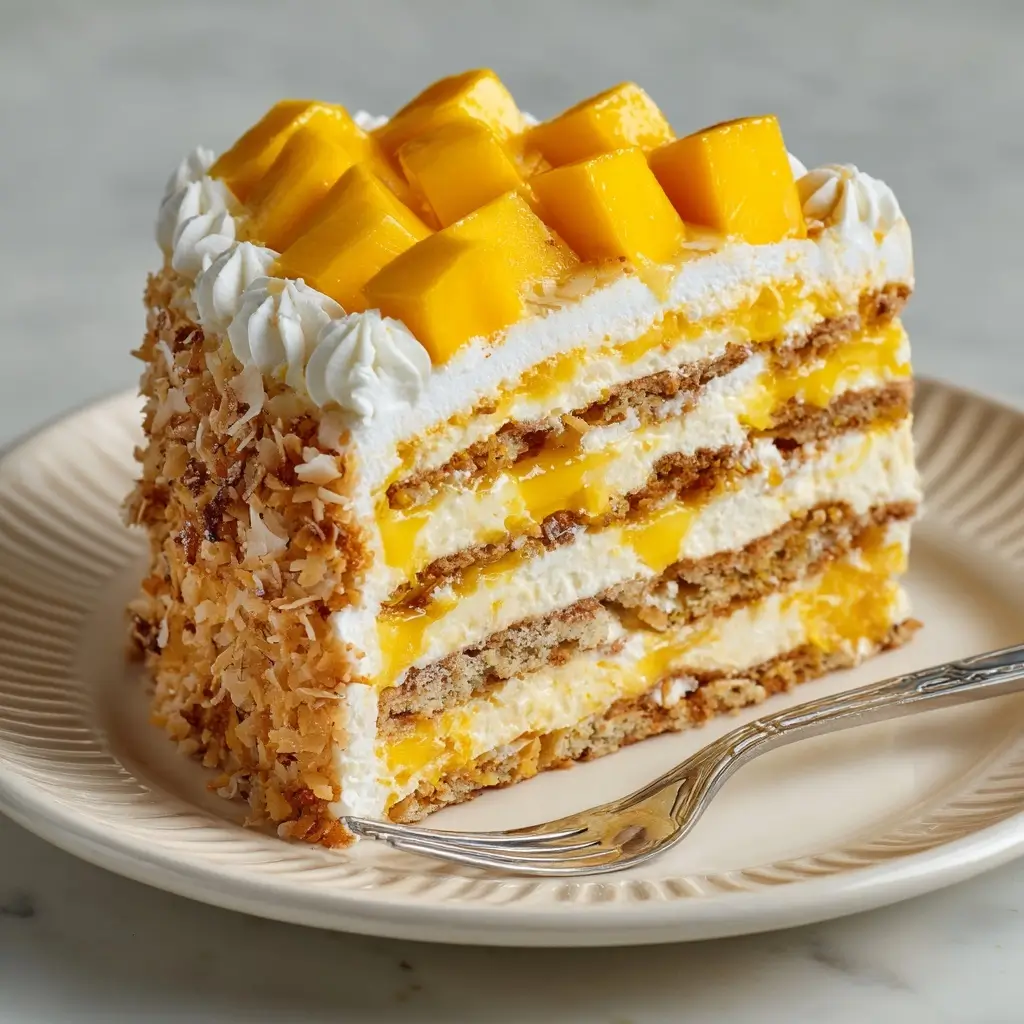
Mango Coconut Icebox Cake: A Tropical Dessert Delight
Introduction
The Mango Coconut Icebox Cake is a luscious, no-bake dessert that captures the essence of tropical paradise in every bite. With layers of creamy coconut-infused custard, ripe mango slices, and tender vanilla wafers or graham crackers, this cake requires no oven time—just patience as it chills and sets in the refrigerator. Light, refreshing, and bursting with flavor, it’s perfect for summer gatherings, beachside picnics, or anytime you crave a sweet escape to the islands. Whether you’re hosting a dinner party or simply treating yourself, this icebox cake delivers elegance without the effort.
The History
Icebox cakes have a surprisingly rich history rooted in early 20th-century America, long before modern refrigeration. When households began using insulated “iceboxes” cooled by actual blocks of ice, creative cooks started making desserts that relied on chilling rather than baking. The original concept involved layering sweetened whipped cream with thin wafers or cookies, allowing them to soften into a cohesive, cake-like texture over time.
The classic version often used chocolate wafers and heavy cream, evolving into what many now recognize as the Oreo icebox cake. However, as global flavors became more accessible, bakers began experimenting with tropical ingredients like coconut and mango—especially in regions such as the Caribbean, Southeast Asia, and South Florida, where these fruits grow abundantly.
The Mango Coconut variation emerged as a fusion of American dessert techniques and exotic tropical tastes. It reflects both culinary innovation and cultural exchange, combining the creamy tradition of American icebox desserts with the bright, juicy sweetness of mango and the rich, nutty aroma of coconut. Today, this version is celebrated not only for its taste but also for its versatility and seasonal appeal.
Ingredients Breakdown
Every component of the Mango Coconut Icebox Cake plays a vital role in creating its signature texture and flavor profile. Let’s explore each ingredient in detail:
- Ripe Mangoes (2–3 large): Choose fragrant, slightly soft mangoes like Ataulfo, Kent, or Tommy Atkins. They provide natural sweetness, vibrant color, and a smooth texture when layered. Fresh is best, but frozen (thawed) or high-quality canned mango can work in a pinch.
- Heavy Whipping Cream (2 cups): This forms the base of the creamy layers. High fat content (at least 36%) ensures proper whipping and stability. It gives the cake its luxurious mouthfeel and helps bind the layers together as it chills.
- Sweetened Condensed Milk (1 can, 14 oz): Acts as both sweetener and thickener. Its caramel-like richness complements the tartness of mango and enhances the overall creaminess without curdling when mixed with acidic ingredients.
- Cream of Coconut (½ cup): Not to be confused with coconut milk or coconut water, cream of coconut (like Coco López) is a thick, sweetened coconut product essential for tropical flavor. It adds depth and a velvety consistency.
- Vanilla Extract (1 tsp): Enhances the overall aroma and balances the sweetness. Use pure extract for best results.
- Lemon Juice (1 tbsp): A small amount brightens the filling and cuts through the richness, preventing the dessert from feeling too heavy.
- Vanilla Wafers or Graham Crackers (about 40–50 sheets): These form the structural base of the cake. Vanilla wafers offer a crisp, buttery contrast that softens beautifully after chilling. Graham crackers provide a slightly wholesomer, honeyed flavor and are ideal for those who prefer a less sweet cookie base.
- Shredded Coconut (½ cup, optional): Toasted or raw, it adds texture and reinforces the coconut theme. Sprinkle between layers or use as a garnish.
- Mascarpone or Cream Cheese (4 oz, optional): For a richer, more stable filling, some bakers add mascarpone or cream cheese. It improves structure and adds a subtle tang.
- Coconut Extract (¼ tsp, optional): Boosts coconut flavor if your cream of coconut isn’t potent enough.
Step-by-Step Recipe
- Prepare the Mango Purée: Peel and dice 2 ripe mangoes. Blend until smooth using a food processor or immersion blender. Strain through a fine-mesh sieve to remove fibers for a silky texture. Set aside ¾ cup for layering; reserve extra for topping or another use.
- Whip the Cream: In a chilled bowl, beat 2 cups of cold heavy cream with an electric mixer on medium-high speed until soft peaks form. Be careful not to over-whip. Transfer to another bowl and set aside.
- Create the Coconut Custard Base: In a large mixing bowl, combine one 14-ounce can of sweetened condensed milk, ½ cup cream of coconut, 1 teaspoon vanilla extract, and 1 tablespoon lemon juice. Whisk until smooth and well blended.
- Fold in the Cream: Gently fold the whipped cream into the coconut mixture in three additions, using a spatula. Be gentle to maintain airiness. If using mascarpone or cream cheese, blend it into the condensed milk mixture before folding in the cream.
- Assemble the Layers: Select a 9×9-inch square dish, a trifle bowl, or a springform pan lined with parchment paper for easy removal. Begin with a layer of vanilla wafers or graham cracker squares, breaking pieces as needed to fit snugly without gaps.
- Add Mango Layer: Spread about one-third of the mango purée evenly over the cookies.
- Add Cream Layer: Spoon one-third of the coconut cream mixture over the mango and spread gently with a spatula.
- Repeat the Layers: Add another layer of cookies, followed by mango purée, then coconut cream. Repeat once more to create at least three full layers. Finish with a final layer of the coconut cream mixture on top.
- Smooth and Garnish: Use a spatula to smooth the top surface. Optionally, press toasted shredded coconut around the sides or sprinkle it on top. Arrange thin mango slices in a decorative pattern on the surface for a stunning presentation.
- Chill Thoroughly: Cover the dish tightly with plastic wrap and refrigerate for at least 8 hours, preferably overnight. This allows the cookies to absorb moisture and soften into a cake-like consistency.
Tips
- Use Cold Ingredients: Ensure the heavy cream, bowl, and beaters are well-chilled before whipping. This helps achieve maximum volume and stability.
- Don’t Over-Whip the Cream: Stop beating once soft to medium peaks form. Over-whipped cream can turn grainy or even become butter.
- Layer Evenly: Distribute each layer uniformly to prevent soggy spots or dry patches. Press down lightly but don’t compact the layers.
- Prevent Sogginess: If assembling ahead of time, consider brushing the topmost cream layer with a thin glaze of melted white chocolate or apricot jam to create a moisture barrier, especially if adding fresh fruit toppings later.
- Easy Removal: Line your dish with parchment paper or acetate strips to lift the cake out cleanly for slicing.
- Stabilize the Cream (Optional): For extra firmness, especially in warm climates, add 1 teaspoon of unflavored gelatin dissolved in 1 tablespoon of warm water to the cream mixture before folding.
- Toast the Coconut: Lightly toasting shredded coconut before sprinkling enhances flavor and adds a pleasant crunch.
- Control Sweetness: If mangoes are very sweet, reduce the condensed milk slightly or balance with a touch more lemon juice.
Variations and Customizations
The beauty of the Mango Coconut Icebox Cake lies in its adaptability. Here are some delicious twists to try:
- Alcohol-Infused Version: Add 2–3 tablespoons of dark rum, coconut rum (like Malibu), or mango liqueur to the cream mixture for an adult-friendly twist.
- Dairy-Free/Vegan Option: Substitute heavy cream with chilled full-fat coconut milk (chill overnight, scoop out the solid cream), use vegan condensed milk (homemade or store-bought), and choose plant-based cookies. Coconut cream alone can replace dairy entirely.
- Gluten-Free Version: Use gluten-free vanilla wafers or almond flour cookies. Many brands now offer excellent alternatives that soften well.
- Fruit Variations: Swap mango with passion fruit purée, pineapple, peaches, or mixed berries. Create a tropical medley with diced kiwi, banana, and mango.
- Chocolate Swirl: Melt ¼ cup white or dark chocolate and swirl into the cream layers for a marbled effect.
- Layered Parfaits: Serve individual portions in glasses for an elegant dessert presentation.
- Citrus Zest: Add lime or orange zest to the cream for a zesty kick that complements the mango.
- Nutty Crunch: Add a layer of crushed macadamia nuts or pecans between the cream and cookies for added texture.
- Coconut Water Soak: Lightly brush cookies with chilled coconut water before layering to enhance tropical flavor without excess sweetness.
Health Considerations and Nutritional Value
While undeniably indulgent, the Mango Coconut Icebox Cake does offer some nutritional benefits—when enjoyed in moderation.
Nutritional Highlights:
- Mangoes: Rich in vitamin C, vitamin A, fiber, and antioxidants like mangiferin, which may support immune health and reduce inflammation.
- Coconut Products: Cream of coconut contains medium-chain triglycerides (MCTs), which are metabolized differently than other fats and may provide quick energy. However, it is high in saturated fat and sugar, so portion control is key.
- Dairy: Provides calcium, protein, and vitamin D (if fortified). Opting for reduced-fat versions can lower calorie content, though it may affect texture.
Considerations:
- High Sugar Content: Sweetened condensed milk and cream of coconut are both very high in added sugars. One serving can contain 25–35 grams of sugar. Diabetics or those managing blood sugar should consume sparingly or explore low-sugar alternatives.
- Calorie Density: Due to heavy cream, condensed milk, and cookies, this dessert is calorie-rich. A single slice may range from 300–500 calories depending on size and ingredients.
- Lactose Intolerance: Contains dairy; lactose-sensitive individuals may need substitutes like coconut-based creams and non-dairy condensed milks.
- Balanced Indulgence: Best served as an occasional treat. Pair with a light meal and plenty of water to balance digestion.
Ingredients
- 2–3 ripe mangoes, peeled and pureed (about ¾–1 cup)
- 2 cups heavy whipping cream, cold
- 1 (14 oz) can sweetened condensed milk
- ½ cup cream of coconut (e.g., Coco López)
- 1 teaspoon pure vanilla extract
- 1 tablespoon fresh lemon juice
- 40–50 vanilla wafers or graham crackers
- ½ cup shredded coconut (toasted or raw, optional)
- Pinch of salt (optional, enhances flavor)
- Mango slices for garnish (optional)
Directions
- In a blender or food processor, puree mango flesh until smooth. Strain if desired and measure out ¾ cup. Set aside.
- Chill a large mixing bowl and beaters in the freezer for 10 minutes. Add cold heavy cream and whip until soft peaks form. Transfer to a separate bowl.
- In the same (now clean) bowl, whisk together sweetened condensed milk, cream of coconut, vanilla extract, lemon juice, and a pinch of salt until smooth and fully combined.
- Gently fold one-third of the whipped cream into the coconut mixture to lighten it. Then fold in the remaining cream until no streaks remain. Avoid overmixing.
- Line a 9×9-inch dish or trifle bowl with parchment paper for easy removal. Place a single layer of vanilla wafers or graham crackers on the bottom, breaking pieces to fill gaps.
- Spread approximately one-third of the mango puree evenly over the cookies.
- Top with one-third of the coconut cream mixture, spreading gently with a spatula.
- Repeat the layers two more times: cookies → mango → cream. End with a final layer of the coconut cream on top.
- Sprinkle shredded coconut over the surface or press it onto the sides. Arrange fresh mango slices decoratively on top if desired.
- Cover tightly with plastic wrap and refrigerate for at least 8 hours, or overnight for best results.
- Before serving, let sit at room temperature for 10–15 minutes for easier slicing. Use a sharp knife dipped in hot water for clean cuts.
FAQ
Q: Can I make this cake ahead of time?
A: Absolutely! This dessert actually improves with time. Make it 1–2 days in advance for optimal texture and flavor.
Q: Can I freeze Mango Coconut Icebox Cake?
A: Freezing is possible but not ideal. The texture may become slightly grainy upon thawing due to separation in the cream layers. For best quality, keep refrigerated and consume within 4–5 days.
Q: Why are my layers soggy or dry?
A: Uneven liquid distribution or insufficient chilling time causes texture issues. Ensure even spreading of purée and cream, and always chill for at least 8 hours.
Q: Can I use canned mango?
A: Yes, but choose unsweetened or light syrup varieties. Drain well and blend for smoothness. Fresh mango provides superior flavor and color.
Q: What can I substitute for cream of coconut?
A: There’s no perfect substitute, but a mix of coconut milk and powdered sugar (3:1 ratio) can mimic texture, though it lacks sweetness and richness. Homemade cream of coconut can be made by simmering coconut milk with sugar until thickened.
Q: Is this safe for pregnant women?
A: Yes, since all ingredients are pasteurized and no raw eggs are used. Just ensure dairy products are fresh and stored properly.
Q: Can I use yogurt instead of whipped cream?
A: Greek yogurt can be used for a tangier, lower-fat version, but the texture will be denser and less fluffy. Combine with whipped cream (half-and-half) for a balanced result.
Summary
The Mango Coconut Icebox Cake is a dreamy, no-bake dessert that blends tropical mango and rich coconut cream between layers of tender cookies, requiring only chilling to transform into a luxuriously soft, sliceable cake. Effortless to prepare yet impressive in presentation, it’s the ultimate make-ahead treat for warm days and sweet cravings alike.