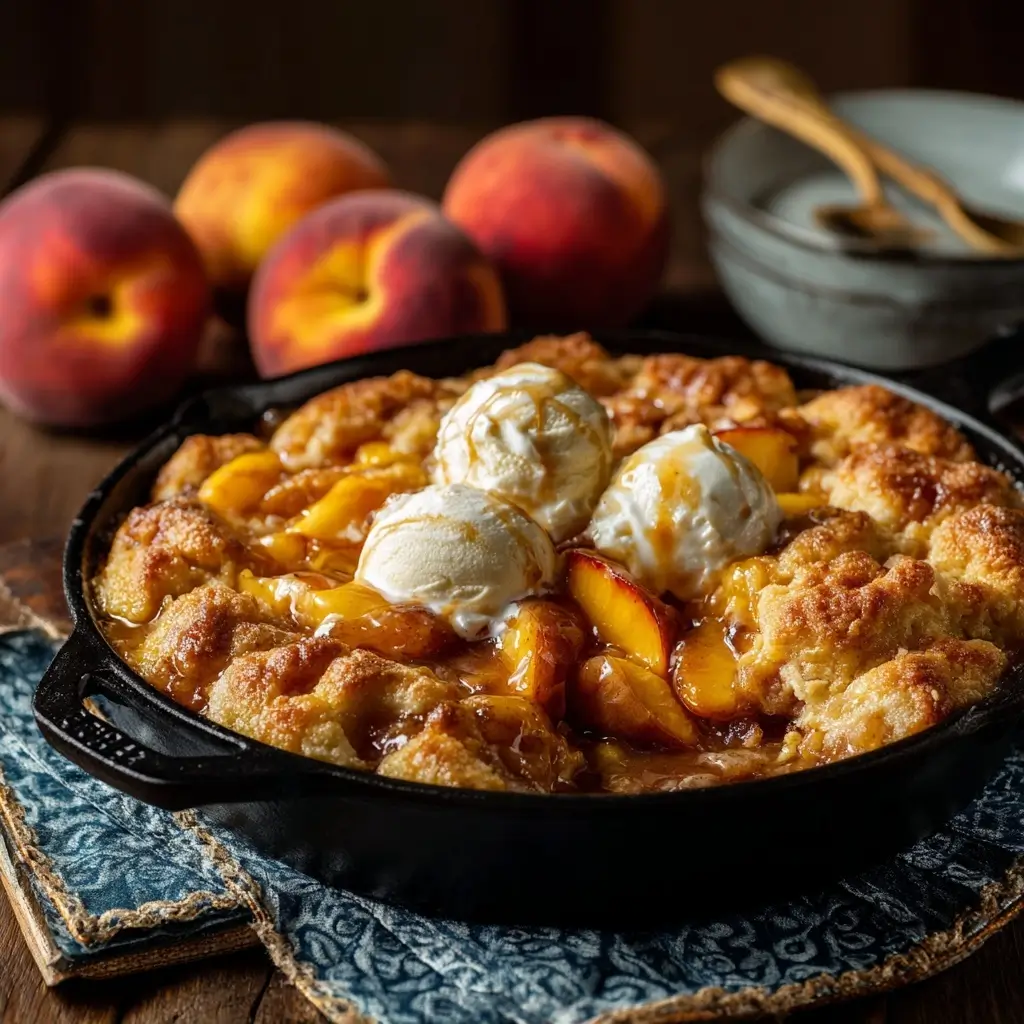
Peach Cobbler Skillet Dessert: A Southern Classic Baked to Perfection
The History of Peach Cobbler
Peach cobbler is a quintessential American dessert with deep roots in Southern culinary tradition, though its origins trace back even further. The term “cobbler” first appeared in 19th-century England and America to describe a baked fruit dish covered with a dropped or spooned biscuit-like topping—distinct from pies that used rolled pastry crusts. Early American settlers, lacking the ingredients and tools for traditional English pies, improvised using what was available: fresh seasonal fruit and simple flour-based doughs.
As peach farming flourished in the American South—particularly in states like Georgia and South Carolina—peaches became a staple ingredient in home kitchens. By the late 1800s, peach cobbler had become a beloved staple at family dinners, church suppers, and summer picnics. It was especially popular during harvest season when peaches were abundant and affordable. The skillet version of the cobbler emerged as a practical innovation, allowing cooks to prepare the dessert directly over a wood stove or open flame using cast iron skillets—a hallmark of rustic American cooking.
Today, the peach cobbler skillet dessert stands as a symbol of comfort food, evoking nostalgia and warmth. Its enduring popularity lies not only in its delicious flavor but also in its simplicity, versatility, and the way it brings people together around the dinner table.
Ingredients Breakdown: What Makes This Skillet Cobbler Special
The magic of a perfect peach cobbler lies in the harmony between sweet, juicy fruit and a golden, buttery crust. Each ingredient plays a vital role in creating this soul-satisfying dessert.
- Fresh Peaches: The star of the show. Ripe, juicy peaches offer natural sweetness and a vibrant aroma. When in season (typically May through August), nothing beats fresh peaches peeled and sliced. However, frozen or canned peaches can be substituted in a pinch.
- Granulated Sugar: Enhances the natural sweetness of the peaches and helps create a syrupy filling as it bakes. Adjust according to the ripeness of your peaches and personal preference.
- Brown Sugar: Adds depth and a caramel-like richness to the filling. It also contributes to the moist texture of the topping when used in the batter.
- Lemon Juice: A small amount brightens the flavor, cutting through the sweetness and enhancing the fruit’s natural tang.
- Cinnamon: Warm and aromatic, cinnamon complements peaches beautifully and adds a cozy note typical of classic cobblers.
- All-Purpose Flour: Provides structure to the cobbler topping. Used in both the fruit filling (to thicken) and the batter (for texture).
- Butter: Unsalted butter is essential for flavor and richness. In skillet cobblers, melted butter is often poured into the pan before adding the batter, creating a crispy, caramelized bottom layer.
- Milk: Helps bind the batter and creates a tender crumb in the topping.
- Vanilla Extract: Elevates the overall flavor profile with its warm, floral notes.
- Baking Powder: Acts as a leavening agent, giving the topping a light, cake-like rise.
- Salt: Balances the sweetness and enhances all other flavors in the dish.
- Optional Add-Ins: Nutmeg, almond extract, oats, chopped pecans, or even a splash of bourbon can elevate your cobbler to gourmet levels.
Step-by-Step Recipe: How to Make Peach Cobbler in a Skillet
Follow these detailed instructions to create a mouthwatering peach cobbler right in your cast iron skillet. This method ensures a gooey fruit center and a golden, crisp-topped crust with minimal cleanup.
Ingredients:
- 6 cups peeled, pitted, and sliced fresh peaches (about 6–7 medium peaches)
- ½ cup granulated sugar
- ¼ cup brown sugar, packed
- 1 tablespoon lemon juice
- 1 teaspoon ground cinnamon
- 2 tablespoons all-purpose flour
- ¼ teaspoon salt
- ½ cup (1 stick) unsalted butter
- 1 cup all-purpose flour (for topping)
- ¾ cup granulated sugar
- 1½ teaspoons baking powder
- ½ teaspoon salt
- ½ cup milk
- 1 teaspoon vanilla extract
Directions:
- Preheat the Oven: Set your oven to 350°F (175°C). Position the rack in the center for even baking.
- Prepare the Fruit Filling: In a large mixing bowl, combine the sliced peaches, ½ cup granulated sugar, ¼ cup brown sugar, lemon juice, cinnamon, 2 tablespoons flour, and ¼ teaspoon salt. Gently toss until the peaches are evenly coated. Let sit for 10–15 minutes to release juices.
- Heat the Skillet and Melt Butter: Place a 10-inch cast iron skillet in the preheating oven for about 5 minutes. Carefully remove it (it will be hot!) and add the ½ cup (1 stick) of butter. Swirl the pan until the butter is completely melted and coats the bottom and sides. Return the skillet to the oven while you prepare the topping.
- Make the Cobbler Topping: In a medium bowl, whisk together 1 cup flour, ¾ cup sugar, baking powder, and ½ teaspoon salt. Stir in the milk and vanilla extract until just combined. Do not overmix; a few lumps are okay.
- Assemble the Cobbler: Remove the hot skillet from the oven again. Pour the batter evenly over the melted butter—do not stir. The batter will look thin, but it will rise and form a cake-like layer on top during baking.
- Add the Peach Filling: Gently pour the peach mixture over the batter. Again, do not stir. The peaches will sink slightly, and the batter will rise around them as it bakes.
- Bake: Place the skillet in the oven and bake for 40 to 45 minutes, or until the topping is golden brown, the fruit is bubbling, and a toothpick inserted into the cake portion comes out clean.
- Cool Slightly: Allow the cobbler to rest for 10–15 minutes after removing it from the oven. This helps the filling thicken slightly and makes serving easier.
- Serve Warm: Scoop servings directly from the skillet. For the ultimate experience, top with a scoop of vanilla ice cream or a drizzle of heavy cream.
Tips for the Perfect Peach Cobbler Skillet Dessert
- Use Ripe, But Not Mushy Peaches: Opt for peaches that yield slightly to pressure but still hold their shape. Overripe peaches may turn mushy during baking.
- Peel Peaches Easily: Blanch them! Score an “X” on the bottom, dip in boiling water for 30 seconds, then transfer to ice water. The skins will slip right off.
- Don’t Skip Preheating the Skillet: A hot skillet helps create a crisp, caramelized edge on the bottom of the cobbler and promotes even baking.
- Resist the Urge to Stir: After pouring the batter and fruit into the skillet, leave it alone. Stirring disrupts the layering effect that gives cobbler its signature texture.
- Adjust Sweetness: Taste your peaches before adding sugar. If they’re very sweet, reduce the sugar by 1–2 tablespoons.
- Watch the Browning: If the topping browns too quickly, tent loosely with aluminum foil for the last 10–15 minutes of baking.
- Cast Iron Is Key: A well-seasoned cast iron skillet distributes heat evenly and retains it well, resulting in a perfectly cooked cobbler.
- Let It Rest: Allowing the cobbler to cool slightly improves texture and prevents burns from steamy filling.
Variations and Customizations
While traditional peach cobbler is timeless, feel free to experiment with flavors and textures to make it your own.
- Berry-Peach Cobbler: Replace 2 cups of peaches with fresh blueberries, raspberries, or blackberries for a summery twist.
- Spiced Peach Cobbler: Add a pinch of nutmeg, ginger, or cardamom to the filling for a more complex spice profile.
- Bourbon Peach Cobbler: Stir 1–2 tablespoons of bourbon into the peach filling for a rich, adult-friendly flavor.
- Oat Crumble Topping: Swap the cake-like topping for a streusel made with oats, brown sugar, flour, butter, and cinnamon for a crunchier texture.
- Gluten-Free Option: Use a 1:1 gluten-free flour blend in both the filling and topping for a safe alternative.
- Dairy-Free Version: Substitute butter with coconut oil or vegan butter, and use almond, oat, or soy milk instead of dairy milk.
- Mini Skillet Cobblers: Divide the recipe among small individual cast iron skillets for charming single-serving desserts, ideal for parties.
- Apple-Peach Hybrid: Combine peeled and diced apples with peaches for a fall-inspired variation.
- Nutty Crunch: Fold chopped pecans or walnuts into the topping or sprinkle on top before baking.
- Lactose-Free Ice Cream Pairing: Serve with dairy-free vanilla ice cream made from coconut or almond milk.
Health Considerations and Nutritional Value
While peach cobbler is undeniably indulgent, understanding its nutritional content can help you enjoy it mindfully.
Nutritional Highlights (Per Serving, Approx. 1/8 of Recipe):
- Calories: ~320–360
- Total Fat: 12–15g (mostly from butter)
- Saturated Fat: 7–8g
- Carbohydrates: 55–60g
- Sugars: 38–42g (naturally occurring and added)
- Protein: 3–4g
- Dietary Fiber: 2–3g (from peaches and flour)
- Vitamin C: 8–10mg (from peaches)
- Potassium: ~200mg
Health Tips:
- Portion Control: Serve modest portions, ideally ½ cup, and pair with a protein-rich side like Greek yogurt to balance blood sugar.
- Reduce Sugar: Cut the sugar in the filling by 25–30% without sacrificing flavor, especially if using ripe, sweet peaches.
- Boost Fiber: Use whole wheat pastry flour or add oats to increase fiber content and improve satiety.
- Limit Butter: While butter is traditional, you can slightly reduce the amount or use heart-healthy oils like avocado oil in the topping (though texture may vary).
- Fruit Benefits: Peaches are low in calories, rich in antioxidants (like vitamin C and beta-carotene), and contain anti-inflammatory compounds.
- Enjoy Occasionally: Best treated as an occasional treat rather than a daily dessert, especially for those managing diabetes or weight.
Frequently Asked Questions (FAQ)
Can I use frozen peaches?
Yes! Thaw and drain frozen peaches before using. Pat them dry to prevent excess moisture in the filling. You may need to increase the flour slightly (up to 1 extra tablespoon) to absorb liquid.
Can I make peach cobbler ahead of time?
You can prep the peach filling up to 24 hours in advance and store it covered in the refrigerator. The batter is best mixed just before baking. Assembled unbaked cobbler can be refrigerated overnight, but add 5–10 minutes to the baking time.
How do I store leftovers?
Cover the skillet with plastic wrap or transfer leftovers to an airtight container. Store in the refrigerator for up to 4 days. Reheat in the oven at 325°F for 10–15 minutes or in the microwave for 30–60 seconds.
Can I freeze peach cobbler?
Yes, though the texture may soften slightly. Cool completely, wrap tightly in plastic and foil, and freeze for up to 3 months. Thaw in the refrigerator overnight and reheat in the oven.
Why is my cobbler runny?
This could be due to undercooking, too much fruit juice, or insufficient thickener. Ensure you use enough flour and bake until the filling bubbles vigorously and the topping is fully set.
Can I use a different pan?
Yes, but a cast iron skillet delivers the best results. Alternatives include a 9×9-inch baking dish or pie plate, though heating may be less even.
Is peach cobbler the same as peach pie?
No. Pie has a bottom and/or top crust made from pastry dough, while cobbler features a fruit base with a spooned cake or biscuit topping. Cobblers are generally easier and quicker to make.
Can I double the recipe?
Absolutely. Use a larger 12-inch skillet or divide between two 10-inch skillets. Increase baking time by 5–10 minutes and check for doneness.
Summary
Peach Cobbler Skillet Dessert is a timeless Southern favorite that combines sweet, juicy peaches with a buttery, cake-like topping baked to golden perfection in a cast iron skillet.
Simple to make, endlessly customizable, and best served warm with ice cream, this comforting dessert brings joy to any gathering and celebrates the bounty of summer fruit.