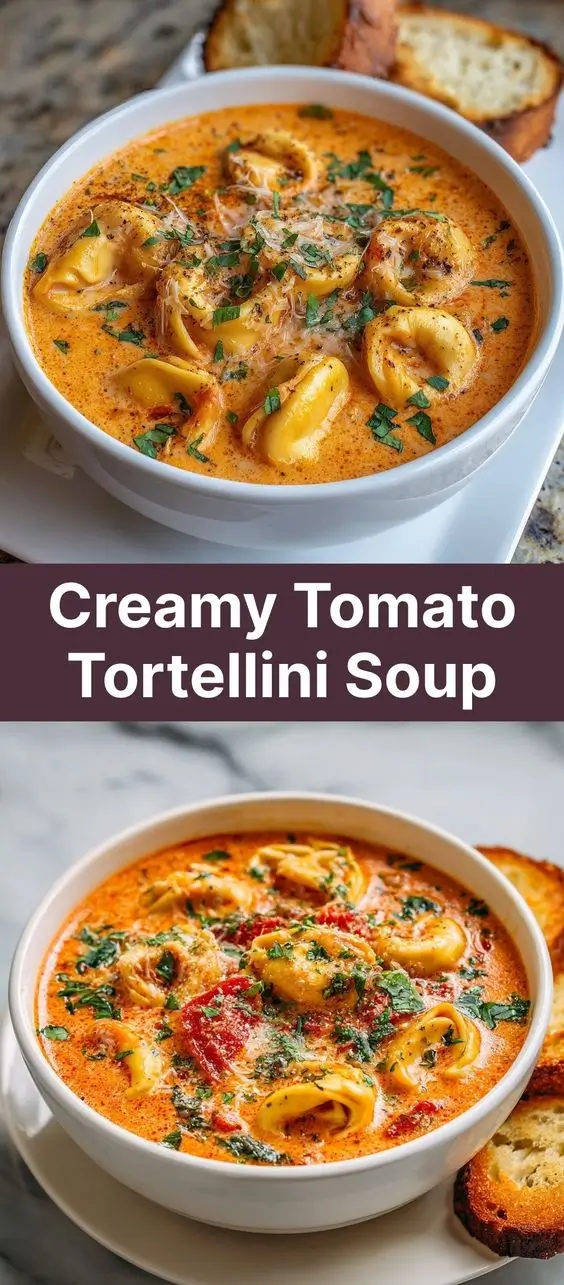
Creamy Tomato Tortellini Soup: A Comforting Bowl of Rich Flavor
Introduction
If there’s one soup that embodies the essence of comfort food, it’s Creamy Tomato Tortellini Soup. This luscious, velvety dish combines the bright acidity of ripe tomatoes with the richness of cream and the satisfying bite of cheese-filled tortellini. Whether you’re cooking for a cozy family dinner, preparing a meal for a chilly evening, or looking for something simple yet indulgent, this soup delivers on all fronts. It’s hearty without being overly heavy, flavorful without requiring complex techniques, and can be made in under an hour using mostly pantry staples.
The beauty of this soup lies in its versatility—it can be customized to suit dietary preferences, elevated with gourmet ingredients, or kept rustic and humble. With each spoonful, you’re greeted with layers of flavor: tangy tomato, savory herbs, creamy dairy (or non-dairy alternatives), and tender pasta pockets oozing with cheese. It pairs perfectly with crusty bread, a side salad, or even enjoyed on its own. In this comprehensive guide, we’ll dive deep into everything you need to know about making the perfect Creamy Tomato Tortellini Soup—from its historical roots to detailed recipes, ingredient insights, health considerations, and more.
The History
The origins of Creamy Tomato Tortellini Soup are rooted in the culinary traditions of Northern Italy, particularly Emilia-Romagna—the birthplace of both tortellini and rich tomato-based sauces. While traditional Italian cuisine often separates courses, with pasta served before soup, modern American-Italian fusion has embraced combining them into heartier, one-pot meals.
Tortellini itself is believed to have originated in Bologna or Modena, shaped to resemble Venus’s navel according to local legend. These small, ring-shaped stuffed pastas were traditionally filled with meats, cheeses, and spices, then served in broths or with butter and sage. Meanwhile, tomato-based soups gained popularity across Europe after the introduction of tomatoes from the Americas in the 16th century. However, it wasn’t until the 19th and 20th centuries that canned tomatoes and dairy creams became widely accessible, allowing for the creation of creamy tomato soups.
The fusion of these two elements—creamy tomato soup and cooked tortellini—likely emerged in mid-20th century North America, where home cooks began experimenting with Italian-inspired dishes using available ingredients. The result was a warming, filling soup that combined the best of Italian flavors with American comfort food sensibilities. Today, variations of Creamy Tomato Tortellini Soup appear in cookbooks, restaurant menus, and weeknight dinner rotations around the world.
Ingredients Breakdown
Understanding the role of each ingredient helps elevate your soup from good to extraordinary. Here’s a detailed look at what goes into a classic Creamy Tomato Tortellini Soup:
- Tomatoes: The foundation of the soup. Canned crushed tomatoes or whole peeled tomatoes (hand-crushed) are preferred for consistent flavor and texture. Fresh tomatoes can work but require longer simmering to reduce and concentrate their taste.
- Onion & Garlic: Provide aromatic depth. Yellow onion is standard; garlic adds pungency and warmth. Sautéed slowly, they build the flavor base.
- Vegetable or Chicken Broth: Adds liquid structure and savory notes. Low-sodium versions allow better control over salt levels.
- Heavy Cream or Half-and-Half: Gives the soup its signature silkiness. For lighter options, whole milk or evaporated milk can substitute, though with less richness.
- Tortellini: Typically cheese-filled, though spinach-cheese, meat, or vegan varieties can be used. Frozen tortellini works perfectly and doesn’t need thawing.
- Olive Oil: Used for sautéing aromatics. Extra virgin olive oil enhances flavor, while refined oils prevent burning at high heat.
- Dried Herbs: Basil, oregano, and thyme are common. They infuse earthy, herbal tones throughout the soup.
- Fresh Basil or Parsley (optional): Added at the end for brightness and color contrast.
- Sugar (optional): A pinch balances excessive tartness from tomatoes.
- Red Pepper Flakes: Introduce subtle heat—adjustable to taste.
- Salt and Black Pepper: Essential seasonings applied gradually to layer flavor.
- Parmesan Rind (optional): Simmered in the broth, it adds umami depth and natural savoriness.
- Cheese Topping: Grated Parmesan or Pecorino Romano sprinkled on serving enhances richness.
Step-by-Step Recipe
Making Creamy Tomato Tortellini Soup is straightforward and forgiving. Follow this detailed process for restaurant-quality results every time.
- Prepare Ingredients: Dice one medium yellow onion (about 1 cup). Mince 3 cloves of garlic. Measure out 28 oz of crushed tomatoes (one standard can), 4 cups of broth, 1 cup of heavy cream, 1 teaspoon dried basil, ½ teaspoon dried oregano, ¼ teaspoon red pepper flakes, and 1 package (about 9–12 oz) of frozen cheese tortellini.
- Sauté Aromatics: Heat 2 tablespoons of olive oil in a large pot or Dutch oven over medium heat. Add the diced onion and cook for 5–7 minutes, stirring occasionally, until translucent and softened. Do not brown.
- Add Garlic and Spices: Stir in minced garlic, dried basil, oregano, red pepper flakes, and black pepper. Cook for 30 seconds to 1 minute until fragrant—be careful not to burn the garlic.
- Incorporate Tomatoes: Pour in the crushed tomatoes (with juices). Stir well and let the mixture simmer gently for 10 minutes. This develops deeper tomato flavor and allows raw acidity to mellow.
- Pour in Broth: Add 4 cups of chicken or vegetable broth. If using, add a Parmesan rind now. Bring to a gentle boil, then reduce heat to maintain a steady simmer.
- Add Tortellini: Drop in the frozen tortellini directly. Stir to submerge. Simmer uncovered for 7–9 minutes, or as directed on the package, until tortellini float and are tender.
- Stir in Cream: Reduce heat to low. Slowly pour in the heavy cream while stirring constantly. Do not allow the soup to boil after adding cream to prevent curdling.
- Season and Adjust: Taste the soup. Add salt gradually (start with ½ tsp). If too acidic, add a pinch of sugar (¼ tsp). Remove Parmesan rind if used.
- Finish with Fresh Herbs: Stir in 2–3 tablespoons of chopped fresh basil or parsley just before serving for a burst of freshness.
- Serve Immediately: Ladle hot soup into bowls. Top with grated Parmesan, cracked black pepper, and a drizzle of extra virgin olive oil if desired.
Tips
- Don’t Overcook Tortellini: Since they come pre-cooked and frozen, tortellini only need 7–9 minutes. Overcooking leads to mushy texture.
- Use Frozen Tortellini Straight from Freezer: No need to thaw—adding them frozen ensures even cooking in the hot liquid.
- Simmer Gently After Adding Cream: High heat can cause the cream to separate. Keep the temperature low and avoid boiling.
- Bloom the Spices: Cooking dried herbs with onions and garlic unlocks their full aroma and integrates them into the oil phase for better flavor distribution.
- Boost Umami: Add a splash of Worcestershire sauce, a dash of soy sauce, or a Parmesan rind during simmering for deeper savoriness.
- Blend for Smoother Texture: Use an immersion blender to partially purée the soup for a thicker, silkier body while leaving some texture.
- Acidity Balance: Taste before final seasoning. Some tomato brands are more acidic than others—adjust sugar or cream accordingly.
- Make Ahead Base: Prepare the tomato-broth portion ahead of time and refrigerate for up to 3 days. Add tortellini and cream when ready to serve.
- Reheat Carefully: Reheat leftovers on low heat, adding a splash of broth or milk to loosen consistency if needed.
- Garnish Generously: A sprinkle of fresh herbs, cheese, or toasted pine nuts adds visual appeal and textural contrast.
Variations and Customizations
This soup is highly adaptable. Below are popular twists to suit different tastes and dietary needs:
- Vegan Version: Use plant-based tortellini (filled with tofu ricotta or cashew cheese), coconut milk or cashew cream instead of dairy, and vegetable broth. Skip cheese garnish or use nutritional yeast.
- Gluten-Free: Substitute gluten-free tortellini (available in most supermarkets). Ensure broth and other ingredients are certified GF.
- Meat Lovers: Brown Italian sausage, ground beef, or pancetta before sautéing onions. Drain excess fat before proceeding.
- Vegetable-Packed: Add diced carrots, celery, zucchini, or bell peppers when cooking onions. Spinach or kale can be stirred in during the last 2 minutes of cooking.
- Roasted Tomato Twist: Replace canned tomatoes with roasted tomatoes (roast halved cherry tomatoes with olive oil, garlic, and herbs at 400°F for 25 minutes).
- Spicy Arrabbiata Style: Increase red pepper flakes to ½–1 teaspoon and add a dash of hot sauce like Calabrian chili paste.
- Herb-Forward: Use fresh rosemary or thyme sprigs during simmering (remove before serving). Finish with lemon zest for brightness.
- Cream Alternatives: Try half-and-half, whole milk, evaporated milk, Greek yogurt (tempered), or béchamel for varying degrees of richness.
- Seafood Infusion: Add cooked shrimp or scallops in the last few minutes for a luxurious twist.
- Slow Cooker Method: Sauté aromatics first, then transfer to slow cooker with tomatoes, broth, and herbs. Cook on low 4–6 hours. Add tortellini and cream in the last 30 minutes.
- Instant Pot Version: Use sauté function for onions and garlic. Add remaining ingredients except cream and tortellini. Pressure cook 5 minutes, quick release, then add tortellini and cook on sauté for 7 minutes. Stir in cream.
Health Considerations and Nutritional Value
While Creamy Tomato Tortellini Soup is undeniably comforting, understanding its nutritional profile helps make informed choices:
Caloric Content: One serving (approx. 1.5 cups) ranges from 350–500 calories depending on ingredients. Heavy cream, cheese tortellini, and added cheese toppings contribute significantly.
Macronutrients:
- Carbohydrates: ~40–55g per serving—mainly from pasta and tomatoes.
- Protein: ~12–18g—comes from cheese filling, dairy, and optional meat additions.
- Fat: ~18–28g—with saturated fat primarily from cream and cheese.
Vitamins & Minerals:
- Lycopene: Found in tomatoes, especially when cooked, this antioxidant supports heart health and may reduce cancer risk.
- Vitamin C: Present in tomatoes and fresh herbs—supports immune function.
- Calcium: From dairy components, beneficial for bone health.
- B Vitamins: Especially B12 and riboflavin from dairy and cheese.
Dietary Modifications:
- Lower Fat: Use low-fat milk, light cream, or Greek yogurt instead of heavy cream. Choose lean protein fillings or veggie tortellini.
- Lower Sodium: Opt for no-salt-added tomatoes and low-sodium broth. Season with herbs rather than salt.
- Higher Fiber: Incorporate lentils, barley, or high-fiber gluten-free pasta. Add leafy greens or roasted vegetables.
- Keto-Friendly? Not traditional due to pasta content, but possible with keto-approved tortellini (almond flour-based) and increased fats.
Digestive Notes: Cheese-filled tortellini and dairy cream may cause discomfort for those with lactose intolerance. Lactose-free alternatives (like lactose-free cream and cheese) or plant-based substitutes can help.
Portion Control: Serve with a side salad to increase volume without excess calories. Use smaller bowls to manage intake while still enjoying satisfaction.
Ingredients
- 2 tbsp olive oil
- 1 medium yellow onion, finely diced
- 3 cloves garlic, minced
- 1 tsp dried basil
- ½ tsp dried oregano
- ¼–½ tsp red pepper flakes (to taste)
- 28 oz can crushed tomatoes (preferably fire-roasted)
- 4 cups low-sodium chicken or vegetable broth
- 1 Parmesan rind (optional)
- 9–12 oz frozen cheese tortellini (or preferred variety)
- 1 cup heavy cream (or substitute)
- Salt to taste (start with ½ tsp)
- Pinch of sugar (optional)
- 2–3 tbsp fresh basil or parsley, chopped
- Grated Parmesan cheese, for serving
- Cracked black pepper and extra olive oil, for garnish
Directions
- In a large pot or Dutch oven, heat olive oil over medium heat. Add diced onion and cook for 5–7 minutes until soft and translucent.
- Add minced garlic, dried basil, oregano, red pepper flakes, and black pepper. Stir and cook for 1 minute until fragrant.
- Pour in crushed tomatoes and stir well. Simmer for 10 minutes, stirring occasionally.
- Add chicken or vegetable broth and Parmesan rind (if using). Bring to a gentle boil.
- Reduce heat to a simmer and add frozen tortellini. Cook for 7–9 minutes, or until tortellini are tender and floating.
- Lower heat to minimum. Stir in heavy cream gradually, ensuring even distribution.
- Season with salt and a pinch of sugar if needed. Taste and adjust seasoning.
- Remove Parmesan rind. Stir in fresh basil or parsley.
- Serve immediately in warm bowls, topped with grated Parmesan, cracked pepper, and a drizzle of olive oil.
FAQ
Can I use fresh tortellini instead of frozen?
Yes, fresh refrigerated tortellini can be used. Cooking time may be shorter—follow package instructions (usually 3–5 minutes).
Can I freeze Creamy Tomato Tortellini Soup?
It’s not recommended due to the dairy content. Cream may separate upon thawing and reheating, leading to a grainy texture. Instead, freeze the tomato-broth base without cream and tortellini, then add fresh components when reheating.
How long do leftovers last?
Store in an airtight container in the refrigerator for up to 3–4 days. Reheat gently on the stove with a splash of broth to restore consistency.
Why did my soup curdle?
Cream can curdle if exposed to high heat or extreme pH (very acidic). Always add cream off-boil and consider tempering by mixing a little hot soup into the cream before adding it to the pot.
Can I make this in a crockpot?
Absolutely. Sauté onions and garlic first, then transfer to slow cooker with tomatoes, broth, and herbs. Cook on low 4–6 hours. Add tortellini and cream in the last 30 minutes on low setting.
Is this soup gluten-free?
Only if using gluten-free tortellini and verifying all other ingredients (broth, seasonings) are GF-certified.
What can I serve with this soup?
Excellent pairings include garlic bread, focaccia, Caesar salad, antipasto platter, or a simple arugula salad with balsamic vinaigrette.
Can I use tomato puree or sauce instead of crushed tomatoes?
You can, but crushed tomatoes provide better texture and body. If using sauce, reduce liquid slightly or simmer longer to thicken.
Can I make it spicy?
Yes! Add more red pepper flakes, a dash of cayenne, or a spoonful of harissa or sriracha for heat.
Can I use canned cheese tortellini?
No—canned tortellini is rare and usually of poor texture. Stick to frozen or fresh refrigerated versions for best results.
Summary
Creamy Tomato Tortellini Soup blends rich tomato flavor with tender cheese-filled pasta and velvety cream for a satisfying, one-pot meal that’s easy to customize and perfect for any season. Hearty, comforting, and bursting with flavor, it’s a modern classic that brings warmth to every bowl.