Garlic Butter Shrimp and Potatoes Sheet Pan: A Complete Guide
Introduction
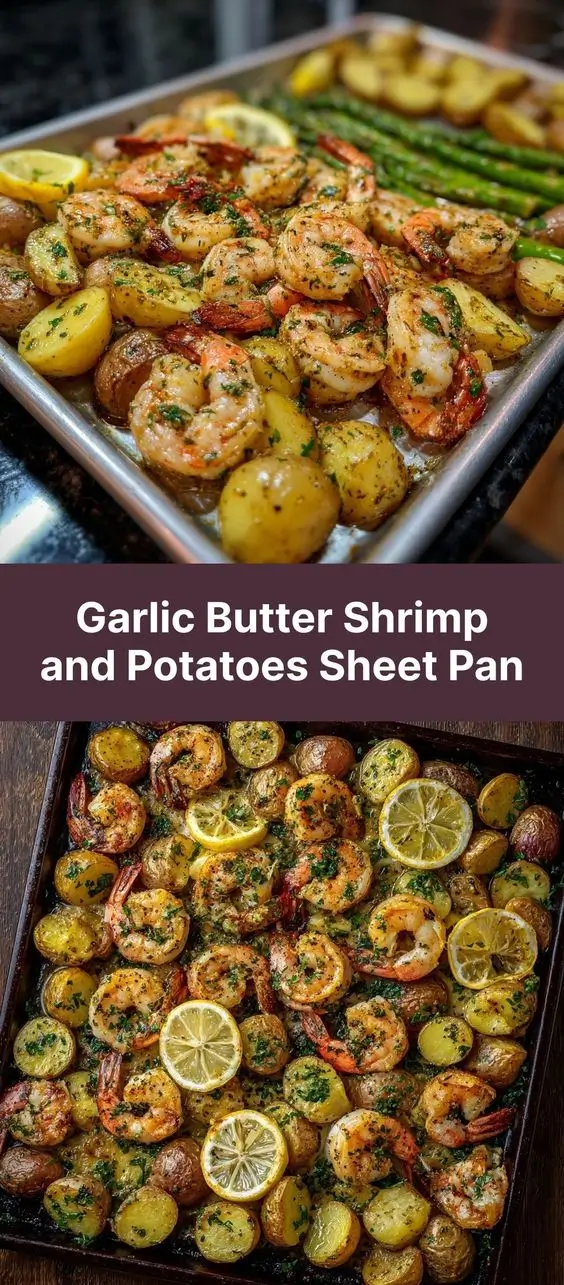
If you’re looking for a delicious, easy-to-prepare meal that combines savory seafood with hearty vegetables, look no further than Garlic Butter Shrimp and Potatoes Sheet Pan. This one-pan wonder is perfect for busy weeknights, lazy weekends, or even entertaining guests without the stress of complicated cooking. With minimal cleanup, maximum flavor, and a beautiful presentation straight from the oven to your table, this dish brings together tender shrimp, crispy roasted potatoes, and an aromatic garlic butter sauce in perfect harmony.
The beauty of this recipe lies not only in its simplicity but also in its versatility. You can customize it with your favorite herbs, spices, and additional vegetables to suit any palate. Whether you’re a seasoned home cook or just beginning your culinary journey, this sheet pan dinner will quickly become a staple in your kitchen rotation. Let’s dive into everything you need to know about making the perfect Garlic Butter Shrimp and Potatoes Sheet Pan dish — from history and ingredients to step-by-step instructions, variations, health benefits, and more.
The History
While there isn’t a specific documented origin for “Garlic Butter Shrimp and Potatoes Sheet Pan” as a named dish, its roots are deeply embedded in classic culinary traditions from around the world. Garlic and butter have long been celebrated in French and Mediterranean cuisines, where they form the foundation of countless sauces and sautés. Shrimp, being a popular seafood choice globally, has been prepared in garlicky, buttery ways for centuries—think of French crevettes à la plancha, Spanish gambas al ajillo, or Italian burro e aglio preparations.
Potatoes, on the other hand, became a dietary staple across Europe after their introduction from the Americas in the 16th century. Roasting potatoes with oil, salt, and herbs gained popularity due to their crisp texture and rich flavor. The modern concept of combining proteins and vegetables on a single baking sheet emerged strongly in the late 20th and early 21st centuries, particularly with the rise of quick, healthy, family-friendly meals promoted by food blogs and lifestyle magazines.
The “sheet pan dinner” trend exploded in the 2010s as people sought convenient, low-mess recipes that could be cooked entirely in one pan. Combining protein (like shrimp) with root vegetables (such as potatoes) allowed for efficient roasting with balanced textures and flavors. Garlic butter acts as both a marinade and basting agent, infusing every component with richness and depth. Today, Garlic Butter Shrimp and Potatoes exemplifies the fusion of traditional techniques with contemporary convenience, making it a beloved favorite among home cooks worldwide.
Ingredients Breakdown
To create a truly flavorful and well-balanced Garlic Butter Shrimp and Potatoes Sheet Pan dish, each ingredient plays a vital role. Here’s a detailed breakdown:
- Shrimp: Large or jumbo shrimp (21–25 count per pound), peeled and deveined, are ideal. They cook quickly and evenly, turning opaque and pink when done. Fresh or high-quality frozen shrimp work well—just ensure they’re fully thawed if frozen.
- Potatoes: Yukon Gold or baby potatoes are recommended for their creamy interior and golden crust when roasted. Their natural sweetness complements the savory garlic butter sauce. Red potatoes also work well for added color and firmness.
- Butter: Unsalted butter allows you to control the sodium level. It melts into a luxurious sauce base that coats the shrimp and potatoes, enhancing mouthfeel and carrying flavors throughout the dish.
- Garlic: Freshly minced garlic is essential—it delivers a pungent, aromatic punch that defines the dish. Avoid pre-minced jarred garlic for best results unless fresh isn’t available.
- Olive Oil: Used in combination with butter to prevent burning and add fruity notes. It also helps the potatoes brown beautifully during roasting.
- Lemon: Fresh lemon juice adds brightness and cuts through the richness of the butter. Lemon zest enhances aroma and intensifies citrus flavor.
- Herbs: Parsley (preferably flat-leaf) provides freshness and color. Optional additions like thyme, rosemary, or oregano deepen the herbal complexity.
- Seasonings: Salt, black pepper, paprika (smoked or sweet), red pepper flakes (for heat), and onion powder round out the flavor profile with balance and warmth.
- Optional Add-ins: Cherry tomatoes, bell peppers, zucchini, or asparagus can be included for extra nutrition, color, and variety.
Step-by-Step Recipe
Ingredients
- 1.5 lbs (680g) Yukon Gold or baby potatoes, halved or quartered depending on size
- 1 lb (450g) large shrimp (21–25 count), peeled and deveined
- ½ cup (1 stick / 113g) unsalted butter
- ¼ cup olive oil
- 6–8 cloves garlic, finely minced
- Zest and juice of 1 medium lemon
- ¼ cup fresh parsley, chopped
- 1 tsp kosher salt (adjust to taste)
- ½ tsp freshly ground black pepper
- ½ tsp smoked paprika
- ¼ tsp red pepper flakes (optional for heat)
- ½ tsp onion powder
- Optional: 1 cup cherry tomatoes, halved; 1 diced bell pepper
Directions
- Preheat Oven: Preheat your oven to 400°F (200°C). Line a large rimmed baking sheet with parchment paper or aluminum foil for easy cleanup.
- Prepare Potatoes: In a large bowl, toss the cut potatoes with 2 tablespoons of olive oil, ½ teaspoon salt, ¼ teaspoon black pepper, and ¼ teaspoon paprika. Spread them in a single layer on the prepared sheet pan. Roast for 20 minutes to get a head start on cooking since potatoes take longer than shrimp.
- Make Garlic Butter Sauce: While the potatoes roast, melt the butter in a small saucepan over medium-low heat. Add the minced garlic and sauté gently for 1–2 minutes until fragrant but not browned (to avoid bitterness). Remove from heat and stir in the remaining olive oil, lemon juice, lemon zest, onion powder, red pepper flakes, and half of the chopped parsley.
- Prepare Shrimp: After the potatoes have roasted for 20 minutes, remove the pan from the oven. Push the potatoes to one side or arrange them around the edges of the pan, leaving space in the center for the shrimp.
- Add Shrimp: Pat the shrimp dry with paper towels (this ensures better browning). Place them in the center of the hot pan in a single layer. Spoon the warm garlic butter mixture evenly over the shrimp and drizzle some over the potatoes as well.
- Final Roasting: Return the sheet pan to the oven and roast for another 10–12 minutes, or until the shrimp are opaque, curled, and cooked through, and the potatoes are tender when pierced with a fork and golden-brown on the outside.
- Finish and Serve: Remove from oven. Sprinkle with the remaining fresh parsley and a final squeeze of lemon juice if desired. Toss lightly at the table or serve directly from the pan for a rustic presentation.
Tips
- Uniform Cutting: Cut potatoes into similar sizes so they cook evenly. Smaller pieces may burn, while larger ones stay undercooked.
- Dry Shrimp: Always pat shrimp dry before adding them to the pan. Moisture prevents proper browning and dilutes the garlic butter flavor.
- Don’t Overcook Garlic: Burnt garlic turns bitter. When making the sauce, keep the heat low and remove it from the stove as soon as it becomes aromatic.
- Use a Rimmed Baking Sheet: This prevents juices and butter from spilling into the oven and makes serving easier.
- Rotate the Pan: If your oven has hot spots, rotate the pan halfway through roasting for even cooking.
- Rest Before Serving: Let the dish sit for 2–3 minutes after removing from the oven—this allows flavors to settle and shrimp to finish cooking slightly from residual heat.
- Baste Midway (Optional): For extra flavor, use a spoon to baste the shrimp halfway through the final roasting time.
- Double the Sauce: Consider doubling the garlic butter sauce if you love dipping or want leftovers—you can reheat it easily and pour over again.
Variations and Customizations
This recipe is highly adaptable based on dietary needs, preferences, and seasonal availability. Here are several creative twists:
- Protein Swap: Replace shrimp with scallops, chicken breast cubes, salmon fillets, or even plant-based alternatives like marinated tofu or chickpeas for a vegetarian version.
- Veggie Boost: Add sliced bell peppers, zucchini, red onion, broccoli florets, or asparagus alongside the potatoes. Just add them after the initial 20-minute potato roast to prevent overcooking.
- Creamy Twist: Stir in 2 tablespoons of heavy cream or Greek yogurt into the garlic butter sauce before pouring for a richer, velvety texture.
- Dairy-Free Option: Substitute butter with vegan butter or additional olive oil. Coconut oil can work too, though it imparts a slight coconut flavor.
- Spicy Version: Increase red pepper flakes, add cayenne pepper, or include sliced jalapeños for a kick.
- Mediterranean Style: Add Kalamata olives, artichoke hearts, sun-dried tomatoes, and crumbled feta cheese after baking.
- Herb Variations: Use dill, basil, tarragon, or cilantro instead of parsley for different flavor profiles.
- Citrus Swaps: Try lime or orange instead of lemon for a unique twist—especially great with chili and cilantro for a Latin-inspired flair.
- Wine-Infused Sauce: Deglaze the garlic butter with ¼ cup of dry white wine (like Sauvignon Blanc or Pinot Grigio) for a sophisticated touch.
- Crispy Finish: Broil for 1–2 minutes at the end for extra caramelization—but watch closely to avoid burning!
Health Considerations and Nutritional Value
Garlic Butter Shrimp and Potatoes Sheet Pan can be part of a balanced diet when enjoyed in moderation and prepared with mindful ingredient choices. Here’s a nutritional overview per serving (assuming 4 servings):
| Nutrient | Amount Per Serving (Approximate) |
|---|---|
| Calories | 420–480 kcal |
| Protein | 25–30g |
| Total Fat | 20–25g |
| Saturated Fat | 8–10g |
| Carbohydrates | 35–40g |
| Fiber | 4–5g |
| Sugar | 2–3g |
| Sodium | 600–800mg (varies with added salt) |
Health Benefits:
- Shrimp: Low in calories and fat, high in protein, selenium, vitamin B12, iodine, and omega-3 fatty acids, which support heart and brain health.
- Potatoes: Rich in potassium, vitamin C, vitamin B6, and fiber (especially with skin on). Often misunderstood, they provide sustained energy and satiety.
- Garlic: Contains allicin, known for immune-boosting and anti-inflammatory properties.
- Lemon: High in vitamin C and antioxidants, aiding digestion and iron absorption.
- Olive Oil: A source of heart-healthy monounsaturated fats and polyphenols.
Dietary Modifications:
- Low-Sodium: Reduce or omit added salt and use low-sodium butter or broth to baste.
- Keto-Friendly: Replace potatoes with cauliflower florets or radishes for lower carbs.
- Heart-Healthy: Use less butter or replace half with olive oil, and limit saturated fat intake elsewhere in the day.
- Allergies: Shellfish allergy? Substitute with chicken, tofu, or mushrooms. Dairy allergy? Use plant-based butter alternatives.
FAQ
Can I use frozen shrimp?
Yes, but make sure to thaw them completely in the refrigerator overnight and pat them very dry before using. Cooking frozen shrimp may result in excess moisture and uneven texture.
Do I need to peel the potatoes?
No, peeling is optional. Leaving the skin on adds fiber, nutrients, and a rustic texture. Just scrub them well before cutting.
Can I prepare this ahead of time?
You can prep ingredients in advance: chop potatoes, make the garlic butter sauce, and season shrimp. Store separately in the fridge. Assemble and bake when ready to serve.
How do I store leftovers?
Cool completely and store in an airtight container in the refrigerator for up to 2 days. Reheat gently in the oven or skillet—avoid microwaving, which can make shrimp rubbery.
Can I freeze this dish?
It’s not recommended to freeze once cooked, especially shrimp, which becomes tough upon reheating. However, you can freeze uncooked seasoned shrimp and potatoes separately for up to 3 weeks.
Why are my potatoes not crispy?
Ensure your oven is fully preheated, spread potatoes in a single layer, and don’t overcrowd the pan. Toss with enough oil and roast long enough. Flip halfway if needed.
Can I cook everything at the same time?
Not ideally. Potatoes require more time than shrimp. Starting them first ensures both are perfectly cooked—shrimp would overcook if added from the beginning.
Is this dish gluten-free?
Yes! This recipe is naturally gluten-free as long as all ingredients (especially butter and seasonings) are certified gluten-free if needed.
Summary
Garlic Butter Shrimp and Potatoes Sheet Pan is a flavorful, fuss-free dinner that combines succulent shrimp, crispy roasted potatoes, and a rich garlic-lemon butter sauce—all cooked on one pan for easy cleanup. Packed with protein, fiber, and bold Mediterranean-inspired flavors, it’s a weeknight winner that impresses every time.