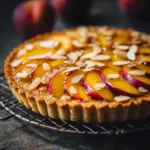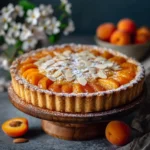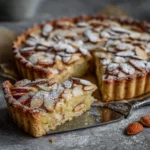
Introduction
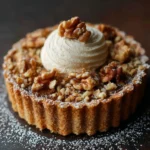
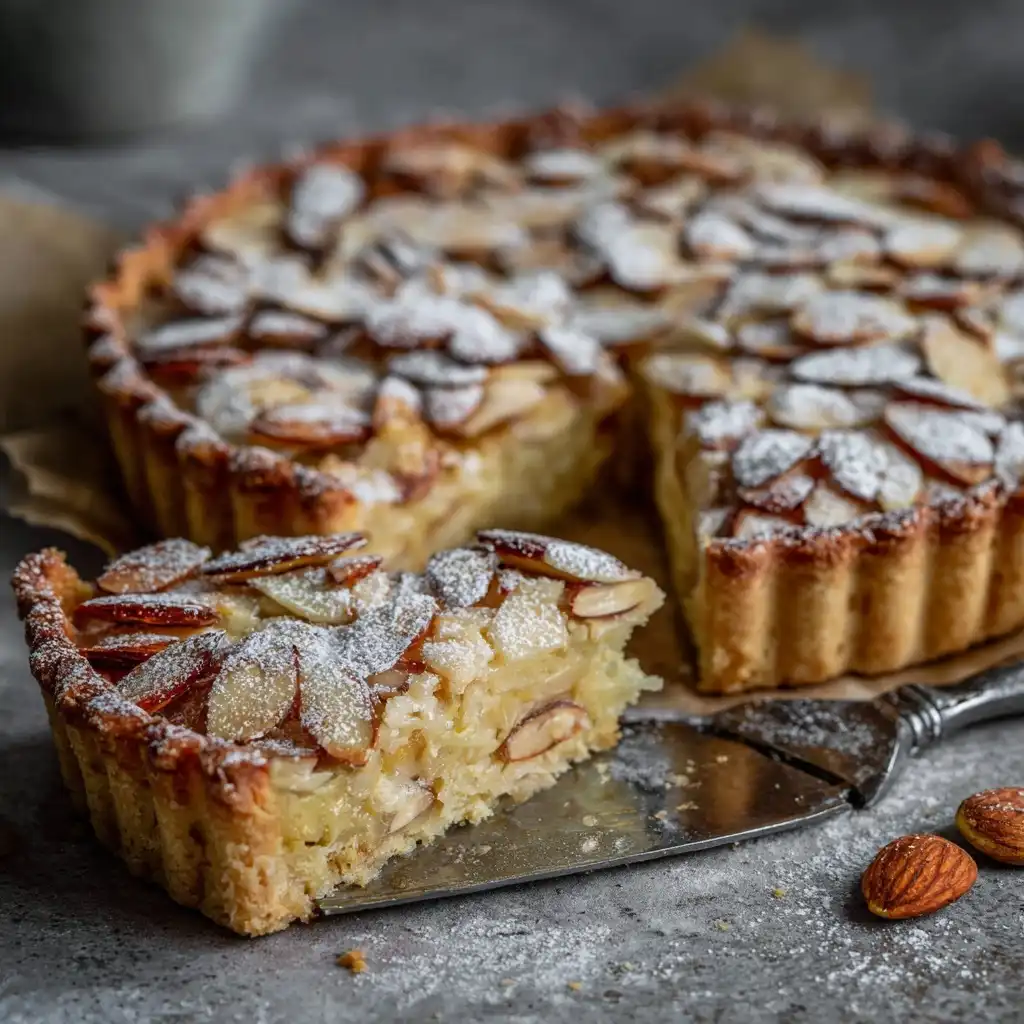
The Almond Frangipane Tart is a timeless classic of French patisserie—a harmonious marriage of buttery shortcrust pastry, luxuriously rich almond cream, and elegant simplicity. Revered for its velvety texture, delicate nutty aroma, and subtle sweetness, this tart transcends seasonal boundaries: it shines as a sophisticated dessert at holiday gatherings, a refined afternoon treat with tea, or an impressive centerpiece for dinner parties. Unlike overly sugary confections, the frangipane tart celebrates balance—its richness tempered by the flaky, slightly salty base; its depth enhanced by toasted almonds and natural vanilla; and its finish elevated by optional fruit accents like poached pears, roasted apricots, or a glossy apricot glaze. More than just a dessert, it embodies the artistry of restraint and precision—where minimal ingredients yield maximum flavor, and traditional technique meets modern versatility.
The History
Frangipane’s origins trace back to 16th-century Renaissance Italy and France, steeped in aristocratic legend and culinary evolution. The name “frangipane” is widely believed to honor Marquis Muzio Frangipani, a noble Italian perfumer who crafted an almond-scented glove conditioner in the early 1500s. When French royalty—including King Henry II—adopted the fragrance, bakers were inspired to replicate its delicate, marzipan-like aroma in pastry fillings. By the 17th century, “frangipane” had evolved into a distinct filling: a smooth, spreadable mixture of ground almonds, sugar, butter, and eggs—distinct from denser marzipan or cruder almond paste. While often confused with “almond cream” (crème d’amande), authentic frangipane traditionally includes a small proportion of pastry cream (crème pâtissière) for added stability, silkiness, and subtle custard notes—though many modern interpretations omit it for simplicity and intensity of almond flavor. The tart format gained prominence in provincial French bakeries, particularly in Burgundy and Île-de-France, where local orchards supplied high-quality sweet almonds and butter-rich dairy. Over centuries, the frangipane tart became a staple of *pâtisseries*, featured in cookbooks from Marie-Antoine Carême to Curnonsky, and later embraced globally through the rise of artisanal baking movements in the late 20th and early 21st centuries. Today, it remains a benchmark of French baking mastery—taught in culinary schools, deconstructed by Michelin-starred chefs, and lovingly recreated in home kitchens worldwide.
Ingredients Breakdown
Every exceptional Almond Frangipane Tart begins with ingredient integrity—not just measurements, but understanding *why* each component matters:
- Unsalted Butter (high-fat, European-style preferred): Provides richness, tenderness, and flakiness in the crust—and emulsifies the frangipane for a creamy, cohesive texture. Cold butter is essential for laminated shortcrust; softened (but not melted) butter ensures smooth frangipane without curdling.
- Almond Flour (blanched, super-fine): The soul of frangipane. Must be finely ground and *not* substituted with almond meal (which is coarser and oilier) or whole-wheat flour. Toasting it lightly before use deepens nuttiness and removes raw bitterness. Opt for brands like Bob’s Red Mill Super-Fine or artisanal stone-ground varieties for optimal mouthfeel.
- Granulated Sugar (preferably organic cane or beet): Balances almond’s natural earthiness and aids in creaming butter for air incorporation. A portion may be replaced with light brown sugar for caramel nuance—but avoid dark muscovado unless intentionally seeking molasses depth.
- Eggs (large, room temperature): Act as binders and leaveners. Room temperature ensures even emulsification and prevents splitting. Egg yolks add fat and color; whites contribute structure—though most classic recipes use whole eggs for balance.
- Pure Vanilla Extract (Madagascar Bourbon or Tahitian): Not imitation—vanilla’s phenolic compounds enhance almond’s benzaldehyde, creating a synergistic aromatic lift. For ultra-luxury, infuse seeds from one split vanilla bean into warm butter before creaming.
- All-Purpose Flour (unbleached, low-protein ~10–11% protein): Used sparingly in both crust and frangipane. In the crust, it forms gluten networks for structure; in frangipane, it stabilizes and prevents excessive spreading. Cake flour may be substituted for extra tenderness.
- Salt (fine sea salt or fleur de sel): A critical flavor amplifier—underscoring sweetness, rounding acidity, and enhancing nuttiness. Never omit; even ¼ tsp transforms the profile.
- Heavy Cream or Whole Milk (optional, for frangipane enrichment): Adds moisture, tenderness, and slight tang. Use only if frangipane feels too stiff after mixing—never excess, or it may weep during baking.
- Almond Extract (pure, *not* artificial): A potent accent—½ tsp max—to reinforce the almond identity without overpowering. Best added at the end, after eggs, to preserve volatility.
- Apricot Jam or Preserves (strained, for glaze): Traditional finishing touch—adds shine, subtle fruit acidity, and a gentle sweetness that cuts richness. Alternatives include red currant jelly or pear nectar reduction.
Note: Ingredient temperatures, freshness, and sourcing profoundly affect outcome. Stale almond flour yields flat flavor; old eggs reduce emulsion stability; low-fat butter compromises crust integrity. Whenever possible, weigh ingredients (grams) rather than rely on volume measures for reproducible results.
Step-by-Step Recipe
- Prepare the Pâte Sucrée (Sweet Shortcrust Pastry): In a food processor, pulse 1 ¼ cups (160g) all-purpose flour, ¼ cup (30g) powdered sugar, and ¼ tsp fine sea salt until combined. Add ½ cup (115g) cold, cubed unsalted butter and pulse 8–10 times until mixture resembles coarse breadcrumbs with pea-sized butter pieces. Add 1 large egg yolk and 2 tsp ice water; pulse just until dough begins to clump. Turn onto parchment, flatten into a 1-inch thick disc, wrap tightly, and chill for *at least 2 hours* (overnight preferred) to relax gluten and solidify butter.
- Roll & Blind-Bake the Crust: Preheat oven to 375°F (190°C). On a lightly floured surface, roll chilled dough to ⅛-inch thickness, ~12 inches in diameter. Gently transfer to a 9-inch fluted tart pan with removable bottom. Trim excess, press dough into flutes, and prick base with fork. Line with parchment and fill with ceramic pie weights or dried beans. Bake 18 minutes. Carefully remove weights and parchment; bake 8–10 minutes more until golden and dry. Cool completely on a wire rack—*do not skip cooling*, or frangipane will melt on contact.
- Make the Frangipane Filling: In a stand mixer fitted with paddle attachment, beat ¾ cup (170g) softened unsalted butter on medium until creamy (~2 min). Gradually add ¾ cup (150g) granulated sugar; beat 3–4 minutes until pale and fluffy. Scrape bowl. Add 2 large room-temperature eggs one at a time, beating 1 full minute after each addition until fully incorporated and glossy. Beat in 1 tsp pure vanilla extract and ¼ tsp pure almond extract. Reduce speed to low; gradually add 1 cup (100g) super-fine blanched almond flour, ¼ cup (30g) all-purpose flour, and ¼ tsp salt. Mix *just until combined*—overmixing develops gluten and causes toughness. Optional: fold in 2 tbsp heavy cream for extra richness. Transfer to a bowl, cover, and refrigerate 20 minutes to firm slightly (eases spreading).
- Assemble & Bake: Spoon chilled frangipane into cooled tart shell. Using an offset spatula, spread evenly to edges, smoothing surface. Optional decorative touches: arrange 6–8 thin pear slices in concentric circles, scatter 2 tbsp slivered almonds, or dust lightly with powdered sugar. Bake at 350°F (175°C) for 35–42 minutes—until deeply golden, puffed, and set with only a slight wobble in center (a skewer inserted should come out clean). Rotate pan halfway for even browning. Cool in pan on wire rack for 1 hour minimum—frangipane continues to set as it cools.
- Glaze & Finish: Warm ¼ cup (85g) strained apricot jam with 1 tsp water and ½ tsp lemon juice in a small saucepan over low heat until fluid. Strain through fine-mesh sieve. While tart is still slightly warm (but not hot), brush glaze evenly over surface using a pastry brush. Let cool completely (2+ hours) before slicing—chilling overnight yields cleanest cuts and most developed flavor.
Tips
- Chill Relentlessly: Cold dough = flaky crust. Chilled frangipane = controlled spread. Even chilling the baked shell for 10 minutes before filling helps prevent thermal shock and sinking.
- Room-Temperature Eggs Are Non-Negotiable: Cold eggs cause butter to seize and create lumpy, broken frangipane. Place eggs in warm water for 5 minutes if forgotten.
- Toast Your Almond Flour: Spread almond flour on a parchment-lined sheet; toast at 325°F (160°C) for 8–10 minutes, stirring twice, until fragrant and lightly golden. Cool completely before using. This step eliminates raw grain notes and intensifies aroma tenfold.
- Measure by Weight: Almond flour compacts easily—measuring by volume leads to dense, dry frangipane. Invest in a digital kitchen scale (accuracy ±0.1g).
- Don’t Overbake: Frangipane continues cooking from residual heat. Remove when center is *just* set—it will firm further while cooling. Overbaking yields cracked, rubbery, or overly browned filling.
- Use a Tart Pan with Removable Bottom: Ensures clean release and professional presentation. Lightly grease the pan’s outer rim (not base) to prevent sticking during unmolding.
- Rest Before Slicing: Refrigerate fully cooled tart for 2–3 hours—or overnight. This firms the frangipane, prevents crumbling, and enhances flavor integration. Use a hot, dry knife (dipped in hot water and wiped clean between cuts) for flawless slices.
- Prevent Soggy Bottoms: Ensure tart shell is *completely dry* before filling. If humidity is high, return blind-baked shell to 325°F oven for 3–4 minutes to re-crisp before filling.
- Embrace Texture Contrast: Sprinkle cooled tart with flaky sea salt (Maldon) just before serving—this elevates sweetness and adds a delightful crunch.
- Batch Prep Smart: Make dough and frangipane separately up to 3 days ahead; store covered in fridge. Or freeze unbaked shells (up to 2 months) and thaw before blind-baking.
Variations and Customizations
The Almond Frangipane Tart is remarkably adaptable—serving as a canvas for seasonal, cultural, and dietary reinterpretation:
- Seasonal Fruit Toppings: Spring: Fresh raspberries + lemon zest glaze. Summer: Roasted nectarines + basil-infused syrup. Autumn: Poached quince + star anise. Winter: Caramelized apples + Calvados reduction.
- Nut Variations: Substitute up to 50% of almond flour with hazelnut flour (toasted), pistachio flour (vibrant green hue), or walnut flour (earthy depth). Note: Oil content varies—adjust butter down by 1 tbsp per ¼ cup high-oil nut flour.
- Flavor Infusions: Steep vanilla bean, orange zest, or cardamom pods in warm cream/butter before incorporating. Add 1 tbsp amaretto, kirsch, or Grand Marnier to frangipane (reduce cream by same amount).
- Crust Innovations: Chocolate Pâte Sucrée (replace 2 tbsp flour with cocoa powder); Brown Butter Crust (brown butter before chilling); Oat-Infused Crust (blend ¼ cup toasted oats into flour); Gluten-Free Crust (use certified GF all-purpose blend + 1 tsp xanthan gum).
- Dietary Adaptations: Vegan: Use plant-based butter (Miyoko’s or Forager), flax eggs (2 tbsp ground flax + 5 tbsp water), and almond milk. Gluten-Free: Replace all-purpose flour with GF blend in both crust and frangipane (ensure almond flour is GF-certified). Lower-Sugar: Replace half granulated sugar with erythritol or allulose (test first—some sugar alcohols inhibit browning).
- Textural Twists: Swirl in 2 tbsp raspberry coulis before baking. Press toasted sliced almonds or candied ginger into surface pre-bake. Top with caramelized white chocolate shards post-bake.
- Mini & Individual Versions: Bake in 4-inch tartlet pans (reduce bake time to 22–28 mins) or muffin tins lined with dough rounds (bake 18–22 mins). Perfect for buffets or gifting.
- Cultural Fusions: Matcha Frangipane (add 1 tsp ceremonial-grade matcha to dry ingredients); Rosewater & Pistachio (replace vanilla with rosewater, top with crushed pistachios); Maple-Bourbon (substitute maple syrup for part of sugar, add 1 tbsp bourbon).
Health Considerations and Nutritional Value
While undeniably indulgent, the Almond Frangipane Tart offers notable nutritional attributes when viewed contextually—not as “health food,” but as a nutrient-dense, mindful dessert choice:
- Almond Powerhouse: Almond flour delivers vitamin E (a potent antioxidant), magnesium (supports muscle/nerve function), healthy monounsaturated fats (heart-health supportive), and plant-based protein (~6g per ¼ cup). Blanched almond flour retains most nutrients, though some fiber is lost versus whole almonds.
- Butter Benefits: Grass-fed butter contributes vitamin K2 (critical for calcium metabolism and arterial health), butyrate (anti-inflammatory short-chain fatty acid), and conjugated linoleic acid (CLA)—linked in studies to improved body composition and immune modulation.
- Minimal Refined Sugar: Traditional recipes use modest sugar relative to commercial desserts—typically 15–20g per generous slice—allowing natural almond sweetness to dominate. Substituting part sugar with unrefined alternatives (coconut sugar, date paste) adds trace minerals but requires recipe adjustment.
- No Artificial Additives: Homemade versions avoid preservatives, emulsifiers, artificial flavors, and high-fructose corn syrup common in store-bought pastries.
- Portion-Conscious Enjoyment: A standard 9-inch tart yields 10–12 servings. Paired with black coffee, herbal tea, or a small scoop of Greek yogurt, it becomes a satisfying, balanced finale—not a blood-sugar spike.
- Considerations: Naturally high in calories (≈320–380 kcal/slice), moderate in saturated fat (≈14–18g), and contains gluten and dairy. Those with tree nut allergies must avoid entirely. For lower-calorie options, serve smaller portions (1/16th tart) or pair with fresh seasonal fruit salad.
- Nutritional Snapshot (per 1/10th slice, approx. 120g): Calories: 345 | Total Fat: 22g (11g sat) | Carbs: 31g (20g sugars) | Fiber: 2g | Protein: 6g | Vitamin E: 3.8mg (25% DV) | Magnesium: 42mg (10% DV) | Calcium: 48mg.
Ultimately, its value lies in quality, intention, and moderation—not deprivation. Baking it mindfully, savoring each bite slowly, and sharing it joyfully transforms it from mere dessert into nourishment for body and spirit.
Ingredients
For the Pâte Sucrée (Sweet Shortcrust Pastry):
- 1 ¼ cups (160g) all-purpose flour, spooned & leveled
- ¼ cup (30g) powdered sugar
- ¼ tsp fine sea salt
- ½ cup (115g) cold unsalted butter, cubed
- 1 large egg yolk
- 2 tsp ice water
For the Frangipane Filling:
- ¾ cup (170g) unsalted butter, softened to room temperature
- ¾ cup (150g) granulated sugar
- 2 large eggs, room temperature
- 1 tsp pure vanilla extract
- ¼ tsp pure almond extract
- 1 cup (100g) super-fine blanched almond flour
- ¼ cup (30g) all-purpose flour
- ¼ tsp fine sea salt
- 2 tbsp heavy cream or whole milk (optional, for richness)
For Finishing:
- ¼ cup (85g) apricot jam or preserves, strained
- 1 tsp water
- ½ tsp fresh lemon juice
- Optional: 2 tbsp sliced almonds, flaky sea salt, or seasonal fruit
Directions
- Make the pastry dough: In a food processor, combine flour, powdered sugar, and salt. Pulse to mix. Add cold butter cubes; pulse 8–10 times until mixture resembles coarse crumbs with visible pea-sized butter bits. Add egg yolk and ice water; pulse just until dough begins to gather into clumps. Turn dough onto a sheet of parchment paper, gather into a ball, then flatten into a 1-inch thick disc. Wrap tightly in plastic wrap and refrigerate for at least 2 hours—or preferably overnight.
- Preheat oven to 375°F (190°C). Lightly grease a 9-inch fluted tart pan with removable bottom.
- Roll and line the tart pan: On a lightly floured surface, roll chilled dough to ⅛-inch thickness (approx. 12 inches in diameter). Carefully lift and drape over tart pan. Gently press dough into bottom and up sides, ensuring even thickness. Trim excess dough with a sharp knife. Prick base all over with a fork. Freeze for 15 minutes.
- Blind-bake the crust: Line chilled crust with parchment paper and fill with pie weights or dried beans. Bake for 18 minutes. Carefully lift out parchment and weights. Return crust to oven and bake 8–10 minutes more, until golden brown and dry to the touch. Transfer to a wire rack and cool completely—minimum 1 hour.
- Prepare frangipane: In a stand mixer with paddle attachment, beat softened butter on medium speed for 2 minutes until creamy. Gradually add sugar; beat on medium-high for 4 minutes until pale, fluffy, and nearly doubled in volume. Scrape bowl thoroughly. Add eggs one at a time, beating on medium speed for 1 full minute after each addition until fully incorporated and glossy. Beat in vanilla and almond extracts. Reduce speed to low; add almond flour, all-purpose flour, and salt. Mix *just until no dry streaks remain*—do not overmix. Fold in heavy cream if using. Cover and refrigerate 20 minutes.
- Fill and bake: Spoon chilled frangipane into cooled tart shell. Smooth surface with an offset spatula, reaching edges. Optional: Arrange fruit or sprinkle with sliced almonds. Bake at 350°F (175°C) for 35–42 minutes—rotating halfway—until deeply golden, puffed, and center is set with only a gentle jiggle. A toothpick inserted near center should come out clean.
- Cool and glaze: Cool tart in pan on wire rack for 1 hour. Meanwhile, gently warm apricot jam, water, and lemon juice in a small saucepan over low heat until fluid; strain through a fine-mesh sieve. Once tart is slightly warm (but not hot), brush glaze evenly over surface. Cool completely (2+ hours) before removing from pan.
- Serve: Run a thin knife around inner edge. Release tart ring. Slice with a hot, dry knife (dip in hot water and wipe clean between cuts). Serve at cool room temperature. Store covered at room temperature up to 2 days, or refrigerated up to 5 days. Bring to room temperature before serving for optimal texture and flavor.
FAQ
- Can I make the tart ahead of time?
- Absolutely. The unbaked dough keeps refrigerated for 3 days or frozen for 3 months. Blind-baked shells stay crisp for 2 days at room temperature (store uncovered to prevent sogginess). Assembled, unbaked tarts can be refrigerated overnight—just add 3–5 minutes to bake time. Fully baked tarts taste best within 48 hours but keep well refrigerated for up to 5 days.
- Why did my frangipane sink or crack?
- Sinking usually occurs from underbaking (center wasn’t set) or opening the oven too early. Cracking often results from overbaking, rapid temperature shifts (e.g., placing hot tart on cold surface), or excessive egg incorporation causing over-aeration. Ensure proper cooling time and avoid drafts during baking.
- Can I use almond meal instead of almond flour?
- Not recommended. Almond meal is coarser, higher in oil, and less finely ground—leading to gritty texture, greasy separation, and poor rise. If necessary, process raw almond meal in a food processor for 1–2 minutes until powdery, then sift through a fine-mesh strainer. Still, results won’t match true super-fine blanched almond flour.
- My crust shrank while baking—what went wrong?
- Shrinkage stems from insufficient resting (gluten tension), overworking dough, stretching dough while fitting pan, or inadequate chilling before baking. Always chill dough ≥2 hours, handle minimally, and avoid stretching—gently lift and settle instead.
- Can I freeze the baked tart?
- Yes—with caveats. Freeze fully cooled, unglazed tart wrapped tightly in plastic + foil for up to 2 months. Thaw overnight in fridge, then bring to room temperature. Glaze *after* thawing for best shine and adhesion.
- Is frangipane the same as marzipan?
- No. Marzipan is a dense, sweet confection of ground almonds and sugar (often with egg whites), used for modeling or candy. Frangipane is a soft, spreadable, egg-enriched almond cream designed for baking—lighter, moister, and more versatile.
- What if I don’t have a food processor?
- Use a pastry cutter or two knives to cut cold butter into flour mixture. Mix egg yolk and water in a separate bowl, then drizzle in while stirring with a fork until shaggy clumps form. Gather by hand—avoid over-kneading.
- Can I make this dairy-free?
- Yes. Substitute high-fat vegan butter (e.g., Miyoko’s), use flax eggs (2 tbsp ground flax + 5 tbsp water, rested 10 mins), and replace cream with full-fat coconut milk. Note: Coconut flavor will subtly emerge—pair with tropical fruit variations.
- Why does my frangipane taste eggy?
- Overbeating eggs or using cold eggs causes poor emulsification and sulfur notes. Always use room-temperature eggs and beat each addition just until incorporated—no longer. Adding a pinch of nutmeg or cardamom also masks eggy undertones.
- How do I prevent a soggy bottom crust?
- Ensure complete blind-baking until deep golden and *dry* to touch. Cool fully before filling. If humidity is high, re-crisp shell at 325°F for 3–4 minutes before filling. Avoid adding wet fruit directly—pre-cook or pat dry.
Summary
The Almond Frangipane Tart is a masterclass in French patisserie—where humble ingredients transform through precise technique into an elegantly rustic, deeply flavorful dessert defined by buttery tenderness, toasted almond richness, and sublime textural harmony. With its storied heritage, adaptable framework, and capacity for both tradition and innovation, it remains not just a recipe, but a ritual—one that invites patience, presence, and the quiet joy of creation shared generously.