Introduction
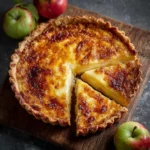
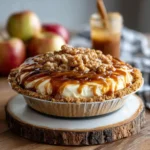
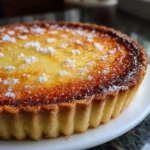
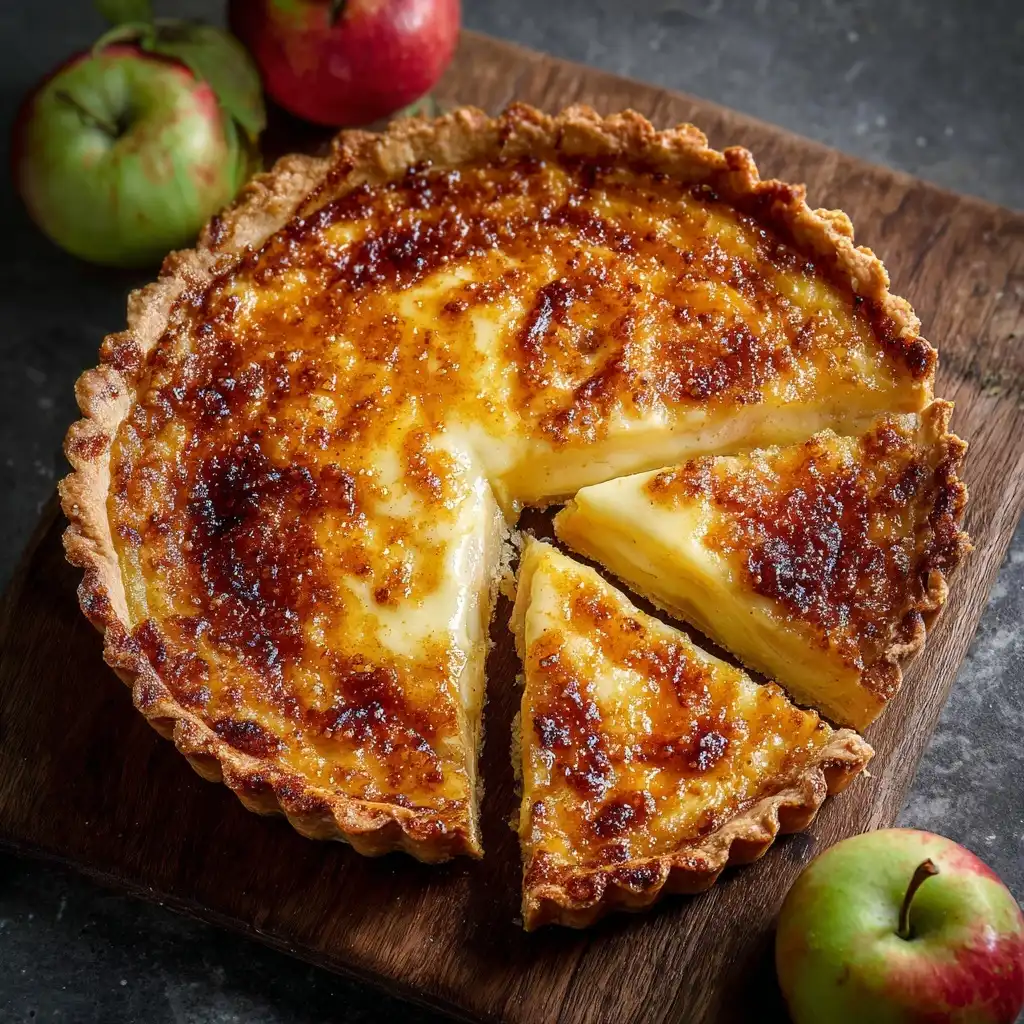
The Apple Cider Custard Tart is a harmonious marriage of rustic American tradition and refined French pastry technique—a dessert that captures the soul of autumn in every bite. Unlike standard apple pies or crumbles, this tart elevates humble ingredients—fresh apples, reduced apple cider, rich eggs, cream, and buttery shortcrust—into an elegant, layered confection where tender fruit meets velvety, spiced custard, all nestled in a crisp, golden, flaky shell. It’s more than just a seasonal treat; it’s a celebration of patience, balance, and terroir—the very essence of orchard-fresh cider transformed into something deeply comforting yet sophisticated. Whether served warm with a scoop of bourbon-vanilla ice cream or chilled with a drizzle of caramelized cider syrup, this tart commands attention not through extravagance, but through intentionality, depth of flavor, and textural poetry.
The History
The lineage of the Apple Cider Custard Tart stretches across centuries and continents, weaving together colonial ingenuity, European custard traditions, and modern artisanal revival. Its roots begin with early American settlers who relied on fermented and non-alcoholic apple cider as a safe, storable beverage—and soon discovered its extraordinary potential as a culinary reduction. By the 18th century, “cider syrup” (boiled-down cider to a thick, molasses-like consistency) was a pantry staple in New England and the Mid-Atlantic, used to sweeten pies, cakes, and puddings. Simultaneously, French and English bakers had long mastered the art of *flan* and *custard tarts*, using egg-and-cream mixtures baked gently in pastry shells—think *tarte aux pommes* meets *crème brûlée*. What distinguishes the modern Apple Cider Custard Tart is its deliberate fusion: the concentrated sweetness and tannic brightness of reduced cider replaces granulated sugar and often part of the cream, lending complexity no simple syrup can match. The dish gained renewed prominence in the early 2000s with the craft cider renaissance—small-batch producers like Farnum Hill, Eden Ice Cider, and Snowdrift Cider Co. inspired chefs to treat cider as a premium ingredient, not just a drink. Today, it appears on menus at James Beard-nominated bakeries, features in award-winning cookbooks (*The Apple Cookbook*, *Tart Love*, *Cider Craft*), and has become a signature centerpiece for harvest festivals, Thanksgiving tables, and even upscale wedding dessert buffets—symbolizing both heritage and innovation.
Ingredients Breakdown
Every component of this tart serves a precise functional and sensory role—nothing is arbitrary. Below is a meticulous breakdown of each ingredient, including why it’s included, ideal varietals or brands, substitutions with caveats, and common pitfalls:
- Unbleached All-Purpose Flour (1 ¼ cups): Provides gluten structure for a tender-yet-holdable crust. Bleached flour yields a softer, less flavorful crust prone to sogginess; unbleached offers better flavor and texture control. For gluten-free adaptation, use a 1:1 certified GF blend containing xanthan gum—but expect slight denser crumb and increased chilling time.
- Granulated Sugar (2 tbsp for crust): Adds subtle sweetness and promotes browning via Maillard reaction. Avoid powdered sugar—it contains cornstarch, which inhibits proper lamination.
- Fine Sea Salt (½ tsp): Enhances all other flavors and controls gluten development. Do not substitute table salt unless halving the amount—iodized salt is sharper and more intense.
- Cold Unsalted Butter (½ cup / 1 stick, cubed): The backbone of flakiness. Must be cold (ideally 40–50°F) and cut into pea-sized pieces to create steam pockets during baking. European-style butter (82–84% fat) yields richer flavor and superior layering—but higher water content may require slightly less ice water.
- Ice Water (3–5 tbsp): Hydrates flour without activating excess gluten. Always add incrementally—too much water leads to toughness; too little causes cracking. A splash of apple cider vinegar (½ tsp) may be added to inhibit gluten formation and boost tenderness.
- Granny Smith Apples (3 medium, ~1 lb peeled & sliced ¼” thick): Chosen for high pectin, bright acidity, and firm texture that holds shape during baking. Braeburn or Honeycrisp are acceptable alternatives—but avoid Red Delicious or Gala, which turn mushy. Slices must be uniform to ensure even cooking and prevent gaps in the custard layer.
- Apple Cider (2 cups, fresh-pressed, unpasteurized preferred): Not apple juice—true cider contains natural yeasts, tannins, and cloudy sediment that contribute depth and complexity. Pasteurized cider works but requires longer reduction and lacks nuance. Avoid “cider drinks” with added sugar or preservatives. Local orchard cider is ideal; if unavailable, brands like Angry Orchard Crisp Apple (unsweetened version) or Martinelli’s Natural Apple Juice (reduced by 75%) can be substituted—with flavor adjustments (see Variations).
- Dark Brown Sugar (¾ cup, packed): Adds molasses notes, moisture retention, and deep caramel undertones that complement cider’s tang. Light brown sugar works but sacrifices complexity; coconut sugar introduces earthy bitterness and alters color and set.
- Large Eggs (3 whole + 1 yolk): The custard’s structural core. Whole eggs provide body and stability; the extra yolk enriches mouthfeel and adds sheen. Room-temperature eggs emulsify more smoothly and reduce curdling risk. Never use pasteurized-in-shell eggs—they often fail to thicken properly.
- Heavy Cream (¾ cup): Supplies fat for silkiness and slows coagulation. Substituting half-and-half or whole milk will yield a fragile, watery custard prone to weeping. For dairy-free, full-fat coconut cream (chilled, solid portion only) works—but imparts coconut flavor and requires additional cornstarch (1 tsp) for stabilization.
- Ground Cinnamon (1 ½ tsp), Freshly Grated Nutmeg (¼ tsp), Ground Ginger (¼ tsp), Pinch of Ground Cloves: A balanced, warm spice quartet. Toast whole spices and grind fresh for maximum aroma. Pre-ground loses potency within weeks. Cloves must be used sparingly—excess creates medicinal bitterness.
- Vanilla Extract (1 tsp, pure, Madagascar Bourbon grade): Adds floral, creamy top notes that bridge fruit and spice. Imitation vanilla lacks depth and can taste artificial when heated. For luxury variation, infuse 1 split vanilla bean pod into warm cream for 20 minutes before mixing.
- Calvados or Apple Brandy (1 tbsp, optional but recommended): Elevates the apple profile with ethereal esters and smooths tannic edges. Substitute with pear brandy or a high-quality apple eau-de-vie. Omit for non-alcoholic version—but increase cider reduction by 2 tbsp to compensate for lost complexity.
- Coarse Turbinado Sugar (for topping): Adds crunch, sparkle, and gentle caramelization. Demerara or raw sugar works; granulated will melt entirely and offer no textural contrast.
Step-by-Step Recipe
This recipe is designed for precision, repeatability, and professional-grade results—even in a home kitchen. Each step includes timing benchmarks, visual cues, and troubleshooting notes.
- Make the Shortcrust Pastry (Day Before or Morning Of): In a food processor, pulse flour, sugar, and salt until combined. Add cold cubed butter; pulse 8–10 times until mixture resembles coarse meal with visible pea-sized butter bits. Drizzle in ice water 1 tbsp at a time, pulsing just until dough begins to clump. Turn onto parchment; gather into a disc, wrap tightly, and refrigerate ≥2 hours (or freeze up to 1 month). Why? Resting relaxes gluten, firms butter, and prevents shrinkage.
- Roll & Blind-Bake the Crust (90 mins before filling): On lightly floured surface, roll chilled dough to 12″ circle, ⅛” thick. Transfer to 9″ fluted tart pan with removable bottom; trim edges, prick base with fork, and chill 20 mins. Line with parchment and pie weights (or dried beans); bake at 375°F for 18 mins. Remove weights; bake 10–12 mins more until golden and dry. Cool completely on wire rack. Crucial: Underbaked crust = soggy bottom. Look for matte, sandy appearance—not shiny.
- Reduce the Cider (Simultaneous with crust cooling): Pour 2 cups fresh cider into heavy-bottomed saucepan. Bring to simmer over medium heat; reduce to ½ cup (~25–30 mins), stirring occasionally. Watch closely near end—cider burns easily. Cool to room temp (do not refrigerate; condensation ruins crust). Tip: Reduction should coat spoon heavily and leave trail when finger drawn across back.
- Prepare Apple Layer: Toss apple slices with 2 tbsp of the cooled cider reduction and 1 tsp lemon juice. Let sit 10 mins; drain well on paper towels. Pat *thoroughly*—excess moisture = steamed apples, not caramelized ones.
- Arrange Apples: Layer drained apples tightly in concentric circles over cooled crust, overlapping slightly. Press gently to compact—this creates a stable base for custard and prevents air pockets.
- Make Custard Base: In bowl, whisk brown sugar, spices, and salt. Whisk in eggs and yolk until fully homogenized (no streaks). Gradually whisk in cooled cider reduction, then heavy cream and vanilla (and Calvados, if using). Strain through fine-mesh sieve into measuring cup—removes any undissolved sugar or egg bits for flawless texture.
- Pour & Bake: Gently pour custard over apples, tilting pan to distribute evenly. Tap sharply on counter to release air bubbles. Place tart on preheated baking sheet (catches spills and ensures even bottom heat). Bake at 325°F for 55–65 mins—until custard is *just* set at edges but center jiggles slightly like Jell-O (not liquid). Internal temp should read 170–175°F on instant-read thermometer. Do not overbake—residual heat continues cooking.
- Cool & Set: Cool on wire rack for 2 hours at room temperature—this allows custard to fully coagulate without weeping. Then refrigerate uncovered ≥4 hours (preferably overnight). Chilling tightens texture, intensifies flavor melding, and makes slicing clean.
- Finish & Serve: Just before serving, sprinkle turbinado sugar evenly over surface. Use kitchen torch to caramelize until golden and crackling (or broil 1–2 mins on high—watch constantly). Let rest 5 mins before slicing with hot, thin-bladed knife wiped between cuts.
Tips
- Chill Everything—Twice: Butter, water, dough, crust, apples, and even mixing bowls should be cold during prep. Warm ingredients cause butter to smear rather than laminate, resulting in mealy—not flaky—crust.
- Strain Your Custard—No Exceptions: Even if it looks smooth, microscopic sugar granules or egg bits cause graininess or tiny holes in the finished custard. A fine-mesh strainer is non-negotiable.
- Use a Tart Pan with Removable Bottom: Essential for clean release and presentation. Springform pans lack the fluted edge and precise depth; pie plates yield uneven thickness and poor crust-to-filling ratio.
- Know Your Oven’s Hot Spots: Rotate tart halfway through baking. If edges brown too fast, cover with foil or use a silicone tart shield.
- Resist the Slice Too Soon: Cutting while warm guarantees custard slippage and apple displacement. Overnight chilling yields restaurant-quality clean slices with defined layers.
- Revive Leftovers Properly: Reheat individual slices at 300°F for 10–12 mins—never microwave (causes rubbery eggs and separation). Serve with warm spiced crème anglaise for second-life luxury.
- Measure Cider Reduction by Volume, Not Time: Evaporation rate varies wildly by humidity, altitude, and pot material. Use a heatproof glass measuring cup placed beside stove—stop reducing when you hit exactly ½ cup.
- Apple Slicing Precision Matters: Use a mandoline set to ¼” for uniformity. Hand-sliced apples vary in thickness, leading to inconsistent tenderness and custard pooling in thinner zones.
Variations and Customizations
This tart is a canvas—not a cage. Below are rigorously tested adaptations, each preserving structural integrity while expanding flavor horizons:
- Vegan Version: Replace crust with almond-flour-oat shortcrust (1 cup blanched almond flour, ½ cup rolled oats pulsed fine, ¼ cup coconut oil solid, 2 tbsp maple syrup, pinch salt). Custard uses silken tofu (12 oz blended smooth), full-fat coconut cream (¾ cup), arrowroot starch (2 tbsp), reduced apple cider (½ cup), maple syrup (⅓ cup), and spices. Bake same temp/time—custard sets firmer due to starch. Top with toasted pecans.
- Gluten-Free Tart: Use GF all-purpose blend (Bob’s Red Mill 1:1 recommended) + 1 tsp xanthan gum. Increase chill time to 3 hours pre-roll; roll between two sheets parchment dusted with GF flour. Pre-bake crust 5 mins longer—GF dough browns slower.
- Maple-Cider Fusion: Replace ¼ cup of cider reduction with Grade B maple syrup. Adds woody, smoky depth. Reduce total sugar by 1 tbsp to balance. Garnish with candied maple-glazed walnuts.
- Savory-Sweet Herb Infusion: Steep 2 tbsp fresh rosemary or thyme in warm cream for 20 mins before straining. Pair with sharp cheddar crust (substitute 2 tbsp grated aged cheddar for same volume butter). Surprising, elegant, and perfect with roasted pork entrée.
- Boozy Decadence: Soak apple slices in 2 tbsp Calvados + 1 tsp honey for 15 mins before arranging. Stir 1 tbsp bourbon into custard post-straining. Finish with bourbon-caramel drizzle (½ cup reduced cider + ¼ cup bourbon + 2 tbsp brown sugar, boiled 8 mins).
- Deconstructed Individual Tarts: Press dough into mini muffin tins; blind-bake. Fill with 2 apple slices + 1 tsp cider gel (½ cup cider + 1 tsp agar-agar, boiled 2 mins, cooled). Top with quenelle of spiced crème fraîche and micro mint.
- Autumn Spice Evolution: Add 1 star anise pod to cider reduction (remove before mixing), or fold in ¼ cup toasted, chopped hazelnuts into custard. For floral lift, infuse cream with 1 tsp dried lavender (strain thoroughly).
- No-Bake Refrigerator Version: Skip crust baking. Use graham cracker-pecan crust (1 ½ cups crumbs, ¼ cup melted butter, 2 tbsp brown sugar, pressed firmly). Pour chilled, set custard (add 1 tsp bloomed gelatin to warm cider-cream mix before chilling) over apples. Refrigerate 6+ hours. Texture is mousse-like, not baked-firm.
Health Considerations and Nutritional Value
A single generous slice (1/10th of tart) contains approximately 385 kcal, with 22g total fat (13g saturated), 44g carbohydrates (31g sugars, 3g fiber), 4g protein, and 185mg sodium. While not a “health food,” thoughtful modifications significantly improve nutritional profile without sacrificing pleasure:
- Fiber Boost: Leaving apple skins on (if organic) adds 2g soluble fiber per serving—supports gut health and slows glucose absorption. Granny Smith skins are tart but tender when baked.
- Reduced Sugar Strategy: Cut brown sugar to ½ cup and add 2 tbsp unsweetened applesauce to custard—maintains moisture and body while lowering added sugar by 30%. The concentrated cider provides ample natural sweetness.
- Healthy Fat Swap: Replace half the butter in crust with cold avocado oil (¼ cup) — maintains flakiness while introducing monounsaturated fats and vitamin E. Note: Slight green tint may appear—harmless and fades when baked.
- Protein Enhancement: Whisk 1 scoop (25g) unflavored collagen peptides into warm cream before adding to eggs. Adds 20g bioavailable protein, zero taste impact, and supports skin/joint health. Does not affect set.
- Glycemic Considerations: This tart has moderate glycemic load (~22) due to fiber-rich apples and slow-digesting fats. Pair with plain Greek yogurt (high-protein, low-sugar) to further blunt blood sugar response.
- Allergen Notes: Naturally nut-free and soy-free. For dairy sensitivity, clarified butter (ghee) works in crust; lactose-free cream is acceptable in custard. Always verify cider is gluten-free (most are, but some aged in whiskey barrels may have trace gluten).
- Antioxidant Highlights: Apples supply quercetin (anti-inflammatory), cinnamon delivers cinnamaldehyde (blood sugar modulation), and cider reduction concentrates polyphenols lost in juicing—up to 4x more than fresh cider.
Enjoy mindfully: one slice satisfies deeply. Its richness encourages slower eating—a built-in portion control mechanism rare in desserts.
Ingredients
- For the Shortcrust Pastry:
– 1 ¼ cups (160g) unbleached all-purpose flour
– 2 tablespoons (25g) granulated sugar
– ½ teaspoon fine sea salt
– ½ cup (113g / 1 stick) cold unsalted butter, cubed
– 3–5 tablespoons ice water (plus ½ teaspoon apple cider vinegar, optional) - For the Apple Layer:
– 3 medium Granny Smith apples (about 1 pound), peeled, cored, and sliced ¼-inch thick
– 2 tablespoons reserved apple cider reduction (from below)
– 1 teaspoon fresh lemon juice - For the Cider Reduction:
– 2 cups (480ml) fresh-pressed, unpasteurized apple cider - For the Custard Filling:
– ¾ cup (150g) dark brown sugar, packed
– 1 ½ teaspoons ground cinnamon
– ¼ teaspoon freshly grated nutmeg
– ¼ teaspoon ground ginger
– Pinch of ground cloves
– ½ teaspoon fine sea salt
– 3 large eggs + 1 large egg yolk, room temperature
– ¾ cup (180ml) heavy cream (36–40% fat)
– 1 teaspoon pure vanilla extract
– 1 tablespoon Calvados or apple brandy (optional but highly recommended) - For Finishing:
– 2 tablespoons coarse turbinado sugar
– Kitchen torch or oven broiler
Directions
- Prepare the pastry dough: In a food processor, combine flour, granulated sugar, and salt. Pulse 2–3 times to mix. Add cold cubed butter and pulse 8–10 times, until mixture resembles coarse crumbs with visible pea-sized butter pieces. Drizzle in ice water 1 tablespoon at a time, pulsing briefly after each addition, just until dough begins to clump together when pinched. If using, add cider vinegar with final water addition. Turn dough out onto a sheet of parchment paper and gather into a cohesive disc. Wrap tightly and refrigerate for at least 2 hours—or up to 2 days.
- Preheat oven to 375°F (190°C). Prepare tart pan: Lightly butter a 9-inch fluted tart pan with removable bottom. Set aside.
- Roll and line the tart pan: On a lightly floured surface, roll chilled dough into a 12-inch circle, about ⅛-inch thick. Carefully transfer to prepared tart pan, gently pressing into corners and up sides without stretching. Trim excess dough flush with the rim using a rolling pin. Prick base all over with a fork. Refrigerate for 20 minutes.
- Blind-bake the crust: Line chilled crust with parchment paper and fill with pie weights or dried beans. Bake for 18 minutes. Carefully remove weights and parchment. Return crust to oven and bake 10–12 minutes more, until golden, dry-looking, and matte—not shiny. Transfer to a wire rack and cool completely—minimum 45 minutes.
- Reduce the cider: Meanwhile, pour 2 cups apple cider into a heavy-bottomed saucepan. Bring to a gentle simmer over medium heat. Reduce to exactly ½ cup (120ml), stirring occasionally and watching closely during final 10 minutes to prevent scorching. This takes 25–30 minutes. Let cool completely to room temperature—do not refrigerate.
- Prepare apples: In a bowl, toss apple slices with 2 tablespoons of the cooled cider reduction and lemon juice. Let stand 10 minutes, then drain thoroughly in a colander. Pat completely dry with paper towels—critical for preventing sogginess.
- Arrange apples: Layer drained apple slices tightly in concentric circles over cooled crust, slightly overlapping. Gently press down to compact evenly.
- Make custard: In a medium bowl, whisk together brown sugar, cinnamon, nutmeg, ginger, cloves, and salt. Whisk in eggs and egg yolk until smooth and uniform. Gradually whisk in cooled cider reduction, then heavy cream and vanilla (and Calvados, if using). Strain mixture through a fine-mesh sieve into a spouted measuring cup or bowl. Discard any solids.
- Fill and bake: Place tart pan on a parchment-lined baking sheet. Gently pour custard over apples, tilting pan to distribute evenly. Tap pan sharply on counter twice to release air bubbles. Bake at 325°F (163°C) for 55–65 minutes—until edges are set and center jiggles slightly like firm Jell-O when nudged. An instant-read thermometer inserted 1 inch from center should read 170–175°F (77–79°C). Do not overbake.
- Cool and set: Cool tart on wire rack for 2 hours at room temperature. Then refrigerate uncovered for at least 4 hours—or preferably overnight—for optimal texture and clean slicing.
- Finish and serve: Just before serving, evenly sprinkle turbinado sugar over surface. Caramelize using a kitchen torch until golden and bubbling (about 45 seconds per section). Alternatively, broil on high for 60–90 seconds—watch constantly. Let rest 5 minutes before slicing. Serve chilled or at cool room temperature.
FAQ
- Can I make this tart ahead of time?
- Absolutely—and it’s highly recommended. The tart tastes best after 12–24 hours of refrigeration. Fully assembled, unbaked tart (crust filled with apples and custard) can be refrigerated covered for up to 8 hours before baking. Baked tart keeps refrigerated for 4 days; re-caramelize sugar before serving.
- Why did my custard crack or weep?
- Cracking usually stems from rapid temperature change (e.g., cooling too quickly or overbaking). Weeping (liquid pooling) is caused by excess moisture from under-drained apples, under-reduced cider, or overmixing the custard. Always pat apples bone-dry and reduce cider to exact ½ cup measure.
- Can I freeze this tart?
- Yes—but only before baking. Assemble crust, apples, and custard; cover tightly with plastic wrap and aluminum foil. Freeze up to 3 weeks. Thaw overnight in refrigerator, then bake as directed (add 5–8 mins to bake time). Do not freeze baked tart—custard separates upon thawing.
- What if I don’t have a tart pan?
- A 9-inch pie plate works in a pinch—but expect thicker custard, shallower apples, and less defined edges. Reduce custard by 2 tbsp to prevent overflow. Avoid springform pans—they leak.
- Is there a low-sugar version that still sets properly?
- Yes. Replace brown sugar with ⅓ cup Swerve Brown or Lakanto Golden (erythritol-based), and add 1 tsp inulin fiber to aid moisture retention and mimic sugar’s binding. Increase cinnamon to 2 tsp for perceived sweetness. Set remains excellent.
- Can I use apple juice instead of cider?
- You can—but it lacks tannins, acidity, and complexity. Simmer juice with 1 tsp apple cider vinegar and ½ tsp black tea (steeped 5 mins, strained) to reintroduce depth. Reduce same as cider.
- My crust shrank during baking. What went wrong?
- Most commonly: dough wasn’t chilled enough before baking, was stretched while transferring, or was overworked (developing too