Beef Kofta Kebabs: A Flavorful Journey Through Tradition and Taste
Beef Kofta Kebabs are a beloved staple across the Middle East, North Africa, and parts of South Asia. With their richly spiced ground beef mixture molded onto skewers and grilled to perfection, these kebabs offer an irresistible combination of smoky char, juicy tenderness, and aromatic depth. Whether served in warm pita bread, over fragrant rice, or alongside fresh salads, Beef Kofta Kebabs bring people together around shared tables and cherished memories. This comprehensive guide dives deep into the history, ingredients, preparation, variations, health aspects, and culinary tips for crafting the perfect kofta experience at home.
The History of Beef Kofta Kebabs
The origins of kofta trace back thousands of years, with early references found in ancient Persian, Turkish, and Indian cuisines. The word “kofta” is derived from the Persian verb kuftan, meaning “to pound” or “to grind,” reflecting the traditional method of finely mincing meat using a large stone mortar. Historically, koftas were developed as a way to stretch limited quantities of meat by combining it with accessible ingredients like onions, herbs, and spices—making flavorful meals even during times of scarcity.
As trade routes expanded across Asia, the Mediterranean, and into Eastern Europe, kofta traveled with merchants, soldiers, and migrants. Each region adapted the dish to local tastes and available ingredients. In Turkey, you’ll find çiğ köfte (raw kofta made with bulgur), while in Egypt, kofta is often baked rather than grilled. In Lebanon and Syria, spiced beef kofta is threaded on skewers and grilled over open flames—a style now popular worldwide.
Today, Beef Kofta Kebabs represent a fusion of culinary traditions, embodying centuries of cultural exchange. They’re commonly found at street food stalls, family gatherings, religious festivals, and upscale restaurants alike, proving that simple ingredients, when treated with care and tradition, can become something extraordinary.
Ingredients Breakdown: What Makes Beef Kofta Special?
The magic of Beef Kofta Kebabs lies in the harmonious balance between quality meat and bold seasonings. Every ingredient plays a vital role—not just in flavor but also in texture and moisture retention. Here’s a detailed breakdown:
- Ground Beef (80/20 lean-to-fat ratio): The foundation of any great kofta. A slightly higher fat content ensures juiciness during grilling. Leaner beef may result in dry, crumbly kebabs.
- Onion (finely grated or minced): Adds natural sweetness and moisture. When sautéed lightly first, it enhances umami without overpowering the meat.
- Fresh Garlic (minced): Provides a sharp, pungent kick that mellows beautifully when cooked.
- Fresh Herbs (parsley, mint, cilantro): Chopped finely, these lend brightness and freshness. Parsley is essential; mint adds cool complexity; cilantro brings a citrusy note common in Levantine versions.
- Spices (cumin, coriander, paprika, cinnamon, allspice, black pepper): These form the soul of the seasoning blend. Cumin offers earthiness, coriander adds citrus warmth, paprika gives color and mild heat, cinnamon lends subtle sweetness, and allspice ties everything together with its clove-like aroma.
- Salt: Crucial for enhancing all other flavors. Use kosher salt for better control over sodium levels.
- Breadcrumbs or Bulgur (optional): Used as a binder to prevent crumbling and absorb excess moisture. Soaked briefly in water or milk, then squeezed out before mixing in.
- Egg (optional): Sometimes added for extra binding, especially if using leaner meat or planning to grill without skewers.
- Olive Oil: Helps keep the mixture moist and promotes browning during cooking.
- Skewers (metal or soaked wooden): Flat metal skewers are ideal—they allow the kofta to grip better and rotate evenly for uniform charring.
Step-by-Step Recipe: How to Make Authentic Beef Kofta Kebabs at Home
Follow this detailed recipe to achieve restaurant-quality Beef Kofta Kebabs right in your kitchen. Serves 4–6.
Ingredients
- 1.5 lbs (680g) ground beef (preferably 80% lean, 20% fat)
- 1 medium yellow onion, finely grated
- 3 cloves garlic, minced
- 1/2 cup fresh flat-leaf parsley, finely chopped
- 2 tablespoons fresh mint, finely chopped (optional but recommended)
- 1 teaspoon ground cumin
- 1 teaspoon ground coriander
- 1 teaspoon smoked paprika
- 1/2 teaspoon ground cinnamon
- 1/2 teaspoon ground allspice
- 1/2 teaspoon freshly ground black pepper
- 1.5 teaspoons kosher salt (adjust to taste)
- 2 tablespoons breadcrumbs (or 1 tablespoon fine bulgur, soaked in water and drained)
- 1 tablespoon olive oil (plus more for brushing)
- 8–10 flat metal skewers (or wooden skewers soaked in water for 30 minutes)
Directions
- Prepare the Onion Mixture: Grate the onion using a box grater. Place the grated pulp in a clean kitchen towel and squeeze out as much liquid as possible. Set aside. This step prevents the kofta from becoming too wet and helps concentrate flavor.
- Mix the Aromatics: In a large mixing bowl, combine the squeezed onion, minced garlic, chopped parsley, and mint. Stir well to distribute evenly.
- Add Spices and Binders: To the herb mixture, add cumin, coriander, paprika, cinnamon, allspice, black pepper, salt, breadcrumbs (or soaked bulgur), and olive oil. Mix thoroughly until fully combined.
- Incorporate the Ground Beef: Add the ground beef to the bowl. Using your hands (clean and cool), gently mix everything together. Avoid overmixing, which can make the meat tough. Stop once the ingredients are uniformly distributed.
- Chill the Mixture: Cover the bowl with plastic wrap and refrigerate for at least 30 minutes (up to 2 hours). Chilling firms up the fat, making the mixture easier to shape and less likely to fall apart on the grill.
- Shape the Kofta: Remove the mixture from the fridge. Take about 1/3 cup of the mixture per skewer. Press and mold it firmly around each skewer, shaping into a long, oval log about ¾ inch thick. Gently press along the length to ensure even thickness and no air pockets. Smooth the surface with damp fingers for a polished look.
- Preheat the Grill or Broiler: Heat your outdoor grill, stovetop grill pan, or broiler to medium-high heat (around 400°F / 200°C). Lightly oil the grates to prevent sticking.
- Grill the Kebabs: Place the skewers on the hot grill. Cook for 4–5 minutes per side, turning every few minutes to achieve even charring and full doneness. Total cooking time should be 12–18 minutes, depending on thickness and desired internal temperature.
- Check Doneness: Use an instant-read thermometer to check internal temperature. Beef kofta is safe at 160°F (71°C). Alternatively, cut into one kebab to ensure there’s no pink center and juices run clear.
- Rest Before Serving: Transfer kebabs to a plate, tent loosely with foil, and let rest for 5 minutes. This allows juices to redistribute, ensuring maximum juiciness.
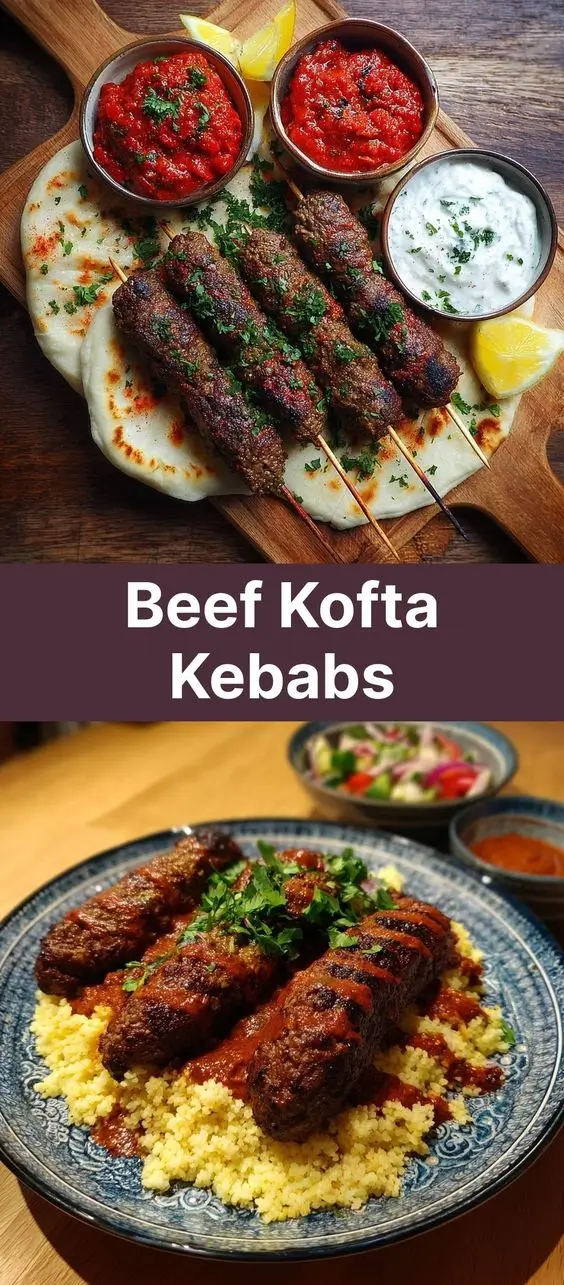
- Serve Warm: Slide the kofta off the skewers or serve directly on them. Accompany with pita, rice pilaf, tzatziki, hummus, tabbouleh, grilled vegetables, or a crisp salad.
Tips for Perfect Beef Kofta Kebabs Every Time
- Use Cold Hands: Keep your hands cold while handling the meat mixture—run them under cold water or wear disposable gloves chilled in the freezer. Warm hands melt the fat prematurely, leading to denser kebabs.
- Don’t Overmix: Mix just until ingredients are incorporated. Overworking develops proteins that lead to a dense, sausage-like texture instead of tender kofta.
- Soak Wooden Skewers: If not using metal, soak wooden skewers in water for at least 30 minutes to prevent burning.
- Flat Skewers Are Best: Flat metal skewers provide more surface area for the meat to adhere, reducing spinning and falling off during cooking.
- Uniform Thickness: Shape all kebabs to similar size and thickness so they cook evenly.
- Oil the Grill, Not the Meat: Brush the grill grates lightly with oil instead of coating the raw kofta, which can cause flare-ups.
- Let Them Char, Don’t Crowd: Give each skewer space on the grill to allow proper airflow and searing. Crowding causes steaming instead of grilling.
- Resist Constant Turning: Let the kebabs develop a good crust before flipping—about 4–5 minutes per side. Frequent turning disrupts caramelization.
- Double the Batch: These freeze beautifully! Freeze uncooked shaped kebabs on a tray, then transfer to zip-top bags. Cook from frozen, adding 2–3 minutes per side.
- Test One First: Fry a small patty in a pan to taste and adjust seasoning before shaping all the kebabs.
Variations and Customizations
While traditional beef kofta is delicious on its own, feel free to experiment based on dietary needs, regional influences, or personal preference:
- Lamb Kofta: Substitute ground lamb for beef or use a 50/50 blend. Lamb has a richer, gamier profile that pairs wonderfully with rosemary and sumac.
- Chicken or Turkey Kofta: Use ground poultry for a lighter version. Add extra olive oil or grated zucchini to compensate for lower fat content.
- Vegan Kofta: Replace meat with mashed chickpeas, lentils, mushrooms, or textured vegetable protein (TVP). Bind with flaxseed meal and season heavily.
- Gluten-Free Option: Omit breadcrumbs and use gluten-free oats, almond flour, or cooked quinoa as a binder.
- Spice Level Adjustment: Add red pepper flakes, cayenne, or harissa paste for heat. For milder kebabs, reduce paprika and omit chili elements.
- Mediterranean Twist: Add lemon zest, oregano, and sun-dried tomatoes for a Greek-inspired flavor.
- Indian-Inspired Kofta: Swap spices for garam masala, turmeric, ginger, and green chilies. Serve with mint yogurt sauce.
- Middle Eastern Wrap Style: Serve in warm pita with tahini sauce, pickled turnips, lettuce, tomato, and onion.
- Rice Bowl Version: Slice cooked kofta and serve over saffron basmati rice with grilled peppers, eggplant, and toum (garlic sauce).
- Kofta Burgers: Form the mixture into patties and grill as kofta burgers. Serve on brioche buns with feta, cucumber, and yogurt dressing.
Health Considerations and Nutritional Value
Beef Kofta Kebabs can be part of a balanced diet when prepared thoughtfully. Here’s what you need to know:
- Protein Powerhouse: At approximately 25–30g of high-quality protein per 4 oz serving, kofta supports muscle repair and satiety.
- Fat Content: Depending on the cut, a typical serving contains 15–20g of fat. Opt for leaner blends (90/10) if monitoring saturated fat intake, though some fat is necessary for flavor and texture.
- Iron and Zinc: Beef is rich in heme iron (easily absorbed) and zinc, both crucial for immune function and energy metabolism.
- Vitamins B12 and Niacin: Support nerve health and cellular energy production.
- Sodium Awareness: Store-bought spice blends or excessive salt can increase sodium levels. Control this by seasoning yourself and using low-sodium options.
- Grilling and Carcinogens: High-temperature grilling can produce heterocyclic amines (HCAs) and polycyclic aromatic hydrocarbons (PAHs). Reduce risk by:
- Avoiding prolonged charring
- Marinating meat (acidic components like lemon juice help)
- Using indirect heat or foil barriers
- Trimming burnt portions before eating
- Dietary Modifications:
- Low-Carb/Keto: Skip breadcrumbs and serve over cauliflower rice or salad.
- Mediterranean Diet: Pair with olives, tomatoes, legumes, and whole grains.
- Balanced Plate: Include plenty of vegetables and limit portion sizes to 4–6 oz per serving.
Frequently Asked Questions (FAQ)
Q: Can I bake Beef Kofta Kebabs instead of grilling?
A: Yes! Preheat oven to 400°F (200°C). Place skewers on a parchment-lined baking sheet and bake for 15–20 minutes, turning halfway through. For extra browning, finish under the broiler for 2–3 minutes.
Q: How do I prevent kofta from falling off the skewers?
A: Use flat metal skewers, chill the mixture before shaping, and press the meat firmly onto the skewer. Avoid overloading—keep lengths proportional to skewer size.
Q: Can I make kofta ahead of time?
A: Absolutely. Prepare and shape up to 24 hours in advance; store covered in the fridge. You can also freeze uncooked kebabs for up to 3 months.
Q: What dipping sauces go well with kofta?
A: Popular choices include tzatziki, tahini sauce, garlic toum, amba (mango pickle sauce), harissa mayo, or plain Greek yogurt with lemon and dill.
Q: Is it safe to eat kofta slightly pink inside?
A: No. Ground beef must reach an internal temperature of 160°F (71°C) to be safe due to potential bacterial contamination throughout the meat.
Q: Can I cook kofta in an air fryer?
A: Yes. Air fry at 375°F (190°C) for 10–12 minutes, flipping halfway. Works best with smaller shapes or mini koftas.
Q: Why did my kofta turn out dry?
A: Likely causes: lean meat, overmixing, overcooking, or skipping moisture-rich ingredients like onion and herbs. Always use 80/20 beef and avoid excessive handling.
Q: Can I use frozen onions or pre-minced garlic?
A: While convenient, fresh yields superior flavor. Frozen onions release more water and lack texture. Fresh garlic provides brighter, cleaner taste compared to jarred versions.
Summary
Beef Kofta Kebabs are a timeless dish rooted in centuries of culinary tradition, combining seasoned ground beef with aromatic herbs and spices, then grilled to smoky perfection on skewers. Easy to customize, rich in flavor, and perfect for any occasion—from weeknight dinners to festive gatherings—they bring bold Middle Eastern flavors straight to your table.