Introduction
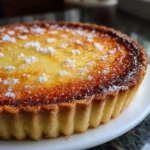
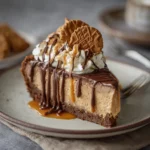
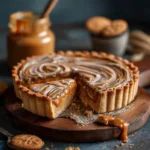
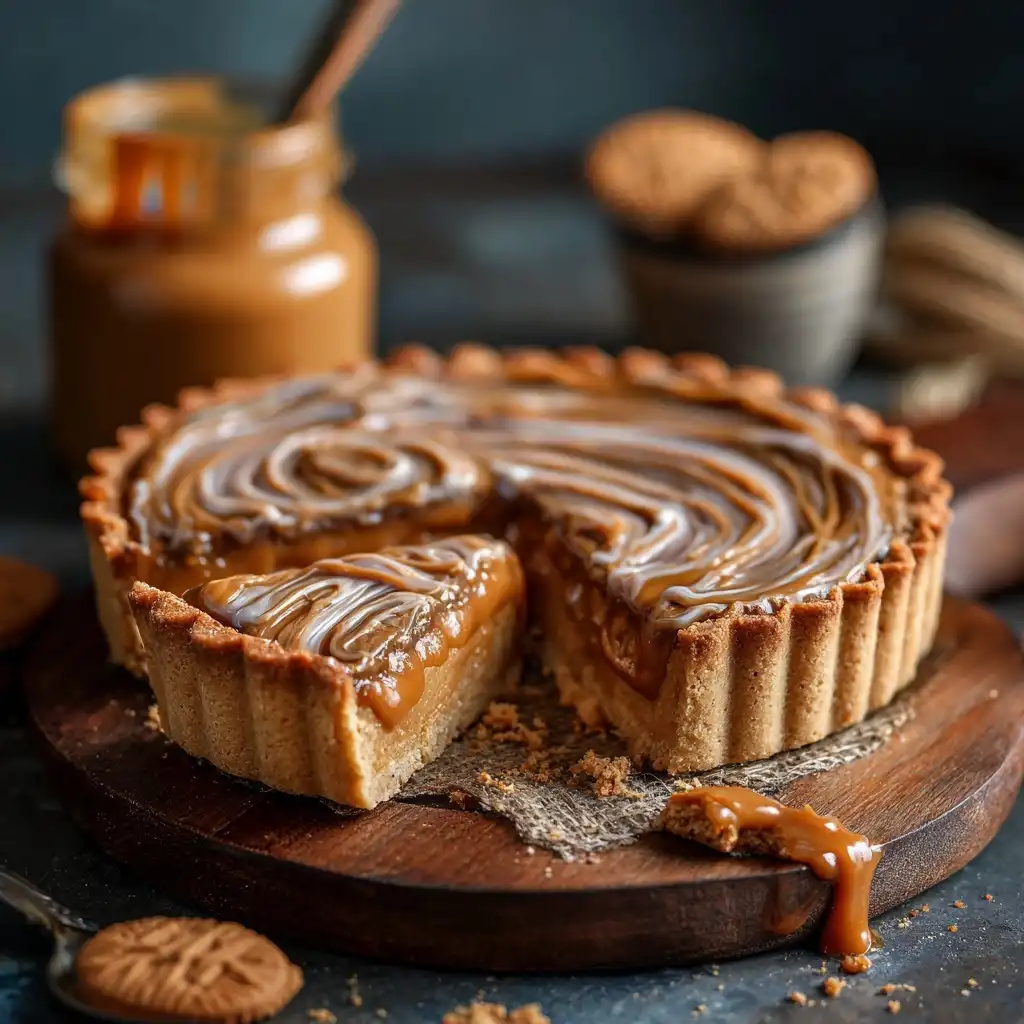
Welcome to the decadent, velvety world of the Biscoff Cookie Butter Tart — a showstopping dessert that marries the nostalgic warmth of caramelized speculoos spices with the elegant structure of a buttery shortcrust tart shell. This isn’t just another cookie spread dessert; it’s a harmonious symphony of texture and flavor — rich yet balanced, indulgent yet surprisingly nuanced. Whether you’re hosting an intimate dinner party, preparing a crowd-pleasing treat for a holiday gathering, or simply treating yourself to a moment of mindful sweetness, this tart delivers sophistication in every slice. Its glossy, creamy filling sets like silk, its spiced aroma fills your kitchen like a cozy autumn memory, and its golden-brown crust provides the perfect crisp counterpoint. More than a recipe, it’s an experience — one that transforms humble pantry staples into something extraordinary.
The History
The story of the Biscoff Cookie Butter Tart begins not in a Michelin-starred kitchen, but in the humble Belgian port city of Lembeke — home to Lotus Bakeries, the creators of the iconic Biscoff (originally “Lotus Speculoos”) cookies in 1932. These cinnamon-tinged, caramelized shortbread biscuits were traditionally served with coffee on Belgian railways — hence their original name, “Speculoos” (from the Dutch *speculaas*, meaning “mirror cake,” referencing the ornate molds once used). Fast forward to 2007: Lotus launched Biscoff Spread, a smooth, creamy, shelf-stable interpretation of the cookie — made from ground speculoos cookies, vegetable oils, sugar, and natural flavorings. Its meteoric rise — first across Europe, then globally — sparked a wave of culinary innovation. Home bakers and pastry chefs alike began experimenting: swirling it into brownies, folding it into frostings, layering it into cheesecakes — and eventually, elevating it into refined, restaurant-worthy tarts. The Biscoff Cookie Butter Tart emerged organically as a natural evolution — a celebration of European heritage reimagined through modern American and Anglo baking sensibilities. It reflects our collective love for accessible luxury: a dessert that feels special without demanding professional technique or obscure ingredients.
Ingredients Breakdown
Understanding each component is key to mastering this tart’s balance, texture, and depth. Let’s explore not just *what* goes in — but *why*:
- Shortcrust Pastry (Tart Shell): A classic all-butter pâte sucrée forms the foundation — enriched with powdered sugar for tenderness and egg yolk for richness and binding. The inclusion of a small amount of cornstarch (optional but recommended) inhibits gluten development, yielding an ultra-tender, melt-in-the-mouth crumb. Chilling the dough before rolling is non-negotiable — it prevents shrinkage during blind baking and ensures structural integrity beneath the dense filling.
- Biscoff Cookie Butter: Use authentic Lotus Biscoff Spread (smooth or crunchy — see Variations) for guaranteed consistency and authentic spice profile. Imitators often lack the precise balance of caramelized sugar, cinnamon, ginger, nutmeg, and clove — resulting in flat or overly sweet fillings. Note: Do not substitute regular peanut or almond butter — their oil separation and flavor profiles are incompatible.
- Full-Fat Cream Cheese: Not optional. Low-fat versions contain stabilizers and excess water, leading to a grainy, weeping, or curdled filling. Full-fat cream cheese provides essential fat content, acidity, and body — helping the filling set firmly while contributing subtle tang to offset the spread’s sweetness.
- Heavy Cream (36–40% fat): Adds luxurious mouthfeel and aids in emulsification. Its high fat content prevents splitting and contributes to a glossy, satiny finish. Avoid half-and-half or milk — they’ll dilute flavor and compromise texture.
- Granulated Sugar: While Biscoff Spread is already sweet, a modest addition (typically ¼–⅓ cup) enhances flavor perception, balances acidity from the cream cheese, and improves setting properties. Too much sugar, however, can inhibit proper gelation and make the filling cloying.
- Eggs (Large, Room Temperature): Act as the primary binder and leavening agent. Their proteins coagulate during baking, transforming the liquid mixture into a stable, sliceable custard. Room temperature eggs incorporate more evenly and reduce the risk of curdling when mixed with warm ingredients.
- Vanilla Extract (Pure, Not Imitation): Deepens the caramel notes and rounds out the spice profile. A high-quality Madagascar bourbon vanilla adds floral complexity that complements — rather than competes with — the speculoos spices.
- Sea Salt (Flaky or Fine): A crucial “flavor amplifier.” Just ¼ tsp enhances sweetness, suppresses bitterness, and lifts the warm spices. Don’t skip it — it’s the secret behind professional-level depth.
Step-by-Step Recipe
- Prepare the Tart Shell (Minimum 1 hour ahead, preferably overnight): In a food processor, pulse 1¾ cups (220g) all-purpose flour, ¼ cup (30g) powdered sugar, and ½ tsp fine sea salt until combined. Add 1 cup (227g) cold, cubed unsalted butter and pulse until the mixture resembles coarse cornmeal with some pea-sized butter pieces remaining. In a small bowl, whisk 1 large egg yolk, 2 tbsp ice-cold water, and 1 tsp apple cider vinegar (the acid tenderizes gluten). Drizzle over flour mixture while pulsing until dough just begins to clump. Turn onto parchment, flatten into a 1-inch thick disc, wrap tightly, and refrigerate for at least 1 hour (or freeze for up to 3 months).
- Roll & Blind Bake: Preheat oven to 375°F (190°C). Lightly flour surface and rolling pin. Roll chilled dough to ⅛-inch thickness between two sheets of parchment. Carefully lift and drape into a 9-inch (23cm) fluted tart pan with removable bottom. Gently press into corners and up sides. Trim excess, then crimp edges decoratively. Prick base 10–12 times with fork. Freeze shell for 15 minutes. Line with parchment and pie weights (or dried beans). Bake 18 minutes. Remove weights and parchment; bake 12–15 more minutes until golden and dry-looking. Cool completely on wire rack (minimum 30 minutes).
- Prepare Filling: Reduce oven to 325°F (165°C). In stand mixer fitted with paddle attachment, beat 8 oz (227g) full-fat cream cheese (room temp) on medium until smooth and creamy (~2 min). Scrape bowl. Add 1 cup (260g) smooth Biscoff Spread and beat on medium-low until fully incorporated and glossy (~1.5 min). Scrape bowl thoroughly. Add ⅓ cup (67g) granulated sugar, 1 tsp pure vanilla extract, and ¼ tsp fine sea salt; beat 1 minute. Add ½ cup (120ml) heavy cream; mix on low just until combined. One at a time, add 2 large room-temperature eggs, beating on low just until yolk disappears after each (do NOT overmix — ~15 sec per egg). Scrape bowl meticulously after each addition.
- Fill & Bake: Pour filling into cooled tart shell. Tap pan sharply on counter 3x to release air bubbles. Place tart on center oven rack. Bake 35–42 minutes — until edges are set and center jiggles only slightly (like Jell-O) when gently shaken. Avoid overbaking — the filling will continue to set as it cools. Turn off oven, crack door open 2 inches with wooden spoon, and let tart cool inside for 15 minutes.
- Cool & Chill: Transfer tart (still in pan) to wire rack. Cool completely at room temperature (~2 hours). Then, cover loosely with plastic wrap and refrigerate for minimum 6 hours — ideally overnight. This slow, cold set is essential for clean slicing and optimal texture.
- Finish & Serve: Run thin knife around inner edge to loosen. Carefully remove outer ring. Garnish with flaky sea salt, a drizzle of extra Biscoff Spread, crushed Biscoff cookies, toasted pecans, or a quenelle of lightly sweetened whipped cream. Slice with hot, dry knife wiped between cuts.
Tips
- Chill Everything — Seriously: Cold butter, cold dough, room-temp *filling* ingredients (not cold), and a fully cooled shell are non-negotiable for success. Warm ingredients cause butter to melt prematurely, leading to greasy, tough crusts and unstable fillings.
- Don’t Skip the Vinegar: Apple cider vinegar (or white vinegar) in the crust dough inhibits gluten formation, yielding unparalleled tenderness. It bakes off completely — no flavor remains.
- Blind Bake Like a Pro: Freeze the shaped shell before baking to prevent shrinkage. Use ceramic pie weights or dried beans — never foil alone, which conducts heat too aggressively and burns the bottom.
- Scrape Religiously: After every mixing step — especially after adding eggs — scrape the paddle, bowl sides, and bottom with a flexible spatula. Unincorporated streaks of cream cheese or Biscoff cause uneven baking and textural flaws.
- Low & Slow Is Key: Baking at 325°F (not 350°F+) prevents cracking, curdling, and over-browning. The gentle heat allows the proteins to coagulate gradually, creating a silken, uniform set.
- Patience Pays Off: Rushing the chilling phase is the #1 reason for sloppy slices and weeping fillings. The 6+ hour refrigeration allows starches and proteins to fully hydrate and bond, transforming the filling from custard to firm, sliceable perfection.
- Knife Technique Matters: Dip a long, thin, non-serrated knife in hot water, wipe dry, and slice cleanly. Repeat for each cut. A serrated knife tears the delicate crust and smears the filling.
- Room Temp Before Serving: For optimal flavor and texture, let chilled tart sit at room temperature for 15–20 minutes before slicing. This softens the filling slightly, releasing its full aromatic complexity.
Variations and Customizations
This tart is a canvas for creativity — all while honoring its core identity. Here are inspired, tested variations:
- Crunchy Biscoff Version: Substitute smooth Biscoff Spread with crunchy Biscoff Spread. The texture contrast is delightful — tiny cookie bits suspended in creamy filling. Reduce heavy cream to ⅓ cup to compensate for added moisture from the crunchy bits.
- Spiced Caramel Swirl: Warm ½ cup homemade or high-quality store-bought salted caramel sauce until pourable. After pouring filling into shell, drizzle caramel in concentric circles. Use a toothpick to gently swirl — don’t overmix. Adds deep molasses notes and visual drama.
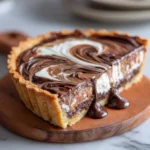
- Chocolate-Biscoff Fusion: Melt 4 oz (113g) high-quality dark chocolate (70% cacao) and fold into warm (not hot) filling just before pouring. Or, create a chocolate ganache layer: brush cooled, baked shell with ¼ cup warm ganache (½ cup cream + 4 oz dark chocolate), chill 15 min, then add Biscoff filling.
- Nutty Delight: Toast ½ cup chopped pecans or walnuts. Fold ⅓ cup into filling before baking. Sprinkle remaining ⅓ cup on top before baking for crunch and visual appeal.
- Streusel-Topped: Mix ¼ cup Biscoff Spread, ¼ cup flour, 2 tbsp brown sugar, 2 tbsp cold butter, and ¼ tsp cinnamon. Crumble over filled tart before baking. Creates a delightful textural crown.
- Mini Tartlets: Press dough into 12 standard muffin tin cups (greased and lined with parchment circles). Blind bake 12–15 min. Fill and bake 22–28 min. Perfect for parties or portion control.
- Vegan Adaptation (Advanced): Use vegan butter and gluten-free flour blend in crust. Replace cream cheese with cultured cashew cream cheese (soaked, blended, fermented), Biscoff with certified vegan speculoos spread, eggs with flax eggs (2 tbsp ground flax + 5 tbsp water, rested 10 min), and heavy cream with full-fat coconut cream. Requires precise timing and testing — not recommended for first-time bakers.
- Gluten-Free Option: Substitute all-purpose flour in crust with 1:1 gluten-free baking blend (e.g., King Arthur Measure for Measure). Ensure Biscoff Spread is certified GF (Lotus Biscoff is in most regions — verify label).
Health Considerations and Nutritional Value
While undeniably indulgent, understanding the nutritional landscape empowers mindful enjoyment. Per standard slice (1/12th of a 9-inch tart, approx. 180g):
- Calories: ~380–420 kcal — primarily from complex carbohydrates (Biscoff’s caramelized sugars and flour), healthy fats (butter, cream cheese, cream), and minimal protein.
- Fats: ~26–29g total fat (16–18g saturated). The majority comes from dairy sources — rich in fat-soluble vitamins (A, D, K2) and conjugated linoleic acid (CLA), associated with anti-inflammatory benefits. However, moderation remains key for cardiovascular health.
- Sugars: ~24–28g total sugars, of which ~18–22g are added sugars (mainly from Biscoff Spread and granulated sugar). While speculoos spices offer antioxidant properties (cinnamon’s cinnamaldehyde, cloves’ eugenol), the overall sugar load warrants portion awareness.
- Protein: ~5–6g — modest but valuable, contributed by egg, cream cheese, and butter. Supports satiety and muscle maintenance.
- Fiber: ~0.5g — very low, due to refined flour and spread. Consider serving with a side of fresh berries (fiber + antioxidants) or a small green salad to balance the meal.
- Allergens: Contains wheat (gluten), dairy (butter, cream cheese, cream), eggs, and soy (often in Biscoff Spread’s emulsifier). Always check labels for specific allergen statements.
- Mindful Enjoyment Tips: Share a slice, pair with herbal tea instead of sugary beverages, savor slowly to enhance satisfaction, and consider the tart as a special occasion dessert — not daily fare. Its richness means smaller portions deliver profound pleasure.
Ingredients
- For the Shortcrust Tart Shell:
- 1¾ cups (220g) all-purpose flour, plus more for dusting
- ¼ cup (30g) powdered sugar
- ½ tsp fine sea salt
- 1 cup (227g) unsalted butter, cold and cubed
- 1 large egg yolk
- 2 tbsp ice-cold water
- 1 tsp apple cider vinegar
- For the Biscoff Filling:
- 8 oz (227g) full-fat brick-style cream cheese, room temperature
- 1 cup (260g) smooth Lotus Biscoff Cookie Butter Spread
- ⅓ cup (67g) granulated sugar
- ½ cup (120ml) heavy cream (36–40% fat)
- 2 large eggs, room temperature
- 1 tsp pure vanilla extract
- ¼ tsp fine sea salt
- For Garnish (Optional):
- Flaky sea salt (e.g., Maldon)
- Extra Biscoff Spread, warmed
- Crushed Biscoff cookies
- Toasted pecan halves
- Lightly sweetened whipped cream
Directions
- Make the Dough: In a food processor, combine flour, powdered sugar, and salt. Pulse 3 times. Add cold butter; pulse until mixture resembles coarse crumbs with visible pea-sized butter pieces (12–15 pulses). In a small bowl, whisk egg yolk, ice water, and vinegar. With processor running, slowly drizzle liquid through feed tube until dough just begins to clump together (10–15 seconds). Do not over-process. Turn dough onto parchment paper, gather into a disc, wrap tightly, and refrigerate for at least 1 hour (up to 3 days) or freeze for up to 3 months.
- Blind Bake the Shell: Preheat oven to 375°F (190°C). Roll chilled dough between two sheets of parchment to ⅛-inch thickness. Carefully transfer to a 9-inch fluted tart pan with removable bottom. Press gently into bottom and up sides. Trim excess, then crimp edges. Prick base 12 times. Freeze 15 minutes. Line with parchment and pie weights. Bake 18 minutes. Remove weights and parchment; bake 12–15 minutes more until golden and dry. Cool completely on wire rack (≥30 min).
- Prep Filling: Reduce oven to 325°F (165°C). In stand mixer with paddle, beat cream cheese on medium 2 minutes until smooth. Add Biscoff Spread; beat on medium-low 1.5 minutes until glossy. Scrape bowl. Add sugar, vanilla, and salt; beat 1 minute. Add heavy cream; mix on low until combined. Add eggs one at a time, beating on low just until incorporated (15 sec each). Scrape bowl after each egg.
- Bake: Pour filling into cooled shell. Tap pan sharply 3x. Bake 35–42 minutes until edges are set and center jiggles slightly. Turn off oven, crack door open 2 inches, and cool tart inside 15 minutes.
- Chill & Serve: Cool completely on rack (~2 hours). Cover loosely with plastic wrap. Refrigerate ≥6 hours (overnight ideal). To serve: loosen edges with knife, remove outer ring, garnish, and slice with hot, dry knife.
FAQ
- Can I use store-brand cookie butter?
- While possible, results vary widely. Many imitators use palm oil (which can separate), excessive sugar, or artificial flavors, leading to greasy, overly sweet, or flavorless fillings. For guaranteed success and authentic taste, Lotus Biscoff is strongly recommended.
- Why did my tart crack?
- Overbaking is the primary culprit — the filling continues to cook from residual heat. Pull it out when the center still has a slight jiggle. Also ensure eggs and cream cheese are truly room temperature to prevent thermal shock.
- Can I make this ahead?
- Absolutely — and it’s encouraged! The tart keeps beautifully refrigerated for up to 5 days. In fact, flavors deepen and textures improve on days 2–3. Freeze unbaked shells for up to 3 months; freeze fully baked, chilled tart (wrapped airtight) for up to 2 months. Thaw overnight in fridge before serving.
- My filling is runny even after chilling. What went wrong?
- Most likely causes: underbaking (center wasn’t set enough before cooling), using low-fat cream cheese or sour cream, substituting milk for heavy cream, or insufficient chilling time (<6 hours). Double-check ingredient labels and timing.
- Can I omit the eggs?
- No. Eggs provide essential structure and binding. Egg-free versions require complex starch-based gels (e.g., cornstarch + agar) and yield a fundamentally different, less luxurious texture — not a true tart.
- How do I prevent soggy bottoms?
- Ensure the shell is fully cooled before filling. Blind bake until deeply golden and completely dry-looking — no pale or doughy spots. If humidity is high, bake shell 2–3 minutes longer.
- Is there caffeine in Biscoff?
- No. Biscoff cookies and spread contain zero caffeine — they’re made from wheat flour, sugar, vegetable oils, and spices, not coffee or chocolate.
- Can I use a regular pie dish instead of a tart pan?
- Yes, but adjust expectations. A standard 9-inch pie dish has sloping sides and no removable bottom, making removal and clean slicing more challenging. Use parchment paper sling for easier lifting. Expect slightly thicker filling and potentially longer bake time (check at 38 min).
Summary
The Biscoff Cookie Butter Tart is a masterclass in accessible elegance — a luxuriously creamy, warmly spiced filling encased in a buttery, tender shortcrust shell, delivering nostalgic comfort with refined execution.
Rooted in Belgian tradition and elevated by modern baking science, it rewards attention to detail (chilled dough, room-temp fillings, precise baking, and patient chilling) with unforgettable flavor, flawless texture, and universal appeal.