Introduction
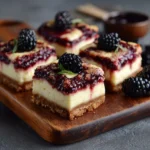
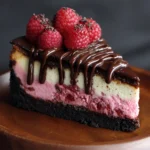
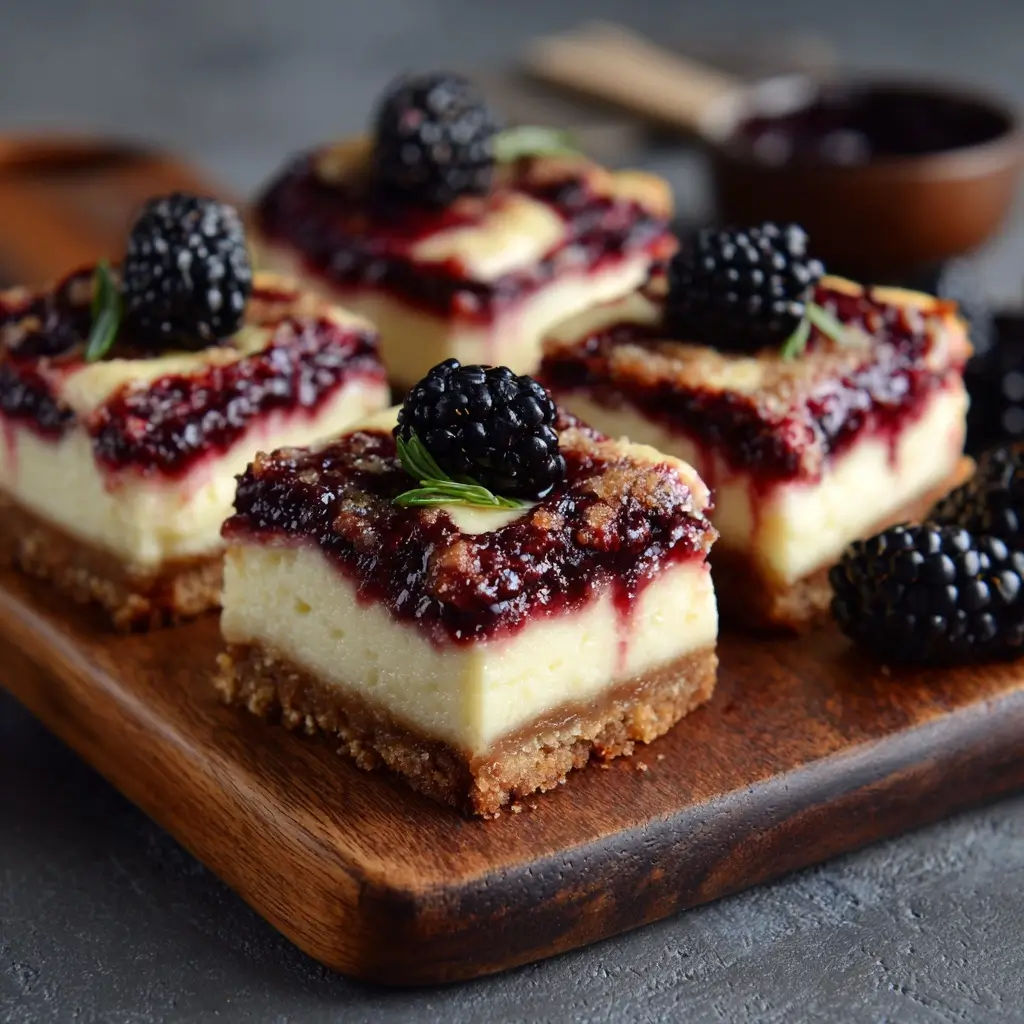
Blackberry Cheesecake Bars are the perfect marriage of tart, juicy summer berries and luxuriously creamy, velvety cheesecake — all nestled atop a buttery shortbread crust and finished with a glossy, jewel-toned blackberry swirl. These decadent yet approachable bars deliver restaurant-quality elegance in every bite, making them ideal for potlucks, holiday dessert tables, summer barbecues, or an indulgent weeknight treat. Unlike traditional cheesecake that requires a water bath and hours of chilling and cooling, these bars bake quickly, set reliably, and slice cleanly — offering impressive visual appeal without the stress. With their vibrant purple hue, delicate floral-berry aroma, and balanced sweet-tart profile, Blackberry Cheesecake Bars are more than just dessert: they’re a sensory celebration of seasonal abundance and nostalgic comfort.
The History
The origins of cheesecake trace back over 2,000 years to ancient Greece, where early versions made with honey-sweetened cheese, flour, and bay leaves were served to athletes at the first Olympic Games in 776 BCE. The Romans later adopted and adapted the recipe, spreading it across their empire. In America, cheesecake evolved significantly in the late 19th and early 20th centuries — especially after the invention of cream cheese by William Lawrence in 1872 in Chester, New York. The iconic New York–style cheesecake emerged in the early 1900s, popularized by Jewish dairy restaurants on the Lower East Side and later immortalized by establishments like Lindy’s and Junior’s.
Bar-form cheesecakes, however, are a mid-century American innovation born from convenience culture and home baking trends. As refrigerated doughs, boxed mixes, and streamlined recipes gained popularity in the 1950s and ’60s, home cooks began transforming classic desserts into portable, shareable formats. Cheesecake bars appeared in community cookbooks, women’s magazines (like Good Housekeeping and Ladies’ Home Journal), and church fundraisers — prized for their uniform portions, minimal equipment needs, and make-ahead flexibility. Blackberries — native to North America and long cherished by Indigenous peoples for food and medicine — became a natural pairing once frozen and fresh blackberry purées became widely available in grocery stores. By the 1980s, blackberry-swirled cheesecake bars had secured a permanent spot in regional baking traditions, especially across the Pacific Northwest, Southeastern U.S., and Midwest — where wild blackberry picking remains a beloved seasonal ritual.
Ingredients Breakdown
Every exceptional Blackberry Cheesecake Bar relies on precise ingredient roles — not just flavor, but function. Below is a detailed breakdown of each component and why it matters:
- Unsalted Butter (for crust & filling): Provides richness, flakiness in the shortbread base, and emulsification in the filling. Unsalted ensures full control over sodium levels and prevents oversalting. European-style butter (82–84% fat) yields a more tender, golden crust.
- All-Purpose Flour: The structural backbone of the shortbread crust. Its moderate protein content (10–12%) delivers tenderness without toughness. For gluten-free adaptations, a 1:1 certified GF blend with xanthan gum works well — but avoid almond or coconut flours alone, as they lack binding capacity.
- Granulated Sugar (crust & filling): Sweetens and aids browning (Maillard reaction) in the crust while stabilizing the cheesecake matrix. Fine-grain sugar dissolves more readily into cream cheese, minimizing graininess.
- Cream Cheese (full-fat, brick-style): Must be at true room temperature (68–72°F) — cool enough to hold shape but soft enough to beat smoothly. Low-fat or whipped varieties contain added stabilizers and air, resulting in cracked, watery, or rubbery bars. Philadelphia-brand is widely tested and reliable.
- Full-Fat Sour Cream: Adds tang, moisture, and a subtle acidity that balances sweetness and enhances shelf life. It also contributes to a silkier, less dense texture than using heavy cream alone.
- Large Eggs (room temperature): Act as binders and leavening agents. Cold eggs can cause lumps and uneven mixing; room-temp eggs emulsify seamlessly into the batter. Always add one at a time, fully incorporating before adding the next.
- Pure Vanilla Extract (not imitation): Deepens flavor complexity and rounds out the sharpness of cream cheese. Madagascar bourbon vanilla offers warm, caramelized notes that harmonize beautifully with blackberries.
- Fresh or Frozen Blackberries: Peak-season fresh blackberries offer superior brightness and floral nuance. Frozen berries (unsweetened, IQF) are excellent year-round — do not thaw before puréeing to preserve intensity and minimize excess water. Avoid canned or syrup-packed berries, which introduce unwanted sugars and thickeners.
- Granulated Sugar (for blackberry swirl): Adjusts tartness and helps thicken the purée slightly. A small amount of lemon juice (¼ tsp per ½ cup purée) brightens the fruit and prevents dullness.
- Optional Additions: A pinch of ground cardamom or lemon zest in the crust adds aromatic sophistication; a tablespoon of crème fraîche in the filling boosts tang and luxury; a light dusting of freeze-dried blackberry powder post-baking intensifies color and flavor.
Step-by-Step Recipe
- Prep & Preheat: Position oven rack in the center position. Preheat oven to 325°F (163°C). Line an 8×8-inch metal baking pan with parchment paper, leaving 2-inch overhang on two opposite sides for easy lifting. Lightly grease the parchment and pan sides.
- Make the Shortbread Crust: In a medium bowl, whisk together 1 cup (125g) all-purpose flour, ¼ cup (50g) granulated sugar, and ¼ tsp fine sea salt. Cut in 6 tbsp (85g) cold, unsalted butter (cubed) using a pastry cutter or two forks until mixture resembles coarse crumbs with some pea-sized pieces. Press evenly and firmly into the bottom of the prepared pan using the back of a measuring cup or flat-bottomed glass. Chill crust for 15 minutes.
- Bake the Crust: Bake chilled crust for 18–20 minutes, until lightly golden and set at edges. Remove from oven and reduce temperature to 300°F (149°C). Let crust cool slightly while preparing filling — it should still be warm (not hot) when filling is added.
- Prepare Blackberry Swirl: In a small saucepan, combine 1 ½ cups (180g) fresh or frozen blackberries and ¼ cup (50g) granulated sugar. Cook over medium-low heat, stirring frequently, until berries break down and release juices (about 6–8 minutes). Mash gently with a fork. Strain through a fine-mesh sieve into a small bowl, pressing pulp with the back of a spoon to extract maximum liquid. Discard seeds. Cool purée completely (≈15–20 min). Optional: stir in ¼ tsp lemon juice.
- Make Cheesecake Filling: In a large bowl using a stand mixer fitted with paddle attachment (or hand mixer), beat 16 oz (454g / two 8-oz bricks) full-fat, room-temperature cream cheese on medium speed for 1 minute until smooth and creamy. Scrape bowl. Add ⅔ cup (135g) granulated sugar and beat 2 minutes until fluffy and lump-free. Scrape bowl thoroughly. Add ½ cup (120g) full-fat sour cream and 1 tsp pure vanilla extract; beat 1 minute until combined. Add 2 large room-temperature eggs one at a time, beating on low just until yolk disappears (≈15 seconds each). Scrape bowl after each addition. Beat in ¼ tsp fine sea salt. Do not overmix — stop as soon as uniform.
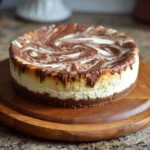
- Layer & Swirl: Pour filling over warm crust. Gently tap pan on counter twice to release air bubbles. Spoon cooled blackberry purée in 6–8 dollops evenly across surface. Using a toothpick or thin skewer, drag gently in figure-eight or zigzag motions to create a marbled effect — avoid over-swirling, which muddies the design.
- Bake Low & Slow: Place pan on center rack. Bake at 300°F for 55–65 minutes. Bars are done when edges are set and puffed slightly, center jiggles *just* 1 inch when gently shaken (like firm Jell-O), and internal temperature reads 150–155°F (65–68°C) on an instant-read thermometer inserted 1 inch from edge. Overbaking causes cracking and dryness.
- Cool Gradually: Turn off oven. Crack oven door open 1 inch with a wooden spoon handle. Let bars cool inside oven for 45 minutes. Remove pan and place on wire rack. Cool at room temperature for 1 hour. Then cover loosely with parchment (not plastic wrap — condensation ruins surface) and refrigerate *uncovered* for at least 8 hours — preferably overnight — to fully set and develop flavor.
- Chill & Slice: Once thoroughly chilled, use parchment overhang to lift bars from pan onto cutting board. Trim uneven edges for clean presentation. Wipe knife with hot water and dry between each cut for razor-sharp slices. Store covered in refrigerator.
Tips
- Room Temperature Is Non-Negotiable: Cream cheese, sour cream, eggs, and even butter for the crust must be truly room temperature (68–72°F), not “slightly cool.” Pull from fridge 2+ hours ahead. Cold ingredients cause lumps, curdling, and poor emulsification — the #1 cause of cracked or grainy bars.
- Straining Is Essential: Never skip straining the blackberry purée. Seeds create textural distraction and interfere with smooth swirling. A chinois or fine-mesh sieve + firm pressing yields silky, professional-grade swirls.
- Underbake Slightly: Err on the side of underdone — the residual heat continues cooking during cooling. If center looks wet but doesn’t slosh, it’s perfect. A fully set center pre-oven = dry, crumbly bars.
- Water Bath? Not Required — But Steam Helps: While not mandatory, placing a shallow roasting pan filled with 1 inch of hot water on the lowest rack creates gentle, even heat and minimizes cracking. Just ensure no water splashes into your pan.
- Cooling Discipline Pays Off: Skipping the in-oven cooldown invites thermal shock and cracks. Rushing the chill time results in smearing, poor slicing, and muted flavor. Overnight refrigeration allows acid and fat molecules to fully reorganize — yielding denser, creamier texture.
- Knife Technique Matters: Use a long, thin-bladed knife (like a chef’s or offset spatula knife). Dip in hot water, wipe completely dry, and cut with slow, downward pressure — no sawing. Warm knife = clean cuts; wet knife = smeared swirls.
- Freeze for Longevity: Fully cooled, uncut bars (wrapped tightly in plastic + foil) freeze beautifully for up to 3 months. Thaw overnight in fridge before slicing — never at room temperature, which causes condensation and sogginess.
- Prevent Browning: If crust edges darken too fast during pre-bake, cover with foil strips. For filling, tent loosely with foil if top begins browning before center sets (rare at 300°F but possible in convection ovens).
Variations and Customizations
Blackberry Cheesecake Bars are wonderfully adaptable — whether you’re accommodating dietary needs, celebrating seasonal produce, or simply craving creative flair. Here’s how to personalize them:
- Gluten-Free: Substitute 1:1 gluten-free all-purpose flour blend (with xanthan gum) for crust flour. Ensure all other ingredients (vanilla, baking powder if used) are certified GF. Add 1 tsp psyllium husk powder to crust for improved binding.
- Vegan: Use vegan butter (Miyoko’s or Earth Balance), almond-based “cream cheese” (Kite Hill or Tofutti), coconut yogurt (unsweetened) instead of sour cream, flax eggs (1 tbsp ground flax + 2.5 tbsp water per egg), and maple syrup or coconut sugar. Note: texture will be softer and tang subtler — best served chilled and sliced carefully.
- Lower-Sugar / Diabetic-Friendly: Replace granulated sugar with erythritol-based blends (Swerve or Lakanto) 1:1 in both crust and filling. Add ¼ tsp stevia glycerite to blackberry purée for extra sweetness without carbs. Reduce sour cream slightly (to ⅓ cup) to compensate for moisture changes.
- Flavor Infusions: Add 1 tbsp finely grated lemon zest to crust; infuse cream cheese with ½ tsp lavender buds (steeped in warm cream, then strained); swirl in 2 tbsp seedless raspberry jam alongside blackberry; fold ¼ cup toasted chopped walnuts or pecans into crust.
- Texture Twists: Press ½ cup crushed graham crackers or ginger snaps into warm crust before baking for crunch. Top baked & cooled bars with a glossy blackberry gelée (purée + 1 tsp gelatin bloom + 1 tbsp sugar), or finish with a sprinkle of flaky Maldon salt and micro mint.
- Seasonal Swaps: Substitute blackberries with equal parts ripe raspberries, boysenberries, marionberries, or even huckleberries. For fall, try roasted fig and cinnamon; for spring, lemon-blueberry or strawberry-rhubarb swirls.
- Miniature Version: Bake in a lined muffin tin (standard or jumbo) for individual servings. Reduce crust bake time to 10–12 minutes and filling bake time to 22–28 minutes. Chill 6+ hours.
- Boozy Upgrade: Stir 1 tbsp Chambord (black raspberry liqueur) or crème de mûre into cooled blackberry purée. Or add ½ tsp bourbon to cheesecake filling for warmth and depth.
Health Considerations and Nutritional Value
While undeniably indulgent, Blackberry Cheesecake Bars do offer meaningful nutritional benefits when enjoyed mindfully — especially thanks to the star ingredient: blackberries. A ½-cup serving of raw blackberries contains approximately 31 calories, 7g carbohydrates, 3.5g fiber (14% DV), 25mg vitamin C (28% DV), and potent antioxidants including anthocyanins (responsible for their deep purple hue), ellagic acid, and quercetin — compounds linked to reduced inflammation, improved cardiovascular health, and cognitive support.
A standard 2×2-inch bar (1/16th of an 8×8 pan) made with full-fat ingredients contains roughly:
- Calories: 245–270 kcal
- Total Fat: 16–18g (10–12g saturated)
- Carbohydrates: 22–25g (16–18g sugars, 1g fiber)
- Protein: 4–5g
- Calcium: ~45mg (4% DV)
- Vitamin A & K: Moderate amounts from butter and cream cheese
Considerations for mindful enjoyment:
- Sugar Awareness: Total sugar per bar ranges from 16–18g — primarily added (from crust sugar and blackberry purée). Those monitoring intake may reduce crust sugar to 2 tbsp and purée sugar to 2 tbsp, relying on blackberry’s natural sweetness.
- Saturated Fat: Comes from dairy fat. While recent research challenges outdated “fat = bad” dogma, moderation remains wise — especially for those with familial hypercholesterolemia or heart concerns. Using 50% reduced-fat cream cheese is not recommended (texture suffers), but substituting 1 tbsp of sour cream with plain nonfat Greek yogurt adds protein and reduces fat slightly.
- Digestive Sensitivity: Lactose-intolerant individuals may tolerate small servings due to fermentation in sour cream and aging in cream cheese — but lactase enzyme supplements or dairy-free versions are safer alternatives.
- Portion Control: These bars are rich and satisfying — one is often enough. Serving alongside fresh berries, mint, or unsweetened whipped cream stretches enjoyment without added sugar.
- No Artificial Additives: When made from scratch, these bars contain zero preservatives, artificial colors, or high-fructose corn syrup — unlike most store-bought desserts.
In summary: Blackberry Cheesecake Bars are a treat best enjoyed occasionally as part of a varied, whole-foods-based diet — where the antioxidants and fiber from real fruit meaningfully offset the indulgence.
Ingredients
For the Shortbread Crust:
- 1 cup (125g) all-purpose flour
- ¼ cup (50g) granulated sugar
- ¼ tsp fine sea salt
- 6 tbsp (85g) unsalted butter, cold and cubed
For the Cheesecake Filling:
- 16 oz (454g / two 8-oz bricks) full-fat brick-style cream cheese, room temperature
- ⅔ cup (135g) granulated sugar
- ½ cup (120g) full-fat sour cream, room temperature
- 1 tsp pure vanilla extract
- 2 large eggs, room temperature
- ¼ tsp fine sea salt
For the Blackberry Swirl:
- 1 ½ cups (180g) fresh or frozen unsweetened blackberries
- ¼ cup (50g) granulated sugar
- ¼ tsp fresh lemon juice (optional, for brightness)
Directions
- Preheat oven to 325°F (163°C). Line an 8×8-inch metal baking pan with parchment paper, leaving 2-inch overhang on two opposite sides. Lightly grease parchment and pan sides.
- In a medium bowl, whisk flour, ¼ cup sugar, and ¼ tsp salt. Cut in cold butter with pastry cutter or forks until mixture resembles coarse crumbs with some pea-sized pieces. Press evenly and firmly into bottom of prepared pan. Chill 15 minutes.
- Bake chilled crust 18–20 minutes, until light golden and set at edges. Remove from oven; reduce temperature to 300°F (149°C). Let crust cool slightly (warm, not hot) while preparing filling.
- Make blackberry purée: In small saucepan, combine blackberries and ¼ cup sugar. Cook over medium-low heat 6–8 minutes, stirring, until berries break down. Mash gently. Strain through fine-mesh sieve, pressing pulp to extract liquid. Cool completely (15–20 min). Stir in lemon juice if using.
- In large bowl with stand mixer (paddle attachment) or hand mixer, beat cream cheese on medium 1 minute until smooth. Add ⅔ cup sugar; beat 2 minutes until fluffy. Scrape bowl. Add sour cream and vanilla; beat 1 minute. Add eggs one at a time, beating on low just until incorporated (≈15 sec each). Scrape bowl after each. Beat in salt. Do not overmix.
- Pour filling over warm crust. Tap pan gently on counter twice. Spoon cooled blackberry purée in dollops over filling. Swirl gently with toothpick in figure-eights — do not overmix.
- Bake at 300°F for 55–65 minutes, until edges are set and center jiggles only 1 inch when gently shaken. Internal temp should read 150–155°F.
- Turn off oven. Crack door open 1 inch with wooden spoon. Cool bars in oven 45 minutes. Remove pan; cool on wire rack 1 hour. Cover loosely with parchment and refrigerate uncovered ≥8 hours (overnight preferred).
- Using parchment overhang, lift bars from pan. Trim edges. Wipe knife with hot water and dry between cuts. Slice into 16 even bars. Store covered in refrigerator up to 5 days.
FAQ
- Can I use frozen blackberries?
- Yes — and they’re often preferred for consistent flavor and availability year-round. Use unsweetened, individually quick-frozen (IQF) berries. Do not thaw before cooking — this preserves intensity and minimizes excess water. Simply add frozen berries directly to the saucepan with sugar.
- Why did my bars crack?
- Cracking usually stems from one (or more) of these: 1) Overmixing the filling after adding eggs, 2) Baking at too high a temperature or for too long, 3) Rapid cooling (never refrigerate warm bars), 4) Under-greasing or improper parchment lining causing sticking and tension during contraction. Following the low-and-slow bake + gradual cooling protocol prevents >95% of cracks.
- Can I make these ahead for a party?
- Absolutely — in fact, they improve with time. Bake and chill completely up to 3 days ahead. Keep covered in the refrigerator. For longer storage, freeze uncut bars (tightly wrapped in plastic + foil) up to 3 months. Thaw overnight in fridge before slicing.
- My blackberry swirl disappeared — it turned gray/brown!
- This happens when the purée is too warm when swirled (causing it to sink and mix) or over-swirled (breaking emulsion). Always cool purée completely. Use gentle, minimal figure-eight motions — 6–8 light drags max. Also, avoid acidic additions (like excess lemon juice) that accelerate oxidation — a tiny amount is fine, but don’t overdo it.
- Can I substitute low-fat cream cheese or sour cream?
- Not recommended. Reduced-fat dairy contains added gums, starches, and water that destabilize the delicate protein structure, leading to weeping, cracking, rubbery texture, or separation. Full-fat ingredients provide essential fat for richness, mouthfeel, and structural integrity.
- How do I prevent soggy crust?
- Pre-baking (blind baking) the crust is essential. Ensure it’s fully cooled *before* adding filling — residual heat is fine, but steam from a hot crust creates moisture migration. Also, avoid overloading with wet purée — always strain and cool thoroughly. A light dusting of crushed graham cracker or almond flour on the warm crust before filling adds a moisture barrier.
- Can I double the recipe for a 9×13 pan?
- Yes — double all ingredients and bake in a parchment-lined 9×13-inch pan. Increase crust bake time to 20–22 minutes. Fill and bake at 300°F for 75–85 minutes. Check doneness using jiggle test and thermometer (150–155°F at 1-inch-from-edge). Cooling and chilling times remain the same.
- Are these bars nut-free and soy-free?
- As written, yes — provided you verify your cream cheese brand (some contain soy lecithin as an emulsifier — check labels if highly sensitive). All other ingredients (butter, flour, sugar, eggs, blackberries, vanilla) are naturally nut- and soy-free. Always confirm allergen statements on packaged items.
- What’s the best way to serve them?
- Chill thoroughly, then serve straight from the refrigerator. Pair with unsweetened whipped cream, fresh blackberry compote, a mint leaf garnish, or a drizzle of honey-thyme syrup. For contrast, serve alongside tart green apple slices or a scoop of lemon sorbet.
- Can I add white chocolate to the swirl?
- Yes — melt ¼ cup high-quality white chocolate and cool to room temperature. Swirl it in *alongside* the blackberry purée (not mixed in) for a stunning marbled effect with sweet, creamy pockets. Ensure white chocolate is fully cooled to prevent melting into the filling.
Summary
Blackberry Cheesecake Bars unite rustic shortbread, luxuriously smooth cream cheese filling, and vibrant, antioxidant-rich blackberry swirls into an effortlessly elegant, make-ahead dessert that delights at any gathering.
With meticulous attention to ingredient temperature, gentle swirling technique, low-and-slow baking, and patient chilling, these bars deliver restaurant-worthy texture, clean slices, and unforgettable sweet-tart balance — proving that extraordinary flavor need not require extraordinary effort.