Introduction
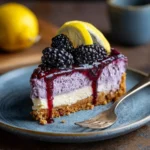
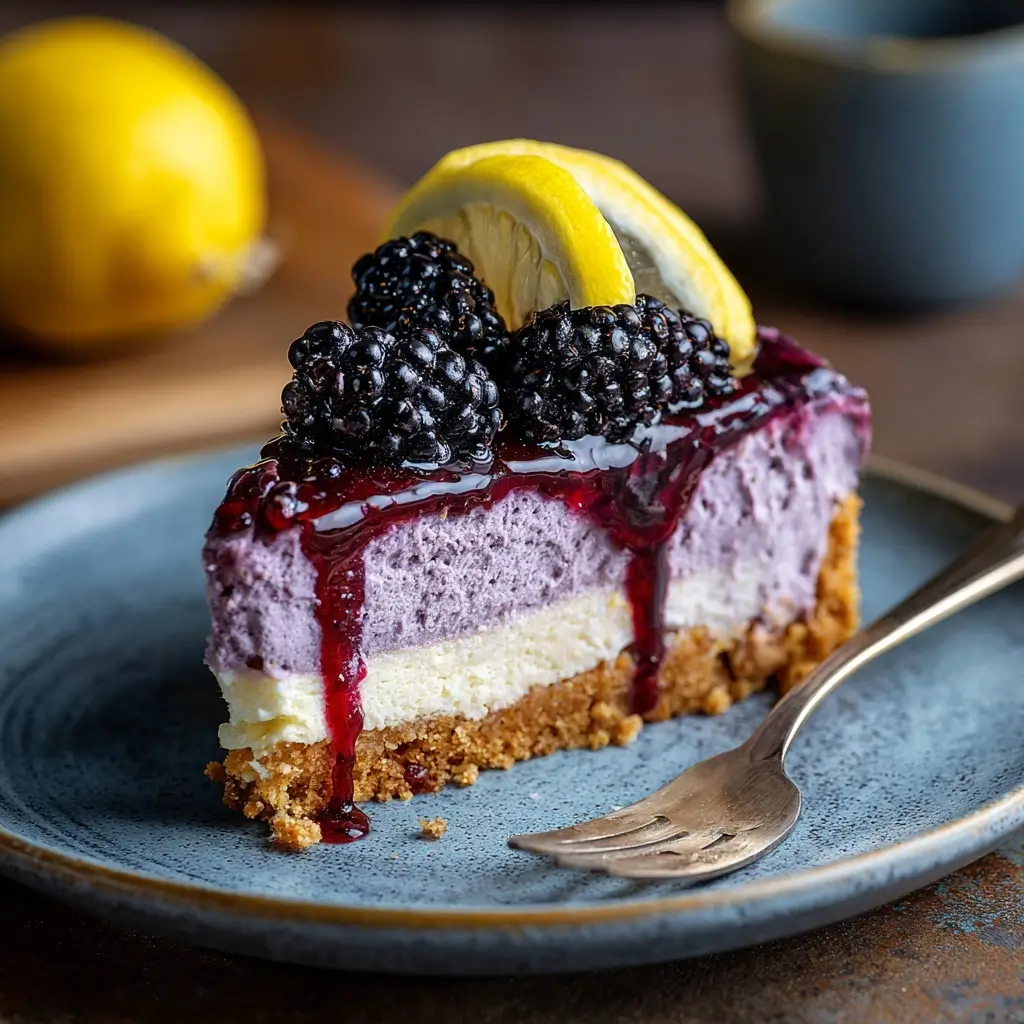
Blackberry Lemon Cheesecake is a stunning fusion of tart, bright citrus and lush, jammy berries—elegantly balanced atop a buttery graham cracker crust and enrobed in velvety, rich New York–style cream cheese filling. This dessert transcends seasonal boundaries: it’s a sun-drenched summer showstopper, a vibrant spring celebration, and an unexpected yet deeply satisfying winter indulgence when made with frozen blackberries and fresh-squeezed lemon juice. Its visual allure—deep purple swirls bleeding into pale ivory custard, crowned with glossy blackberry glaze and delicate lemon zest—is matched only by its complex, layered flavor profile: creamy, tangy, fruity, subtly sweet, and refreshingly acidic all at once. More than just a dessert, it’s a sensory experience—an invitation to pause, savor, and appreciate the harmony of nature’s most vibrant ingredients transformed through careful technique and thoughtful balance.
The History
The lineage of Blackberry Lemon Cheesecake traces back through centuries of culinary evolution, weaving together ancient, European, and American traditions. Cheesecake itself has roots in ancient Greece, where early versions made with honey-sweetened cheese and flour were served to athletes at the first Olympic Games in 776 BCE—and later adopted by the Romans, who spread cheesecake across their empire. In medieval Europe, “cheese tarts” evolved using soft cheeses like ricotta or cottage cheese, often flavored with spices, dried fruits, or citrus peels. The modern American baked cheesecake emerged in the late 19th century with the advent of cream cheese—specifically, William Lawrence’s accidental creation of Philadelphia-style cream cheese in 1872 in Chester, New York. By the 1920s, the iconic New York cheesecake—with its dense, smooth, oven-baked texture—had solidified its place in American baking lore.
Lemon and blackberry, meanwhile, have long held symbolic and culinary significance. Lemons arrived in Europe via Arab traders in the Middle Ages and became prized for both their preservative qualities and bright acidity—eventually finding their way into English curds, French tarts, and American pies by the 1800s. Blackberries, native to North America and revered by Indigenous peoples for food and medicine, were foraged widely and later cultivated commercially beginning in the late 19th century. Their natural affinity with lemon—a classic pairing seen in jams, cordials, and cobblers—made them a natural evolution for cheesecake. While no single “inventor” is credited, Blackberry Lemon Cheesecake gained widespread popularity in the 1980s–90s as artisanal baking surged, food magazines spotlighted seasonal fruit desserts, and home bakers embraced swirl techniques and vibrant, Instagram-worthy presentations. Today, it stands as a beloved contemporary classic—honoring tradition while embracing bold, modern flavor contrasts.
Ingredients Breakdown
Every element of this Blackberry Lemon Cheesecake plays a precise, intentional role—not just in taste, but in structure, texture, stability, and visual appeal. Understanding the *why* behind each ingredient empowers you to troubleshoot, adapt, and elevate your bake:
- Graham Cracker Crust Base (1 ½ cups crumbs): Provides structure, contrast, and subtle sweetness. Graham crackers deliver caramelized notes and just enough fiber to prevent sogginess. Butter (6 tbsp, melted) binds and adds richness; brown sugar (2 tbsp) deepens color and enhances toasty flavor; a pinch of sea salt balances sweetness and heightens aroma.
- Cream Cheese (24 oz / 3 standard blocks, full-fat, room temperature): The essential foundation—its high fat content (at least 33%) ensures creaminess, prevents graininess, and contributes to proper set. Room temperature is non-negotiable: cold cream cheese creates lumps that won’t fully incorporate, even with extended mixing.
- Granulated Sugar (1 cup + 2 tbsp): Sweetens and aids in aeration during beating. The extra 2 tbsp helps stabilize the batter and slightly offsets the sharpness of lemon and blackberry. Avoid powdered sugar—it contains cornstarch, which can mute flavor and affect texture.
- Sour Cream (⅔ cup, full-fat, room temperature): Adds tang, moisture, and tenderness. Its acidity helps tenderize proteins, yielding a smoother, more velvety crumb and preventing cracking. Low-fat versions lack sufficient fat and may cause weeping or dryness.
- Heavy Cream (¼ cup, room temperature): Enhances richness and fluidity without diluting flavor. It improves sliceability and contributes to a luxurious mouthfeel. Do not substitute with milk or half-and-half—they lack the fat needed for structural integrity.
- Fresh Lemon Juice (¼ cup, ~2–3 large lemons): Provides essential, bright acidity that cuts through richness and activates the pectin in blackberries. Bottled juice lacks volatile aromatic compounds and often contains preservatives that dull flavor and destabilize texture.
- Fresh Lemon Zest (2 tbsp, finely grated, no pith): Contains concentrated citrus oils—responsible for the vibrant, floral top note that defines the lemon character. Zest adds complexity far beyond juice alone.
- Eggs (4 large, room temperature, plus 1 yolk): Eggs provide structure and emulsification. Room temperature ensures even incorporation and prevents curdling. The extra yolk adds fat, richness, and silkiness—critical for a dense-yet-creamy texture. Cold eggs can shock the warm batter and cause separation.
- Vanilla Extract (1 tsp, pure, not imitation): Adds warmth and depth, rounding out sharp citrus notes and harmonizing berry and dairy flavors.
- Blackberry Puree (1 cup, strained): Made from 12 oz fresh or frozen blackberries (no added sugar). Straining removes seeds for a refined texture while preserving intense, jammy flavor and natural pectin—which helps set the swirl and prevents bleeding during baking.
- Blackberry Swirl (⅓ cup reserved puree + 1 tsp lemon juice + 1 tsp granulated sugar): Thinned slightly for perfect marbling—too thick, and it sinks; too thin, and it bleeds. The added lemon juice boosts acidity, enhancing brightness; the sugar ensures seamless integration with the batter.
- Blackberry Glaze (¾ cup puree + 2 tbsp granulated sugar + 1 tsp lemon juice + 1 tsp cornstarch slurry): Cooked until thickened and glossy, this seals in moisture, adds shine, and delivers a concentrated burst of fruit. Cornstarch provides clarity and sheen without cloudiness (unlike gelatin, which can mute flavor).
- Garnishes (optional but recommended): Fresh blackberries (tossed in 1 tsp lemon juice), micro lemon zest, edible flowers (violets, pansies), or a dusting of freeze-dried blackberry powder for intensified color and flavor.
Step-by-Step Recipe
- Prepare the Crust (Day Before or Morning Of): Preheat oven to 350°F (175°C). Pulse graham crackers in a food processor until fine crumbs form (~15 sec). Add melted butter, brown sugar, and salt; pulse until mixture resembles wet sand. Press firmly and evenly into bottom and 1 inch up sides of a 9-inch springform pan using the bottom of a measuring cup. Bake 10 minutes until fragrant and lightly golden. Cool completely on a wire rack (minimum 45 minutes)—a warm crust causes batter to melt and pool. Refrigerate while preparing filling.
- Make Blackberry Puree (Can Be Done Ahead): Combine blackberries and 1 tbsp sugar in a saucepan over medium heat. Simmer 8–10 minutes, stirring occasionally, until berries break down and release juice. Remove from heat; stir in 1 tsp lemon juice. Strain through a fine-mesh sieve into a bowl, pressing pulp with a spatula. Discard seeds. Measure exactly 1 cup for filling; reserve ⅓ cup for swirl; refrigerate remaining for glaze. Chill all puree portions at least 30 minutes.
- Preheat & Prep Pan (Critical Step): Place oven rack in lower third position. Line bottom of *cooled* springform pan with parchment paper (cut to fit perfectly). Wrap *entire* outside of pan—including bottom and seams—with two overlapping layers of heavy-duty aluminum foil. This prevents water seepage during the essential water bath.
- Make Cheesecake Batter: Using a stand mixer with paddle attachment (or hand mixer on low speed), beat room-temperature cream cheese on medium-low for 2 minutes until completely smooth and creamy—scrape bowl thoroughly. Add sugar; beat 2 minutes until fluffy and lightened in color. Scrape bowl. Add sour cream and heavy cream; beat 1 minute until homogeneous. Scrape bowl. Add lemon juice, zest, vanilla, and salt; beat 30 seconds. Add eggs one at a time, beating *just until incorporated* after each (about 15 seconds), scraping bowl between additions. Add extra yolk; beat 10 seconds. Batter should be thick, glossy, and lump-free. Overmixing = air bubbles = cracks.
- Create the Swirl: Transfer 1 cup batter to a separate bowl. Gently fold in reserved ⅓ cup blackberry puree (and 1 tsp lemon juice + 1 tsp sugar) with a silicone spatula until *barely* streaked—do not overmix. Set aside.
- Layer & Swirl: Pour plain batter into chilled crust. Smooth top with offset spatula. Dollop blackberry batter in 6–8 even mounds over surface. Using a thin knife or skewer, drag gently through batters in figure-eight or S-patterns—lift knife out cleanly after each pass to avoid dragging puree into crust. Aim for elegant, defined ribbons, not a homogenous blend.
- Water Bath Setup: Place springform pan inside a larger roasting pan. Carefully pour hot (not boiling) water into roasting pan until it reaches halfway up sides of springform pan (~1.5 inches). Use a kettle with a spout for control. Ensure no water touches foil seams.
- Bake Low & Slow: Bake at 325°F (163°C) for 1 hour 15 minutes. Cake is done when edges are set and center jiggles *slightly* like Jell-O (not liquid). Turn off oven. Crack door open 1 inch with wooden spoon handle. Let cake cool *in oven* for 1 hour—this gradual cooling prevents drastic contraction and cracking.
- Chill Overnight (Non-Negotiable): Remove cake from water bath. Run thin knife around edge to loosen. Cool completely on wire rack (1–2 hours). Refrigerate uncovered for *at least 12 hours*, preferably 24–48 hours. This allows flavors to meld, texture to firm, and slices to hold clean edges.
- Prepare Glaze (Day of Serving): Whisk reserved puree, sugar, lemon juice, and cornstarch slurry (1 tsp cornstarch + 1 tsp cold water) in small saucepan. Bring to gentle simmer over medium-low heat, whisking constantly. Cook 2–3 minutes until thickened and translucent. Cool 15 minutes—glaze should be pourable but not runny.
- Glaze & Garnish: Run knife under hot water, dry thoroughly, and loosen cake from pan sides. Release springform collar. Place cake on serving plate. Pour cooled glaze over center; tilt plate gently to spread evenly, allowing excess to drip down sides. Top with fresh blackberries, lemon zest, and optional garnishes. Chill 30 minutes before slicing.
Tips
- Temperature is Everything: All dairy (cream cheese, sour cream, heavy cream, eggs) must be truly room temperature—65–70°F. Take them out 2–3 hours ahead. Cold ingredients cause lumps, curdling, and poor emulsification.
- No Substitutions for Full-Fat Dairy: Low-fat cream cheese is too watery and lacks structure. Reduced-fat sour cream lacks stabilizing fat and can cause weeping. Heavy cream cannot be replaced with milk or half-and-half.
- Strain, Strain, Strain: Blackberry seeds are bitter and gritty. Always strain puree—even if using “seedless” varieties. A fine-mesh sieve + firm spatula pressure yields silky results.
- Patience with the Water Bath: Don’t skip it. The steam creates gentle, even heat—preventing cracks, drying, and uneven cooking. Foil wrapping must be flawless; test for leaks by filling pan with water before baking.
- Undermix, Never Overmix: Beat just until ingredients are incorporated. Overbeating incorporates excess air, leading to puffing then collapsing—and dramatic cracks upon cooling.
- Cool Gradually: The oven-cool step is critical. Rushing this by cooling on the counter leads to thermal shock and splitting. Give it the full hour inside the turned-off oven.
- Chill Religiously: Slicing before 12 hours yields smearing and crumbling. The extended chill allows proteins to fully set and fats to re-solidify, creating that signature dense-yet-creamy bite.
- Sharp Knife, Hot Water, Clean Wipes: For perfect slices: dip a long, thin knife in hot water, wipe dry, cut, repeat. This ensures clean, glossy edges every time.
- Freeze for Long-Term Storage: Un-glazed, fully chilled cake freezes beautifully for up to 3 months. Wrap tightly in plastic, then foil. Thaw overnight in fridge before glazing and serving.
- Acid Balance is Key: If your blackberries are overly sweet, add an extra ½ tsp lemon juice to the puree. If extremely tart, reduce lemon juice in batter by 1 tsp—but never omit zest, which carries aroma.
Variations and Customizations
This recipe is a versatile canvas—adaptable for dietary needs, seasonal produce, creative flair, or pantry constraints—without sacrificing integrity or flavor:
- Gluten-Free: Substitute gluten-free graham crackers (like Kinnikinnick or Schär) or use a blend of almond flour (½ cup), oat flour (½ cup), and coconut sugar (3 tbsp) with 6 tbsp melted butter and pinch of salt.
- Lighter/Dairy-Free Option: Use full-fat coconut milk cream (chilled overnight, scoop solid part) blended with silken tofu (12 oz), lemon juice/zest, and maple syrup (⅔ cup) for a rich, tangy, vegan-friendly base. Note: texture will be softer and more mousse-like.
- No-Bake Version: Replace baked filling with a no-bake version: whip 24 oz softened cream cheese with 1 cup powdered sugar, ½ cup lemon juice, 2 tbsp zest, and 1 cup cold heavy cream until stiff peaks form. Fold in ½ cup blackberry puree. Pour into chilled crust. Chill 8+ hours. Top with glaze.
- Individual Mini Cheesecakes: Use a 12-cup muffin tin lined with foil or parchment liners. Reduce bake time to 22–25 minutes. Makes 12 perfect party portions.
- Flavor Twists: Add 1 tsp lavender buds (food-grade) to blackberry puree while simmering; infuse 5 minutes, then strain. Or stir 2 tbsp crumbled amaretti cookies into crust for almond depth. Or swirl in 2 tbsp blueberry-lime compote for a tri-color effect.
- Crust Alternatives: Try crushed shortbread cookies (buttery, delicate), ginger snaps (spicy contrast), or chocolate wafers (rich, decadent pairing with blackberry). Adjust sugar in crust accordingly.
- Boozy Upgrade: Add 1 tbsp Chambord (black raspberry liqueur) or limoncello to the blackberry swirl for aromatic complexity. Reduce lemon juice by ½ tsp to maintain balance.
- Herbal Garnish: Top with fresh mint leaves, lemon balm, or edible violets for garden-fresh elegance and aromatic lift.
- Texture Contrast: Sprinkle toasted sliced almonds, pistachios, or candied lemon peel over glaze just before chilling for crunch and visual interest.
- Seasonal Swaps: In fall, replace blackberries with roasted figs or poached quince. In winter, use frozen cranberries (simmered with orange zest). Spring invites rhubarb-strawberry swirls.
Health Considerations and Nutritional Value
While undeniably indulgent, Blackberry Lemon Cheesecake offers meaningful nutritional benefits when enjoyed mindfully and in appropriate portions. A standard slice (1/12 of recipe, ~200g) contains approximately:
- Calories: ~420–460 kcal (varies by crust and glaze thickness)
- Total Fat: ~28–32g (primarily unsaturated from blackberries and some saturated from dairy—essential for nutrient absorption and satiety)
- Carbohydrates: ~40–44g (including 28–32g sugars—naturally occurring from fruit and added; ~2g dietary fiber from blackberries and graham crackers)
- Protein: ~7–9g (from cream cheese, eggs, and sour cream—supports muscle maintenance and promotes fullness)
- Vitamin C: ~25–35mg (≈40% DV)—powerful antioxidant from lemon juice and blackberries, supporting immune function and collagen synthesis
- Vitamin K: ~12–18mcg (≈15% DV)—crucial for blood clotting and bone health, abundant in blackberries
- Manganese: ~0.5–0.7mg (≈25% DV)—a cofactor in bone formation, metabolism, and antioxidant defense, highly concentrated in blackberries
- Polyphenols & Anthocyanins: Blackberries are among the highest ORAC (Oxygen Radical Absorbance Capacity) foods—rich in antioxidants that combat oxidative stress and inflammation. Lemon zest contains limonene, linked to anti-inflammatory and potential anticancer properties.
Considerations for Special Diets:
- Lactose Sensitivity: While cream cheese and sour cream contain less lactose than milk, those with severe intolerance may opt for lactose-free cream cheese brands (Green Valley Creamery) or cultured dairy alternatives.
- Sugar-Conscious: Reduce granulated sugar in filling by 2 tbsp (to ¾ cup + 2 tbsp) without compromising structure. Glaze sugar can be reduced to 1 tbsp; enhance sweetness with ripe blackberries.
- Low-Sodium: Use unsalted butter in crust and omit added salt in filling—cream cheese and sour cream contain modest sodium naturally.
- Pregnancy/Nursing: Ensure all eggs are pasteurized and consume within 3 days of glazing. Avoid raw cookie dough or uncooked batter.
- Diabetes-Friendly Adaptation: Use a blend of erythritol and monk fruit sweetener (1:1 ratio with sugar) in crust and filling; glaze can be thickened with chia seeds instead of cornstarch. Monitor portion size closely.
Remember: Nutrition is holistic. This dessert contributes joy, social connection, and mindful presence—proven psychological benefits that support overall well-being. Pair with a leafy green salad or fresh fruit for balance.
Ingredients
For the Crust:
- 1 ½ cups (150g) graham cracker crumbs (about 12 full sheets)
- 6 tablespoons (85g) unsalted butter, melted
- 2 tablespoons (25g) light brown sugar, packed
- ¼ teaspoon fine sea salt
For the Cheesecake Filling:
- 24 ounces (680g) full-fat brick-style cream cheese, at room temperature (3 (8-oz) blocks)
- 1 cup + 2 tablespoons (225g) granulated sugar
- ⅔ cup (160g) full-fat sour cream, at room temperature
- ¼ cup (60ml) heavy cream (36–40% fat), at room temperature
- ¼ cup (60ml) freshly squeezed lemon juice (2–3 large lemons)
- 2 tablespoons (6g) finely grated lemon zest (no white pith)
- 1 teaspoon pure vanilla extract
- ¼ teaspoon fine sea salt
- 4 large eggs, at room temperature
- 1 large egg yolk, at room temperature
For the Blackberry Swirl & Puree:
- 12 ounces (340g) fresh or frozen blackberries (no added sugar)
- 1 tablespoon (12g) granulated sugar (for cooking puree)
- 1 teaspoon (5ml) fresh lemon juice (for puree)
- 1 teaspoon (5ml) fresh lemon juice (for swirl)
- 1 teaspoon (4g) granulated sugar (for swirl)
For the Blackberry Glaze:
- ¾ cup (180ml) reserved blackberry puree
- 2 tablespoons (25g) granulated sugar
- 1 teaspoon (5ml) fresh lemon juice
- 1 teaspoon cornstarch mixed with 1 teaspoon cold water (slurry)
For Garnish (Optional but Recommended):
- 6–8 fresh blackberries
- 1 teaspoon fresh lemon zest
- Edible flowers (e.g., violets or pansies)
Directions
- Make the Crust: Preheat oven to 350°F (175°C). In a food processor, pulse graham crackers into fine crumbs (about 15 seconds). Transfer to a bowl; stir in melted butter, brown sugar, and salt until mixture resembles wet sand. Press firmly and evenly into bottom and 1 inch up sides of a 9-inch springform pan. Bake 10 minutes until fragrant and lightly golden. Cool completely on a wire rack (45+ minutes), then refrigerate.
- Prepare Blackberry Puree: In a small saucepan, combine blackberries and 1 tbsp sugar. Simmer over medium heat 8–10 minutes, stirring often, until berries collapse and release juice. Stir in 1 tsp lemon juice. Remove from heat. Strain through a fine-mesh sieve into a bowl, pressing pulp with a spatula to extract all liquid. Discard seeds. Measure out exactly 1 cup for filling; reserve ⅓ cup for swirl; refrigerate remaining (¾ cup) for glaze. Chill all portions at least 30 minutes.
- Prep Pan & Oven: Position oven rack in lower third. Line bottom of *cooled* springform pan with parchment. Wrap entire outside—bottom and seams—with two overlapping layers of heavy-duty aluminum foil.
- Make Filling: Using stand mixer with paddle attachment, beat cream cheese on medium-low 2 minutes until smooth. Add sugar; beat 2 minutes until fluffy. Scrape bowl. Add sour cream and heavy cream; beat 1 minute. Scrape bowl. Add lemon juice, zest, vanilla, and salt; beat 30 seconds. Add eggs one at a time, beating 15 seconds each, scraping bowl. Add yolk; beat 10 seconds. Batter should be thick, glossy, and lump-free.
- Swirl Preparation: Transfer 1 cup batter to separate bowl. Gently fold in reserved ⅓ cup puree, 1 tsp lemon juice, and 1 tsp sugar until barely streaked.
- Assemble & Swirl: Pour plain batter into crust. Smooth top. Dollop blackberry batter in 6–8 mounds. Drag thin knife or skewer in figure-eights to create elegant swirls—lift knife cleanly after each pass.
- Water Bath: Place springform pan inside roasting pan. Carefully pour hot water into roasting pan until halfway up springform sides (~1.5 inches).
- Bake: Bake at 325°F (163°C) for 1 hour 15 minutes. Center should jiggle slightly like Jell-O. Turn off oven. Crack door open 1 inch with spoon handle. Cool cake in oven 1 hour.
- Chill: Remove from water bath. Cool on wire rack 1–2 hours. Refrigerate uncovered 24–48 hours.
- Make Glaze: Whisk reserved puree, 2 tbsp sugar, 1 tsp lemon juice, and cornstarch slurry in saucepan. Simmer 2–3 minutes, whisking constantly, until thick and glossy. Cool 15 minutes.
- Finish: Loosen cake edge with hot knife. Release collar. Pour glaze over center; tilt plate to spread. Garnish. Chill 30 minutes before slicing.
FAQ
- Why does my cheesecake crack?
- Cracks are almost always caused by rapid temperature change (cooling too fast), overmixing (trapping air), or overbaking. Ensure gradual oven-cooling, avoid opening oven door during baking