Introduction
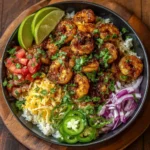
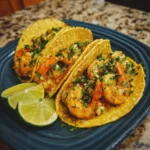
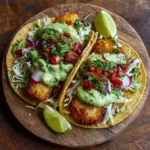
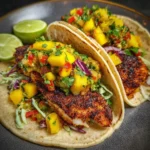
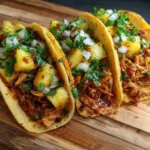
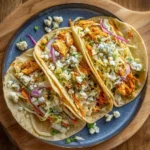
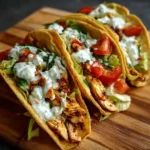
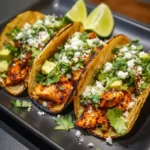
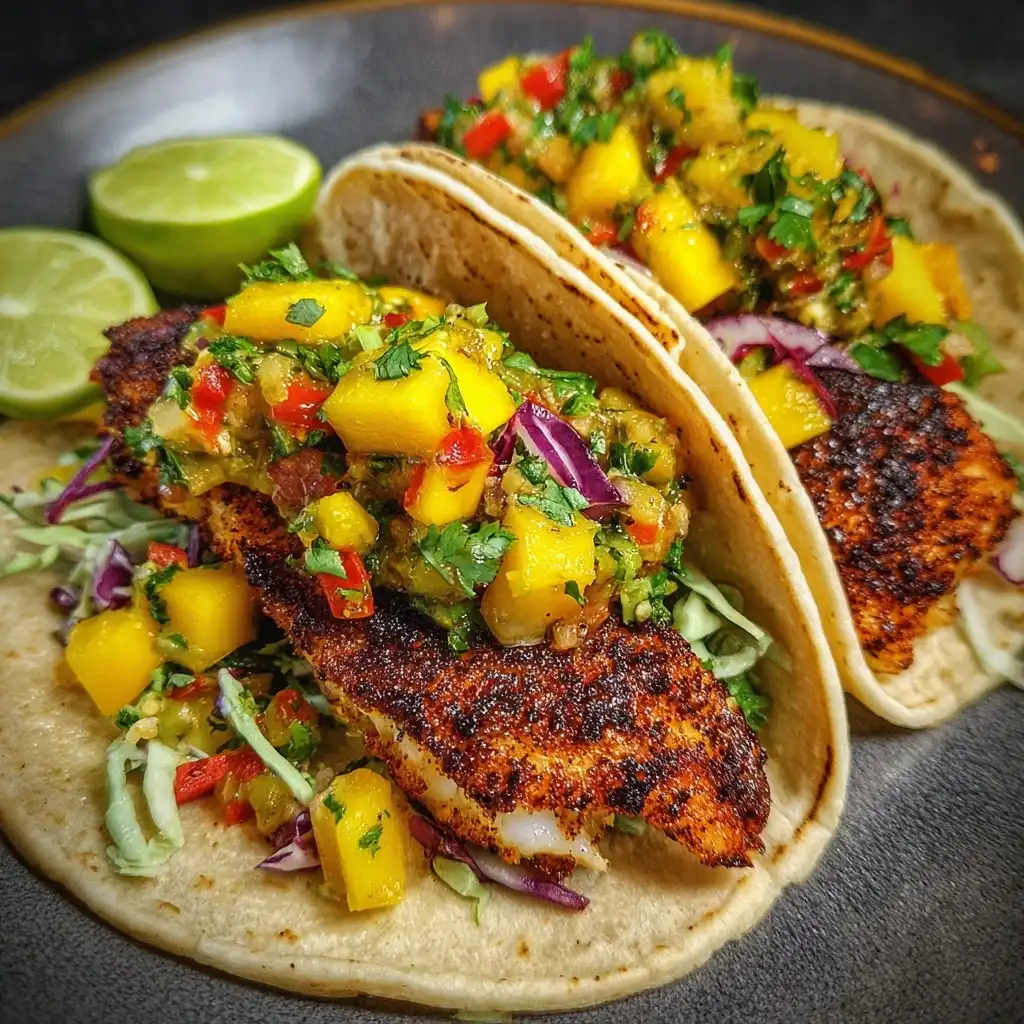
Blackened Fish Tacos with Mango Salsa represent the perfect harmony of bold, smoky heat and bright, tropical sweetness—a vibrant fusion dish that bridges Cajun tradition with Baja coastal flair. These tacos are more than just a meal; they’re an experience—crispy, char-kissed fish nestled in warm tortillas and crowned with a refreshing, zesty mango salsa that cuts through richness and elevates every bite. Ideal for weeknight dinners, summer cookouts, or impressing guests without hours in the kitchen, this recipe delivers restaurant-quality flavor with accessible techniques and pantry-friendly ingredients.
The History
The origins of blackened fish trace back to the 1970s in New Orleans, where legendary chef Paul Prudhomme revolutionized American cooking by developing the “blackening” technique at his flagship restaurant, K-Paul’s Louisiana Kitchen. Seeking to intensify flavor without frying, Prudhomme coated catfish fillets in a robust blend of paprika, cayenne, thyme, oregano, garlic powder, onion powder, salt, and black pepper—then seared them in a blisteringly hot cast-iron skillet with butter until the spice crust caramelized into a dark, aromatic, almost espresso-colored crust. The technique quickly gained national acclaim after appearing on *The Tonight Show* in 1983, sparking a culinary craze that extended far beyond Creole country.
Meanwhile, fish tacos emerged from the sun-drenched shores of Baja California Sur, particularly Ensenada, where street vendors began serving battered and fried local rockfish (often called *pescado blanco*) in soft corn tortillas with shredded cabbage, lime, and crema. As Mexican cuisine gained popularity across the U.S., chefs began experimenting—replacing fried fish with grilled, broiled, or blackened preparations for lighter, bolder alternatives. The marriage of blackened fish and mango salsa is a modern evolution: mango, native to South Asia but now widely cultivated in Mexico, Central America, and the Caribbean, brings natural acidity, floral sweetness, and velvety texture that beautifully balances the assertive, smoky-spicy crust. This combination reflects today’s global palate—respecting regional roots while embracing cross-cultural creativity and fresh, seasonal sensibility.
Ingredients Breakdown
Every element in this dish plays a deliberate role—not just for taste, but for texture, temperature contrast, and aromatic layering:
- Fish: Mild, firm-fleshed white fish like mahi-mahi, cod, snapper, or halibut hold up best to high-heat blackening without falling apart. Their neutral canvas allows the spice rub to shine while retaining moisture and flakiness.
- Blackening Spice Rub: A carefully calibrated blend where smoked paprika contributes deep earthiness and color, cayenne delivers controllable heat (adjustable to preference), garlic and onion powders add savory umami depth, dried thyme and oregano lend herbal complexity, brown sugar enhances caramelization and balances heat, and black pepper adds sharp, woody brightness. Salt is essential—not only for seasoning but for drawing out surface moisture to ensure optimal crust formation.
- High-Smoke-Point Oil: Avocado oil or refined grapeseed oil is critical—both withstand temperatures over 500°F (260°C), necessary for proper blackening without burning or smoking excessively. Olive oil (especially extra virgin) is unsuitable due to its low smoke point.
- Tortillas: Double-warmed 6-inch corn tortillas provide authentic texture and pliability. Warming them twice—first on a dry comal or skillet, then wrapped in a damp cloth or foil—ensures flexibility and prevents cracking when folded.
- Mango Salsa: Ripe but still-firm Ataulfo or Tommy Atkins mangoes offer ideal sweetness-to-acidity balance. Red onion adds pungent crunch, jalapeño (seeds removed for milder heat) contributes vegetal fire, cilantro brings citrusy freshness, lime juice provides essential acidity to brighten and preserve, and a pinch of toasted cumin ties the salsa back to the earthy notes in the rub.
- Finishing Touches: Creamy elements like chipotle-lime crema or avocado crema temper heat and add luxurious mouthfeel. Pickled red onions offer tangy contrast, while crumbled cotija cheese lends salty, milky funk—a traditional Mexican counterpart to feta or queso fresco.
Step-by-Step Recipe
- Prep the Fish: Pat fillets *extremely* dry using paper towels—this is non-negotiable for crust formation. Trim any excess fat or connective tissue. Lightly brush both sides with oil (just enough to help the rub adhere).
- Apply the Rub Generously: In a small bowl, whisk together all blackening spices. Sprinkle 1–1.5 tsp per 6-oz fillet evenly over both sides, pressing gently to adhere. Let rest at room temperature for 10–15 minutes—this allows spices to bloom and surface moisture to reabsorb slightly.
- Heat the Skillet: Place a heavy-bottomed cast-iron skillet over medium-high heat for 3–4 minutes until visibly hot. Add 1 tbsp high-smoke-point oil and swirl to coat. Heat until oil shimmers and just begins to ripple—but do not let it smoke.
- Blacken the Fish: Carefully place fillets in the skillet without overcrowding (cook in batches if needed). Press down gently with a spatula for the first 10 seconds to ensure full contact. Cook undisturbed for 2–2.5 minutes until a deeply bronzed, crisp crust forms. Flip once—do not press again—and cook 1.5–2 more minutes until fish flakes easily with a fork and internal temperature reaches 145°F (63°C). Transfer to a wire rack to rest 2 minutes—this preserves juiciness and prevents steam from softening the crust.
- Prepare the Mango Salsa: While fish cooks, dice mango, red onion, jalapeño, and cilantro uniformly. Combine in a bowl with lime juice, salt, and cumin. Gently fold. Let sit 5–10 minutes for flavors to meld—but serve within 1 hour for peak freshness and texture.
- Warm & Stack Tortillas: Heat corn tortillas individually over medium flame or on a dry skillet for ~15 seconds per side until pliable and lightly speckled. Stack and wrap in a clean kitchen towel or foil-lined bowl to retain steam and warmth.
- Assemble with Intention: Place one warm tortilla on a plate. Flake blackened fish into generous portions (3–4 oz per taco). Top with 2–3 tbsp mango salsa, a drizzle of chipotle crema, a sprinkle of cotija, and optional pickled onions or micro-cilantro. Serve immediately with extra lime wedges and hot sauce on the side.
Tips
- Dryness is Destiny: Moisture is the enemy of crust. If fillets feel even slightly damp after patting, repeat with fresh paper towels. Consider air-drying uncovered in the fridge for 10 minutes pre-rub for ultra-crisp results.
- Skip the Butter: Traditional blackening uses butter—but for tacos, clarified butter or ghee can work. However, for cleaner flavor and less greasiness, stick to oil-only searing. Butter burns easily and can mute spice nuances.
- Smoke Management: Run your exhaust fan on high and open nearby windows. Keep a lid nearby to smother flare-ups. If smoke alarms activate, remove pan from heat briefly and ventilate—don’t panic. A well-seasoned cast iron produces less smoke than a new or poorly maintained one.
- Fish Thickness Matters: Aim for ¾-inch thickness. Too thin? Burns before cooking through. Too thick? Crust forms but interior steams rather than sears. Ask your fishmonger for uniform cuts—or butterfly thicker fillets.
- Rest Before Flaking: Let cooked fish rest 2 minutes before breaking apart. This allows residual heat to finish cooking gently and juices to redistribute—resulting in moist, tender flakes instead of dry shreds.
- Salsa Timing: Make mango salsa no more than 45 minutes before serving. Acid from lime will begin to break down mango fibers, turning it mushy. For make-ahead convenience, prep components separately and combine 10 minutes before serving.
- Tortilla Tenderizing Hack: For foolproof pliability, lightly steam tortillas: place 3–4 stacked tortillas between two damp (not dripping) paper towels and microwave for 20–25 seconds. Then finish on the skillet for char.
- Cast Iron Care: After use, wipe while warm with paper towels. For stuck bits, scrub gently with coarse salt and a paper towel. Never soak or use soap. Re-season monthly with a thin layer of avocado oil baked at 400°F for 1 hour.
Variations and Customizations
This recipe is wonderfully adaptable—whether accommodating dietary needs, seasonal availability, or personal taste preferences:
- Vegetarian/Vegan Option: Replace fish with thick-cut, marinated king oyster mushrooms or crispy cauliflower “steaks.” Marinate in blackening spices + tamari + maple syrup, then roast at 425°F until deeply caramelized and tender.
- Gluten-Free Assurance: Naturally GF—just verify all spice blends are certified gluten-free (some commercial paprikas contain anti-caking agents with wheat starch). Use certified GF corn tortillas (many brands contain hidden wheat fillers).
- Pescatarian Protein Swaps: Try blackened shrimp (cook 1–1.5 min per side), scallops (2 min per side), or even flaky salmon (reduce heat slightly—salmon blackens faster and benefits from a gentler crust).
- Salsa Twists:
- Pineapple-Jicama Salsa: Swap mango for ripe pineapple and jicama for crunch and cooling effect.
- Tomatillo-Mango Verde: Blend roasted tomatillos, mango, serrano, cilantro, and lime for a tangy green variation.
- Smoked Mango Salsa: Briefly smoke mango cubes over cherrywood chips before dicing for a subtle campfire nuance.
- Heat Level Adjustments: For mild: omit cayenne, use ½ tsp smoked paprika, and swap jalapeño for poblano. For fiery: add ¼ tsp ground chipotle or 1 minced habanero to the rub *and* salsa.
- Tortilla Alternatives: Blue corn tortillas add nuttiness and visual pop; flour tortillas (preferably hand-pressed) offer chewy softness; lettuce cups provide a low-carb, crunchy vessel.
- Global Infusions:
- Asian-Fusion: Replace cumin with toasted sesame oil in salsa; garnish with pickled ginger and nori strips.
- Mediterranean Twist: Use lemon zest + oregano in rub; top with tzatziki and kalamata olives.
- Indian-Inspired: Add garam masala to rub; garnish with mint-chutney drizzle and crispy chickpeas.
- Make-Ahead Friendly Components: Rub can be mixed and stored airtight for 3 months. Salsa base (diced mango/onion/jalapeño) can be prepped 1 day ahead—store separately from lime juice and herbs. Chipotle crema lasts 5 days refrigerated.
Health Considerations and Nutritional Value
Blackened Fish Tacos with Mango Salsa are inherently nutrient-dense—when prepared mindfully, they align beautifully with heart-healthy, anti-inflammatory, and weight-conscious dietary patterns:
- Lean Omega-3 Powerhouse: White fish like cod and snapper provide high-quality protein (20–25g per 4-oz serving) and beneficial omega-3 fatty acids (EPA/DHA), shown to support cardiovascular health, cognitive function, and joint mobility. Blackening preserves nutrients better than deep-frying, avoiding excess saturated fat and acrylamide formation.
- Antioxidant-Rich Salsa: Mango delivers vitamins A and C, folate, and polyphenols like mangiferin—shown in studies to exhibit anti-diabetic, anti-viral, and neuroprotective properties. Red onion and jalapeño contribute quercetin and capsaicin, respectively—bioactive compounds linked to reduced inflammation and metabolic support.
- Low-Glycemic & Fiber-Friendly: Corn tortillas (especially 100% masa harina) have a lower glycemic index than flour counterparts and contain resistant starch—acting as prebiotic fiber that feeds beneficial gut bacteria. Pairing with high-fiber salsa further slows glucose absorption.
- Sodium & Spice Awareness: While naturally low in sodium, store-bought spice blends or cotija cheese can elevate levels. Opt for low-sodium cotija or omit cheese entirely. Those with GERD or IBS may wish to reduce cayenne or omit raw onion—substituting roasted red pepper or cucumber for milder crunch.
- Allergen Notes: Naturally free of dairy (if skipping crema/cheese), eggs, nuts, and soy. Always verify spice blend labels for potential cross-contamination if managing severe allergies. For shellfish allergies, avoid shrimp/scallop variations.
- Nutrition Snapshot (Per Serving – 2 Tacos):
- Calories: ~420–480 kcal
- Protein: 32–38g
- Healthy Fats: 14–18g (mostly monounsaturated from avocado oil & mango)
- Carbohydrates: 32–38g (of which 5–7g dietary fiber)
- Vitamin C: >100% DV | Vitamin A: ~65% DV | Folate: ~30% DV
- Dietitian Tip: To boost satiety and blood sugar balance, add ¼ sliced avocado per taco or serve with a side of black beans simmered with epazote and lime.
Ingredients
For the Blackened Fish:
- 1 lb (450g) skinless, boneless white fish fillets (mahimahi, cod, snapper, or halibut), cut into 4 equal portions (~6 oz each)
- 2 tbsp avocado oil or refined grapeseed oil (divided)
- 2 tbsp smoked paprika
- 1 tbsp garlic powder
- 1 tbsp onion powder
- 1½ tsp dried thyme
- 1½ tsp dried oregano
- 1 tsp freshly ground black pepper
- 1 tsp cayenne pepper (adjust to taste)
- 1 tsp kosher salt
- 1 tsp brown sugar (optional, for enhanced caramelization)
For the Mango Salsa:
- 1½ cups diced ripe mango (about 1 large mango, ~250g)
- ½ cup finely diced red onion
- 1–2 tbsp finely minced jalapeño (seeds and membranes removed for mild heat)
- ⅓ cup chopped fresh cilantro leaves and tender stems
- 3 tbsp fresh lime juice (about 1½ limes)
- ½ tsp ground cumin
- ½ tsp kosher salt
For Assembly:
- 8 (6-inch) corn tortillas (preferably 100% masa harina)
- ½ cup chipotle-lime crema (see note below)
- ¼ cup crumbled cotija cheese
- Lime wedges, for serving
- Optional: Pickled red onions, micro-cilantro, radish sprouts
Chipotle-Lime Crema (Quick Homemade Version):
- ½ cup full-fat sour cream or Mexican crema
- 1–2 tsp adobo sauce from canned chipotles (or 1 minced chipotle in adobo)
- 1 tbsp fresh lime juice
- Pinch of salt
Directions
- Prep the Fish: Place fish fillets on a clean cutting board lined with paper towels. Gently press with additional paper towels until completely dry—no visible moisture should remain. Lightly brush both sides with 1 tbsp avocado oil.
- Make the Blackening Rub: In a small bowl, combine smoked paprika, garlic powder, onion powder, thyme, oregano, black pepper, cayenne, salt, and brown sugar (if using). Whisk thoroughly to evenly distribute.
- Rub & Rest: Sprinkle 1½ tsp spice mixture evenly over one side of each fillet. Press gently with fingertips to adhere. Flip and repeat on the other side. Arrange on a wire rack set over a baking sheet. Let rest at room temperature for 12–15 minutes.
- Heat the Skillet: Place a 12-inch cast-iron skillet over medium-high heat. Allow to preheat for 4 minutes. Add remaining 1 tbsp avocado oil and swirl to coat. Heat until oil shimmers and thin wisps of smoke appear (~450°F).
- Blacken the Fish: Carefully place 2 fillets in the skillet (do not crowd). Press down lightly with a heatproof spatula for 10 seconds. Cook undisturbed for 2 minutes 15 seconds (timing varies slightly by thickness). Flip and cook 1 minute 45 seconds more, until deep brown-black crust forms and fish flakes easily. Transfer to a clean wire rack. Repeat with remaining fillets.
- Make the Salsa: While fish rests, combine mango, red onion, jalapeño, cilantro, lime juice, cumin, and salt in a medium bowl. Gently fold with a silicone spatula. Taste and adjust—more lime for brightness, more salt to lift flavors, or a pinch of sugar if mango is overly tart.
- Warm the Tortillas: Heat a dry comal, griddle, or skillet over medium heat. Warm each tortilla for 20 seconds per side until soft and pliable with light charring. Stack and wrap tightly in a clean cotton kitchen towel or foil-lined bowl.
- Prepare Crema: In a small bowl, whisk together sour cream, chipotle adobo, lime juice, and salt until smooth. Refrigerate until ready to use.
- Assemble Tacos: Place one warm tortilla on a plate. Flake ½ of one fillet (approx. 3 oz) onto center. Top with 2 heaping tbsp mango salsa, 1 tbsp chipotle crema, and 1 tsp cotija. Garnish with extra cilantro and a lime wedge. Serve immediately.
- Serve & Enjoy: Present tacos family-style with remaining salsa, crema, lime wedges, and optional toppings in small bowls for interactive customization.
FAQ
- Can I bake or air-fry the fish instead of pan-searing?
- Yes—but true “blackening” requires direct, intense stovetop heat. Baking (425°F for 10–12 min) yields a roasted, spiced fish—not blackened. Air-frying (400°F for 8–10 min, flipping halfway) creates excellent crispness and spice adherence, though crust won’t be as intensely dark. For closest results, preheat air fryer fully and spray fillets lightly with oil before seasoning.
- Why does my blackened crust turn bitter or burnt?
- Bitterness usually indicates overheated oil or excessive spice layer. Ensure oil is shimmering—not smoking—before adding fish. Also, avoid pressing too hard after flipping (traps steam and softens crust), and don’t reuse oil—it degrades rapidly. If spice rub chars before fish cooks, reduce heat slightly and extend cook time by 30 seconds per side.
- Can I make this recipe ahead for a party?
- Absolutely. Prep rub, chop salsa ingredients (store separately), and make crema up to 1 day ahead. Cook fish just before serving—its aroma and texture are best fresh. Set up a “taco bar” with warmed tortillas under a warming tray or slow cooker on low, salsa in chilled bowls, and toppings arranged for self-assembly.
- What’s the best fish for beginners?
- Mahi-mahi is most forgiving—thick, resilient, and holds shape beautifully. Cod is widely available and mild, but requires extra-dry handling. Avoid delicate fish like tilapia or sole—they tend to crumble during blackening.
- Is blackening unhealthy due to smoke or charring?
- When done properly—using high-smoke-point oil, avoiding flare-ups, and not charring to ash—blackening poses no greater risk than grilling or roasting. The Maillard reaction (browning) creates flavorful compounds—not harmful PAHs/HCAs, which form primarily with prolonged, direct flame contact or charring of animal fats. Ventilation minimizes smoke inhalation.
- How do I store leftovers?
- Store components separately: cooled fish (up to 2 days), salsa (up to 1 day), crema (up to 5 days), tortillas (room temp 2 days or freeze). Reheat fish gently in a skillet with ½ tsp oil—never microwave (makes it rubbery). Revive tortillas on a dry skillet for 15 sec/side.
- Can I use frozen fish?
- Yes—but thaw completely in the refrigerator overnight, then pat *extremely* dry. Never blacken partially frozen fish—it steams instead of sears and releases excess water, preventing crust formation.
- What if I don’t have a cast-iron skillet?
- A heavy-bottomed stainless steel or carbon steel pan works well. Avoid nonstick—the high heat will degrade the coating and prevent proper crust development. Preheat longer (5–6 min) and monitor oil closely.
Summary
Blackened Fish Tacos with Mango Salsa unite the bold, smoky tradition of New Orleans with the sunlit vibrancy of Baja, delivering an unforgettable balance of heat, sweetness, acidity, and texture in every bite. With smart prep, mindful technique, and customizable flair, this dish proves that extraordinary flavor doesn’t require complexity—just respect for quality ingredients and thoughtful execution.
Whether served poolside with margaritas or as a nourishing weeknight staple, these tacos embody joyful, health-forward cooking: rich in omega-3s and antioxidants, adaptable to countless diets and tastes, and guaranteed to spark conversation, cravings, and repeat requests.