Introduction
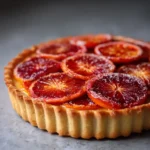
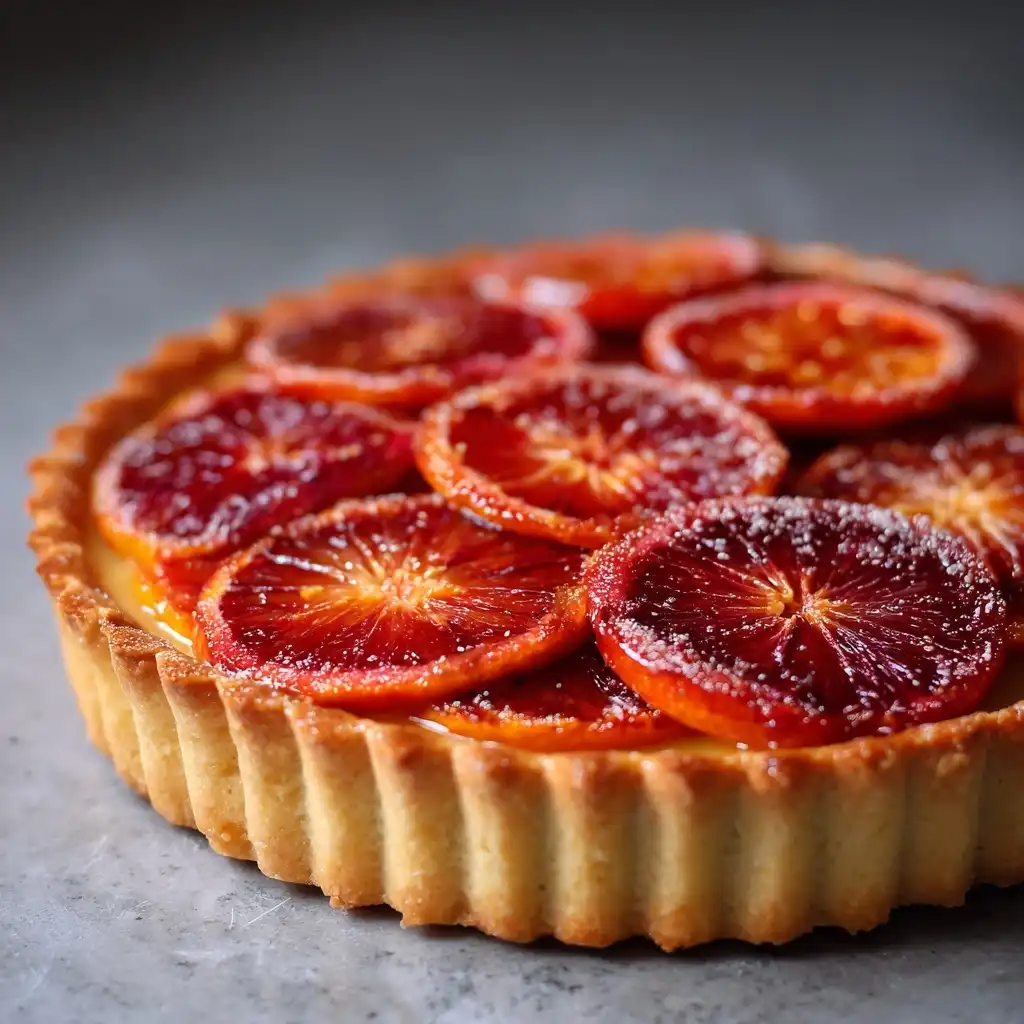
The Blood Orange Tart is a stunning, sophisticated dessert that marries the vibrant tartness of blood oranges with the buttery richness of a shortcrust pastry and the silken elegance of a custard or curd filling. With its deep ruby-red hue, floral-citrus aroma, and delicate balance of sweet and sour, this tart transcends seasonal expectations—offering both visual drama and complex flavor in every bite. Whether served at an elegant dinner party, a spring brunch, or as a refreshing counterpoint to rich winter meals, the Blood Orange Tart is more than a confection: it’s a celebration of citrus terroir, artisanal technique, and mindful indulgence. Its jewel-toned slices radiate warmth and sophistication, inviting diners not just to taste, but to pause, observe, and savor.
The History
While tarts themselves trace their lineage back to medieval Europe—where early versions were rustic, open-faced pastries filled with fruits, nuts, or cheese—the specific evolution of the Blood Orange Tart is deeply intertwined with the cultivation and cultural reverence for the blood orange (Citrus × sinensis var. moro, tarocco, and sanguinello). Native to the volcanic soils of Sicily’s Mount Etna region, blood oranges have been cultivated since at least the 15th century, prized by Italian nobility for their vivid color and distinctive raspberry-like notes—a phenomenon caused by anthocyanin pigments activated by cool nighttime temperatures. In the 18th and 19th centuries, Sicilian pastry chefs began incorporating these crimson gems into regional sweets like *cassata siciliana* and citrus-infused almond cakes. The modern Blood Orange Tart, however, emerged gradually through 20th-century French pâtisserie influence—particularly the refinement of *tarte aux agrumes*, where techniques from classic lemon tart preparation (think Pierre Hermé or Ladurée) were adapted to highlight blood orange’s subtler acidity and nuanced aromatic profile. By the early 2000s, as specialty citrus gained prominence in farm-to-table and seasonal cooking movements—championed by chefs like Alice Waters, David Lebovitz, and Yotam Ottolenghi—the Blood Orange Tart evolved into a signature dessert across high-end bakeries and culinary magazines, often featured in *Bon Appétit*, *Saveur*, and *The New York Times Cooking*. Today, it stands as a global symbol of citrus artistry—bridging Mediterranean heritage, French precision, and contemporary wellness sensibilities.
Ingredients Breakdown
Every element of the Blood Orange Tart plays a precise role in achieving harmony between structure, texture, acidity, sweetness, and aroma:
- Shortcrust Pastry (Pâte Sucrée): A tender, slightly sweet, crumbly-yet-holdable base made with all-purpose flour, unsalted butter (preferably European-style, 82–84% fat), powdered sugar, egg yolk, and a pinch of salt. The cold butter creates flakiness; the egg yolk adds richness and binding without toughness; the powdered sugar ensures fine grain and subtle sweetness without graininess.
- Blood Orange Zest: Finely grated outer peel (avoiding bitter white pith) contributes volatile citrus oils—intense bergamot, rose, and red berry top notes essential for aromatic lift.
- Blood Orange Juice: Freshly squeezed (never bottled or pasteurized) and strained to remove pulp and seeds. Provides the tart backbone and natural anthocyanin coloration; acidity level varies by variety (Moro is deepest and most assertive; Tarocco is sweeter and more floral; Sanguinello offers balanced mildness).
- Eggs & Egg Yolks: Whole eggs provide structure and gentle set, while extra yolks enrich the custard with velvety mouthfeel, golden hue, and emulsifying power to prevent curdling.
- Granulated Sugar: Not only sweetens but also raises the coagulation temperature of eggs, allowing the filling to cook smoothly without scrambling. Adjusted carefully to complement—not mask—the fruit’s natural acidity.
- Unsalted Butter (for filling): Added off-heat after cooking, it imparts luxurious sheen, roundness, and gloss while cooling the mixture to prevent overcooking.
- Optional Enhancements: A whisper of vanilla bean paste (not extract) for depth; a tiny pinch of ground cardamom or star anise to echo blood orange’s floral spice; a splash of dry white wine (e.g., Pinot Grigio) or sparkling water to brighten acidity; or a touch of honey (acacia or orange blossom) for nuanced sweetness and humectant properties.
Crucially, ingredient quality is non-negotiable: blood oranges must be ripe, heavy for their size, deeply colored, and fragrant. Underripe fruit yields pale, sour juice lacking complexity; overripe fruit produces muted flavor and excessive bitterness. Always zest before juicing—and always strain juice through a fine-mesh sieve lined with cheesecloth for absolute clarity.
Step-by-Step Recipe
- Prepare the Pâte Sucrée Dough: In a food processor, pulse 1 ¼ cups (160g) all-purpose flour, ¼ cup (30g) powdered sugar, and ¼ tsp fine sea salt until combined. Add ½ cup (115g) very cold, cubed unsalted butter and pulse 8–10 times until mixture resembles coarse meal with pea-sized butter pieces. Add 1 large egg yolk and 1–2 tsp ice water; pulse just until dough begins to clump. Turn onto parchment, gather into a disc, wrap tightly, and refrigerate for at least 1 hour (or up to 3 days).
- Blind-Bake the Tart Shell: Preheat oven to 375°F (190°C). Roll chilled dough on lightly floured surface to ⅛-inch thickness; gently transfer to a 9-inch (23cm) fluted tart pan with removable bottom. Trim excess, crimp edges, and prick base with fork. Freeze for 15 minutes. Line with parchment and fill with pie weights or dried beans. Bake 18 minutes. Remove weights and parchment; bake 10–12 more minutes until golden and dry. Cool completely on wire rack.
- Make the Blood Orange Curd Filling: Zest 4–5 medium blood oranges (≈2 tbsp finely grated zest). Juice them to yield exactly ¾ cup (180ml) strained juice. In a heavy-bottomed saucepan, whisk together zest, juice, ¾ cup (150g) granulated sugar, 3 large eggs, and 2 large egg yolks until fully homogenized. Place over medium-low heat. Whisk constantly—not stirring, but lifting and folding—to prevent scrambling. Cook 10–14 minutes until thickened enough to coat the back of a spoon (≈170°F/77°C). Remove from heat.
- Enrich & Strain: Immediately whisk in 6 tbsp (85g) cold, cubed unsalted butter, one piece at a time, until fully melted and emulsified. For ultimate silkiness, press mixture through a fine-mesh strainer into a clean bowl. Stir in ½ tsp pure vanilla bean paste (optional but recommended).
- Fill & Chill: Pour warm curd into cooled tart shell. Smooth surface with offset spatula. Refrigerate uncovered for at least 4 hours—or preferably overnight—to allow full setting, flavor melding, and textural refinement. The curd should be firm yet yielding, glossy, and vibrantly hued.
- Final Garnish & Serve: Just before serving, dust lightly with powdered sugar using a fine sieve. Arrange ultra-thin blood orange wheels (blanched 10 seconds in simmering water then shocked in ice bath for pliability and translucency) and fresh mint or edible violets. Optional: drizzle with reduced blood orange syrup (simmer ½ cup juice + 2 tbsp sugar until syrupy) or sprinkle with crushed pistachios for contrast.
Tips
- Temperature Control Is Everything: Keep butter cold for pastry and warm (but not hot) for curd incorporation. Overheating the curd—even by 5°F—can cause weeping or graininess. Use an instant-read thermometer for foolproof results.
- Zest First, Juice Second: Zesting a whole orange is far easier when fruit is at room temperature and firm. Chilled oranges are harder to grate evenly and yield less oil.
- Straining Is Non-Negotiable: Even if you think your juice is clear, microscopic pulp particles and zest fragments will create grittiness in the finished curd. Double-strain through a chinois for professional smoothness.
- Prevent Tart Shell Sogginess: Brush cooled, baked shell interior with a thin layer of melted white chocolate or apricot jam (warmed and strained) before adding curd—it forms a moisture barrier.
- Room-Temp Serving: Remove tart from refrigerator 15–20 minutes before slicing. Cold curd can dull aroma and make cutting messy. A warm, sharp knife dipped in hot water and wiped dry ensures clean slices.
- Acid Balance Test: Before pouring curd, dip a clean spoon into the mixture and taste. It should be bright but not eye-wateringly sharp. If too tart, whisk in ½ tsp more sugar; if too sweet, add ½ tsp additional juice.
- Freeze for Longevity: Unfilled baked shells freeze beautifully for up to 3 months. Fully assembled tarts (without garnishes) can be frozen for up to 6 weeks—thaw overnight in fridge, then bring to room temp before serving.
Variations and Customizations
The Blood Orange Tart is a canvas for creativity—adaptable across dietary needs, seasonal pairings, and global flavor accents:
- Vegan Version: Substitute pâte sucrée with almond flour–coconut oil crust (1 cup blanched almond flour, ¼ cup coconut oil, 2 tbsp maple syrup, pinch salt); replace eggs with blended silken tofu + cornstarch slurry (½ cup tofu + 2 tbsp cornstarch + 2 tbsp aquafaba); use coconut cream instead of butter for richness.
- Gluten-Free Adaptation: Use a 1:1 gluten-free flour blend with xanthan gum; add 1 tsp psyllium husk powder to improve elasticity. Ensure all other ingredients (vanilla, baking powder if used) are certified GF.
- Chocolate-Blood Orange Fusion: Add 2 oz finely chopped 70% dark chocolate to warm curd off-heat for a bittersweet, velvety variation. Or line tart shell with a thin layer of ganache before adding curd.
- Herbal Infusions: Steep 1 tsp fresh thyme or rosemary in warm blood orange juice for 10 minutes before straining—adds earthy complexity ideal for fall/winter service.
- Sparkling Citrus Tart: Replace 2 tbsp juice with chilled Prosecco or blood orange soda for effervescent lightness—add after cooking, just before butter enrichment.
- Deconstructed “Tart”: Serve components separately: crumbled shortbread tuile, quenelles of curd, candied blood orange peel, olive oil–toasted hazelnuts, and micro-cress for texture and contrast.
- Mini Individual Tarts: Use 4-inch tartlet pans. Reduce blind-baking time by 3–4 minutes; curd sets faster—chill 2 hours minimum.
- Layered Tart: Alternate layers of blood orange curd and mascarpone cream (mascarpone + confectioners’ sugar + lemon zest + whipped cream) for airy contrast.
- Boozy Accent: Stir 1 tbsp Grand Marnier, Cointreau, or Aperol into curd off-heat for aromatic depth and subtle bitterness.
Health Considerations and Nutritional Value
While undeniably indulgent, the Blood Orange Tart offers notable nutritional virtues when crafted mindfully—especially compared to many conventional desserts:
- Vitamin C Powerhouse: Blood oranges contain up to 30% more vitamin C than navel oranges—supporting immune function, collagen synthesis, and iron absorption. One serving (⅛ tart) provides ≈35–45mg vitamin C (nearly half the RDA).
- Anthocyanin Antioxidants: The deep red pigment signals high levels of anthocyanins—potent anti-inflammatory, neuroprotective, and cardiovascular-supportive compounds linked to reduced oxidative stress and improved endothelial function.
- Limited Added Sugar: Traditional recipes use significantly less sugar than lemon tarts due to blood orange’s naturally higher fructose content—allowing for 20–25% less added sweetener while maintaining balance.
- Healthy Fats: Using grass-fed butter or ghee contributes conjugated linoleic acid (CLA) and fat-soluble vitamins (A, D, E, K2); substituting part of the butter with avocado oil in the crust adds monounsaturated fats.
- Fiber Contribution: While the curd itself is low-fiber, pairing with a whole-grain or oat-based crust (substituting ¼–⅓ flour with toasted oat flour) boosts soluble fiber and slows glucose absorption.
- Lower Glycemic Impact: The combination of citrus acidity, healthy fats, and protein from eggs helps moderate postprandial blood sugar spikes—making it more metabolically friendly than high-sugar, low-acid desserts.
- Cautions: Those with citrus sensitivities, GERD, or salicylate intolerance should consume in moderation. Individuals managing diabetes should monitor portion size (ideal serving: 1.5–2 inches wide) and consider pairing with a source of protein (e.g., Greek yogurt dollop) to further stabilize glycemia. Avoid artificial food dyes—even “natural” ones—as they negate the authentic phytonutrient benefits of real blood orange pigment.
A typical slice (1/8 of a 9-inch tart) contains approximately: 320–360 kcal | 22–26g total fat (14–16g saturated) | 30–34g carbohydrates (22–25g sugars) | 4–5g protein | 0.5g fiber | 85mg cholesterol | 110mg sodium. Values vary based on butter quantity, sugar adjustments, and crust composition.
Ingredients
For the Pâte Sucrée Tart Shell
- 1 ¼ cups (160g) all-purpose flour, plus extra for dusting
- ¼ cup (30g) powdered sugar
- ¼ teaspoon fine sea salt
- ½ cup (115g) unsalted butter, very cold and cubed
- 1 large egg yolk
- 1–2 teaspoons ice water
For the Blood Orange Curd Filling
- Zest of 4–5 medium blood oranges (about 2 tablespoons finely grated)
- ¾ cup (180ml) freshly squeezed and strained blood orange juice (from ~5–6 oranges)
- ¾ cup (150g) granulated sugar
- 3 large eggs
- 2 large egg yolks
- 6 tablespoons (85g) unsalted butter, cold and cubed
- ½ teaspoon pure vanilla bean paste (optional but highly recommended)
For Garnish (Optional)
- Powdered sugar, for dusting
- Thin blood orange wheels (blanched and chilled)
- Fresh mint leaves or edible flowers (violets, pansies)
- Crushed roasted pistachios or toasted sesame seeds
- Reduced blood orange syrup (simmer ½ cup juice + 2 tbsp sugar until thickened)
Directions
- Make the dough: In a food processor, combine flour, powdered sugar, and salt. Pulse to mix. Add cold butter cubes; pulse 8–10 times until mixture resembles coarse crumbs with visible pea-sized butter pieces. Add egg yolk and 1 tsp ice water; pulse just until dough begins to clump together. If too dry, add second tsp water. Turn dough onto parchment paper, gather into a disc, wrap tightly, and refrigerate for at least 1 hour (up to 3 days).
- Preheat oven to 375°F (190°C). Lightly flour work surface. Roll chilled dough to ⅛-inch thickness (about 12-inch circle). Gently lift and drape into a 9-inch fluted tart pan with removable bottom. Press firmly into corners and up sides. Trim excess dough with a knife or rolling pin. Crimp edges decoratively. Prick base all over with a fork. Freeze for 15 minutes.
- Blind-bake: Line chilled shell with parchment paper and fill with ceramic pie weights or dried beans. Bake for 18 minutes. Carefully remove weights and parchment. Return shell to oven and bake 10–12 minutes more, until golden brown and dry to the touch. Cool completely on a wire rack—minimum 45 minutes.
- Prepare curd: In a heavy-bottomed, non-reactive saucepan (stainless steel or enamel), whisk together blood orange zest, juice, granulated sugar, eggs, and egg yolks until fully smooth and uniform. Place over medium-low heat.
- Cook curd: Whisk constantly—lifting from bottom and folding over—until mixture thickens and coats the back of a spoon (approx. 10–14 minutes). Do not let boil. An instant-read thermometer should register 170°F (77°C). Remove from heat immediately.
- Enrich: Add cold butter cubes one at a time, whisking vigorously until each is fully melted and incorporated before adding the next. Whisk in vanilla bean paste, if using.
- Strain: Immediately pour warm curd through a fine-mesh strainer into a clean bowl, pressing with a spatula to extract all liquid. Discard any solids caught in strainer.
- Fill shell: Pour strained curd into completely cooled tart shell. Smooth surface with an offset spatula. Refrigerate uncovered for at least 4 hours—or ideally overnight—for optimal set and flavor development.
- Garnish and serve: Dust lightly with powdered sugar using a fine-mesh sieve. Arrange blanched blood orange wheels, fresh herbs, or edible flowers. Slice with a warm, sharp knife wiped clean between cuts. Serve slightly chilled or at cool room temperature.
FAQ
- Can I use bottled blood orange juice?
- No—bottled or pasteurized juice lacks volatile aromatic compounds, has muted flavor, inconsistent acidity, and often contains preservatives that interfere with curd setting. Freshly squeezed is essential for authenticity and performance.
- Why did my curd curdle or look grainy?
- Most commonly due to overheating (above 175°F/80°C), insufficient whisking, or adding butter while curd is too hot or too cool. Always use low heat, constant motion, and an instant-read thermometer. Straining rescues most grainy batches.
- My tart shell shrank during baking—what went wrong?
- Overworking the dough (developing gluten), not chilling long enough before baking, or stretching the dough while fitting it into the pan causes shrinkage. Always chill thoroughly and ease dough in gently without pulling.
- How do I prevent a soggy bottom?
- Ensure the shell is fully baked and cooled before filling. Brushing the interior with melted white chocolate or apricot jam creates a waterproof barrier. Also, avoid over-chilling the curd before pouring—it should be warm but not hot.
- Can I make this ahead?
- Absolutely. The baked, unfilled shell keeps well wrapped at room temperature for 2 days or frozen for 3 months. The curd can be made 3 days ahead and refrigerated. Assembled tart holds beautifully for 4 days refrigerated—flavor deepens overnight.
- What’s the best blood orange variety for this tart?
- Moro offers the deepest color and boldest flavor—ideal for dramatic presentation. Tarocco is sweeter and more floral—perfect for milder palates. Sanguinello strikes a lovely middle ground. Mix varieties for layered complexity.
- Can I substitute regular oranges?
- You can—but it won’t be a Blood Orange Tart. Navel or Valencia oranges lack anthocyanins, floral notes, and balanced acidity. The result will be a standard citrus tart, visually pale and aromatically one-dimensional.
- Is there a way to reduce the sugar without ruining the texture?
- Yes—reduce sugar by up to 2 tablespoons, but compensate with 1 tsp honey or maple syrup (which lowers coagulation temp). You may need to extend cooking time by 1–2 minutes to achieve proper thickness.
- Why does my tart weep or release liquid after slicing?
- This “syneresis” occurs when eggs are overcooked or curd cools too rapidly. Ensure precise temperature control, strain thoroughly, and allow tart to rest at cool room temp 15 minutes before slicing. Avoid freezing fully assembled tarts unless properly wrapped.
- Can I use Meyer lemons for a hybrid version?
- Yes—with caution. Meyer lemons are sweeter and less acidic. Replace only 25–30% of blood orange juice with Meyer lemon juice to preserve color and tart backbone. Add extra zest to maintain aromatic intensity.
Summary
The Blood Orange Tart is a masterclass in seasonal elegance—where Sicilian citrus heritage meets French pâtisserie discipline to yield a dessert of breathtaking color, layered aroma, and refined balance.
From its crisp, buttery shell to its jewel-toned, velvety curd infused with sun-ripened complexity, it invites mindful celebration: of terroir, technique, and the quiet joy found in a perfectly balanced bite of tart, sweet, floral, and bright.