Introduction
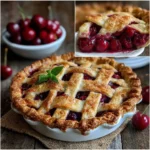
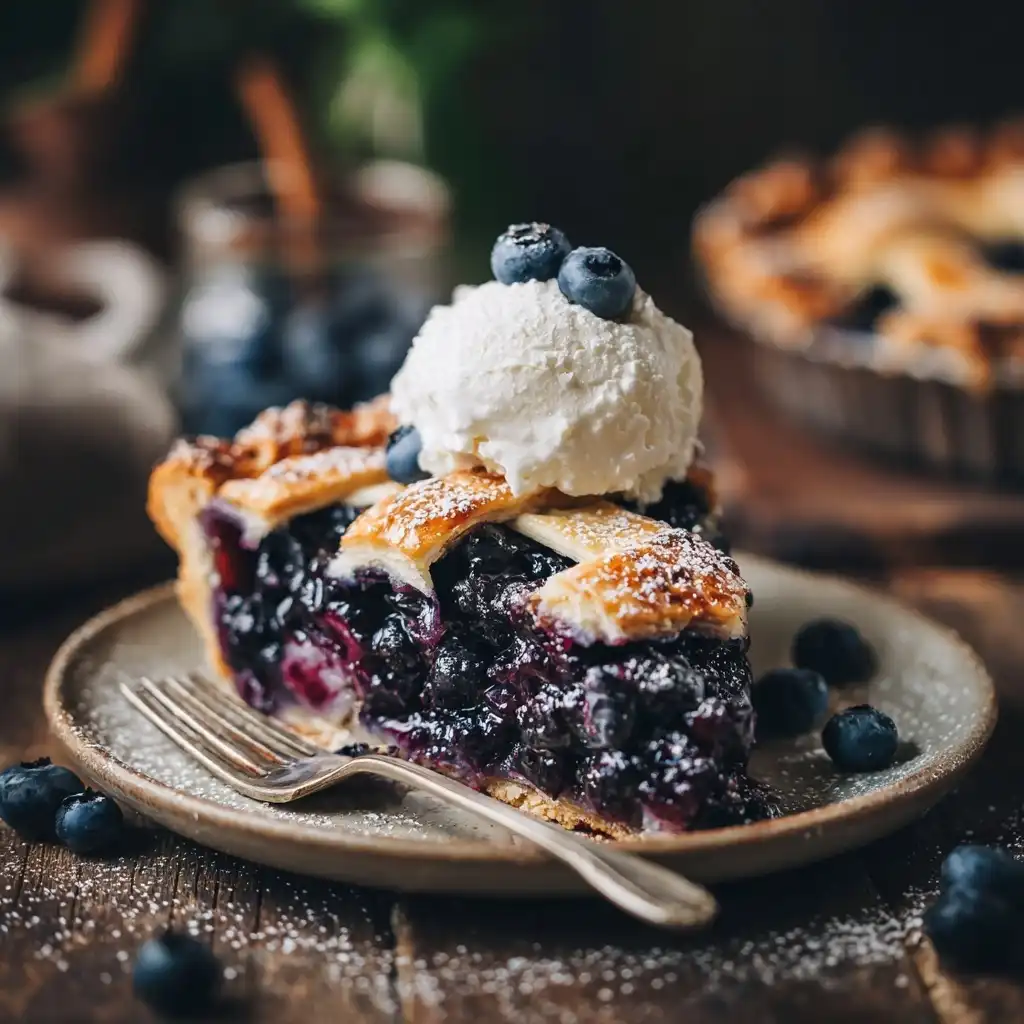
Blueberry Lattice Pie is more than just a dessert—it’s a celebration of summer’s sweetest bounty, artistry in pastry, and time-honored American baking tradition. With its vibrant jewel-toned filling bursting with tart-sweet blueberries and its signature woven crust that invites light, air, and admiration, this pie strikes the perfect balance between rustic charm and refined elegance. Whether served warm with a scoop of vanilla bean ice cream or chilled with a dollop of crème fraîche, Blueberry Lattice Pie delivers a multisensory experience: the delicate crunch of golden, flaky crust, the lush, jammy-yet-bright filling with bursts of whole berries, and the subtle perfume of lemon zest and warm spices. It’s a pie that feels both nostalgic and endlessly adaptable—equally at home on a farmhouse table at a Fourth of July picnic, a holiday dessert spread, or as a thoughtful homemade gift wrapped in parchment and twine.
The History
The origins of the lattice pie trace back to 17th- and 18th-century England and colonial America, where resourceful bakers developed open-faced or partially covered pies not only for aesthetic appeal but for practical reasons: ventilation during baking prevented sogginess, allowed excess steam to escape (critical for juicy fruit fillings), and helped achieve optimal thickening without boiling over. The word “lattice” itself derives from the Latin laqueus, meaning “noose” or “snare,” later evolving in Middle English to describe an interwoven pattern—aptly describing the crisscrossed strips of dough laid across a filled pie. While early versions often featured apples or dried fruits due to seasonal limitations, the rise of cultivated highbush blueberries in the early 20th century—thanks to the pioneering work of Elizabeth White and Dr. Frederick Coville—catapulted blueberry pie into national prominence. By the 1930s and ’40s, blueberry lattice pie appeared regularly in women’s magazines like Good Housekeeping and community cookbooks across New England and the Pacific Northwest. Its inclusion in iconic references such as the 1950 edition of The Joy of Cooking and its unofficial designation as the official state dessert of Maine (a nod to the state’s prolific wild blueberry harvests) cemented its cultural legacy. Today, the blueberry lattice pie stands as a beloved symbol of artisanal simplicity—a dessert where technique, ingredient integrity, and heritage converge.
Ingredients Breakdown
Every exceptional Blueberry Lattice Pie begins with intentionality—not just in measurement, but in selection and understanding the functional role each ingredient plays. Below is a detailed, chef-level breakdown:
For the All-Butter Pie Dough (Double Crust)
- All-Purpose Flour (2½ cups / 312g): Provides gluten structure; unbleached flour yields superior flavor and tenderness. Protein content (~10–11%) balances flakiness and workability.
- Unsalted Butter (1 cup / 227g, very cold, cubed): The cornerstone of flakiness—its water content turns to steam during baking, separating dough layers. European-style butter (82–84% fat) enhances richness and reduces moisture-related toughness.
- Ice Water (6–8 tbsp / 90–120ml): Added gradually to hydrate flour without activating excessive gluten. Must be *ice-cold* to keep butter solid until baking.
- Granulated Sugar (1 tbsp / 12g): Enhances browning via caramelization and adds subtle sweetness without masking butter flavor.
- Fine Sea Salt (1 tsp / 6g): Balances sweetness, sharpens overall flavor, and strengthens gluten slightly for better sheeting.
- Vinegar (1 tsp apple cider or white vinegar): Inhibits gluten formation for extra tenderness; acidity also brightens crust flavor.
For the Blueberry Filling
- Fresh Blueberries (6 cups / 900g, ~1.5 lbs): Preferably local, peak-season berries—plump, deeply colored, and dusted with natural bloom. Wild blueberries (smaller, tarter, more anthocyanin-rich) offer concentrated flavor but require slightly less thickener.
- Granulated Sugar (¾–1 cup / 150–200g): Adjust based on berry tartness and personal preference. Start with ¾ cup for very sweet berries; up to 1 cup for intensely tart or underripe fruit.
- Light Brown Sugar (¼ cup / 50g, packed): Adds molasses depth, moisture retention, and caramel notes that complement blueberries’ natural acidity.
- Cornstarch (¼ cup / 30g): A classic, reliable thickener for blueberry pie—creates a glossy, firm-yet-yielding set. Substitute arrowroot (same amount) for clearer gel and lower-temperature activation, or tapioca starch (3 tbsp) for chewier, more resilient texture.
- Lemon Juice (2 tbsp fresh, ~30ml): Brightens flavor, balances sweetness, and helps preserve vibrant purple-red hue by lowering pH (anthocyanins are more stable in acidic environments).
- Lemon Zest (1 tbsp finely grated, from 1 large lemon): Imparts aromatic citrus oils that lift the entire filling—never skip; it’s transformative.
- Ground Cinnamon (½ tsp): Warm, earthy nuance—subtle but essential; avoid overuse, which can dominate.
- Fine Sea Salt (¼ tsp): Critical for flavor layering—enhances fruitiness and rounds out perceived sweetness.
- Unsalted Butter (1 tbsp / 14g, cold, cut into small cubes): Dotting the filling adds richness and helps create pockets of tender, buttery flavor throughout the baked pie.
For Assembly & Finishing
- Large Egg (1, beaten with 1 tsp water or cream): Egg wash ensures deep golden-brown, glossy crust with excellent adhesion for sugar sparkle.
- Coarse Turbinado Sugar (2–3 tbsp): Sprinkled just before baking for crunch, visual appeal, and subtle caramelized sweetness.
- Heavy Cream or Milk (1 tbsp, optional for extra shine): Can be brushed *after* egg wash for heightened gloss—use sparingly to avoid sogginess.
Step-by-Step Recipe
This meticulously tested method prioritizes precision, timing, and temperature control—the trifecta of lattice pie success. Allow 3 hours total (including chilling); active time is ~60 minutes.
Step 1: Make the Pie Dough (30 minutes + 2+ hours chilling)
- In a food processor fitted with a steel blade, pulse flour, sugar, and salt until combined (5 seconds). Add cold, cubed butter and pulse 10–12 times in 1-second bursts until mixture resembles coarse meal with visible pea-sized butter pieces.
- Drizzle in ice water and vinegar while pulsing 3–4 times just until dough begins to clump. Do *not* over-process—dough should hold together when pinched but still look shaggy.
- Turn dough onto a lightly floured surface. Divide into two uneven portions: a slightly larger disk (⅔) for the bottom crust and a smaller one (⅓) for the lattice top. Flatten each into 1-inch-thick disks, wrap tightly in plastic wrap, and refrigerate for *at least* 2 hours—or up to 3 days. For best results, freeze for 30 minutes before rolling to ensure butter remains cold.
Step 2: Prepare the Filling (15 minutes, can be done while dough chills)
- In a large non-reactive bowl (stainless steel or glass), combine blueberries, granulated sugar, brown sugar, cornstarch, lemon juice, lemon zest, cinnamon, and salt. Gently fold with a silicone spatula until evenly coated—avoid crushing berries. Let macerate at room temperature for 30 minutes to draw out juices and begin natural thickening. Stir once halfway through.
- After maceration, you’ll notice a syrupy, deep purple liquid pooling at the bottom. This is ideal—it means the starch is beginning to hydrate. Drain *no more than* 2 tablespoons of excess liquid (only if berries were extremely juicy or previously frozen and thawed) to prevent a runny pie. Reserve drained liquid to brush on crust edges if needed.
Step 3: Roll & Line the Bottom Crust (15 minutes)
- Remove the larger dough disk from the fridge. On a cool, lightly floured surface (or between two sheets of parchment), roll into a 12-inch circle, rotating and lightly flouring as needed to prevent sticking. Aim for even ⅛-inch thickness—slightly thicker at edges for structural integrity.
- Gently drape dough over a 9-inch deep-dish pie plate (glass or ceramic preferred for even heat conduction). Ease into corners without stretching. Trim overhang to 1 inch beyond rim. Tuck excess under itself to create a reinforced edge; flute decoratively using thumb-and-knuckle or fork method. Refrigerate uncovered for 15 minutes to relax gluten and re-chill.
Step 4: Assemble the Pie (10 minutes)
- Preheat oven to 425°F (220°C) with a heavy-duty baking sheet placed on the lowest rack—this catches drips and boosts bottom heat for crisp crust.
- Pour chilled, macerated blueberry filling into the chilled bottom crust. Scatter cold butter cubes evenly over the surface.
- Remove smaller dough disk. Roll into a 12-inch circle. Using a sharp knife or pizza cutter, cut into eight ¾-inch-wide strips. Keep strips cold on parchment-lined tray while working.
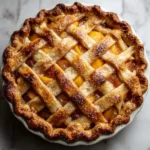
- Weave the lattice: Lay four parallel strips vertically across the pie, spacing evenly. Fold back every other strip halfway. Place one horizontal strip across the center. Unfold vertical strips over it. Then fold back the *other* set of vertical strips and lay a second horizontal strip below the first. Repeat, alternating folds, until all eight strips are woven. Trim ends flush with bottom crust edge. Press gently to seal.
- Tuck lattice ends under the bottom crust’s fluted edge and crimp again for security. Freeze assembled pie for 15 minutes—this is non-negotiable for clean cuts and defined lattice.
Step 5: Bake to Perfection (60–70 minutes)
- Brush entire lattice surface generously with egg wash. Sprinkle turbinado sugar evenly over top. Optional: Brush exposed bottom crust edge with remaining egg wash for uniform browning.
- Place pie on preheated baking sheet in oven. Bake at 425°F for 20 minutes—this initial blast sets the crust and jumpstarts thickening.
- Reduce heat to 375°F (190°C). Rotate pie 180° for even baking. Continue baking 40–50 minutes, until crust is deep golden brown, lattice is crisp, and filling is visibly bubbling *vigorously* through the vents and around the edges (not just simmering—look for thick, syrupy bubbles that hold shape for 2+ seconds). If edges brown too quickly, cover loosely with foil or a pie shield.
- Remove pie and place on a wire rack. Resist cutting—even for 4 hours. Ideal cooling time is 6–8 hours at room temperature. This allows starch to fully set, preventing leakage and ensuring clean, sliceable wedges with intact lattice.
Tips
- Butter Temperature Is Everything: Butter must be *cold* (35–40°F) when cutting into flour—and dough must remain cold (<50°F) through rolling and assembly. Warm butter melts prematurely, causing greasiness and toughness. Keep bowls, tools, and surfaces cool; use chilled metal pie plates if possible.
- Don’t Skip the Chill Steps: Each refrigeration or freezing stage serves a purpose: first chill hydrates gluten and firms butter; second chill relaxes gluten for easier rolling; third chill (post-assembly) prevents shrinkage and maintains definition. Rushing = blurry lattice and soggy bottoms.
- Maceration Matters: Letting berries sit with sugar draws out juice *before* baking, allowing starch to hydrate fully and reducing boil-over risk. Never skip or shorten this step—even 20 minutes helps.
- Measure Cornstarch Accurately: Use the “spoon-and-level” method—never scoop directly from bag. Too little = runny pie; too much = gummy, cloudy filling. For ultra-clear results, replace 1 tbsp cornstarch with 1 tsp instant clearjel.
- Thicken Without Cloudiness: For crystal-clear filling, substitute cornstarch with 2 tbsp quick-cooking tapioca (grind in spice grinder for finer texture) or 3 tbsp arrowroot. Avoid flour—it creates opacity and requires longer baking to eliminate raw taste.
- Prevent Soggy Bottoms: Preheat your baking sheet—it radiates heat upward, crisping the underside. Also, consider brushing the *inside* of the bottom crust with lightly beaten egg white before adding filling—it creates a moisture barrier.
- Freeze for Flawless Cutting: For clean slices after cooling, place fully cooled pie in freezer for 20 minutes before serving. Use a long, thin, serrated knife dipped in hot water and wiped dry between cuts.
- Revive Stale Crust: If pie sits longer than 2 days, refresh in a 350°F oven for 8–10 minutes on a parchment-lined sheet—crust regains crispness without overcooking filling.
- Roll Between Parchment: Eliminates flour dusting (which toughens crust) and prevents sticking. Peel top parchment away as you roll—no tearing, no reshaping needed.
- Embrace Imperfection: Hand-woven lattice isn’t meant to be machine-perfect. Slight gaps, gentle curves, and rustic tension add authenticity and charm. Focus on even strip width and consistent spacing—not robotic precision.
Variations and Customizations
Blueberry Lattice Pie is gloriously versatile—adaptable to seasons, dietary needs, regional flavors, and creative whims. Here’s how to make it uniquely yours:
Fruit Variations
- Blueberry-Lemon Verbena: Infuse 1 cup of the macerating liquid with 4–5 fresh lemon verbena leaves (steep 10 min, strain) for ethereal floral-citrus notes.
- Blueberry-Blackberry Swirl: Replace 1½ cups blueberries with equal blackberries—adds complexity, deeper color, and subtle tannic structure.
- Maple-Blueberry: Substitute all granulated and brown sugar with 1¼ cups pure maple syrup (grade B for robustness). Reduce lemon juice to 1 tbsp and add 1 tsp maple extract. Thicken with 3 tbsp tapioca starch (maple’s acidity interferes with cornstarch).
- Blueberry-Rhubarb: Combine 4 cups blueberries + 2 cups diced rhubarb (½-inch). Increase sugar to 1¼ cups and cornstarch to ⅓ cup. Add ¼ tsp ground ginger for warmth.
Crust Innovations
- Brown Butter Crust: Brown ½ cup of the butter before chilling; cool completely before incorporating. Adds nutty depth that pairs beautifully with blueberries.
- Oat-Flour Crust: Replace ½ cup AP flour with toasted old-fashioned oats (ground fine in blender). Adds earthy sweetness and tender crumbliness.
- Whole Wheat Honey Crust: Substitute ¾ cup AP flour with white whole wheat flour; add 1 tbsp honey to dough. Nutritious, subtly sweet, and sturdy for lattice weaving.
- Spiced Crust: Add ½ tsp ground cardamom + ¼ tsp freshly grated nutmeg to dry ingredients for aromatic intrigue.
Dietary Adaptations
- Vegan Blueberry Lattice: Use vegan butter (Miyoko’s or Earth Balance) and ice water mixed with 1 tsp apple cider vinegar for dough. For filling, replace egg wash with almond milk + 1 tsp agave; use arrowroot or tapioca starch. Ensure sugars are certified vegan (some bone-char processed).
- Gluten-Free: Use a 1:1 GF flour blend with xanthan gum (like King Arthur Measure for Measure or Bob’s Red Mill). Add 1 extra tbsp cold water to dough and chill 30 min longer. Pre-bake bottom crust 10 min at 375°F before filling to prevent gumminess.
- Reduced-Sugar: Cut total sugar by ⅓ (to ⅔ cup), add 2 tbsp monk fruit-erythritol blend, and increase lemon zest to 1½ tbsp for brightness. Thicken with 3 tbsp tapioca starch + 1 tsp xanthan gum.
Artistic & Seasonal Twists
- Herb-Infused: Stir 1 tsp finely chopped fresh thyme or lavender buds (culinary grade) into filling. Lavender especially harmonizes with blueberry’s floral notes—use sparingly!
- Nutty Crunch Top: Before baking, sprinkle lattice with 2 tbsp toasted sliced almonds or chopped pecans mixed with 1 tsp brown sugar and pinch of cinnamon.
- Boozy Blueberry: Add 2 tbsp bourbon, Grand Marnier, or Chambord to macerating berries. Reduce lemon juice by ½ tsp to balance alcohol’s acidity.
- Winter Blueberry-Cranberry: Use 4 cups blueberries + 2 cups fresh or frozen cranberries. Increase sugar to 1¼ cups and add ¼ tsp orange zest. Tart, festive, and stunning ruby-red.
- “Stained Glass” Lattice: Dye 2–3 lattice strips with natural colorants: blueberry juice (purple), turmeric water (gold), or spinach juice (green)—paint gently with food-safe brush before weaving.
Health Considerations and Nutritional Value
A single generous slice (1/8 of a 9-inch pie, approx. 225g) provides approximately:
- Calories: 420–480 kcal
- Total Fat: 20–24g (12–15g saturated, primarily from butter)
- Carbohydrates: 58–64g (32–38g sugars, naturally occurring + added)
- Dietary Fiber: 3–4g (from blueberries and crust flour)
- Protein: 4–5g
- Vitamin K: ~18 mcg (22% DV — supports bone and cardiovascular health)
- Vitamin C: ~12 mg (13% DV — antioxidant, immune support)
- Manganese: ~0.4 mg (18% DV — essential for metabolism and antioxidant enzymes)
- Anthocyanins: 150–200 mg (potent flavonoid antioxidants linked to reduced inflammation, improved cognitive function, and cardiovascular protection)
Key Health Notes:
- Blueberries Are a Superfood Star: Ranked among the highest ORAC (Oxygen Radical Absorbance Capacity) foods, their anthocyanins combat oxidative stress. Studies associate regular blueberry consumption with improved insulin sensitivity, delayed neurodegenerative decline, and enhanced vascular function.
- Butter Isn’t the Villain It Was Made Out to Be: Grass-fed butter contributes vitamin A, K2 (critical for calcium metabolism), and butyrate—a gut-healing short-chain fatty acid. Moderation and context matter more than demonization.
- Sugar Awareness: While traditional recipes use significant added sugar, the natural fructose in blueberries has a lower glycemic impact than sucrose. For blood sugar management, pair pie with protein (e.g., Greek yogurt) or reduce sugar by 25% without sacrificing quality.
- Fiber Benefits: The combination of soluble fiber (blueberries) and insoluble fiber (whole grain crust variations) supports satiety, digestive regularity, and microbiome diversity.
- Considerations for Specific Diets: Those managing diabetes should monitor portion size and prioritize whole-food thickeners (tapioca, chia seeds) over refined starches. Individuals with celiac disease must verify *all* ingredients (oats, baking powder, vanilla) are certified gluten-free. Vegan versions omit cholesterol but may rely on highly processed fats—opt for minimally refined coconut oil or avocado oil-based butters.
- Portion Mindfulness: Enjoying one slice as part of a balanced meal—not as an isolated snack—maximizes nutritional synergy and minimizes metabolic disruption.
Ingredients
Makes one 9-inch double-crust lattice pie (8 servings)
For the All-Butter Pie Dough
- 2½ cups (312g) unbleached all-purpose flour, plus more for dusting
- 1 cup (227g) unsalted butter, very cold, cut into ½-inch cubes
- 6–8 tablespoons (90–120ml) ice water
- 1 tablespoon (12g) granulated sugar
- 1 teaspoon (6g) fine sea salt
- 1 teaspoon apple cider vinegar
For the Blueberry Filling
- 6 cups (900g) fresh blueberries (about 1.5 lbs), rinsed and picked over
- ¾–1 cup (150–200g) granulated sugar (start with ¾ cup; adjust to taste)
- ¼ cup (50g) light brown sugar, firmly packed
- ¼ cup (30g) cornstarch
- 2 tablespoons (30ml) fresh lemon juice
- 1 tablespoon (6g) finely grated lemon zest (from 1 large lemon)
- ½ teaspoon ground cinnamon
- ¼ teaspoon fine sea salt
- 1 tablespoon (14g) unsalted butter, cold, cut into small cubes
For Assembly & Finishing
- 1 large egg
- 1 teaspoon water or heavy cream
- 2–3 tablespoons coarse turbinado sugar (e.g., Sugar in the Raw)
Directions
- Make the dough: In a food processor, pulse flour, sugar, and salt. Add cold butter; pulse until pea-sized. Drizzle in ice water and vinegar; pulse just until clumps form. Turn onto surface; divide into two disks (⅔ and ⅓). Wrap, chill ≥2 hours.
- Prepare filling: In large bowl, combine blueberries, sugars, cornstarch, lemon juice, zest, cinnamon, and salt. Gently fold; let macerate 30 minutes at room temperature.
- Roll bottom crust: Roll larger disk to 12-inch circle. Fit into 9-inch deep-dish pie plate. Trim to 1-inch overhang; tuck and flute edge. Chill 15 minutes.
- Assemble: Preheat oven to 425°F (220°C) with baking sheet on lowest rack. Pour filling into crust; dot with butter. Roll smaller disk; cut into eight ¾-inch strips. Weave lattice. Trim, tuck, crimp, and freeze 15 minutes.
- Bake: Brush lattice with egg wash; sprinkle turbinado sugar. Bake 425°F for 20 minutes. Reduce to 375°F; bake 40–50 more minutes until crust is deep golden and filling bubbles thickly. Cool completely on wire rack (6–8 hours) before slicing.
FAQ
- Can I use frozen blueberries?
- Yes—but do *not* thaw them first. Toss frozen berries directly with sugar and thickener, then add lemon juice/zest last. Increase cornstarch to ⅓ cup and bake 10–15 minutes longer. Expect slightly softer texture and darker color.
- Why did my pie leak?
- Most commonly: insufficient thickener, underbaking (filling wasn’t bubbling vigorously), or skipping the maceration step. Also check for cracks in lattice or gaps where filling escaped during baking. Always bake on a preheated sheet to catch drips.
- How do I store leftover pie?
- At room temperature, loosely covered with parchment (not plastic wrap—it traps moisture), for up to 2 days. After that, refrigerate for up to 5 days. Reheat individual slices at 350°F for 10 minutes. Freezing is excellent: wrap tightly in plastic + foil; freeze up to 4 months. Thaw overnight