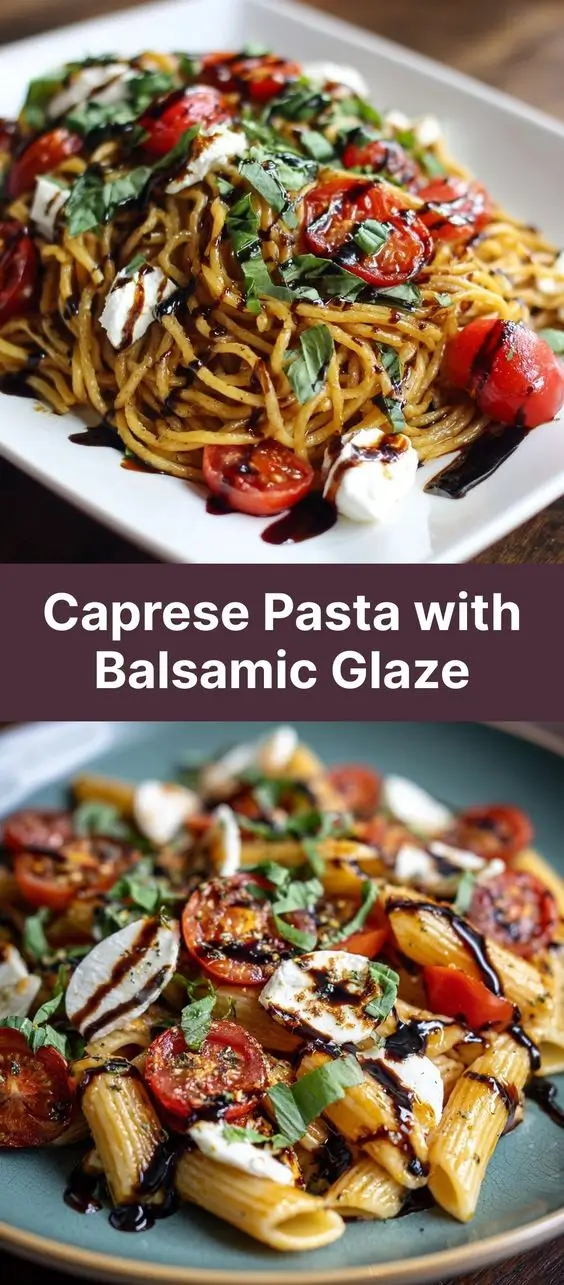
Caprese Pasta with Balsamic Glaze: A Delightful Fusion of Italian Classics
The Caprese Pasta with Balsamic Glaze is a modern culinary masterpiece that brings together the rustic charm of traditional Italian cooking and the elegance of contemporary gourmet presentation. This dish, while not rooted in centuries-old Italian tradition, has emerged as a beloved favorite in homes and restaurants around the world—particularly over the last two decades. It cleverly combines two iconic Italian elements: the Caprese salad (originating from the island of Capri) and the comforting familiarity of pasta. The addition of balsamic glaze elevates the entire experience, introducing a sweet-tangy depth that perfectly complements the fresh ingredients.
The History Behind the Dish
The roots of this recipe trace back to Italy’s Campania region, where the classic Insalata Caprese was first created in the early 20th century. Legend has it that the salad was invented as a tribute to the Italian flag—its red tomatoes, white mozzarella, and green basil forming a patriotic tricolor. Over time, chefs and home cooks began experimenting by integrating these vibrant flavors into warm dishes. Pasta, being a staple of Italian cuisine, became a natural canvas for the Caprese combination. The use of balsamic glaze—a reduction of balsamic vinegar that originated in Modena—adds a luxurious touch inspired by modern plating techniques popularized in fusion and farm-to-table dining movements. Today, Caprese Pasta with Balsamic Glaze stands as a symbol of culinary evolution, blending heritage with innovation.
Ingredients Breakdown: What Makes This Dish Shine
The beauty of Caprese Pasta lies in its simplicity and the quality of its components. Each ingredient plays a crucial role in delivering a harmonious balance of textures and tastes:
- Pasta: Typically penne, fusilli, or farfalle are used for their ability to hold sauce and mix well with chunky ingredients. Whole wheat or gluten-free versions can be substituted based on dietary needs.
- Fresh Tomatoes: Ripe vine-ripened or cherry tomatoes provide juiciness and a bright, slightly acidic flavor. Heirloom varieties add complexity and visual appeal.
- Fresh Mozzarella: Preferably buffalo mozzarella or ciliegine (cherry-sized balls), which melt slightly when mixed with warm pasta, creating creamy pockets throughout the dish.
- Fresh Basil: Essential for that aromatic lift; torn rather than chopped to preserve essential oils and prevent bruising.
- Balsamic Glaze: A thick, syrupy reduction that adds sweetness and tang. Made by simmering high-quality balsamic vinegar until reduced by half or more, sometimes with added sugar or honey.
- Extra Virgin Olive Oil: Used both in cooking and finishing; look for cold-pressed, fruity varieties to enhance richness.
- Garlic: Minced or sliced, sautéed gently to infuse the oil without turning bitter.
- Salt and Freshly Ground Black Pepper: To taste, enhancing all other flavors.
- Optional Additions: Red onion, pine nuts, sun-dried tomatoes, grilled chicken, or Parmesan shavings for extra depth.
Step-by-Step Recipe
Follow these detailed steps to create a restaurant-quality Caprese Pasta with Balsamic Glaze right in your kitchen:
- Cook the Pasta: Bring a large pot of salted water to a boil (use about 1 tablespoon of salt per 4 quarts of water). Add 12 ounces of your chosen pasta and cook according to package instructions until al dente. Reserve ½ cup of pasta water before draining.
- Prepare the Balsamic Glaze: While the pasta cooks, reduce store-bought or homemade balsamic vinegar in a small saucepan over medium-low heat. Simmer for 10–15 minutes until it thickens into a syrupy consistency that coats the back of a spoon. Remove from heat and let cool.
- Sauté the Aromatics: In a large skillet, heat 3 tablespoons of extra virgin olive oil over medium heat. Add 2–3 cloves of minced garlic and sauté for 1–2 minutes until fragrant but not browned. If using red onion, add ¼ cup finely diced pieces and cook until softened.
- Combine Pasta and Sauce: Drain the cooked pasta and immediately add it to the skillet with the tomato mixture. Toss well to coat the pasta in the garlicky tomato oil. Use reserved pasta water, one ladle at a time, to loosen the sauce if needed—this helps emulsify the oil and starch for a silky texture.
- Incorporate Mozzarella and Basil: Remove the skillet from heat. Gently fold in 8 ounces of fresh mozzarella pieces (cut into bite-sized chunks if necessary) and ½ cup loosely packed torn basil leaves. The residual heat will warm the cheese slightly without melting it completely.
- Season and Finish: Drizzle with 1–2 tablespoons of high-quality extra virgin olive oil. Season generously with sea salt and freshly ground black pepper to taste. Toss gently once more.
- Plate and Drizzle: Divide the pasta among serving bowls. Just before serving, drizzle each portion with 1–2 teaspoons of balsamic glaze in a decorative swirl pattern. Garnish with additional basil leaves, a sprinkle of flaky sea salt, or microgreens for presentation.
<4>Add Tomatoes: Stir in 2 cups of halved cherry tomatoes or diced ripe tomatoes. Cook gently for 3–4 minutes just until they begin to soften and release their juices. Avoid overcooking to maintain freshness.
Pro Tips for Perfect Caprese Pasta
- Don’t Overcook the Tomatoes: Keep them slightly firm to mimic the fresh crunch of a Caprese salad. They should retain shape and color after mixing.
- Use Warm Pasta: Combining the fresh mozzarella and basil with warm (not hot) pasta ensures the cheese softens beautifully while preserving the herb’s aroma.
- Quality Matters: Since this dish relies on few ingredients, opt for the best you can find—ripe seasonal tomatoes, authentic mozzarella di bufala, and premium olive oil make a dramatic difference.
- Make Ahead Smartly: You can prep the balsamic glaze up to a week in advance and store it in a sealed jar in the refrigerator. Reheat gently before use. The tomatoes and garlic can be prepped ahead but assemble the dish fresh.
- Reserve That Starchy Water: Never skip saving pasta water—it’s golden for adjusting texture and binding flavors seamlessly.
- Drizzle Last Minute: Apply the balsamic glaze just before serving to maintain its visual contrast and prevent soaking into the dish too early.
Variations and Customizations
This versatile recipe welcomes creativity. Here are some delicious twists to tailor it to your taste or occasion:
- Protein-Packed Version: Add grilled chicken breast slices, shrimp, or Italian sausage for a heartier meal.
- Vegan Option: Replace mozzarella with dairy-free alternatives like cashew mozzarella or omit cheese entirely. Boost creaminess with avocado slices.
- Gluten-Free Adaptation: Use gluten-free pasta made from rice, corn, or quinoa. Ensure all other ingredients are certified GF if necessary.
- Herb Variations: Substitute part of the basil with fresh oregano, parsley, or even mint for a unique twist.
- Roasted Vegetable Twist: Roast the tomatoes and garlic beforehand for deeper umami notes. Add roasted zucchini or bell peppers for added texture.
- Cold Pasta Salad Style: Chill the dish after preparation and serve as a refreshing summer salad. Increase the balsamic glaze slightly for brightness.
- Truffle Elevation: Drizzle with a touch of truffle oil and top with shaved Parmigiano-Reggiano for an upscale version perfect for entertaining.
Health Considerations and Nutritional Value
Caprese Pasta with Balsamic Glaze is relatively wholesome, especially when prepared with whole ingredients and mindful portions. Here’s a nutritional breakdown per average serving (approximately 1.5 cups):
- Calories: ~400–500 kcal (varies based on pasta type, cheese amount, and oil usage)
- Carbohydrates: 55–65g (primarily from pasta and tomatoes)
- Protein: 15–20g (from mozzarella and optional protein additions)
- Fat: 18–25g (mostly unsaturated fats from olive oil and cheese)
- Fiber: 4–6g (especially higher with whole grain pasta and tomatoes)
- Vitamins & Minerals: Rich in vitamin C (tomatoes), calcium (mozzarella), vitamin K and antioxidants (basil), and heart-healthy monounsaturated fats (olive oil).
Dietary Notes:
- Lacto-vegetarian friendly (unless vegan modifications are made).
- Naturally low in sodium if unsalted cheese and minimal added salt are used.
- Contains dairy and gluten unless substitutions are applied.
- Balsamic glaze may contain added sugars; choose naturally reduced versions or make your own without sweeteners for a cleaner option.
For those managing weight or blood sugar, consider reducing pasta quantity and increasing vegetables, or using legume-based pasta for higher protein and fiber.
Complete Ingredients List
- 12 oz (340g) short pasta (penne, fusilli, or farfalle)
- 2 cups cherry tomatoes, halved (or 2 medium ripe tomatoes, diced)
- 8 oz (225g) fresh mozzarella, cubed or using ciliegine
- ½ cup fresh basil leaves, torn
- 3 tbsp extra virgin olive oil (plus extra for finishing)
- 3 cloves garlic, minced
- ½ tsp red pepper flakes (optional)
- Salt and freshly ground black pepper, to taste
- ¼ cup finely diced red onion (optional)
- ½ cup reserved pasta water
- 3–4 tbsp balsamic glaze (homemade or high-quality store-bought)
- Flaky sea salt and additional basil, for garnish
Detailed Directions
- Fill a large pot with 4–6 quarts of water, add 1 tablespoon of salt, and bring to a rolling boil. Add pasta and stir immediately to prevent sticking. Cook until al dente (usually 9–11 minutes for dried pasta, less for fresh). Before draining, scoop out ½ cup of starchy cooking water and set aside.
- While pasta cooks, prepare the balsamic glaze: Pour ½ cup of balsamic vinegar into a small saucepan. Bring to a gentle simmer over medium-low heat. Reduce heat to low and let it bubble slowly, stirring occasionally, until volume reduces by half and reaches a syrup-like consistency (about 10–15 minutes). Watch closely near the end to avoid burning. Remove from heat and cool.
- In a large skillet or sauté pan, heat 3 tablespoons of extra virgin olive oil over medium heat. Add minced garlic and optional red pepper flakes. Sauté for 1 minute until fragrant. Add diced red onion (if using) and cook for another 2–3 minutes until translucent.
- Add the halved cherry tomatoes to the skillet. Cook for 3–4 minutes, stirring occasionally, allowing them to soften slightly and release their juices. Do not overcook—retain some texture and freshness.
- Remove the skillet from heat. Add the fresh mozzarella cubes and torn basil leaves. Gently fold them in using tongs or a spatula—avoid vigorous stirring to keep the cheese intact.
- Season with salt and freshly ground black pepper to taste. Drizzle with an additional 1 tablespoon of olive oil for gloss and richness. Toss one final time.
- Divide the Caprese pasta evenly among shallow bowls or plates. Using a spoon or squeeze bottle, drizzle 1–2 teaspoons of balsamic glaze over each serving in zigzag or spiral patterns. Garnish with extra basil, a pinch of flaky sea salt, and cracked pepper.
- Serve immediately while flavors are vibrant and cheese is luxuriously soft.
<5>Combine Everything: Drain the cooked pasta and transfer it directly to the skillet with the tomato mixture. Toss thoroughly to combine. Gradually add reserved pasta water, starting with ¼ cup, tossing continuously until the sauce clings well to the pasta.
Frequently Asked Questions (FAQ)
Can I make Caprese Pasta ahead of time?
It’s best served fresh, but you can prep components ahead. Cook and chill pasta (toss with a little oil to prevent sticking), store tomatoes and basil separately, and keep balsamic glaze refrigerated. Assemble and warm gently before serving.
How long does balsamic glaze last?
Homemade balsamic glaze can be stored in an airtight container in the refrigerator for up to 2 weeks. Reheat briefly in a microwave or over low heat before use.
Can I use regular balsamic vinegar instead of glaze?
You can, but the result will be thinner and more acidic. For best results, either reduce the vinegar yourself or use a commercially prepared glaze for that signature thickness and sweetness.
Is this dish suitable for vegetarians?
Yes, it is naturally vegetarian. To make it vegan, substitute the mozzarella with a plant-based alternative and ensure the pasta doesn’t contain eggs.
Why did my mozzarella turn rubbery?
This usually happens if the cheese is exposed to high heat for too long. Always add fresh mozzarella off the heat so it warms gently without melting or toughening.
Can I freeze Caprese Pasta?
Freezing is not recommended due to the fresh ingredients—tomatoes become watery, basil turns black, and mozzarella loses texture upon thawing.
What wine pairs well with this dish?
A crisp Italian white like Pinot Grigio or Vermentino complements the acidity and freshness. Alternatively, a light-bodied red such as Chianti or Beaujolais works beautifully, especially in cooler months.
Summary
Caprese Pasta with Balsamic Glaze is a vibrant, flavorful dish that celebrates the essence of Mediterranean cuisine—fresh ingredients, bold contrasts, and elegant simplicity. It’s a perfect balance of creamy, juicy, tangy, and herbal notes, making it ideal for weeknight dinners or impressing guests.