Introduction
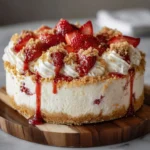
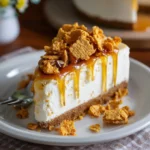
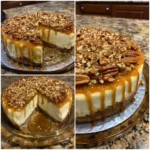
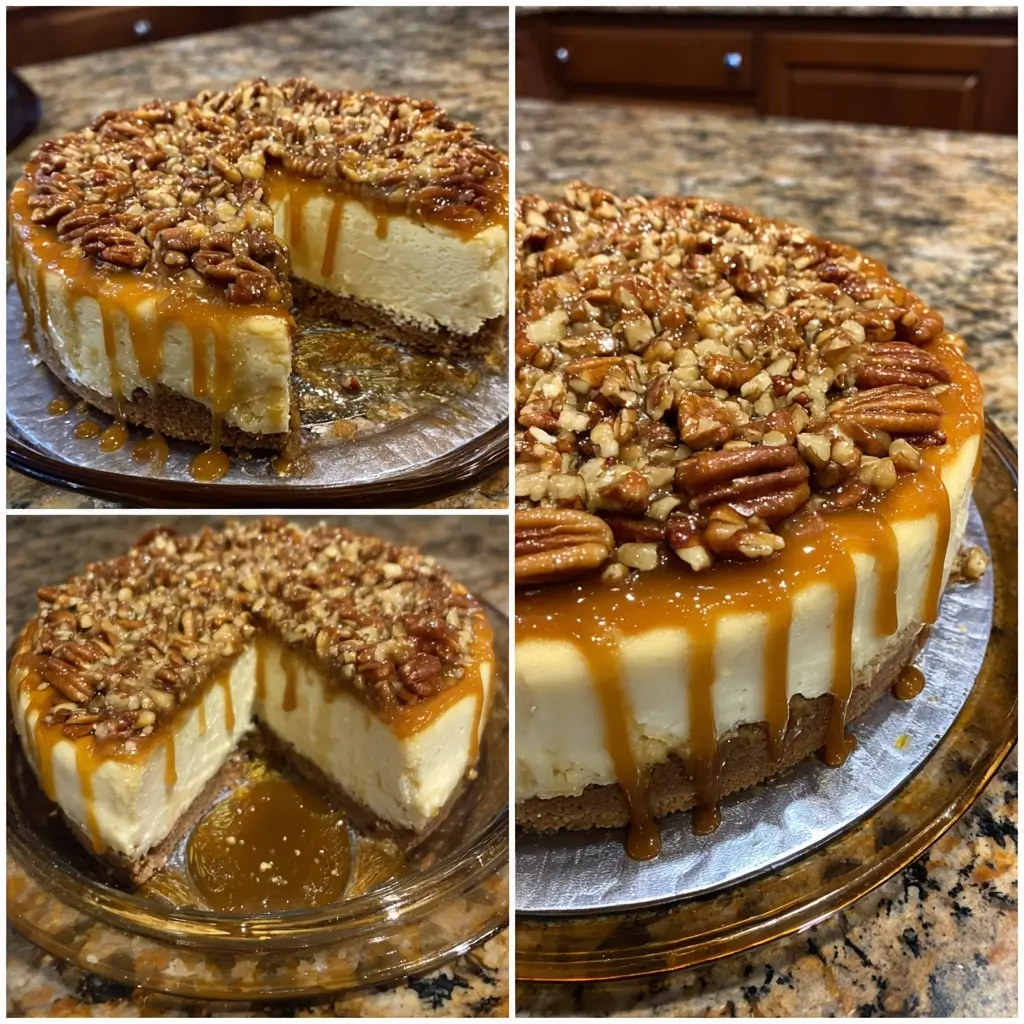
Welcome to the ultimate guide to crafting a showstopping Caramel Pecan Cheesecake — a decadent, rich, and texturally mesmerizing dessert that marries the velvety luxury of New York–style cheesecake with the buttery warmth of toasted pecans and the deep, complex sweetness of slow-simmered caramel. This isn’t just any cheesecake; it’s an elevated confection designed for special occasions, holiday tables, dinner party finales, or even as a heartfelt homemade gift. With its golden-brown caramel drizzle glistening over a crack-free, cloud-soft filling, crowned with a generous scatter of crunchy candied pecans, every bite delivers a symphony of contrasting yet harmonious sensations: creamy, chewy, crisp, salty, sweet, and deeply aromatic. Whether you’re a seasoned baker or stepping confidently into your first multi-layered dessert project, this meticulously crafted guide walks you through every nuance — from ingredient science to oven psychology — ensuring not only success but also deep culinary satisfaction.
The History
The evolution of the Caramel Pecan Cheesecake is a delicious tapestry woven from three distinct culinary traditions. Its foundation — the cheesecake — traces back over 2,300 years to ancient Greece, where simple cheese-and-honey cakes were served to athletes at the first Olympic Games in 776 BCE. The Romans later adopted and refined the concept, spreading cheesecake across their empire. In America, the modern baked cheesecake emerged in the late 19th century, particularly gaining fame with the development of cream cheese by William Lawrence in Chester, NY (1872) and the iconic recipe published by the Philadelphia Cream Cheese company in 1929 — cementing the dense, tangy, oven-baked style we cherish today.
Pecans, native to the southern and central United States and Mexico, have been consumed by Indigenous peoples for millennia and became commercially cultivated in the 18th century. Their rich, buttery, slightly earthy flavor and satisfying crunch made them natural partners for sweet desserts — especially in Southern U.S. baking traditions like pralines and pecan pie. Caramel, meanwhile, has roots in medieval Arabic confectionery (where sugar was boiled into syrup), but its integration into American desserts exploded in the late 1800s with industrial sugar refining and the rise of candy-making. The fusion of all three — cheesecake, pecans, and caramel — likely gained traction in the mid-to-late 20th century, influenced by Texas and Louisiana bakers experimenting with regional flavors, upscale restaurant pastry chefs seeking textural drama, and home cooks inspired by gourmet food magazines and televised cooking shows. Today, Caramel Pecan Cheesecake stands as a beloved emblem of American dessert innovation — rustic yet refined, nostalgic yet luxurious.
Ingredients Breakdown
Understanding *why* each ingredient is included — and how it functions — is key to mastering this dessert. Below is a detailed, functional breakdown:
- Graham Cracker Crust Base: Graham crackers provide structure, subtle honeyed sweetness, and a gentle whole-grain nuttiness. Their fine crumb binds seamlessly with melted butter (which adds richness and helps the crust set firmly) and brown sugar (which enhances caramel notes and promotes browning).
- Cream Cheese (Full-Fat, Brick Style): The irreplaceable heart of the filling. Must be at true room temperature (65–70°F) — cold cream cheese leads to lumps; overheated or softened-too-long cheese causes greasiness. Full-fat (typically 33% milk fat) ensures density, stability, and proper emulsification. Low-fat versions lack sufficient fat to trap air and stabilize the batter, resulting in rubbery or cracked textures.
- Sour Cream & Heavy Cream: Sour cream adds tang, moisture, and tenderness while helping prevent curdling during baking. Heavy cream (not half-and-half or milk) contributes luxurious fat and smoothness, improves sliceability when chilled, and enhances the “melt-in-your-mouth” quality without thinning the batter.
- Granulated Sugar: Not just for sweetness — sugar tenderizes the proteins in cream cheese and eggs, stabilizes the foam during mixing, and aids in browning the top layer during the water bath bake.
- Eggs (Large, Room Temperature): Act as structural binders and leaveners. Their proteins coagulate gently during slow baking, setting the custard. Using room-temperature eggs prevents shocking the warm batter and ensures uniform incorporation — cold eggs can cause separation or graininess.
- Vanilla Extract (Pure, Not Imitation): Adds depth and aromatic complexity. Real vanilla contains hundreds of flavor compounds that complement both caramel and pecans far beyond simple “vanilla” notes — think floral, woody, and spicy undertones.
- Salt (Fine Sea Salt or Kosher Salt): A crucial counterpoint. Salt doesn’t make the cake salty — it *enhances* sweetness, balances acidity from sour cream, and amplifies the roasted nuttiness of the pecans. Omitting it flattens the entire flavor profile.
- Homemade Salted Caramel Sauce: Store-bought caramel often contains stabilizers, preservatives, and inconsistent sugar levels that can destabilize the cheesecake surface or create a sticky, overly sweet layer. Homemade caramel — made with granulated sugar, heavy cream, unsalted butter, and flaky sea salt — offers superior control over consistency (thick enough to hold shape but fluid enough to drizzle), depth of flavor (nutty, toasty, slightly bitter notes from caramelization), and salt balance.
- Pecans (Raw, Unsalted, Halves or Pieces): Toasting is non-negotiable. Raw pecans taste bland and waxy; toasted pecans release volatile oils that deliver intense buttery, maple-like aromas. Using halves or large pieces ensures visual appeal and satisfying crunch. Avoid pre-chopped or roasted/salted store varieties — they often contain oils or seasonings that interfere with caramel adhesion and add unwanted sodium.
Step-by-Step Recipe
- Prep the Pan (24–48 Hours Ahead Recommended): Wrap the *outside* of a 9-inch springform pan tightly with two overlapping layers of heavy-duty aluminum foil, ensuring no gaps at the seam or base. This is critical for the water bath. Lightly grease the *inside* bottom and sides with unsalted butter or non-stick spray. Set aside.
- Make the Graham Cracker Crust (Day Before or Morning Of): Pulse 1 ½ cups graham cracker crumbs (about 12 full sheets), ¼ cup packed light brown sugar, and ¼ tsp fine sea salt in a food processor until uniform. Add 6 tbsp melted unsalted butter and pulse until mixture resembles wet sand. Press firmly and evenly into the bottom and 1 inch up the sides of the prepared pan using the back of a spoon or flat-bottomed measuring cup. Chill uncovered for at least 1 hour (or freeze for 20 minutes) before baking.
- Bake the Crust: Preheat oven to 350°F (175°C). Bake chilled crust for 10 minutes. Remove, tap gently to settle, and cool completely on a wire rack (≈30–45 min). Reduce oven temp to 325°F (165°C) for cheesecake bake.
- Toast the Pecans: While crust cools, spread 1 ½ cups raw pecan halves on a parchment-lined baking sheet. Toast in a 350°F oven for 8–10 minutes, shaking pan halfway, until fragrant and lightly golden. Cool completely. Chop roughly into ½-inch pieces — reserve ⅓ cup for topping, keep remainder for filling.
- Prepare the Caramel Sauce (Can Be Made Up to 1 Week Ahead): In a heavy-bottomed saucepan, melt 1 cup granulated sugar over medium heat, swirling (not stirring!) until fully dissolved and amber-colored (≈5–7 min). Carefully whisk in ½ cup heavy cream (mixture will bubble vigorously), then 4 tbsp unsalted butter, and finally ½ tsp flaky sea salt. Simmer 1–2 min until thickened. Cool to lukewarm (≈90°F), then refrigerate in an airtight container until needed. Re-warm gently before drizzling.
- Make the Cheesecake Batter: In a stand mixer fitted with paddle attachment, beat 24 oz (three 8-oz blocks) full-fat cream cheese on medium speed for 2 minutes until perfectly smooth and glossy — scrape bowl thoroughly. Add 1 cup granulated sugar and beat 2 more minutes until light and fluffy. Scrape bowl. Add 1 cup full-fat sour cream and ½ cup heavy cream; mix on low until just combined (≈30 sec). Add 4 large room-temp eggs, one at a time, beating on low just until yolk disappears (≈15 sec per egg). Scrape bowl after each addition. Mix in 2 tsp pure vanilla extract and ¾ tsp fine sea salt. Gently fold in reserved toasted pecan pieces (≈1 cup) with a silicone spatula until evenly distributed. Do *not* overmix.
- Water Bath Setup & Bake: Place springform pan inside a larger roasting pan. Pour batter into crust. Smooth top with offset spatula. Carefully pour hot (not boiling) water into roasting pan until it reaches halfway up the sides of the springform pan. Carefully transfer to center rack of preheated 325°F oven. Bake for 1 hour 15 minutes — cake should be set around edges but center should jiggle slightly like Jell-O when gently shaken.
- Cool Gradually (Non-Negotiable for Crack Prevention): Turn oven OFF. Crack oven door open 1 inch with a wooden spoon. Let cake cool inside oven for 1 hour. Remove from water bath, run thin knife around edge to loosen. Cool on wire rack at room temperature for 2 hours. Refrigerate uncovered for at least 12 hours — preferably 24–48 hours — before serving. This slow cooling and extended chilling allows proteins to fully set, fats to solidify, and flavors to meld.
- Finish & Serve: Just before serving, drizzle generously with warmed salted caramel sauce (use back of spoon to create ribbons). Sprinkle reserved toasted pecans over top. Optional: add flaky sea salt crystals and a dollop of lightly sweetened whipped cream or crème fraîche.
Tips
- Room Temperature Is Everything: Take cream cheese, eggs, sour cream, and heavy cream out of the fridge 4–6 hours before baking. If rushed, cut cream cheese into cubes and let sit 1.5 hours; place eggs in warm (not hot) water for 10 minutes.
- Scrape Religiously: Use a flexible silicone spatula to scrape the paddle, bowl, and sides after *every single step*. Even a small pocket of unmixed sugar or cold cream cheese causes lumps and cracks.
- Low & Slow Mixing: Overbeating incorporates excess air, leading to puffing and subsequent collapse/cracking. Mix only until ingredients are *just* incorporated — especially after adding eggs.
- Water Bath Water Temp Matters: Use hot tap water (≈140°F), not boiling. Boiling water can cause violent bubbling, splashing, or thermal shock to the delicate batter.
- Crack Repair Hack: If minor cracks appear, don’t panic! Chill fully, then use a warm metal offset spatula dipped in hot water and wiped dry to gently “melt” and smooth the surface. Works surprisingly well.
- Perfect Slicing: Use a long, thin-bladed knife (like a chef’s or boning knife). Wipe clean and dip in hot water between *every* slice. For ultra-clean cuts, chill cake for 30 minutes after removing from fridge before slicing.
- Storage Wisdom: Keep covered tightly with plastic wrap (pressed directly onto surface to prevent drying) or under a cake dome. Lasts beautifully for 5 days refrigerated. Freeze unfrosted (wrap in plastic + foil) for up to 3 months — thaw overnight in fridge before caramel/pecan garnish.
Variations and Customizations
- Gluten-Free: Substitute gluten-free graham crackers or a blend of almond flour (½ cup), oat flour (½ cup), and coconut sugar (¼ cup) for crust. Ensure all other ingredients (vanilla, caramel) are GF-certified.
- Maple-Pecan Fusion: Replace ¼ cup granulated sugar in batter with pure maple syrup (reduce heavy cream by 1 tbsp to compensate for added liquid). Use maple-infused caramel and finish with maple-candied pecans.
- Chocolate Swirl: Melt 4 oz high-quality dark chocolate (70%) with 1 tbsp heavy cream. After pouring batter, dollop melted chocolate over top and drag a toothpick through in figure-eights for elegant marbling.
- Bourbon Caramel: Add 1 tbsp aged bourbon to warm caramel sauce off-heat — enhances depth and complements pecans beautifully. Reduce salt slightly if using smoked sea salt.
- Mini Individual Cheesecakes: Use a lined muffin tin. Reduce bake time to 22–25 minutes in water bath (roasting pan with mini pans nestled inside). Chill 8+ hours.
- Vegan Adaptation (Advanced): Use soaked cashews (blended smooth), coconut cream, coconut oil, almond milk yogurt, and date-sweetened caramel. Requires precise pH balancing and agar-agar for set — best attempted with a dedicated vegan cheesecake guide.
- Spiced Variation: Add ½ tsp ground cinnamon + ¼ tsp freshly grated nutmeg + pinch of cardamom to crust crumbs. Infuse caramel with a cinnamon stick while heating.
Health Considerations and Nutritional Value
A 1-slice (1/16th of 9-inch cake, approx. 180g) serving of Caramel Pecan Cheesecake contains approximately:
- Calories: 480–520 kcal
- Total Fat: 34–38g (Saturated: 18–21g)
- Cholesterol: 135–155mg
- Sodium: 320–380mg (highly dependent on salted caramel & crust salt)
- Total Carbohydrates: 36–40g (Dietary Fiber: 1g, Sugars: 28–32g)
- Protein: 7–9g
Nutritional Highlights & Considerations:
- Pecans: A nutritional powerhouse — rich in monounsaturated fats (heart-healthy), vitamin E (antioxidant), magnesium, zinc, and phenolic antioxidants linked to reduced inflammation and improved cognitive function. One ounce (≈19 halves) provides ≈200mg of potassium and 2.7g plant-based protein.
- Cream Cheese & Sour Cream: Provide calcium and phosphorus for bone health, plus vitamin A. However, their saturated fat content warrants mindful portion control, especially for those managing cholesterol or cardiovascular health.
- Caramel Sauce: Primarily added sugars. While occasional indulgence is part of a balanced lifestyle, frequent high-sugar intake correlates with increased risk of insulin resistance, fatty liver disease, and dental caries. Opting for homemade caramel allows control over sugar quantity and eliminates high-fructose corn syrup or artificial additives found in many commercial versions.
- Mindful Enjoyment Tips: Serve smaller portions (1/18th or 1/20th slices); pair with fresh seasonal berries (strawberries, raspberries) for fiber and polyphenols; enjoy as an occasional treat rather than daily dessert; consider reducing crust sugar by 1 tbsp and caramel drizzle by 25% without sacrificing enjoyment.
Ingredients
For the Graham Cracker Crust:
- 1 ½ cups (150g) graham cracker crumbs (about 12 full sheets, finely crushed)
- ¼ cup (50g) packed light brown sugar
- ¼ teaspoon fine sea salt
- 6 tablespoons (85g) unsalted butter, melted and cooled slightly
For the Toasted Pecans:
- 1 ½ cups (180g) raw pecan halves or large pieces
For the Salted Caramel Sauce (Makes ~1 ¼ cups):
- 1 cup (200g) granulated sugar
- ½ cup (120ml) heavy cream, room temperature
- 4 tablespoons (57g) unsalted butter, cut into pieces
- ½ teaspoon flaky sea salt (e.g., Maldon), plus more for finishing
For the Cheesecake Filling:
- 24 ounces (680g) full-fat brick-style cream cheese, at room temperature (65–70°F)
- 1 cup (200g) granulated sugar
- 1 cup (240g) full-fat sour cream, at room temperature
- ½ cup (120ml) heavy cream, at room temperature
- 4 large eggs, at room temperature
- 2 teaspoons pure vanilla extract
- ¾ teaspoon fine sea salt
- 1 cup (120g) of the toasted pecans, roughly chopped (reserve remaining ⅓ cup for garnish)
Directions
- Prep Pan & Crust: Wrap exterior of a 9-inch springform pan tightly with two layers of heavy-duty aluminum foil. Lightly grease interior. In food processor, pulse graham cracker crumbs, brown sugar, and salt until fine. Add melted butter; pulse until mixture resembles wet sand. Press firmly into bottom and 1 inch up sides of pan. Chill 1 hour (or freeze 20 min).
- Bake Crust: Preheat oven to 350°F (175°C). Bake crust 10 minutes. Cool completely on wire rack (30–45 min). Reduce oven to 325°F (165°C).
- Toast Pecans: Spread pecans on parchment-lined sheet. Bake at 350°F 8–10 min until fragrant and golden. Cool completely. Chop 1 cup; reserve ⅓ cup whole/halved for garnish.
- Make Caramel: In heavy saucepan, melt sugar over medium heat, swirling until amber (5–7 min). Carefully whisk in cream (will bubble), then butter, then salt. Simmer 1–2 min. Cool to lukewarm; refrigerate until needed. Re-warm before drizzling.
- Make Batter: In stand mixer, beat cream cheese on medium 2 min until smooth. Add sugar; beat 2 min until fluffy. Scrape bowl. Add sour cream and heavy cream; mix on low until combined. Add eggs one at a time, beating just until incorporated (15 sec each). Scrape bowl. Mix in vanilla and salt. Fold in 1 cup chopped toasted pecans.
- Bake: Place springform pan in roasting pan. Pour batter in. Pour hot water into roasting pan to halfway up springform. Bake at 325°F 1 hr 15 min — edges set, center jiggles slightly.
- Cool & Chill: Turn oven OFF. Crack door open 1 inch; cool cake in oven 1 hr. Remove from water bath. Loosen edges. Cool on rack 2 hrs. Refrigerate uncovered ≥12 hrs (ideally 24–48 hrs).
- Finish: Drizzle generously with warmed caramel. Sprinkle with reserved pecans and flaky salt. Slice with hot, wiped knife.
FAQ
- Q: Can I make this without a water bath?
- A: Technically yes — but strongly discouraged. Without the humid, even heat of the water bath, the cheesecake is highly prone to cracking, curdling, and developing a dry, rubbery texture. If absolutely necessary, place a shallow pan of boiling water on the lowest oven rack while baking, but results won’t match the water bath’s reliability.
- Q: Why did my cheesecake crack?
- A: Most common causes: (1) Overmixing after adding eggs, (2) Cooling too quickly (never refrigerate a warm cake!), (3) Underbaking (center must jiggle *slightly*), (4) Opening oven door before 1-hour mark, (5) Cold ingredients causing uneven emulsification. Follow the gradual cooling protocol strictly.
- Q: Can I use low-fat cream cheese or Neufchâtel?
- A: Not recommended. These contain higher moisture and lower fat, which prevents proper setting, increases crack risk, and yields a grainy, watery, or “cottage-cheesy” texture. Full-fat brick-style is essential.
- Q: How do I prevent soggy crust?
- A: Ensure crust is fully chilled before baking, baked until fragrant and dry-looking (no raw crumb appearance), and completely cooled before adding batter. The foil wrapping prevents water seepage, but a properly pre-baked crust is the first line of defense.
- Q: Can I freeze caramel pecan cheesecake?
- A: Yes! Unfrosted, tightly wrapped in plastic wrap then heavy-duty foil, it freezes beautifully for up to 3 months. Thaw overnight in the refrigerator. Add caramel and pecans *after* thawing for optimal texture and visual appeal.
- Q: My caramel seized or turned grainy. What went wrong?
- A: Sugar crystallization occurred — usually from stirring too early, using a dirty or wet pan, or introducing cold cream too abruptly. Next time, ensure pan is impeccably clean and dry, avoid stirring until sugar melts, and warm cream slightly before adding. If it seizes, gently reheat and stir constantly until smooth — it often recovers.
- Q: Can I make this ahead for Thanksgiving or Christmas?
- A: Absolutely — and highly recommended! It tastes even better on Day 2 or 3. Bake and chill completely (48 hours ideal), then store covered in fridge. Drizzle caramel and add pecans the morning of or 2 hours before serving.
Summary
Caramel Pecan Cheesecake is a masterclass in balance — where the dense, tangy elegance of a perfectly baked New York–style cheesecake meets the deep, buttery resonance of toasted pecans and the complex, salt-kissed sweetness of slow-simmered caramel.
By honoring foundational techniques — room-temperature ingredients, meticulous scraping, the indispensable water bath, and patient, multi-stage cooling — you transform a luxurious idea into a flawless, unforgettable reality that delights the eye, tongue, and soul alike.