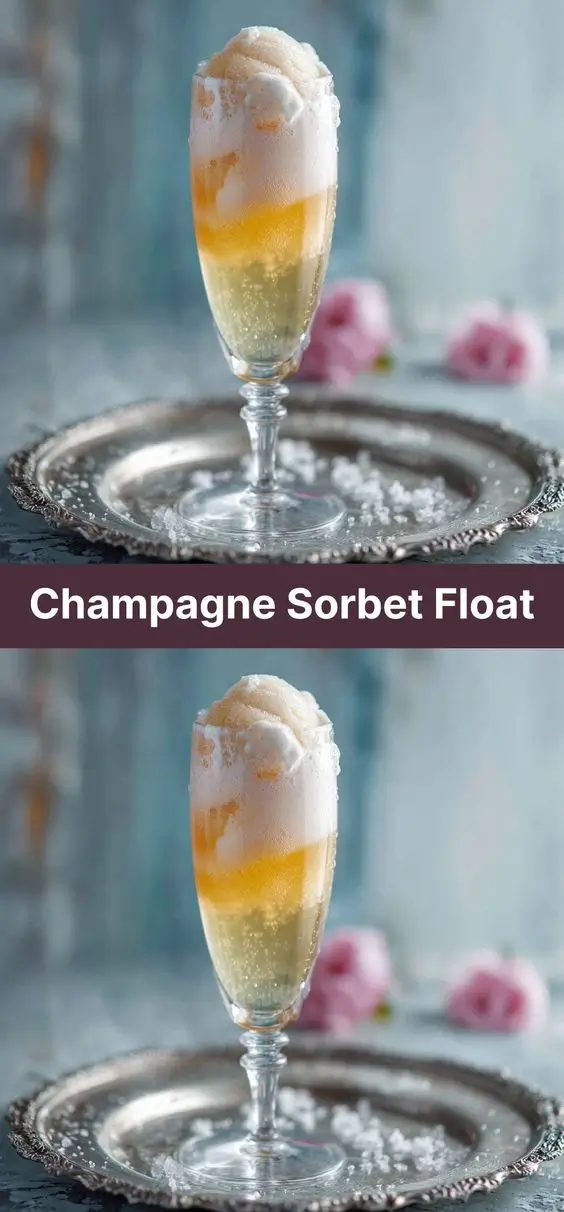
Champagne Sorbet Float: A Bubbly Elixir of Elegance and Refreshment
The History
The Champagne Sorbet Float traces its origins to the opulent salons of 19th-century France, where the art of dessert-making reached new heights of sophistication. As champagne became a symbol of celebration and luxury—especially after Dom Pérignon’s contributions to sparkling wine production in the late 1600s—chefs began experimenting with incorporating it into desserts. The concept of a sorbet float likely emerged from the tradition of sherbet liqueurs, frozen desserts served with a splash of liquor or sparkling wine to elevate their flavor and texture.
In Parisian cafés during the Belle Époque, patrons would enjoy delicate scoops of fruit sorbet topped with a gentle pour of chilled champagne as a refreshing intermezzo between courses. This practice evolved over time, especially in America during the Roaring Twenties, when Prohibition made cocktails creative and non-traditional. Home entertainers began crafting mock versions using ginger ale or sparkling cider, but once Prohibition ended, the true champagne version resurged as a hallmark of glamour.
By the mid-20th century, the Champagne Sorbet Float had cemented its place in haute cuisine, often featured at weddings, galas, and New Year’s Eve celebrations. Today, it remains a beloved treat that marries the effervescence of champagne with the clean, icy sweetness of fruit sorbet—a drink-dessert hybrid that transcends categories and delights palates around the world.
Ingredients Breakdown
The beauty of the Champagne Sorbet Float lies in its simplicity and elegance. Each ingredient plays a vital role in balancing flavor, texture, and visual appeal. Here’s an in-depth look at what goes into this exquisite creation:
- Champagne (or Sparkling Wine): The cornerstone of the float. Authentic French champagne offers subtle notes of brioche, apple, citrus, and minerality. However, high-quality prosecco, cava, or crémant can be excellent alternatives. Choose a brut or extra brut for a dry profile that complements rather than overwhelms the sorbet.
- Fruit Sorbet: Typically made from puréed fruit, sugar, and water, sorbet is naturally dairy-free and intensely flavorful. Classic choices include raspberry, lemon, peach, or blood orange. Homemade sorbet allows full control over sweetness and freshness, while premium store-bought versions offer convenience without sacrificing quality.
- Fresh Fruit Garnish: Adds color, aroma, and a burst of natural juice. Raspberries, blackberries, lemon twists, or edible flowers like violets enhance presentation and provide a sensory prelude to the first sip.
- Liqueur (Optional): For added depth, a small splash of complementary liqueur—such as Chambord (raspberry), Grand Marnier (orange), or St-Germain (elderflower)—can intensify the flavor profile. This turns the float into a more sophisticated adult beverage.
- Honey or Simple Syrup (Optional): Used sparingly to adjust sweetness if the champagne is very dry or the sorbet is tart. Infused syrups (e.g., lavender, mint) can introduce aromatic complexity.
- Edible Glitter or Gold Leaf (Luxury Option): For special occasions, these add a touch of sparkle and decadence, transforming the float into a show-stopping centerpiece.
Step-by-Step Recipe
- Chill Your Glassware: Place champagne flutes or coupe glasses in the freezer for at least 15 minutes before serving. Cold glassware preserves the temperature and effervescence of the drink.
- Prepare the Sorbet: Ensure your sorbet has been frozen solid but is slightly softened (about 5–10 minutes at room temperature) for easy scooping. Too hard, and it won’t blend well; too soft, and it melts too quickly.
- Scoop the Sorbet: Using a chilled ice cream scoop, place one generous scoop (about 2–3 tablespoons) of sorbet into the bottom of each glass. For layered effects, use two smaller scoops of different flavored sorbets (e.g., lemon and raspberry).
- Add Optional Liqueur: If using, drizzle ½ to 1 teaspoon of liqueur over the sorbet. Let it begin to melt slightly, creating a syrupy base that will mix beautifully with the champagne.
- Pour the Champagne: Slowly pour chilled champagne down the side of the glass to minimize fizz overflow. Fill to about ¾ full to allow room for expansion as the sorbet melts and bubbles rise.
- Garnish Creatively: Top with fresh berries, citrus zest, a sprig of mint, or a floating edible flower. For drama, gently place a thin slice of cucumber or rose petal on the surface.
- Serve Immediately: The Champagne Sorbet Float is best enjoyed within 2–3 minutes of preparation, when the textures are perfectly balanced—creamy, fizzy, and cold.
Tips for the Perfect Champagne Sorbet Float
- Choose Quality Over Quantity: Invest in real champagne or a fine sparkling wine. The flavor difference is noticeable, especially when paired with delicate sorbet.
- Don’t Overfill: Leave at least an inch of space at the top of the glass to prevent spillage when the carbonation reacts with the cold sorbet.
- Avoid Stirring: Allow the drink to evolve naturally. Stirring releases too much gas and accelerates melting. Instead, let guests sip and swirl gently as they go.
- Pre-Chill Everything: From the champagne bottle to the serving spoons, cold tools preserve the integrity of the float.
- Time It Right: Assemble just before serving. If preparing for a crowd, pre-scoop sorbet into mini molds and freeze until ready to use.
- Use a Straw and Spoon Combo: Offer both so guests can sip the bubbly liquid and scoop the creamy remnants at the end.
- Balance Sweetness: Taste your sorbet ahead of time. If it’s overly sweet, opt for a drier champagne to offset the sugar.
Variations and Customizations
The Champagne Sorbet Float is incredibly versatile. With a few tweaks, you can tailor it to seasons, themes, dietary needs, or cultural preferences:
- Seasonal Themes:
- Spring: Strawberry-basil sorbet with elderflower champagne (like G.H. Mumm Essentiel Rosé).
- Summer: Mango-lime sorbet with Italian prosecco for tropical flair.
- Autumn: Pear-ginger sorbet with oak-aged crémant for warmth and spice.
- Winter: Cranberry-orange sorbet with brut champagne, garnished with cinnamon sticks.
- Dietary Adaptations:
- Vegan: Use plant-based sorbet (check for honey-free recipes) and vegan-certified champagne (many are, but some use animal-based fining agents).
- Sugar-Free: Substitute with monk fruit-sweetened sorbet and ultra-brut zero-residual-sugar champagne.
- Gluten-Free: Naturally gluten-free, but verify labels on liqueurs and commercial sorbets.
- Cocktail-Inspired Versions:
- Mimosa Float: Orange sorbet + champagne = a frozen mimosa experience.
- Bellini Float: White peach purée sorbet topped with Prosecco.
- Kir Royal Float: Blackcurrant sorbet with a drop of crème de cassis before adding champagne.
- Non-Alcoholic Version (“Mock-champagne Float”):
- Replace champagne with sparkling white grape juice, kombucha, or alcohol-free sparkling wine. Add a squeeze of lemon and a dash of vanilla extract to mimic complexity.
- Layered Floats:
- Create a gradient effect by layering multiple sorbets (e.g., raspberry on bottom, lemon in middle, lime on top) and pouring champagne slowly through a spoon.
- Adult-Only Floats:
- Add a shot of vodka for a “Screwdriver Sorbet Float” or espresso sorbet with coffee liqueur and champagne for a brunch twist.
Health Considerations and Nutritional Value
While undeniably indulgent, the Champagne Sorbet Float can be enjoyed mindfully. Here’s a breakdown of its nutritional aspects:
| Nutrient | Approximate per Serving (1 flute) | Notes |
|---|---|---|
| Calories | 120–180 | Depends on sorbet sweetness and champagne type. Lighter fruit sorbets (lemon, raspberry) are lower in calories than tropical varieties. |
| Carbohydrates | 15–25g | Mainly from sugars in fruit and added sweeteners. Champagne contributes ~4g per 4 oz. |
| Sugars | 12–20g | Opt for low-sugar sorbet and brut champagne to reduce intake. |
| Alcohol Content | 9–12% ABV | One standard float contains roughly 0.6–0.8 oz of pure alcohol. Not suitable for pregnant individuals, minors, or those avoiding alcohol. |
| Fat | 0g | Sorbet is fat-free, making this lighter than ice cream floats. |
| Vitamins & Antioxidants | Varies | Fruit-based sorbets provide vitamin C, polyphenols, and anthocyanins (especially in berry types). Champagne also contains antioxidants from grapes. |
Health Tips:
- Limited to one serving if monitoring sugar or alcohol intake.
- Best consumed as part of a balanced meal or festive occasion, not daily.
- Hydrate alongside—champagne is dehydrating, so have water available.
- Those with fructose intolerance should test tolerance with small portions.
- Diabetics may substitute with sugar-free sorbet and monitor blood glucose.
Ingredients
- 2 cups high-quality champagne, prosecco, or crémant (well-chilled)
- 4 scoops (¼ cup) fruit sorbet (raspberry, lemon, peach, or choice flavor)
- 4 tsp optional liqueur (e.g., Chambord, St-Germain, Grand Marnier)
- 8–12 fresh raspberries or other seasonal berries
- 4 lemon or orange twists for garnish
- Optional: 1 tbsp honey or infused simple syrup
- Optional: Edible flowers, mint sprigs, or gold leaf for luxury presentation
Directions
- Place four champagne flutes or coupe glasses in the freezer to chill for 15 minutes.
- Remove sorbet from the freezer and let sit at room temperature for 5–7 minutes to soften slightly.
- Take glasses out of the freezer and place on a stable surface.
- Scoop one portion of sorbet into each glass.
- If using liqueur, drizzle 1 teaspoon over each scoop of sorbet.
- If desired, add ¼ tsp of honey or syrup per glass for enhanced sweetness.
- Slowly pour champagne down the side of each glass, filling to about ¾ full.
- Immediately garnish each float with berries, citrus twist, and mint.
- Serve with elegant cocktail spoons and slender straws.
- Encourage guests to enjoy immediately for optimal texture and temperature.
FAQ
Q: Can I make Champagne Sorbet Floats ahead of time?
A: Not entirely. The float begins to melt and fizz upon contact. However, you can pre-scoop sorbet and freeze in molds, chill glasses and champagne, and prepare garnishes in advance. Assemble just before serving.
Q: What if I don’t have champagne?
A: Excellent substitutes include dry prosecco, Spanish cava, French crémant, or even sparkling rosé. For a budget-friendly option, use high-quality sparkling apple cider (though it will be sweeter).
Q: Is this dessert kid-friendly?
A: The alcoholic version is not. However, you can easily create a mock version using sparkling white grape juice or ginger ale with a splash of lemon. Kids love the fizzy, icy fun!
Q: Why did my float overflow immediately?
A: This happens when the sorbet is too warm or the champagne is poured too quickly. Always use very cold ingredients and pour slowly down the side of the glass.
Q: Can I use ice cream instead of sorbet?
A: You can, but it will no longer be a traditional sorbet float. Ice cream creates a richer, heavier texture—more like a champagne milkshake. Sorbet is preferred for its lightness and acidity.
Q: How do I store leftover sorbet?
A: Wrap tightly in plastic or place in an airtight container in the freezer. Consume within 2–3 weeks for best texture. Avoid repeated thawing.
Q: Are there vegan champagnes?
A: Yes! Many champagnes are vegan, but some use gelatin or casein in filtration. Look for brands labeled “vegan” or consult databases like Barnivore.com.
Summary
The Champagne Sorbet Float is a timeless fusion of effervescent elegance and icy refreshment, perfect for celebrations, romantic evenings, or luxurious self-indulgence. With just a few high-quality ingredients, you can craft a dessert that dazzles the senses and elevates any occasion.