Introduction
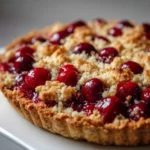
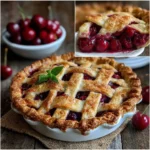
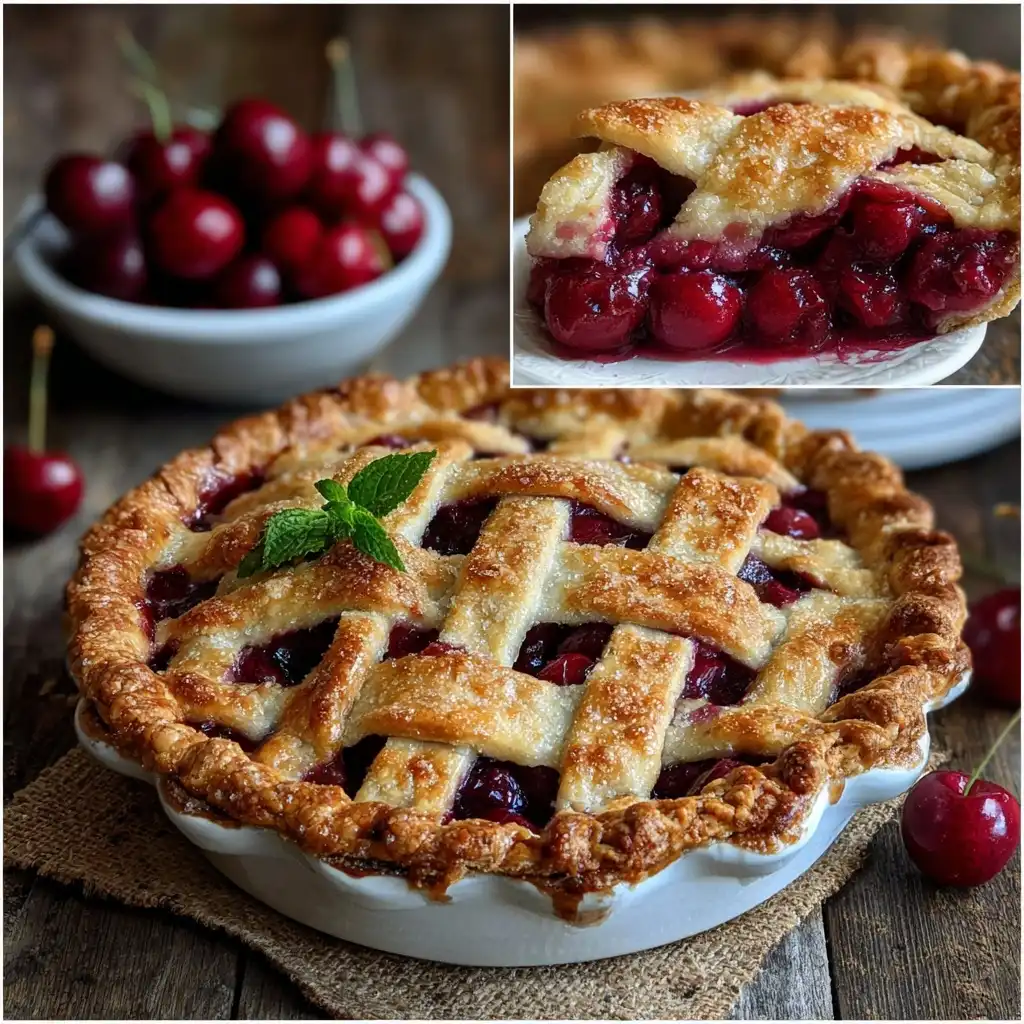
Cherry Pie with Almond Crust is a sublime fusion of classic American tradition and elegant European sophistication—a dessert that marries the vibrant tart-sweet intensity of cherries with the rich, nutty depth and delicate crumb of an almond-infused pastry. Unlike conventional shortcrust or flaky pie doughs, this version elevates the entire experience by incorporating finely ground almonds (or almond flour) directly into the crust—imparting a warm, toasty aroma, a tender-yet-sturdy structure, and a subtle marzipan-like nuance that complements rather than competes with the fruit filling. Whether served warm with a scoop of vanilla bean ice cream, dusted with powdered sugar at a summer picnic, or presented as a centerpiece at holiday gatherings, this cherry pie transcends seasonal expectations: it’s equally at home in spring’s first farmers’ market haul, midsummer’s backyard barbecue, or winter’s cozy hearthside indulgence. Its charm lies not only in its flavor harmony but also in its versatility—adaptable for fresh, frozen, or even dried cherries; forgiving for beginner bakers yet refined enough to impress seasoned pastry connoisseurs.
The History
The lineage of cherry pie stretches back centuries—long before it became an emblem of Americana. Cherries were cultivated in ancient Rome and later spread across medieval Europe, where fruit pies (often called “coffins” due to their sturdy rye- or barley-based encasements) were used as preservation vessels—baked with meat or fruit and sealed to extend shelf life. By the 16th century, English cooks began refining pie techniques, introducing buttery shortcrusts and lattice tops, while Dutch and German immigrants brought kuchen-style fruit desserts—including Kirschstreusel and Schwarzwälder Kirschtorte—to colonial America. The iconic American cherry pie gained national resonance in the 19th century, bolstered by the expansion of Michigan’s tart cherry industry (especially Montmorency cherries), the invention of commercial pie plates, and cultural reinforcement through folklore (“as American as apple pie”—though cherry often vies for top honors). The almond crust variation, however, emerged more recently—likely inspired by French frangipane traditions, Italian crostata di amarene, and the mid-20th-century rise of almond extract and almond flour in home baking. Chefs and food writers in the 1980s and ’90s—such as James Beard, Maida Heatter, and later Dorie Greenspan—began experimenting with nut-flour hybrids in pie crusts, recognizing almonds’ ability to add moisture retention, richness, and structural integrity without excess gluten development. Today, Cherry Pie with Almond Crust stands as a thoughtful evolution—not a departure from heritage, but a respectful, flavorful dialogue between Old World technique and New World abundance.
Ingredients Breakdown
Every exceptional Cherry Pie with Almond Crust begins with intentionality in ingredient selection—each component playing a precise functional and sensory role:
- Cherries: Tart Montmorency cherries are the gold standard—naturally high in pectin and acidity, which balances sweetness and ensures a glossy, sliceable filling without excessive thickener. Sweet Bing or Rainier cherries may be used but require added lemon juice and careful sugar adjustment. Frozen unsweetened tart cherries work exceptionally well year-round and often yield more consistent results than inconsistent fresh batches. Always pit thoroughly—residual pits impart bitter compounds and pose safety hazards.
- Sugar: A blend is ideal: granulated sugar for structure and clarity, plus a portion of light brown sugar (10–20%) for molasses-derived depth, moisture, and caramel notes that echo the almond crust. Avoid raw or turbinado sugars in the filling—they can crystallize or lend grittiness.
- Thickener: Tapioca starch (instant or pearl, finely ground) is preferred over cornstarch or flour—its neutral flavor, freeze-thaw stability, and ability to create a clear, jewel-toned, non-stringy gel make it ideal for cherry’s high water content. Arrowroot is a viable alternative for paleo or grain-free adaptations.
- Acid & Brightness: Fresh lemon juice (not bottled) is non-negotiable—it lifts the cherry’s flavor, prevents browning, and activates pectin. A small amount of grated lemon zest adds aromatic complexity without sharpness.
- Almond Flour: Blanched, super-fine almond flour (not almond meal) is essential for a smooth, tender crust. It contributes fat, protein, and natural sweetness while reducing reliance on butter—yielding a crust that’s less prone to shrinkage and more resistant to sogginess. Its Maillard-reactive amino acids also enhance browning and nutty fragrance during baking.
- Butter: Unsalted, high-fat (82%+), European-style cultured butter is strongly recommended—its lower water content minimizes steam-induced toughness, while its pronounced flavor and creamy texture enrich both crust and mouthfeel. Cold temperature is critical: butter must be diced and chilled (even frozen for 10 minutes pre-mixing) to ensure flakiness.
- All-Purpose Flour: Used in moderation (typically 25–40% of total dry weight) to provide just enough gluten for cohesion and lift—too much yields toughness; too little causes disintegration. Pastry flour may be substituted for ultra-tenderness, but requires precise hydration adjustment.
- Almond Extract: Pure, alcohol-based extract—not imitation—adds concentrated marzipan essence. Use sparingly (¼–½ tsp); excess tastes medicinal. For deeper nuance, combine with 1 tsp of finely toasted sliced almonds folded into the crust dough.
- Binders & Hydration: Ice-cold water remains primary—but a tablespoon of chilled vodka (gluten-free, inhibits gluten formation) or a splash of cold heavy cream (for extra richness and browning) can be substituted for part of the liquid. Egg yolk (optional, in richer variations) adds color, tenderness, and emulsification.
- Finishing Touches: Coarse turbinado sugar for sparkle and crunch; a light egg wash (1 yolk + 1 tsp cream) for golden sheen; a whisper of flaky sea salt just before serving to heighten all flavors.
Step-by-Step Recipe
- Prepare the Almond Crust Dough (Minimum 2 hours ahead—or overnight): In a food processor, pulse 1¼ cups (160g) all-purpose flour, ¾ cup (85g) blanched super-fine almond flour, ¼ tsp fine sea salt, and 1 tbsp granulated sugar until combined. Add ½ cup (115g) very cold, cubed unsalted butter and 2 tbsp very cold solid vegetable shortening (optional, for extra flakiness). Pulse 12–15 times in 1-second bursts until mixture resembles coarse crumbs with pea-sized butter bits. Drizzle in 3–4 tbsp ice-cold water mixed with ½ tsp pure almond extract and 1 tsp fresh lemon juice. Pulse just until dough begins to clump—do not overmix. Turn onto parchment; divide into two uneven disks (⅔ for bottom crust, ⅓ for top/lattice). Wrap tightly and refrigerate ≥2 hours (or freeze up to 3 months).
- Make the Cherry Filling: In a large nonreactive bowl, combine 4 cups (680g) pitted tart cherries (fresh or thawed frozen), ¾ cup (150g) granulated sugar, ¼ cup (50g) light brown sugar, ¼ cup (30g) instant tapioca starch, 2 tbsp fresh lemon juice, 1 tsp lemon zest, ¼ tsp almond extract, and a pinch of ground cinnamon (optional, for warmth). Gently fold with a silicone spatula until evenly coated. Let macerate at room temperature 30–45 minutes—cherries will release deep ruby juices. Stir once more; if pooling, drain *excess* liquid (reserve 1–2 tbsp for brushing crust edges) to prevent sogginess.
- Roll & Line the Bottom Crust: Lightly flour surface and rolling pin. Roll larger dough disk to 12-inch round, ⅛-inch thick, rotating and lifting frequently to prevent sticking. Fold gently in half, transfer to 9-inch deep-dish pie plate, unfold, and gently press into bottom and sides without stretching. Trim overhang to ½ inch beyond rim. Chill 15 minutes.
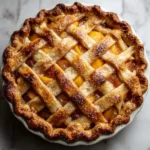
- Fill & Top: Pour filling into chilled crust, mounding slightly higher in center. Dot with 1 tbsp cold butter cut into tiny cubes. Roll smaller dough disk to 11-inch round. For full top crust: place over filling, trim to match bottom overhang, fold edges under, and crimp decoratively with fingers or fork. For lattice: cut into 10–12 strips; weave over filling, trimming ends and folding under bottom edge; crimp. Cut 3–4 steam vents in top (or slash decorative pattern). Brush entire surface with egg wash (1 yolk + 1 tsp cream). Sprinkle generously with turbinado sugar and a tiny pinch of flaky salt.
- Chill & Bake: Refrigerate assembled pie 30 minutes (critical for shape retention). Preheat oven to 425°F (220°C) with rack positioned in lowest third. Place pie on preheated heavy baking sheet (prevents under-browning and catches spills). Bake 20 minutes. Reduce heat to 375°F (190°C); rotate pie. Continue baking 40–55 minutes—until crust is deeply golden brown, bubbling thickly *through vents* (not just around edges), and juices are syrupy, not watery. If edges brown too fast, shield with foil or pie crust shield.
- Cool Completely: Transfer to wire rack. Cool *at least 4 hours*, preferably overnight. This allows filling to fully set—cutting too soon yields runny slices. Resist temptation!
Tips
- Pitting Efficiency: Use a cherry pitter for speed and safety—or repurpose a sturdy paperclip bent into a hook, or a chopstick pressed into stem end to pop pits out cleanly. Save pits for infusing simple syrup or cherry vinegar.
- Chill Discipline: Every chilling step matters: cold fat = flaky layers; cold dough = minimal gluten activation; cold pie before baking = sharp crimp definition and reduced shrinkage.
- Thickener Precision: Measure tapioca starch by weight when possible—volume measurements vary wildly due to settling. Too little = soupy pie; too much = gummy, opaque filling.
- Acid Balance: Taste filling before baking. If cherries are exceptionally sweet, add another ½ tsp lemon juice. If overly tart, add 1 tsp brown sugar—then re-taste.
- Oven Thermometer Essential: Most home ovens run hot or cold. An accurate thermometer ensures proper caramelization and starch gelation.
- Steam Vents Are Non-Negotiable: Under-vented pies explode or steam internally, making crust soggy. Make vents *before* egg wash so they don’t seal shut.
- Baking Sheet Strategy: Always bake on a preheated heavy-duty sheet—radiant heat ensures crisp bottom crust and prevents “wet spot” syndrome.
- Cooling Patience Pays Off: Cutting into a warm pie breaks down the pectin network. A fully cooled pie slices cleanly and holds its shape elegantly on the plate.
- Freezing Success: Unbaked assembled pie freezes beautifully for up to 3 months. Bake from frozen—add 15–20 minutes to initial high-heat phase, then proceed normally. No thawing needed.
- Reviving Leftovers: Reheat individual slices in a 350°F oven for 10–12 minutes—never microwave, which makes crust leathery and filling rubbery.
Variations and Customizations
This recipe serves as a master canvas—adaptable across dietary needs, seasonal availability, and culinary curiosity:
- Vegan Version: Substitute cold coconut oil (refined for neutrality) + vegan butter blend for dairy butter; use flax “egg” (1 tbsp ground flax + 2.5 tbsp water) in crust; replace honey or maple syrup for part of sugar; thicken with arrowroot; brush with almond milk + agave glaze.
- Gluten-Free: Replace all-purpose flour with 1:1 GF blend containing xanthan gum (e.g., King Arthur or Bob’s Red Mill); increase almond flour to 1 cup; add 1 tsp psyllium husk powder for elasticity. Ensure all extracts and thickeners are certified GF.
- Low-Sugar / Diabetic-Friendly: Use erythritol or allulose blended with 1–2 tbsp monk fruit extract; reduce total sweetener by 30%; increase lemon juice and cinnamon for perceived sweetness; thicken with chia seeds (2 tbsp soaked 10 min) or glucomannan.
- Boozy Infusion: Stir 2 tbsp Kirsch, Amaretto, or brandy into filling after maceration. Reduce lemon juice by ½ tsp to balance. Optional: soak 2 tbsp toasted almonds in liquor for 1 hour, then fold into filling.
- Spiced Complexity: Add ¼ tsp freshly grated nutmeg, ⅛ tsp cardamom, or a 1-inch cinnamon stick steeped in warm cherry juice (strained before mixing).
- Texture Contrast: Fold in ⅓ cup chopped dark chocolate (70%), toasted walnuts, or candied ginger during final fold for surprising bursts of flavor and mouthfeel.
- Mini Pies & Hand Pies: Scale down: use 4-inch tart pans or muffin tins (bake 18–22 min at 425°F). For hand pies, roll dough thinner, fill with 2 tbsp filling per pie, crimp with fork, vent, and bake on parchment-lined sheet.
- Crust Alternatives: Try a streusel topping (butter, brown sugar, oats, almond flour, cinnamon) for rustic charm; or a “rustic galette” free-form fold with rosemary-infused crust.
- Fruit Swaps: Works beautifully with sour blackberries, raspberries, or mixed stone fruits—adjust sugar and lemon based on pH testing or taste.
- Savory-Sweet Twist: Add 1 tsp finely minced fresh rosemary or thyme to crust; finish with black pepper and aged balsamic drizzle.
Health Considerations and Nutritional Value
While inherently a celebratory dessert, Cherry Pie with Almond Crust offers notable nutritional advantages over traditional versions—when prepared mindfully:
- Antioxidant Powerhouse: Tart cherries rank among the highest fruit sources of anthocyanins—the potent flavonoids responsible for their deep red hue and linked to reduced inflammation, improved sleep (natural melatonin), and cardiovascular support. One slice (1/8 of 9-inch pie) provides ~15% DV of Vitamin C and significant potassium.
- Almond Flour Benefits: Rich in monounsaturated fats, vitamin E (a fat-soluble antioxidant), magnesium, and plant-based protein—almond flour contributes satiety, blood sugar stabilization, and skin health benefits. It’s naturally gluten-free and low-glycemic compared to wheat flour.
- Reduced Refined Carbs: By using almond flour to replace ~30% of wheat flour, total digestible carbs decrease while fiber and healthy fat increase—supporting slower glucose absorption.
- Lower Sodium Profile: With no added salt beyond a pinch for flavor enhancement, sodium remains minimal (~85mg/slice), especially when using unsalted butter.
- Considerations: Still calorie-dense (approx. 380–420 kcal/slice) due to butter, sugar, and nuts. Those managing diabetes should prioritize low-sugar adaptations and pair with protein (e.g., Greek yogurt) to blunt glycemic response. Gluten-sensitive individuals must verify almond flour purity (cross-contamination risk). Tree nut allergies necessitate complete avoidance—substitute sunflower seed flour or pumpkin seed flour with adjusted hydration.
- Portion Wisdom: Serving size matters—enjoy 1 modest slice (≈150g) alongside herbal tea or sparkling water. Leftovers keep refrigerated 4–5 days; freeze for longer storage without quality loss.
Ingredients
For the Almond Crust (Double Crust)
- 1¼ cups (160g) all-purpose flour, spooned & leveled
- ¾ cup (85g) blanched super-fine almond flour (not almond meal)
- ¼ tsp fine sea salt
- 1 tbsp granulated sugar
- ½ cup (115g) unsalted butter, very cold, cubed
- 2 tbsp (22g) cold vegetable shortening (optional, for extra flakiness)
- 3–4 tbsp ice-cold water
- ½ tsp pure almond extract
- 1 tsp fresh lemon juice
For the Cherry Filling
- 4 cups (680g) pitted tart cherries (fresh, frozen & thawed, or jarred unsweetened)
- ¾ cup (150g) granulated sugar
- ¼ cup (50g) light brown sugar, packed
- ¼ cup (30g) instant tapioca starch (not flour or pearls unless ground)
- 2 tbsp fresh lemon juice
- 1 tsp lemon zest (from 1 organic lemon)
- ¼ tsp pure almond extract
- Pinch of ground cinnamon (optional)
- 1 tbsp cold unsalted butter, diced (for dotting)
For Finishing
- 1 large egg yolk + 1 tsp heavy cream (for egg wash)
- 2–3 tbsp coarse turbinado sugar
- Pinch of flaky sea salt (e.g., Maldon)
Directions
- Chill Components: Place flour, almond flour, salt, and sugar in freezer for 15 minutes. Cube butter and shortening; return to freezer 10 minutes. Chill water, lemon juice, and almond extract.
- Make Crust Dough: In food processor, pulse dry ingredients 3 times. Add cold fats; pulse 12–15 times until pea-sized crumbs form. Drizzle in liquid mixture; pulse just until clumps form. Turn onto parchment; divide into two disks (10 oz and 5 oz). Wrap; refrigerate ≥2 hours (overnight best).
- Prepare Filling: In large bowl, combine cherries, sugars, tapioca, lemon juice/zest, almond extract, and cinnamon. Gently fold; let sit 30–45 min. Drain excess liquid (reserve 1 tbsp if very juicy).
- Roll Bottom Crust: On lightly floured surface, roll larger disk to 12″ round, ⅛” thick. Fold in half; transfer to 9″ deep-dish pie plate. Unfold; press in. Trim to ½” overhang. Chill 15 min.
- Fill & Top: Pour filling in; dot with butter. Roll smaller disk to 11″ round. Place over filling; trim; fold edges under; crimp. Cut 4 steam vents. Brush with egg wash; sprinkle with turbinado sugar and salt.
- Chill & Bake: Refrigerate pie 30 min. Preheat oven to 425°F (220°C) with heavy baking sheet inside. Place pie on hot sheet. Bake 20 min. Reduce heat to 375°F (190°C); bake 40–55 min more until crust is deep golden and filling bubbles thickly through vents.
- Cool & Serve: Cool completely on wire rack (4–12 hours). Serve at room temperature or slightly warmed. Store covered at room temp 2 days, refrigerated 4–5 days, or frozen up to 3 months.
FAQ
- Can I use sweet cherries instead of tart?
- Yes—but reduce sugar by ¼ cup, increase lemon juice to 3 tbsp, and add ½ tsp grated orange zest for balancing acidity. Expect a softer set and sweeter profile.
- Why does my crust shrink during baking?
- Most commonly: dough wasn’t chilled long enough, was stretched while placing in pan, or oven wasn’t preheated properly. Always chill ≥2 hours, avoid stretching, and use cold pie plate.
- My filling is too runny—even after cooling. What went wrong?
- Likely causes: insufficient tapioca (measure by weight), under-baking (filling must bubble *vigorously* for 5+ minutes), or excess liquid not drained pre-filling. Next time, add 1 tsp more tapioca and extend bake time.
- Can I make the crust entirely with almond flour?
- No—almond flour lacks gluten and structure. A minimum of 40% wheat or GF flour is needed for cohesion. 100% almond flour yields a crumbly, greasy, non-lifted crust.
- How do I prevent a soggy bottom crust?
- Preheat baking sheet, blind-bake bottom crust 10 min (with weights) if very juicy, brush bottom with beaten egg white before filling, and ensure filling isn’t overly wet.
- Can I prepare components ahead?
- Absolutely: dough keeps refrigerated 3 days or frozen 3 months; filling (unbaked) lasts 2 days refrigerated; fully assembled unbaked pie freezes beautifully.
- What’s the best way to pit cherries quickly?
- An OXO Good Grips Cherry Pitter is highly efficient. For large batches, use a stainless steel pitter with lever mechanism. Never skip pitting—cherry pits contain amygdalin, which metabolizes to cyanide when crushed or chewed.
- Can I substitute other nut flours?
- Yes—cashew or hazelnut flour work well (toast first for depth), but adjust liquid: walnut flour absorbs more moisture; pistachio flour imparts green hue and earthiness. Avoid coconut flour—it’s highly absorbent and behaves unlike nut flours.
- Is there a way to make this pie lower in fat?
- Reduce butter to ⅓ cup and add 2 tbsp cold applesauce or mashed banana for binding—but expect less flakiness and richer, denser texture. Not recommended for novice bakers.
- Why use almond extract *and* almond flour?
- Almond flour provides texture, nutrition, and subtle background nuttiness; almond extract delivers volatile aromatic compounds (benzaldehyde) that intensify perception of almond flavor—making the pairing synergistic, not redundant.
Summary
Cherry Pie with Almond Crust is a masterclass in balanced contrast—where the bright, complex tartness of premium cherries meets the warm, fragrant richness of a meticulously crafted nut-infused pastry, resulting in a dessert that is simultaneously nostalgic and innovative, rustic and refined.
With its roots in transatlantic culinary tradition and its evolution driven by mindful ingredient choices and technique precision, this pie rewards patience with extraordinary flavor, texture, and versatility—making it not just a seasonal treat, but a timeless centerpiece worthy of every celebration, quiet Sunday, and heartfelt gathering.