Introduction
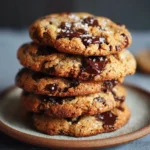
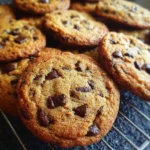
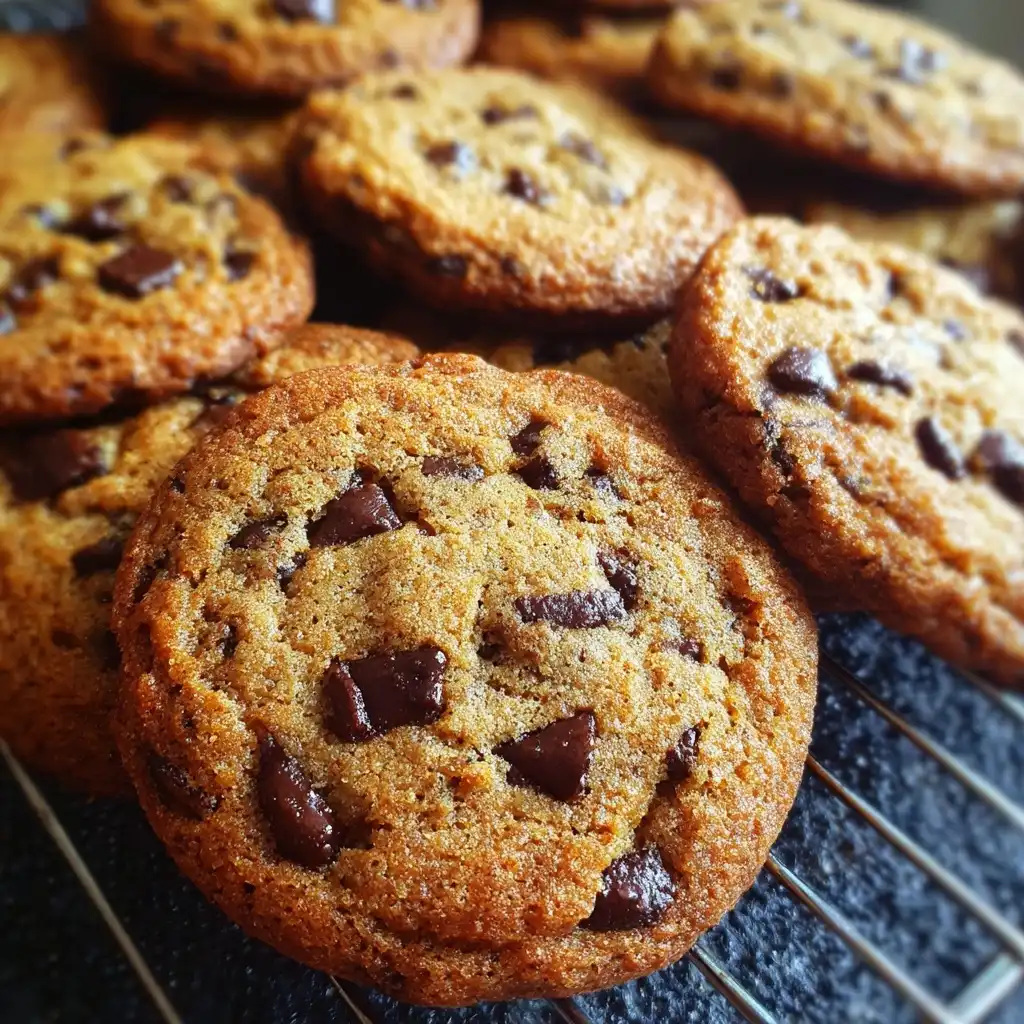
Chewy chocolate chip cookies are more than just a beloved dessert—they’re a cultural touchstone, a nostalgic comfort food, and a timeless baking triumph. Unlike their crisp or cakey cousins, chewy chocolate chip cookies strike the perfect balance: tender, slightly yielding centers with softly caramelized edges, studded generously with melty pockets of rich chocolate. Their signature texture—dense yet supple, moist without being doughy—comes from precise ingredient ratios, thoughtful technique, and an understanding of how ingredients interact at every stage of mixing, chilling, and baking. Whether served warm from the oven with a glass of cold milk, tucked into lunchboxes, gifted in festive tins, or enjoyed as a midnight treat, chewy chocolate chip cookies evoke warmth, memory, and pure, unadulterated joy. This comprehensive guide is designed not only to help you bake exceptional chewy cookies every time—but to deepen your appreciation for the science, history, and soul behind this iconic American classic.
The History
The origin story of the chocolate chip cookie is delightfully serendipitous—and deeply rooted in New England ingenuity. In 1930, Ruth Wakefield, owner of the Toll House Inn in Whitman, Massachusetts, was preparing her popular Butter Drop Do cookies for guests when she ran out of baker’s chocolate. Rather than halt production, she chopped up a Nestlé semi-sweet chocolate bar, expecting it to melt and blend seamlessly into the batter. To her surprise—and the delight of her patrons—the morsels held their shape, creating delightful pockets of gooey chocolate within a soft, buttery cookie. The resulting “Toll House Chocolate Crunch Cookie” became an instant sensation. By 1938, Nestlé struck a landmark deal with Wakefield: they would print her recipe on the wrapper of their newly launched “Nestlé Toll House Semi-Sweet Chocolate Morsels”—the first-ever pre-formed chocolate chips—and in return, Wakefield received a lifetime supply of chocolate. This symbiotic partnership catapulted the cookie into national consciousness. Over decades, countless bakers experimented with techniques—adding corn syrup for chew, substituting brown sugar ratios, chilling dough overnight—to refine that elusive, ideal chew. Today, chewy chocolate chip cookies stand as a testament to culinary improvisation, regional pride, and the enduring power of simple, well-executed ingredients.
Ingredients Breakdown
Every ingredient in a chewy chocolate chip cookie plays a deliberate, functional role—far beyond flavor alone. Understanding *why* each is included empowers bakers to troubleshoot, adapt, and elevate:
- Unsalted Butter (1 cup / 2 sticks / 227g): Provides richness, tenderness, and moisture. Using unsalted butter gives precise control over sodium levels and avoids inconsistencies in salt content found in salted varieties. For optimal chew, butter should be softened—not melted, not greasy—ideally at 65–68°F (18–20°C), allowing proper creaming with sugars to trap air while retaining structure.
- Granulated Sugar (¾ cup / 150g): Adds sweetness, aids in spreading, and contributes to crispness at the edges. Its fine crystals dissolve easily during creaming, helping create a stable, aerated base.
- Packed Brown Sugar (1 cup / 200g, light or dark): The cornerstone of chewiness. Brown sugar contains molasses (3–10% by weight), which adds moisture, acidity (to activate baking soda), and hygroscopic properties—meaning it attracts and retains water, keeping cookies soft and pliable long after cooling. Dark brown sugar yields deeper caramel notes and marginally more chew; light brown offers milder flavor and slightly less moisture.
- Large Eggs (2, room temperature): Act as binders and emulsifiers, contributing structure via proteins and moisture via yolks. Room-temperature eggs incorporate more evenly into the creamed butter-sugar mixture, preventing curdling and ensuring uniform texture.
- Pure Vanilla Extract (2 tsp): Enhances overall aroma and complexity. Alcohol-based vanilla also helps distribute fat-soluble flavor compounds. For best results, use high-quality, alcohol-extracted vanilla—not imitation or paste-only versions.
- All-Purpose Flour (2¼ cups / 280g, spooned & leveled): Provides gluten-forming proteins (glutenin and gliadin) essential for structure. Too much flour leads to toughness; too little causes excessive spread. Spooning and leveling—not scooping—prevents compaction and over-measuring. For enhanced chew, some bakers substitute 1–2 tbsp with bread flour (higher protein) or add 1 tbsp vital wheat gluten.
- Baking Soda (1 tsp): A strong alkali leavener that reacts immediately with acidic components (molasses in brown sugar, yogurt if added, or even natural cocoa acidity) to produce carbon dioxide. This reaction creates lift *and* promotes browning (via Maillard reaction) and spread—both critical for chewy texture and caramelized edges.
- Finely Ground Sea Salt (1 tsp): Not merely for seasoning—salt suppresses bitterness, amplifies sweetness, tightens gluten strands for better elasticity, and balances the richness of butter and chocolate. Fine-grind ensures even distribution; flaky salt is reserved for finishing.
- Chocolate Chips or Chunks (2 cups / 340g): High-fat, high-cocoa-content chocolate performs best. Standard semi-sweet chips contain stabilizers (like soy lecithin and palm oil) that resist melting—ideal for maintaining distinct pockets. For superior flavor and melt, use high-quality chopped chocolate bars (60–70% cacao) with at least 30% cocoa butter. Mix-ins like dark, milk, white, or even ruby chocolate offer nuanced variations. Mini chips increase surface area and distribution; large chunks create dramatic melty zones.
- Optional but Highly Recommended – Corn Syrup (1–2 tbsp): A secret weapon for professional-level chew. Its glucose molecules inhibit sugar crystallization, retain moisture, and add subtle sheen and elasticity. Light corn syrup is neutral; dark adds molasses depth.
Step-by-Step Recipe
- Prepare Your Workspace: Line two large baking sheets with parchment paper or silicone baking mats. Preheat oven to 375°F (190°C). Position racks in upper and lower thirds for even heat circulation. Gather all ingredients and weigh them using a digital kitchen scale for precision—volume measurements introduce significant variability.
- Cream Butter and Sugars: In the bowl of a stand mixer fitted with the paddle attachment (or using a hand mixer), beat softened unsalted butter, granulated sugar, and packed brown sugar on medium speed for 2–3 minutes—until light, fluffy, and pale yellow. Scrape down the bowl halfway through. Proper creaming incorporates microscopic air bubbles that expand in the oven, contributing to lift without dryness.
- Add Wet Ingredients: Add eggs one at a time, beating on medium-low for 30 seconds after each addition until fully incorporated and glossy. Add vanilla and mix just until combined. Avoid overmixing—this develops excess gluten and can lead to toughness.
- Combine Dry Ingredients: In a separate medium bowl, whisk together flour, baking soda, and fine sea salt until fully homogenous. Sifting is optional but recommended if flour has been stored in humid conditions or if lumps are present.
- Incorporate Dry Mixture: Reduce mixer speed to low. Gradually add the dry ingredients in three additions, mixing only until *just* no dry streaks remain—approximately 15–20 seconds per addition. Overmixing at this stage activates gluten excessively, compromising chew and causing dense, tough cookies.
- Fold in Chocolate: Using a flexible silicone spatula, gently fold in chocolate chips or chunks by hand until evenly distributed. This preserves airiness and prevents overworking.
- Chill the Dough (Non-Negotiable for Chew): Cover bowl tightly with plastic wrap and refrigerate for *at least 2 hours*, preferably 24–48 hours. Chilling solidifies butter, slows spread, allows flour to fully hydrate (reducing raw flour taste), and concentrates flavors. Crucially, it enables sugar syrups (especially from brown sugar and corn syrup) to absorb moisture, resulting in denser, moister interiors and crinkled, caramelized tops.
- Scoop and Portion: Use a #24 or 1.5-oz ice cream scoop (≈3 tbsp per cookie) for uniform size and consistent baking. Place dough balls at least 3 inches apart on prepared sheets—cookies will spread significantly.
- Bake Strategically: Bake one sheet at a time in the center of the preheated oven for 10–12 minutes—or until edges are deeply golden brown and set, while centers appear soft, puffy, and slightly underdone. Rotate pan front-to-back at 6 minutes. The cookies will continue to set as they cool. For ultra-chewy results, remove at the 10-minute mark; for slightly firmer (but still chewy) cookies, go to 11½ minutes.
- Cool Completely on Sheet: Remove from oven and let cookies rest on baking sheet for 8–10 minutes. This allows residual heat to finish cooking interiors and sets structure without collapsing. Then, carefully transfer to a wire rack to cool completely—about 30 minutes. Resist eating warm—they’re fragile and overly soft; optimal chew emerges as they cool and moisture redistributes.
Tips
- Butter Temperature Is Everything: Too warm? Cookies spread into thin, greasy discs. Too cold? Dough won’t cream properly, leading to dense, crumbly results. Test by pressing a finger gently into the block—it should yield slightly with no indentation remaining.
- Weigh, Don’t Scoop: A cup of flour can range from 120g (scooped and packed) to 155g (dip-and-sweep)—a 30% variance! Use grams for reproducible chew every time.
- Chill Dough in Log Form: For convenience and portion control, press dough into a 2-inch-diameter log, wrap tightly in parchment + plastic, and freeze for up to 3 months. Slice ½-inch thick rounds straight from freezer—bake 1–2 minutes longer.
- Rotate Pans Mid-Bake: Home ovens have hot spots. Rotating ensures even browning and prevents one side from becoming overly crisp while the other stays doughy.
- Underbake Intentionally: Chewy cookies are *meant* to look slightly underdone in the center when removed from the oven. If they look fully set, they’ll be firm—not chewy—once cooled.
- Cool on the Sheet: Skipping this step causes cookies to lose structural integrity. The residual heat continues gentle cooking while allowing starches to set and moisture to migrate inward.
- Store Smart: Keep cooled cookies in an airtight container at room temperature for up to 5 days. Add a slice of plain white bread—it releases moisture slowly and keeps cookies soft. For longer storage, freeze baked cookies for up to 3 months (thaw at room temp) or freeze dough balls for easy baking anytime.
- Use Oven Thermometer: Built-in oven thermostats are notoriously inaccurate—up to ±25°F. An inexpensive oven thermometer ensures precise temperature control, directly impacting spread, browning, and chew development.
Variations and Customizations
The chewy chocolate chip cookie is a remarkably versatile canvas—easily adapted for dietary needs, seasonal inspiration, global flavors, or playful experimentation—without sacrificing its signature texture:
- Oatmeal Chewy Chocolate Chip: Replace 1 cup flour with 1 cup old-fashioned rolled oats (not quick oats). Add ½ tsp ground cinnamon and ¼ tsp nutmeg. Oats add fiber, heartiness, and extra chew—especially when toasted beforehand.
- Double Chocolate Chewy: Add ¼ cup unsweetened cocoa powder (Dutch-process preferred) to dry ingredients and swap ¼ cup flour for it. Use dark chocolate chunks (70%) for contrast. The cocoa deepens flavor and enhances moisture retention.
- Peanut Butter Swirl: After scooping dough, press ½ tsp creamy peanut butter into the center of each ball and gently fold edges over to seal. Or swirl 1 tbsp PB into each before chilling. Natural, oily peanut butter works best—avoid stabilized brands with palm oil.
- Sea Salt & Dark Chocolate: Use 72% dark chocolate chunks and finish each warm cookie with a flake of Maldon sea salt. The salt cuts richness and heightens chocolate’s fruity, bitter notes.
- Brown Butter Version: Brown 1 cup butter in a saucepan until nutty and amber, then cool completely (refrigerate 30 min) before creaming. Adds profound depth, caramel complexity, and subtle toasty chew.
- Gluten-Free Chewy: Substitute AP flour with a 1:1 GF blend containing xanthan gum (e.g., King Arthur or Bob’s Red Mill). Add 1 tbsp ground psyllium husk or chia seeds mixed with 2 tbsp water (let sit 5 min) to mimic gluten’s binding and elasticity.
- Vegan Chewy: Use vegan butter (Miyoko’s or Earth Balance), flax eggs (2 tbsp ground flax + 6 tbsp water, rested 10 min), and dairy-free chocolate. Increase brown sugar by 2 tbsp and add 1 tbsp maple syrup to compensate for lost moisture and richness.
- Spiced Holiday Chewy: Add 1 tsp ginger, ½ tsp cardamom, ¼ tsp cloves, and 1 tbsp molasses (reduce brown sugar by 1 tbsp). Fold in crystallized ginger pieces and white chocolate.
- Everything Bagel Chewy (Savory-Sweet): Omit chocolate. Add 2 tbsp everything bagel seasoning, ¼ cup grated aged cheddar, and 2 tbsp chopped scallions. Use dark chocolate *shavings* as garnish for contrast.
Health Considerations and Nutritional Value
While chewy chocolate chip cookies are inherently indulgent, mindful ingredient choices and portion awareness allow for enjoyment within a balanced lifestyle. A standard 3-tablespoon cookie (approx. 35g) made with the base recipe provides:
- Calories: ~180–210 kcal
- Total Fat: 10–12g (6–7g saturated)
- Carbohydrates: 22–25g (14–16g sugars, primarily from brown sugar and chocolate)
- Protein: 2–3g
- Fiber: 0.5–1g (increases to 2–3g with oat or whole wheat variations)
- Sodium: 120–160mg
Nutritional Highlights & Considerations:
- Antioxidants: Dark chocolate (70%+) delivers flavanols linked to cardiovascular and cognitive benefits—though processing and added sugar reduce net impact.
- Molasses Benefits: Brown sugar’s molasses contributes trace minerals—calcium, potassium, iron, and magnesium—though amounts per cookie are minimal.
- Healthy Fats: Butter contains conjugated linoleic acid (CLA) and fat-soluble vitamins (A, D, E, K2), especially when sourced from grass-fed cows.
- Refined Sugar Awareness: Combined granulated and brown sugar contribute ~15g per cookie. Consider reducing total sugar by 1–2 tbsp and enhancing flavor with espresso powder, cinnamon, or extra vanilla.
- Portion Control Matters: The 3-tbsp scoop yields optimal chew and satiety. Smaller scoops spread more and become crisp; larger ones risk underbaked centers.
- Allergen Notes: Contains dairy, eggs, wheat/gluten, and soy (in most chocolate). Always verify labels for shared equipment warnings if managing severe allergies.
- No “Healthified” Magic: Substituting coconut sugar, almond flour, or applesauce often compromises chew, spread, and browning. Focus instead on quality ingredients, mindful portions, and occasional enjoyment—not guilt-free reformulation.
Ingredients
- 1 cup (227g) unsalted butter, softened to 65–68°F (18–20°C)
- ¾ cup (150g) granulated sugar
- 1 cup (200g) packed light or dark brown sugar
- 2 large eggs, room temperature
- 2 teaspoons pure vanilla extract
- 2¼ cups (280g) all-purpose flour, spooned and leveled
- 1 teaspoon baking soda
- 1 teaspoon fine sea salt
- 2 cups (340g) semi-sweet chocolate chips or high-quality chopped chocolate (60–70% cacao)
- (Optional but recommended) 1 tablespoon light corn syrup
Directions
- Line two large baking sheets with parchment paper or silicone baking mats. Preheat oven to 375°F (190°C) with racks in upper and lower thirds.
- In the bowl of a stand mixer fitted with paddle attachment, beat butter, granulated sugar, and brown sugar on medium speed for 2–3 minutes until light, fluffy, and pale. Scrape bowl halfway.
- Add eggs one at a time, beating 30 seconds after each until fully incorporated and glossy. Add vanilla; mix just to combine.
- In a separate bowl, whisk together flour, baking soda, and salt until uniform.
- Reduce mixer speed to low. Gradually add dry ingredients in three additions, mixing only until no dry streaks remain—do not overmix.
- Fold in chocolate chips by hand with a silicone spatula until evenly dispersed.
- Cover bowl tightly with plastic wrap and refrigerate dough for at least 2 hours—or ideally 24–48 hours—for maximum chew development.
- Using a 1.5-ounce (3 tbsp) ice cream scoop, portion dough onto prepared sheets, spacing at least 3 inches apart.
- Bake one sheet at a time in center rack for 10–12 minutes—until edges are deeply golden and set, centers soft and puffed. Rotate pan at 6 minutes.
- Let cookies cool on baking sheet for 8–10 minutes, then transfer to wire rack to cool completely (≈30 minutes).
- Store in an airtight container at room temperature for up to 5 days—or freeze baked cookies or dough balls for longer preservation.
FAQ
- Why are my cookies flat and greasy?
- Likely causes: butter too warm, insufficient chilling, too much granulated sugar relative to brown sugar, or expired baking soda. Ensure butter is cool-room temp, chill dough ≥2 hrs, and verify leavener freshness by mixing ¼ tsp with 2 tsp vinegar—if it doesn’t bubble vigorously, replace it.
- Can I make these gluten-free and still get chew?
- Yes—with caveats. Use a reputable 1:1 GF blend *with xanthan gum*, add 1 tbsp ground psyllium husk + 2 tbsp water (rested 5 min), and chill dough 3+ hours. Expect slightly denser, less elastic chew—but still delicious and cohesive.
- Why do you recommend chilling for 24 hours instead of just 2?
- Extended chilling allows enzymatic activity (from flour’s natural amylase) to break down starches into simpler sugars—enhancing browning, flavor complexity, and moisture retention. It also lets gluten networks relax, yielding more tender, cohesive chew.
- Can I use melted butter instead of softened?
- You’ll get a different cookie—chewier in a fudgy, dense way—but less airy and more prone to spreading. For *classic* chewy-chewy (tender yet resilient), softened butter + proper creaming remains unmatched.
- What’s the best chocolate for chewy cookies?
- High-cocoa chocolate with >30% cocoa butter (e.g., Valrhona, Guittard, Callebaut) melts luxuriously while holding shape. Avoid “baking chips” with excessive stabilizers—they can seize or resist melting entirely. Chop bars yourself for irregular, artisanal pockets.
- Can I double the batch?
- Absolutely—just ensure your mixer bowl isn’t overfilled (no more than ⅔ full). Mix in two batches if needed. Chill dough in two separate containers to ensure even cooling.
- My cookies hardened after 2 days. How do I keep them chewy?
- Add a slice of fresh white bread to the airtight container—the bread releases moisture slowly. Alternatively, microwave individual cookies for 5–8 seconds before serving to revive softness.
- Can I bake frozen dough balls?
- Yes! Place frozen dough on parchment-lined sheet, let sit at room temp 5–10 minutes, then bake—add 1–2 minutes to original time. No need to thaw fully.
- Is there a way to reduce sugar without ruining chew?
- Reduce total sugar by up to ¼ cup (e.g., ½ cup granulated + ¾ cup brown). Compensate with 1 tsp espresso powder (enhances perception of sweetness) and extra ½ tsp vanilla. Texture remains excellent.
- Why do my cookies spread unevenly?
- Inconsistent scoop size, uneven oven heat, or baking sheets placed too close together. Use a spring-release scoop, rotate pans, and leave 2-inch gaps between sheets in the oven.
Summary
Chewy chocolate chip cookies achieve their legendary texture through the synergistic interplay of brown sugar’s moisture-retaining molasses, properly creamed butter for aeration, strategic chilling to control spread and deepen flavor, and precise baking to preserve soft centers while caramelizing edges.
This guide empowers you—not just to follow a recipe—but to understand the *why* behind each step, adapt confidently to preferences and constraints, and bake cookies that are consistently tender, richly flavored, irresistibly chewy, and deeply satisfying—batch after batch, year after year.