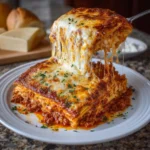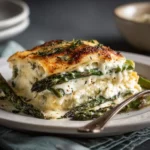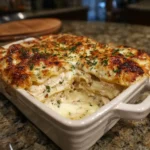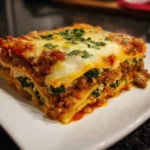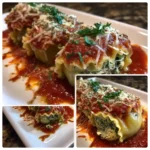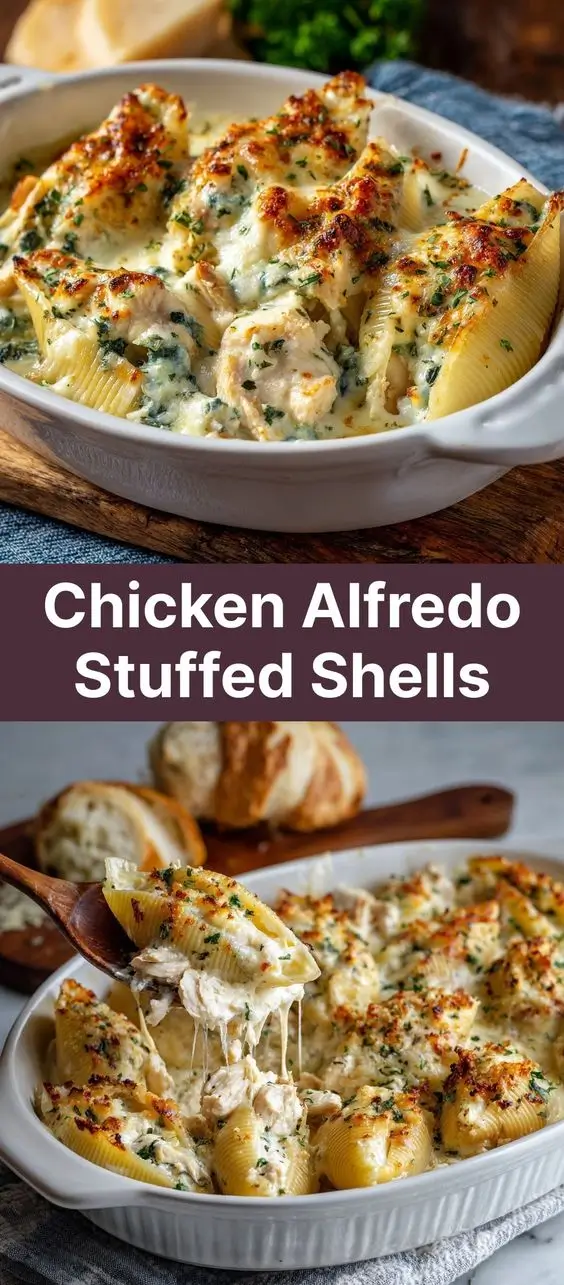
Chicken Alfredo Stuffed Shells: A Creamy, Comforting Italian Classic
The History of Chicken Alfredo Stuffed Shells
The roots of Chicken Alfredo Stuffed Shells trace back to the fusion of Italian culinary tradition and Americanized Italian comfort food. While traditional stuffed shells originated in Southern Italy as a way to use leftover ricotta and herbs inside jumbo pasta shells, the concept evolved dramatically when Italian immigrants brought their recipes to the United States.
Alfredo sauce itself—known in Italy as Fettuccine al Burro—was popularized in Rome during the early 20th century by Alfredo di Lelio, who created a rich butter-and-Parmesan sauce to entice his pregnant wife’s appetite. Over time, American kitchens embraced and adapted this luxurious sauce, incorporating heavy cream, garlic, and other seasonings to create the modern “Alfredo” sauce we know today.
Combining these two beloved elements—stuffed shells and Alfredo sauce—led to the creation of Chicken Alfredo Stuffed Shells. This dish emerged in mid-20th century American-Italian cuisine, particularly in regions like New York, New Jersey, and Philadelphia, where hearty casseroles became weekend dinner staples. The addition of grilled or rotisserie chicken elevated the dish from a simple vegetarian meal into a protein-packed centerpiece, perfect for family dinners, potlucks, and holiday gatherings.
Today, Chicken Alfredo Stuffed Shells are celebrated not only for their indulgent flavor but also for their versatility. They appear on restaurant menus across the U.S., often baked with a golden breadcrumb topping or drizzled with extra sauce. Whether served at Sunday supper or featured at an elegant dinner party, this dish represents the best of creamy, cheesy, comforting food with a satisfying bite.
Ingredients Breakdown: What Makes This Dish Irresistible?
The magic of Chicken Alfredo Stuffed Shells lies in its layers of rich, complementary flavors. Each ingredient plays a vital role in creating a harmonious blend of textures and tastes—from the tender pasta shell to the velvety filling and bubbling cheese topping.
Pasta Shells (Jumbo Size)
Jumbo pasta shells are the foundation of this dish. These large, curved noodles are specifically designed to hold generous fillings. Made from durum wheat semolina, they provide just enough structure to stay intact during boiling and baking while remaining tender to the bite. Their cup-like shape ensures that every shell is packed full of savory goodness.
Chicken (Cooked and Shredded)
High-quality cooked chicken adds lean protein and depth to the stuffing. Rotisserie chicken is a popular choice due to its convenience and juicy texture, but grilled, poached, or baked chicken breasts work equally well. For optimal flavor, season the chicken with salt, pepper, garlic powder, and herbs before cooking. The meat should be finely shredded so it blends seamlessly into the creamy mixture.
Ricotta Cheese
Ricotta brings a light, slightly sweet creaminess to the stuffing. Unlike heavier cheeses, ricotta has a delicate texture that whips easily into the filling without making it dense. Whole-milk ricotta is recommended for maximum richness, though part-skim versions can be used for a lighter alternative.
Mozzarella Cheese
Freshly shredded mozzarella melts beautifully, creating gooey pockets throughout the dish. Low-moisture mozzarella works best because it doesn’t release excess water during baking. Some recipes also incorporate small cubes of fresh mozzarella for bursts of milky flavor.
Parmesan Cheese
Parmigiano-Reggiano or aged Parmesan provides a sharp, nutty contrast to the mild ricotta and mozzarella. Grated finely, it enhances both the filling and the topping, adding umami and helping form a golden crust when baked.
Alfredo Sauce
The star of the show! Homemade or high-quality store-bought Alfredo sauce coats everything in luxurious creaminess. Traditional Alfredo consists of butter, heavy cream, garlic, and Parmesan cheese, simmered until thick and silky. Some variations include cream cheese or sour cream for added tang and body.
Eggs
One or two eggs act as a binder, holding the cheese and chicken mixture together so it doesn’t ooze out during baking. They also contribute to a custard-like consistency in the filling once cooked.
Garlic and Seasonings
Freshly minced garlic infuses the filling with aromatic warmth. Common seasonings include dried basil, oregano, parsley, onion powder, salt, and black pepper. Fresh herbs like chopped parsley or chives can be stirred in at the end for brightness.
Optional Add-ins
- Spinach: Sautéed or thawed frozen spinach adds color, nutrients, and earthy flavor.
- Mushrooms: Finely diced sautéed mushrooms enhance the savory profile.
- Sun-dried tomatoes: Chopped for a tangy, chewy contrast.
- Bacon or pancetta: Crumbled for smoky depth.
- Red pepper flakes: For a touch of heat.
Topper Options
To finish, many bakers sprinkle additional mozzarella and Parmesan on top before broiling. Others add seasoned breadcrumbs, panko, or crushed crackers for crunch. A final drizzle of olive oil helps achieve a perfectly browned surface.
Step-by-Step Recipe: How to Make Chicken Alfredo Stuffed Shells
Follow this detailed guide to create a flawless batch of Chicken Alfredo Stuffed Shells—creamy, cheesy, and utterly satisfying.
Preparation Time:
30 minutes | Cooking Time: 45 minutes | Total Time: 1 hour 15 minutes
Servings: 6–8 | Dietary Info: Contains dairy, gluten, eggs, poultry
Ingredients
- 20–24 jumbo pasta shells
- 2 cups cooked, shredded chicken (about 2 large breasts or 1 rotisserie chicken)
- 15 oz (1.9 cups) whole-milk ricotta cheese
- 2 cups shredded mozzarella cheese, divided
- 1 cup grated Parmesan cheese, divided
- 2 large eggs
- 2 cloves garlic, minced
- 1 tsp dried parsley
- 1 tsp dried basil
- ½ tsp onion powder
- Salt and freshly ground black pepper to taste
- 3 cups homemade or premium store-bought Alfredo sauce (plus extra for drizzling)
- ½ cup fresh spinach, chopped (optional)
- ½ cup sun-dried tomatoes, chopped (optional)
- ½ cup breadcrumbs or panko (optional, for topping)
- 1 tbsp olive oil (for drizzling)
Directions
- Preheat Oven & Prepare Baking Dish:
Preheat your oven to 375°F (190°C). Lightly grease a 9×13-inch baking dish with non-stick spray or softened butter. Spread about ½ cup of Alfredo sauce evenly across the bottom to prevent sticking and add moisture. - Cook the Pasta Shells:
Bring a large pot of salted water to a boil. Add the jumbo shells and cook according to package instructions—usually 9–11 minutes—until al dente (firm to the bite). Be careful not to overcook, as they will continue softening in the oven. Drain and rinse under cool water to stop cooking. Lay the shells flat on a clean kitchen towel or parchment paper to dry slightly. - Prepare the Filling:
In a large mixing bowl, combine ricotta cheese, 1½ cups mozzarella, ¾ cup Parmesan, eggs, minced garlic, parsley, basil, onion powder, salt, and pepper. Mix thoroughly using a spatula or electric mixer on low speed. Fold in the shredded chicken and any optional ingredients like spinach or sun-dried tomatoes. Taste and adjust seasoning if needed. - Stuff the Shells:
Using a spoon or piping bag, carefully fill each cooled pasta shell with approximately 2 tablespoons of the chicken-cheese mixture. Place them seam-side up in the prepared baking dish, arranging snugly but not overlapping. You should fit all 20–24 shells comfortably. - Add Alfredo Sauce:
Pour the remaining 2½ cups of Alfredo sauce evenly over the stuffed shells. Use the back of a spoon to gently spread it, ensuring all shells are covered. Avoid pouring directly onto one spot to maintain even distribution. - Add Topping (Optional):
Sprinkle the remaining ½ cup mozzarella and ¼ cup Parmesan over the top. For extra crunch, mix breadcrumbs or panko with a little melted butter or olive oil and scatter over the cheese layer. - Bake Until Golden and Bubbly:
Cover the dish loosely with aluminum foil (tented to avoid touching the cheese). Bake for 25 minutes. Remove the foil and bake uncovered for another 15–20 minutes, or until the sauce is bubbling around the edges and the cheese is golden brown. - Broil for Finish (Optional):
For a deeper golden top, switch the oven to broil for 2–3 minutes. Watch closely to prevent burning. - Rest Before Serving:
Let the stuffed shells rest for 10 minutes after removing from the oven. This allows the filling to set and makes serving easier without spillage. - Serve Warm:
Garnish with fresh chopped parsley, a drizzle of warm Alfredo sauce, or a sprinkle of red pepper flakes. Serve alongside garlic bread, Caesar salad, or steamed vegetables.
Pro Tips for Perfect Chicken Alfredo Stuffed Shells
- Don’t Overcook the Shells: Al dente is key. Mushy shells break apart when handling. Test one shell a minute before the suggested time.
- Cool Shells Before Stuffing: Hot shells melt the cheese prematurely and make the filling runny. Rinsing in cold water stops cooking and cools them quickly.
- Use Room-Temperature Ricotta: Cold ricotta is harder to mix and may result in lumps. Let it sit out for 30 minutes before using.
- Make Ahead Friendly: Assemble the dish up to 24 hours in advance, cover tightly, and refrigerate. Add 10–15 minutes to baking time if starting cold.
- Freeze for Later: Unbaked stuffed shells freeze exceptionally well. Wrap the entire dish in plastic and foil; freeze for up to 3 months. Thaw overnight before baking.
- Boost Flavor: Sauté garlic in butter before adding to the filling for deeper aroma. Or infuse the Alfredo sauce with fresh thyme or rosemary.
- Prevent Dryness: Ensure there’s enough sauce covering the shells. If concerned, reserve extra sauce to serve on the side.
- Pipe for Precision: Transfer the filling to a piping bag or zip-top bag with a corner snipped off for neater, faster stuffing.
- Grease the Pan Well: Prevents sticking and eases cleanup. Glass or ceramic dishes work better than metal for even heat distribution.
- Double the Batch: These reheat beautifully and make excellent leftovers. Consider doubling the recipe for future meals.
Variations and Customizations
Chicken Alfredo Stuffed Shells are highly adaptable. Here are creative twists to suit different tastes and dietary needs:
Vegetarian Version
Omit the chicken and boost the filling with sautéed mushrooms, zucchini, bell peppers, artichoke hearts, and extra spinach. Add walnuts or pine nuts for crunch and plant-based protein.
Gluten-Free Option
Use certified gluten-free jumbo pasta shells (available from brands like Barilla, Jovial, or Bionaturae). Verify that your Alfredo sauce is gluten-free (many store-bought versions contain flour as a thickener).
Dairy-Free/Lighter Alternative
Swap ricotta with dairy-free ricotta (cashew-based), mozzarella with vegan shreds, and use a plant-based Alfredo sauce made from blended cashews, nutritional yeast, and unsweetened almond milk. Reduce fat by using low-fat cheeses, though texture may be less creamy.
Spicy Kick
Incorporate diced jalapeños, crushed red pepper flakes, or a dash of hot sauce into the filling. Top with sliced banana peppers or a spicy arrabbiata sauce swirl before baking.
Mediterranean Twist
Add kalamata olives, roasted red peppers, crumbled feta, and oregano. Drizzle with pesto after baking instead of extra Alfredo.
Breakfast-for-Dinner Style
Add crumbled cooked bacon or sausage and a pinch of smoked paprika. Serve with a poached egg on top for brunch lovers.
Pumpkin Alfredo Fusion (Seasonal)
Mix pure pumpkin puree into the Alfredo sauce with warm spices like nutmeg and cinnamon for a fall-inspired version. Pairs wonderfully with sage in the filling.
Seafood Variation
Replace chicken with flaked cooked shrimp or lump crab meat for a luxurious twist. Use lemon zest and white wine in the Alfredo sauce for brightness.
Health Considerations and Nutritional Value
While undeniably decadent, Chicken Alfredo Stuffed Shells can be enjoyed as part of a balanced diet with mindful modifications.
Nutritional Profile (Per Serving, Approximate – based on 8 servings)
- Calories: 450–550 kcal
- Protein: 25–30g (excellent source from chicken, eggs, and cheese)
- Fat: 28–35g (mostly saturated from dairy; can be reduced with lower-fat substitutes)
- Carbohydrates: 30–35g (primarily from pasta; complex carbs for sustained energy)
- Fiber: 2–3g (can be increased with spinach or whole-grain pasta)
- Calcium: ~30% DV (from dairy products)
- Sodium: 800–1200mg (moderate to high; reduce by using low-sodium cheese and sauce)
Health Benefits
- High-Quality Protein: Supports muscle repair and satiety.
- Calcium-Rich: Promotes bone health.
- B-Vitamins: Eggs and chicken provide B12, niacin, and riboflavin for metabolism and nerve function.
- Energy Boost: Ideal post-workout or for growing children needing calorie-dense meals.
Considerations
- Saturated Fat: Heavy cream and full-fat cheese contribute to higher cholesterol levels. Limit portion size or choose lighter alternatives.
- Sodium Content: Store-bought Alfredo sauce and cheeses can be high in salt. Opt for homemade sauce and reduced-sodium options.
- Portion Control: One or two shells with a side salad can make a satisfying yet moderate meal.
- Allergens: Contains common allergens: dairy, eggs, gluten, and poultry. Always label when serving guests.
Ways to Lighten the Dish
- Use part-skim ricotta and low-moisture mozzarella.
- Substitute half the Alfredo sauce with steamed cauliflower blended into a creamy sauce.
- Use whole wheat or legume-based pasta for added fiber and protein.
- Reduce cheese quantity by 25% and increase herbs for flavor.
- Bake in individual ramekins to control portions.
Frequently Asked Questions (FAQ)
Can I make Chicken Alfredo Stuffed Shells ahead of time?
Yes! You can assemble the entire dish up to 24 hours in advance. Cover tightly with plastic wrap and refrigerate. When ready to bake, add 10–15 minutes to the cooking time since it starts cold.
Can I freeze stuffed shells?
Absolutely. Freeze unbaked stuffed shells for up to 3 months. Wrap the dish in plastic and foil to prevent freezer burn. Thaw in the refrigerator overnight before baking. You may need to add 10–20 minutes to the baking time.
What can I use instead of ricotta?
Cottage cheese (blended until smooth) is a common substitute. Greek yogurt or mascarpone can also work, though they alter the texture and flavor slightly.
Why did my shells crack or split?
This usually happens if the shells were overcooked or handled roughly. Cook just until al dente and drain gently. Also, ensure the filling isn’t too dry, which can cause cracking during baking.
How do I reheat leftovers?
Reheat in the oven at 350°F (175°C) for 15–20 minutes, covered with foil. Microwaving works but can make shells rubbery. Add a splash of milk or extra Alfredo sauce to retain moisture.
Can I use canned chicken?
You can, but fresh or rotisserie chicken tastes far superior. Canned chicken tends to be drier and less flavorful. If using canned, drain well and consider marinating briefly in Alfredo sauce before mixing.
Is it possible to make this gluten-free?
Yes. Use gluten-free jumbo shells and confirm that your Alfredo sauce is gluten-free (some thickened with flour aren’t). Brands like Barilla offer reliable GF options.
Can I make a vegan version?
Yes! Use plant-based ricotta (cashew or tofu-based), vegan mozzarella shreds, and dairy-free Alfredo sauce. Replace eggs with flax eggs (1 tbsp ground flax + 2.5 tbsp water per egg).
How many shells per person?
Plan for 3–4 stuffed shells per adult serving. Children may eat 1–2. Serve with sides to stretch the meal further.
Can I use regular lasagna noodles instead?
Technically yes—you could cut them into strips and roll them around the filling (like cannelloni). But jumbo shells are ideal for ease and presentation.
Summary
Chicken Alfredo Stuffed Shells combine tender jumbo pasta, a rich blend of ricotta, chicken, and Parmesan, all smothered in velvety Alfredo sauce and baked to golden perfection.
A comforting, crowd-pleasing casserole that’s perfect for weeknight dinners, holidays, or meal prep—with endless possibilities for customization and indulgence.