Introduction
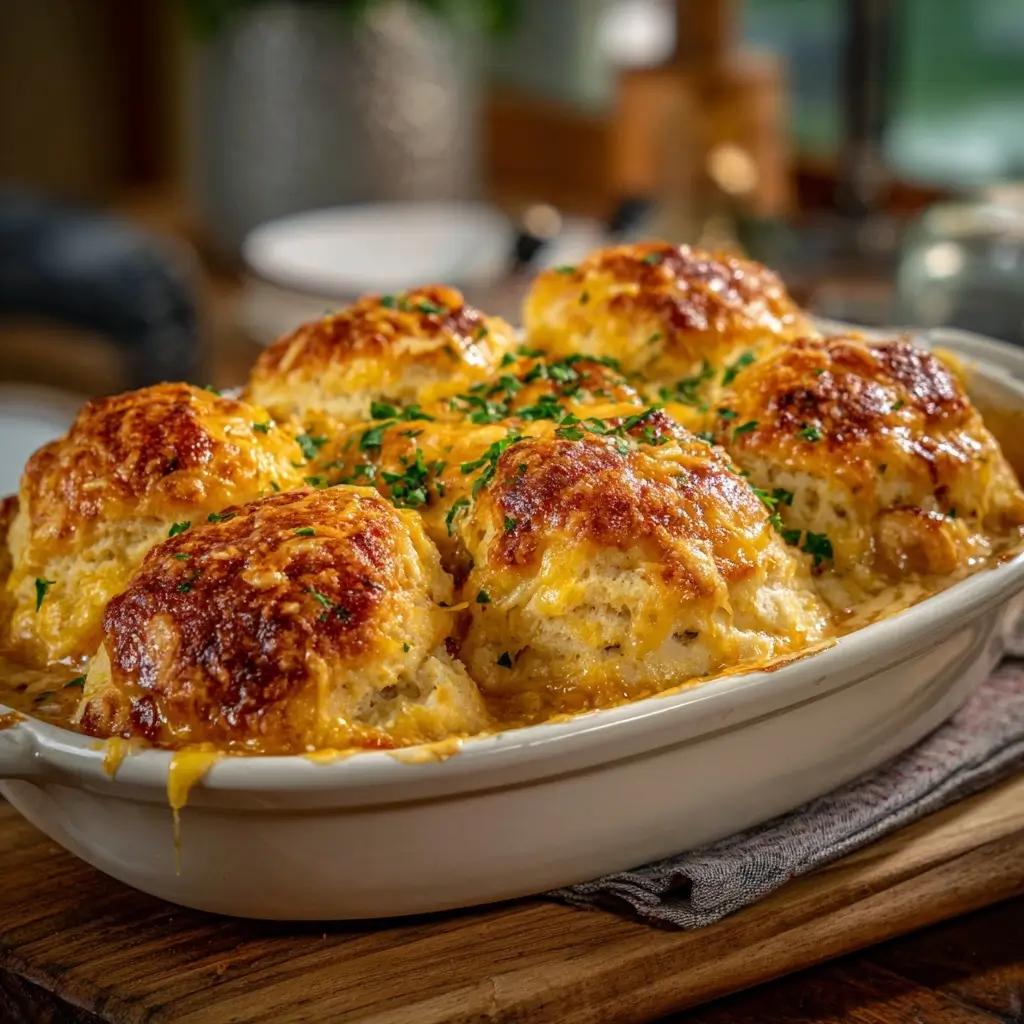
The Chicken Biscuit Bake is a beloved American comfort food casserole that marries tender, savory chicken with flaky, buttery biscuits—all baked together into one cohesive, golden-brown, soul-warming dish. Unlike traditional fried chicken and separate biscuits served on the side, this hearty bake transforms both elements into a unified, oven-baked masterpiece where the biscuits rise luxuriously over and around seasoned chicken in a rich, creamy, herb-infused sauce. It’s the kind of dish that fills kitchens with the irresistible aroma of baking butter and thyme, evokes nostalgic Sunday suppers, and satisfies even the most discerning appetites. Whether served at family gatherings, potlucks, holiday brunches, or as a make-ahead weeknight dinner, the Chicken Biscuit Bake delivers convenience without compromise—offering restaurant-quality flavor with home-kitchen simplicity.
The History
The origins of the Chicken Biscuit Bake are deeply rooted in Southern U.S. culinary tradition, though its evolution reflects broader American home-cooking ingenuity across the 20th century. While biscuits themselves trace back to colonial adaptations of British hardtack and scone-like quick breads—popularized in the South due to the region’s abundant soft-wheat flour and dairy—the concept of layering or topping savory proteins with biscuit dough emerged more prominently during the Great Depression and World War II eras. Resourceful home cooks sought economical, filling meals using pantry staples: leftover roasted or boiled chicken, canned cream soups (like condensed cream of mushroom or celery), evaporated milk, and buttermilk biscuit mixes (such as Bisquick, introduced by General Mills in 1930). Early versions appeared in community cookbooks, church bulletins, and regional newspapers under names like “Chicken and Biscuit Casserole,” “Biscuit-Topped Chicken Pie,” or “Southern Chicken Skillet Bake.” By the 1950s and ’60s, the dish gained national traction through televised cooking shows, Betty Crocker publications, and the rise of the “dump-and-bake” casserole culture—emphasizing ease, versatility, and crowd-pleasing appeal. Today, modern interpretations honor those humble beginnings while embracing gourmet upgrades: artisanal buttermilk biscuits, organic free-range chicken, house-made white gravy, and globally inspired seasonings—proving that this timeless bake continues to evolve without losing its comforting heart.
Ingredients Breakdown
Every exceptional Chicken Biscuit Bake begins with thoughtful, high-quality ingredients—each playing a distinct role in texture, moisture, flavor balance, and structural integrity. Below is an in-depth analysis of each core component:
- Chicken: Boneless, skinless chicken breasts or thighs (thighs preferred for superior tenderness and juiciness) provide lean protein with mild flavor that readily absorbs seasonings. Rotisserie chicken is a popular shortcut—but always shred it while warm and gently pat dry to prevent excess moisture from breaking the sauce.
- Aromatics & Vegetables: Yellow onions, celery, and carrots (a classic mirepoix) form the aromatic foundation—sautéed until softened to build depth. Garlic adds pungent warmth, while optional additions like diced red bell pepper or leeks lend color and subtle sweetness.
- Thickening Agent: All-purpose flour is traditionally used to create a roux (with butter) for a velvety, stable gravy. Cornstarch or arrowroot can substitute for gluten-free versions, though they require slurry preparation and careful tempering to avoid lumping.
- Liquid Components: A combination of low-sodium chicken broth (for savory umami), whole milk or half-and-half (for richness and tenderness), and a splash of dry white wine or apple cider vinegar (for brightness and acidity to cut through fat) ensures a well-rounded, non-cloying sauce. Evaporated milk offers concentrated creaminess without curdling at high heat.
- Herbs & Seasonings: Fresh thyme and rosemary impart earthy, woodsy notes; poultry seasoning (a blend of sage, marjoram, thyme, nutmeg, and black pepper) ties everything together. Dijon mustard adds tang and emulsifying power, while a pinch of cayenne or smoked paprika introduces gentle warmth or smokiness.
- Biscuit Topping: Homemade buttermilk biscuits deliver unmatched flakiness and buttery aroma. Key variables include cold butter (cut into pea-sized pieces), buttermilk temperature (ice-cold), minimal mixing (to prevent gluten development), and proper resting time before baking. Drop-biscuit variations use a looser batter for rustic, crown-like peaks; rolled-and-cut biscuits offer elegant uniformity. For dietary needs, gluten-free flour blends with xanthan gum, vegan butter, and plant-based buttermilk (made with lemon juice + almond milk) yield surprisingly faithful results.
- Finishing Touches: Grated sharp cheddar or Gruyère stirred into the filling adds savory depth; a brushed top of melted butter, coarse sea salt, and flaky finishing salt enhances crust texture and flavor. Fresh parsley or chives sprinkled post-bake contribute freshness and visual contrast.
Step-by-Step Recipe
- Prep & Preheat: Position oven rack in the center position. Preheat oven to 425°F (220°C). Lightly grease a deep 9×13-inch ceramic or metal baking dish (or two 8×8-inch dishes for portion control) with unsalted butter or nonstick spray. Line edges with parchment paper overhang for easier lifting and serving.
- Prepare the Chicken: If using raw chicken, season generously with salt, black pepper, garlic powder, and smoked paprika. Sear in a large skillet over medium-high heat with 1 tbsp olive oil until golden and cooked through (165°F internal temp), ~6–7 minutes per side. Let rest 5 minutes, then dice or shred. If using rotisserie chicken, remove skin and bones, shred meat, and blot gently with paper towels.
- Sauté Aromatics: In the same skillet (or a clean one), melt 4 tbsp unsalted butter over medium heat. Add 1 finely diced yellow onion, 2 ribs diced celery, and 1 large grated carrot. Cook, stirring occasionally, until softened and translucent (~6–8 minutes). Stir in 3 minced garlic cloves and 1 tsp fresh thyme leaves; cook 1 minute until fragrant.
- Build the Roux & Sauce: Sprinkle ¼ cup all-purpose flour evenly over vegetables. Whisk constantly for 2 minutes to cook out raw flour taste. Gradually whisk in 2 cups low-sodium chicken broth, 1 cup whole milk, ½ cup evaporated milk, and 1 tbsp Dijon mustard. Bring to a gentle simmer, whisking continuously until thickened and glossy (~5–7 minutes). Reduce heat to low; stir in shredded chicken, 1 cup frozen peas (thawed and drained), ½ cup grated sharp cheddar, 1 tsp poultry seasoning, ½ tsp freshly ground black pepper, and optional ¼ tsp cayenne. Taste and adjust salt carefully—broth and cheese contribute significant sodium. Simmer 2 more minutes. Remove from heat.
- Transfer & Level: Pour hot filling into prepared baking dish. Smooth surface with a spatula. Let cool slightly (2–3 minutes) to prevent biscuit dough from melting on contact.
- Make Biscuit Dough: In a large bowl, whisk together 2 cups all-purpose flour, 1 tbsp baking powder, 1 tsp sugar, 1 tsp salt, and ½ tsp garlic powder. Cut in ½ cup very cold unsalted butter (cubed) using a pastry cutter or fingers until mixture resembles coarse crumbs with some pea-sized butter pieces remaining. Stir in ¾ cup ice-cold buttermilk just until a shaggy dough forms—do not overmix. Fold in ¼ cup chopped fresh chives or scallions if desired.
- Portion & Place Biscuits: Turn dough onto a lightly floured surface. Gently knead 2–3 times. Pat to ¾-inch thickness. Cut into 8–10 rounds with a 2½-inch biscuit cutter (dip cutter in flour between cuts). Alternatively, scoop ¼-cup portions and drop directly onto filling for rustic “drop biscuits.” Arrange evenly spaced over hot filling—biscuits should nearly touch but not overlap.
- Bake to Golden Perfection: Brush biscuit tops generously with 2 tbsp melted butter. Sprinkle with flaky sea salt and cracked black pepper. Bake at 425°F for 20 minutes. Rotate pan front-to-back. Reduce heat to 375°F and continue baking 12–15 minutes longer—or until biscuits are deeply golden brown, puffed, and firm to the touch, and internal temperature of filling reaches 165°F. A toothpick inserted into the center biscuit should emerge clean.
- Rest & Serve: Let bake rest undisturbed for 15 full minutes—this allows the sauce to reabsorb, biscuits to set, and steam to redistribute. This step is non-negotiable for clean slices and optimal texture. Garnish with fresh parsley, extra chives, or microgreens. Serve warm directly from the dish with a sturdy spatula.
Tips
- Temperature Control Is Everything: Cold butter = flaky layers. Ice-cold buttermilk = tender crumb. Hot filling = steam lift for biscuits. Never skip chilling your butter or freezing your bowl/utensils for 10 minutes pre-mixing.
- Avoid Overmixing: Stir biscuit dough only until *just* combined. Overworking develops gluten, resulting in tough, dense biscuits instead of light, airy ones.
- Drain All Excess Moisture: Whether using frozen veggies, canned soup, or rotisserie chicken—always squeeze, drain, or pat dry. Excess water dilutes the sauce, causes separation, and steams rather than bakes the biscuits.
- Use a Meat Thermometer: Ensure chicken reaches 165°F *before* combining with sauce. Undercooked chicken poses safety risks; overcooked chicken becomes rubbery when baked again.
- Don’t Skip the Rest: Cutting into the bake too soon releases trapped steam, causing biscuits to collapse and sauce to pool. A full 15-minute rest improves sliceability, texture, and overall cohesion.
- Adjust for Altitude: At elevations above 3,000 ft, increase oven temperature by 15–25°F, reduce baking powder by ⅛ tsp per teaspoon, and add 1–2 tbsp extra liquid to biscuit dough.
- Prevent Burnt Edges: If outer biscuits brown too quickly, loosely tent dish with aluminum foil during the final 5–7 minutes of baking.
- Boost Flavor Depth: Deglaze the chicken-searing pan with ¼ cup dry white wine before adding broth. Toast flour in the roux for 3 full minutes before adding liquids for nuttier, more complex gravy.
- Freeze Smart: Assemble unbaked (filling cooled, unbaked biscuits placed on top). Freeze uncovered until solid, then wrap tightly in plastic + foil. Bake from frozen: add 15–20 minutes to total time and cover with foil first 25 minutes.
- Leftover Magic: Refrigerate leftovers up to 4 days. Reheat individual portions in toaster oven or air fryer (350°F, 8–10 min) to revive biscuit crispness—microwaving makes biscuits soggy.
Variations and Customizations
The Chicken Biscuit Bake is inherently adaptable—its structure welcomes global flavors, dietary accommodations, seasonal produce, and creative pantry swaps. Here’s how to make it uniquely yours:
- Global Twists: Mediterranean: Swap chicken for grilled lemon-herb chicken; add sun-dried tomatoes, kalamata olives, feta, and oregano. Use za’atar-spiced biscuit dough. Tex-Mex: Add black beans, corn, green chiles, cumin, chipotle in adobo, and top with jalapeño-cheddar biscuits. Garnish with avocado crema. Asian-Inspired: Replace gravy with ginger-scallion soy reduction (soy sauce, rice vinegar, sesame oil, grated ginger); use scallion-ginger biscuit dough and finish with toasted sesame seeds and cilantro.
- Dietary Adaptations: Gluten-Free: Use 1:1 GF flour blend (with xanthan gum) in both filling and biscuits; thicken sauce with GF cornstarch slurry. Keto/Low-Carb: Replace biscuits with almond-flour “cloud biscuits” (almond flour, cream cheese, eggs, baking powder) and use heavy cream + xanthan gum for thickening. Vegan: Use seitan or king oyster mushrooms for “chicken,” cashew cream + nutritional yeast gravy, and flax “buttermilk” biscuits.
- Seasonal Swaps: Spring: add asparagus tips and fresh tarragon; Summer: fold in cherry tomatoes and basil; Fall: incorporate roasted sweet potatoes, sage, and applewood-smoked cheddar; Winter: use caramelized leeks, parsnips, and thyme-honey glaze on biscuits.
- Protein Alternatives: Turkey (perfect for post-Thanksgiving), flaked cod or salmon (with dill and lemon), pulled pork with BBQ spice rub, or lentil-walnut “chicken” for vegetarian depth.
- Texture & Presentation Upgrades: Top with parmesan-herb crumble (panko, parmesan, thyme, melted butter) before baking. Press biscuit dough into dish bottom for a “chicken pot pie meets biscuit crust” hybrid. Pipe biscuit dough in swirls for elegant presentation.
- Shortcut Hacks (Without Sacrificing Quality): Use high-quality store-bought rotisserie chicken + homemade gravy (takes 10 minutes). Opt for refrigerated buttermilk biscuit dough (Pillsbury Grands!)—brush with herb butter before baking. Blend frozen mixed vegetables with 1 tsp miso paste for umami-rich, no-chop convenience.
Health Considerations and Nutritional Value
A standard 9×13-inch Chicken Biscuit Bake (yielding 12 servings) provides approximately 420–480 calories per portion—with notable nutritional strengths and mindful considerations:
- Protein Powerhouse: Each serving delivers 28–32g of high-quality, complete protein from chicken and dairy—supporting muscle maintenance, satiety, and metabolic function.
- Complex Carbohydrates & Fiber: Whole-grain biscuit variations (using 50% whole wheat or oat flour) boost fiber to 4–5g/serving—aiding digestion and glycemic control. Adding vegetables like carrots, peas, and celery contributes natural fiber, antioxidants (beta-carotene, vitamin C), and phytonutrients.
- Healthy Fats: Butter and whole milk supply fat-soluble vitamins (A, D, E, K) and support nutrient absorption—but moderation matters. Using grass-fed butter, olive oil for sautéing, and reducing total butter by 1 tbsp (replacing with Greek yogurt in biscuits) lowers saturated fat by ~15% without sacrificing richness.
- Sodium Awareness: Traditional recipes can exceed 600mg sodium per serving (mainly from broth, cheese, and seasoning). Mitigate by using low-sodium or no-salt-added broth, omitting added table salt in filling, choosing reduced-sodium cheese, and enhancing flavor with lemon zest, herbs, and spices instead.
- Calcium & Vitamin D: Milk, cheese, and fortified evaporated milk contribute ~20–25% of daily calcium and vitamin D needs—critical for bone health and immune regulation.
- Considerations for Specific Diets: Those managing diabetes should monitor carb content (biscuits contribute ~25g net carbs/serving); pairing with a side salad balances macros. Individuals with hypertension may benefit from potassium-rich add-ins like spinach or white beans. For digestive sensitivities, fermenting biscuit dough overnight (with yogurt + baking soda) increases digestibility and reduces phytic acid.
- Nutrient Density Boosters: Stir 2 tbsp ground flaxseed or chia into biscuit dough for omega-3s and fiber. Add 1 tsp turmeric + black pepper to gravy for anti-inflammatory curcumin absorption. Top with microgreens for concentrated vitamins K, C, and folate.
Ingredients
Makes 10–12 servings
- 2 lbs boneless, skinless chicken thighs (or breasts), cubed
- 1½ tsp kosher salt, divided
- 1 tsp freshly ground black pepper, divided
- 1 tbsp smoked paprika
- 2 tbsp olive oil
- ½ cup unsalted butter, divided
- 1 large yellow onion, finely diced
- 2 ribs celery, finely diced
- 1 large carrot, grated
- 4 garlic cloves, minced
- ¼ cup all-purpose flour
- 2 cups low-sodium chicken broth
- 1 cup whole milk
- ½ cup evaporated milk
- 1 tbsp Dijon mustard
- 1 tsp fresh thyme leaves (or ½ tsp dried)
- 1 tsp poultry seasoning
- ¼ tsp cayenne pepper (optional)
- 1 cup frozen peas, thawed and drained
- 1 cup shredded sharp cheddar cheese
- For the Biscuits:
- 2 cups all-purpose flour
- 1 tbsp baking powder
- 1 tsp granulated sugar
- 1 tsp fine sea salt
- ½ tsp garlic powder
- ½ cup very cold unsalted butter, cubed
- ¾ cup ice-cold buttermilk
- 2 tbsp melted unsalted butter (for brushing)
- Flaky sea salt and freshly cracked black pepper (for finishing)
- Fresh parsley or chives (for garnish)
Directions
- Season and Sear Chicken: Pat chicken dry. In a bowl, toss with 1 tsp salt, ½ tsp black pepper, and smoked paprika. Heat olive oil in a large Dutch oven or heavy-bottomed skillet over medium-high heat. Add chicken in a single layer; cook undisturbed 5–6 minutes until deeply golden. Flip and cook 4–5 more minutes until cooked through (165°F). Transfer to a cutting board; let rest 5 minutes, then dice or shred.
- Sauté Aromatics: In same pot, melt ¼ cup butter over medium heat. Add onion, celery, and carrot; cook 7 minutes until soft. Stir in garlic and thyme; cook 1 minute.
- Make Roux & Gravy: Sprinkle flour over vegetables; whisk 2 minutes. Gradually whisk in broth, milk, evaporated milk, and Dijon. Bring to simmer; cook 5–7 minutes, whisking often, until thickened to coat the back of a spoon. Reduce heat to low.
- Combine Filling: Stir in cooked chicken, peas, cheddar, poultry seasoning, cayenne, remaining ½ tsp salt, and remaining ½ tsp black pepper. Simmer 2 minutes. Remove from heat; cool 3 minutes.
- Prepare Biscuit Dough: In a large bowl, whisk flour, baking powder, sugar, salt, and garlic powder. Cut in cold butter until crumbly. Stir in buttermilk just until shaggy dough forms.
- Assemble: Pour filling into greased 9×13-inch baking dish. Scoop ¼-cup portions of dough and drop evenly over filling (or cut into rounds). Brush tops with melted butter; sprinkle with flaky salt and pepper.
- Bake: Bake at 425°F for 20 minutes. Rotate. Reduce heat to 375°F; bake 12–15 minutes more until biscuits are golden and cooked through.
- Rest & Serve: Cool 15 minutes. Garnish with parsley. Serve warm.
FAQ
- Can I prepare this ahead of time?
- Yes! Assemble the filling and refrigerate up to 24 hours. Prepare biscuit dough, shape into rounds, and refrigerate separately on parchment-lined tray. Assemble and bake just before serving. For freezer prep: assemble fully (unbaked), freeze solid, wrap airtight, and bake from frozen—add 20–25 minutes total time, covering with foil first 30 minutes.
- Why did my biscuits turn out soggy?
- Sogginess usually results from excess moisture in filling (wet chicken or undrained veggies), insufficient thickening (undercooked roux or too much liquid), or cutting into the bake too soon. Always drain thoroughly, simmer gravy until glossy and thick, and rest 15 minutes before serving.
- Can I use canned soup instead of making gravy from scratch?
- You can—but with caveats. Two 10.5-oz cans of condensed cream of mushroom or celery soup + 1 cup milk + ½ cup broth work in a pinch. However, homemade gravy offers superior flavor control, less sodium, and better texture. If using canned, reduce added salt by 75% and stir in 1 tsp lemon juice to brighten.
- My biscuits didn’t rise properly. What went wrong?
- Common culprits: expired baking powder (test by mixing 1 tsp with ¼ cup hot water—if no vigorous fizz, replace), butter not cold enough (melts too fast, fails to create steam pockets), overmixing dough, or opening oven door too early. Also ensure oven is fully preheated—use an oven thermometer for accuracy.
- Is there a way to make this dairy-free?
- Absolutely. Substitute butter with refined coconut oil or vegan butter; use unsweetened almond or oat milk + 1 tbsp lemon juice for “buttermilk”; thicken gravy with cornstarch slurry (2 tbsp cornstarch + 3 tbsp cold water); and use dairy-free cheddar shreds. Note: coconut oil imparts mild sweetness—balance with extra black pepper and herbs.
- Can I use leftover turkey instead of chicken?
- Yes—turkey works beautifully, especially after holidays. Use dark meat for best moisture retention. Add ½ tsp sage and a splash of turkey drippings or giblet stock for deeper flavor.
- What sides pair well with Chicken Biscuit Bake?
- Keep it balanced: a crisp green salad with lemon vinaigrette cuts richness; roasted root vegetables (parsnips, carrots, beets) echo autumnal warmth; tangy coleslaw adds crunch and acidity; or simple steamed green beans with lemon zest and slivered almonds provide freshness and texture contrast.
- How do I reheat leftovers without ruining the biscuits?
- Avoid the microwave for full portions—it steams biscuits into mush. Instead, reheat in a 350°F oven (covered with foil for first 10 minutes, then uncovered) for 15–20 minutes. For single servings, use an air fryer (350°F, 6–8 minutes) or toaster oven—crispness restored!
Summary
The Chicken Biscuit Bake is a masterclass in comforting American cuisine—where tender, herb-kissed chicken simmers in a velvety, umami-rich gravy beneath golden, flaky, buttery biscuits baked to perfection in one seamless dish. It honors tradition with flexibility, rewards technique with generosity, and transforms simple ingredients into a nourishing, celebratory meal that feels equally at home on a holiday table or a weary Tuesday night.
With endless customization potential—from global seasonings and dietary adaptations to seasonal produce and clever shortcuts—this bake isn’t just a recipe, but a canvas for culinary expression, practicality, and heartfelt hospitality.