Chicken Burrito Bowls: A Flavorful, Healthy, and Customizable Meal
The History of Chicken Burrito Bowls
Burrito bowls, also known as “naked burritos” or “burrito-in-a-bowl,” are a modern culinary innovation that emerged from the fusion of traditional Mexican flavors with contemporary American food trends. While the burrito itself has deep roots in Mexican cuisine—originating in the northern regions of Mexico during the 19th century—the concept of serving burrito ingredients deconstructed in a bowl is largely a product of 21st-century fast-casual dining.
The rise of health-conscious eating, low-carb diets, and customizable meal options led to the popularity of burrito bowls, particularly through major restaurant chains like Chipotle, Qdoba, and Moe’s Southwest Grill. These establishments capitalized on consumer demand for fresh, made-to-order meals by offering a base of rice or greens topped with seasoned meats, beans, vegetables, and flavorful salsas—all without the tortilla. The chicken burrito bowl quickly became a fan favorite due to its balance of protein, fiber, and bold flavors.
Unlike traditional burritos, which can be heavy and calorie-dense due to large flour tortillas and excessive cheese or sour cream, the burrito bowl format allows diners to control portion sizes and make healthier choices. Over time, home cooks adopted this concept, making it a staple in meal prep routines and weeknight dinners across households in North America and beyond.
Today, chicken burrito bowls represent more than just a meal—they symbolize the evolution of global cuisine adapting to modern lifestyles, dietary preferences, and nutritional awareness. Whether served over cilantro-lime rice, quinoa, or a bed of crisp lettuce, these bowls celebrate vibrant ingredients and endless customization possibilities.
Ingredients Breakdown
The beauty of a chicken burrito bowl lies in its versatility and layering of textures and flavors. Each component contributes to a satisfying, well-rounded dish. Below is an in-depth look at the core ingredients typically used:
Protein – Grilled Chicken Breast
Chicken breast is the most common protein choice due to its lean nature, mild flavor, and ability to absorb seasonings. It’s usually marinated and grilled, pan-seared, or baked for optimal juiciness and smoky depth. Boneless, skinless chicken breasts are preferred for ease of slicing or dicing after cooking.
Base – Rice or Greens
The foundation of any burrito bowl can be either grain-based or vegetable-based:
- Cilantro-Lime Rice: Long-grain white or brown rice cooked with lime juice, zest, chopped cilantro, and a touch of olive oil or butter. This adds fragrance and brightness.
- Spanish Rice: Tomato-infused rice with garlic, onions, and spices for a richer taste.
- Quinoa: A high-protein, gluten-free alternative that offers a nutty texture and complete amino acid profile.
- Leafy Greens: Romaine lettuce, baby spinach, or kale provide a low-carb, nutrient-dense base ideal for keto or paleo diets.
Beans – Fiber and Plant-Based Protein
Black beans and pinto beans are the most authentic options, offering creamy textures and earthy notes. They can be canned (drained and rinsed) or cooked from dry. Some variations use refried beans for a smoother consistency, though whole beans are preferred in bowls for better texture contrast.
Vegetables – Freshness and Crunch
Fresh produce brings color, crunch, and essential nutrients:
- Diced Tomatoes: Roma or vine-ripened tomatoes add juicy acidity.
- Avocado or Guacamole: Creamy, healthy fats that enhance mouthfeel and satiety.
- Red Onion: Thinly sliced raw red onion provides sharpness; pickled red onion offers tangy sweetness.
- Bell Peppers: Sautéed or raw, green, red, or yellow peppers contribute sweetness and texture.
- Corn: Fresh, frozen (thawed), or roasted corn kernels add natural sweetness and pop.
- Jalapeños: For heat lovers, sliced fresh jalapeños or pickled versions bring spice and complexity.
Sauces and Condiments – Flavor Amplifiers
No burrito bowl is complete without a selection of zesty toppings:
- Salsa: Pico de gallo (fresh salsa), roasted tomato salsa, or fruit-based salsas like mango or pineapple.
- Sour Cream or Greek Yogurt: Adds cool creaminess; Greek yogurt increases protein content.
- Chipotle Mayo: Smoky, spicy, and rich—perfect for drizzling.
- Green Sauce (Salsa Verde): Made from tomatillos and cilantro, this tangy option elevates the bowl’s brightness.
Cheese – Optional but Delicious
While not always included for lighter versions, shredded cheddar, Monterey Jack, cotija, or queso fresco add salty, savory notes. Melty cheeses work well if the bowl is lightly warmed.
Seasonings and Spices – The Soul of the Dish
A signature chicken burrito bowl relies on bold seasoning. Common spices include cumin, smoked paprika, chili powder, garlic powder, onion powder, oregano, salt, pepper, and cayenne. Lime juice and fresh cilantro finish many components for freshness.
Step-by-Step Recipe for Chicken Burrito Bowls
Follow this detailed guide to create restaurant-quality chicken burrito bowls at home. Serves 4–6.
Ingredients
- 1.5 lbs (680g) boneless, skinless chicken breasts
- 2 tbsp olive oil (divided)
- 1.5 tsp ground cumin
- 1.5 tsp smoked paprika
- 1 tsp chili powder
- 1 tsp garlic powder
- 1 tsp onion powder
- 1/2 tsp dried oregano
- 1 tsp kosher salt
- 1/2 tsp black pepper
- Juice of 1 lime
- 1.5 cups long-grain white rice or brown rice
- 3 cups water or broth
- 1/4 cup chopped fresh cilantro
- Zest of 1 lime
- 1 (15 oz) can black beans, drained and rinsed
- 1 (15 oz) can corn, drained (or 1.5 cups fresh/frozen, thawed)
- 2 medium ripe tomatoes, diced
- 1 avocado, sliced or cubed
- 1/2 red onion, finely diced
- 1 bell pepper (any color), sliced or diced
- 1 jalapeño, seeded and minced (optional)
- 1 cup shredded cheese (Monterey Jack, cheddar, or cotija)
- 1/2 cup sour cream or Greek yogurt
- 1 cup salsa (store-bought or homemade)
- Lime wedges, for serving
Directions
- Marinate the Chicken: In a bowl, mix 1 tbsp olive oil, cumin, smoked paprika, chili powder, garlic powder, onion powder, oregano, salt, pepper, and lime juice. Place chicken breasts in a resealable bag or shallow dish and pour marinade over them. Toss to coat evenly. Marinate for at least 30 minutes, or up to 8 hours in the refrigerator for deeper flavor.
- Cook the Rice: Rinse rice under cold water until water runs clear. In a medium saucepan, combine rice and water (or broth). Bring to a boil, then reduce heat to low, cover, and simmer for 15–18 minutes (white rice) or 40–45 minutes (brown rice), until liquid is absorbed and rice is tender. Remove from heat, fluff with a fork, and stir in chopped cilantro, lime zest, and 1/2 tbsp olive oil. Cover and let sit for 5 minutes.
- Cook the Chicken: Heat 1 tbsp olive oil in a large skillet over medium-high heat. Add marinated chicken and cook for 6–7 minutes per side (depending on thickness) until internal temperature reaches 165°F (74°C). Transfer to a cutting board and let rest for 5 minutes before slicing into thin strips or dicing into cubes.
- Prepare the Vegetables: While chicken and rice cook, prepare all toppings. Dice tomatoes, slice avocado, chop red onion, mince jalapeño, slice bell pepper, drain beans and corn. Store each ingredient separately for easy assembly.
- Warm Beans and Corn (Optional): In a small saucepan over medium heat, warm black beans and corn with a splash of water or broth for 3–5 minutes. Season lightly with salt and cumin if desired.
- Make Pickled Onions (Optional but Recommended): Combine 1/2 cup thinly sliced red onion with 1/2 cup hot water, 1/4 cup vinegar (apple cider or white), 1 tsp sugar, and 1/2 tsp salt. Let sit for 20–30 minutes until pink and tangy. Drain before using.
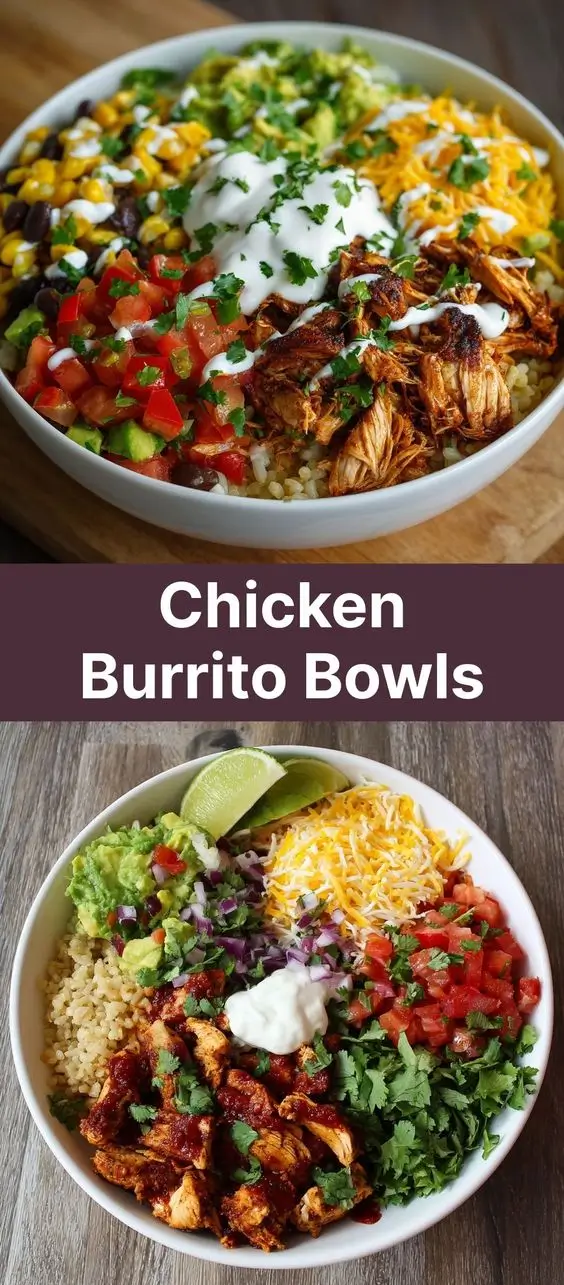
- Assemble the Bowls: Start with a base of cilantro-lime rice (or greens). Top with warm chicken, beans, corn, tomatoes, bell pepper, red onion, avocado, and cheese. Add jalapeños for heat if desired.
- Add Sauces: Drizzle each bowl with sour cream, salsa, and optional chipotle mayo or guacamole. Serve with lime wedges on the side for squeezing over the top.
- Serve Immediately: Enjoy while warm for the best flavor and texture combination.
Tips for Perfect Chicken Burrito Bowls
- Don’t Skip the Rest: Letting the chicken rest after cooking ensures juices redistribute, keeping it moist when sliced.
- Double the Marinade: If planning to grill extra chicken for leftovers, double the marinade and freeze half for later use.
- Rice Texture Matters: Avoid mushy rice by measuring water precisely and not stirring while cooking. Use a tight-fitting lid.
- Prep Ahead: Chop vegetables, cook rice, and marinate chicken the night before for quick weekday assembly.
- Toast the Spices: For even more depth, toast whole cumin seeds or other spices in a dry pan before grinding.
- Use Leftovers Wisely: Extra chicken makes great tacos, salads, or quesadillas the next day.
- Balance Textures: Include something crunchy (like fresh veggies), creamy (avocado or sour cream), and chewy (rice or beans) in every bite.
- Customize Heat Levels: Offer hot sauces on the side so everyone can adjust spiciness to their liking.
- Warm the Bowl (Optional): Microwave serving bowls for 30 seconds before assembling to keep food warmer longer.
- Drizzle Last: Apply wet toppings like salsa and sour cream just before serving to prevent sogginess, especially for meal prep.
Variations and Customizations
One of the greatest strengths of chicken burrito bowls is their adaptability. Here are popular ways to customize based on dietary needs, flavor preferences, or seasonal ingredients:
Dietary Adaptations
- Low-Carb/Keto: Replace rice with cauliflower rice or a salad base. Increase avocado and cheese content. Use full-fat sour cream and skip beans and corn.
- Paleo: Omit grains and legumes. Use sweet potato hash or roasted vegetables as the base. Focus on chicken, avocado, salsa, and compliant fats.
- Vegan/Vegetarian: Swap chicken for grilled tofu, tempeh, or portobello mushrooms. Use plant-based protein sources like lentils or chickpeas instead of meat.
- Gluten-Free: Naturally gluten-free as long as sauces and seasonings are checked for hidden gluten (rare, but possible in store-bought spice blends).
- Dairy-Free: Omit cheese and sour cream. Substitute with dairy-free yogurt or cashew crema.
Flavor Twists
- Tex-Mex: Stick to classic seasonings—chili powder, cumin, garlic—with nacho cheese and taco-seasoned beef-style spices on chicken.
- Southwest: Add roasted corn, blackened peppers, and a southwestern spice blend including cayenne and chipotle.
- Mediterranean Fusion: Use lemon-herb chicken, hummus instead of beans, cucumbers, olives, feta, and tzatziki sauce.
- Asian-Inspired: Marinate chicken in soy sauce, ginger, sesame oil, and garlic. Serve over jasmine rice with edamame, carrots, cucumber, and sriracha mayo.
- Caribbean: Use jerk-seasoned chicken, mango salsa, coconut rice, kidney beans, and plantains.
Meal Prep Friendly Versions
Chicken burrito bowls are ideal for weekly meal prep:
- Store components separately in airtight containers.
- Keep rice and proteins together; store wet toppings (salsa, guac) in small jars.
- Assemble bowls the night before or morning of; add avocado and sauces just before eating.
- Refrigerate for up to 4 days or freeze rice/chicken for longer storage.
Health Considerations and Nutritional Value
Chicken burrito bowls can be a nutritionally balanced meal when thoughtfully composed. Here’s a breakdown of key health aspects:
Nutrient Highlights
- High-Quality Protein: Chicken breast provides about 26g of protein per 3 oz serving, supporting muscle repair and satiety.
- Dietary Fiber: Black beans and whole grains like brown rice or quinoa contribute significant fiber (6–8g per serving), promoting digestive health and blood sugar control.
- Healthy Fats: Avocado and olive oil offer monounsaturated fats, which support heart health and aid in nutrient absorption (especially fat-soluble vitamins).
- Vitamins and Minerals: Rich in vitamin C (from tomatoes, peppers, lime), potassium (beans, avocado), folate (beans), iron (meat, beans), and B vitamins (chicken, rice).
- Antioxidants: Cilantro, tomatoes, and colorful vegetables contain phytonutrients that combat oxidative stress.
Calorie Range and Portion Control
A typical chicken burrito bowl ranges from 450–700 calories depending on ingredients:
- Base: 150–250 cal (rice vs. greens)
- Chicken: 180–220 cal
- Beans: 100–120 cal
- Avocado: 120–160 cal (half an avocado)
- Toppings & Sauces: 50–150 cal (cheese, sour cream, oils)
To reduce calories: use less rice, increase greens, limit cheese and sour cream, and choose Greek yogurt over sour cream.
Dietary Benefits
- Weight Management: High protein and fiber content help you feel full longer, reducing snacking.
- Blood Sugar Regulation: Pairing complex carbs (brown rice) with protein and fat slows glucose absorption.
- Heart Health: Lean protein and unsaturated fats contribute to improved cholesterol profiles.
- Hydration: Ingredients like tomatoes, lettuce, and lime juice have high water content.
Potential Concerns
- Sodium: Store-bought broths, canned beans, and pre-made salsas can be high in sodium. Opt for low-sodium versions or rinse canned goods thoroughly.
- Overloading Toppings: Cheese, sour cream, guacamole, and tortilla chips can turn a healthy bowl into a high-calorie meal. Practice moderation.
- Food Safety: Keep perishable ingredients refrigerated. Don’t leave assembled bowls at room temperature for more than 2 hours.
Frequently Asked Questions (FAQ)
Can I make chicken burrito bowls ahead of time?
Yes! This dish is excellent for meal prep. Cook the chicken and rice, then store them with beans and other stable ingredients in containers. Add fresh items like avocado, salsa, and sauces the day you eat them to maintain texture and flavor.
How long do chicken burrito bowls last in the fridge?
Properly stored (in airtight containers), components will stay fresh for 3–4 days. Assembled bowls with wet toppings may become soggy after 2 days.
Can I freeze chicken burrito bowls?
You can freeze the chicken, rice, and beans mixture for up to 3 months. Thaw overnight in the fridge and reheat in the microwave or oven. Do not freeze avocado, fresh salsa, or sour cream.
What can I use instead of chicken?
Great alternatives include steak (carne asada), ground turkey, shrimp, carnitas (pork), tofu, tempeh, or chickpeas for a vegetarian twist.
Are chicken burrito bowls healthy?
They can be very healthy when built with whole foods, lean protein, fiber-rich beans, and plenty of vegetables. Watch portion sizes of higher-calorie toppings like cheese and sour cream.
Can I make this in a slow cooker or Instant Pot?
Absolutely! Season chicken and place in the slow cooker with 1/2 cup broth for 4–6 hours on low. Shred or dice after cooking. You can also cook rice in an Instant Pot using a 1:1.25 rice-to-water ratio.
How do I keep the rice from drying out when reheating?
Add a tablespoon of water or broth before microwaving and cover with a damp paper towel to trap steam.
Is it okay to use frozen vegetables?
Yes, especially for corn and peppers. Just thaw and drain excess moisture before adding to the bowl.
Can I serve this as a burrito instead?
Definitely! Warm large flour or whole wheat tortillas and fill with all the ingredients, roll tightly, and enjoy as a handheld burrito. Add a strip of foil for support if needed.
What’s the best way to reheat leftover chicken?
Reheat gently in a skillet over medium-low heat with a splash of water or broth to retain moisture. Microwaving works too, but cover and use 50% power to avoid rubberiness.
Summary
Chicken burrito bowls are a delicious, nutritious, and endlessly customizable meal that combines tender seasoned chicken, fluffy cilantro-lime rice, hearty beans, fresh vegetables, and zesty toppings in one vibrant dish.
Perfect for meal prep, family dinners, or entertaining, these bowls celebrate bold flavors and wholesome ingredients while adapting effortlessly to various dietary lifestyles—from keto to vegan and everything in between.