Introduction
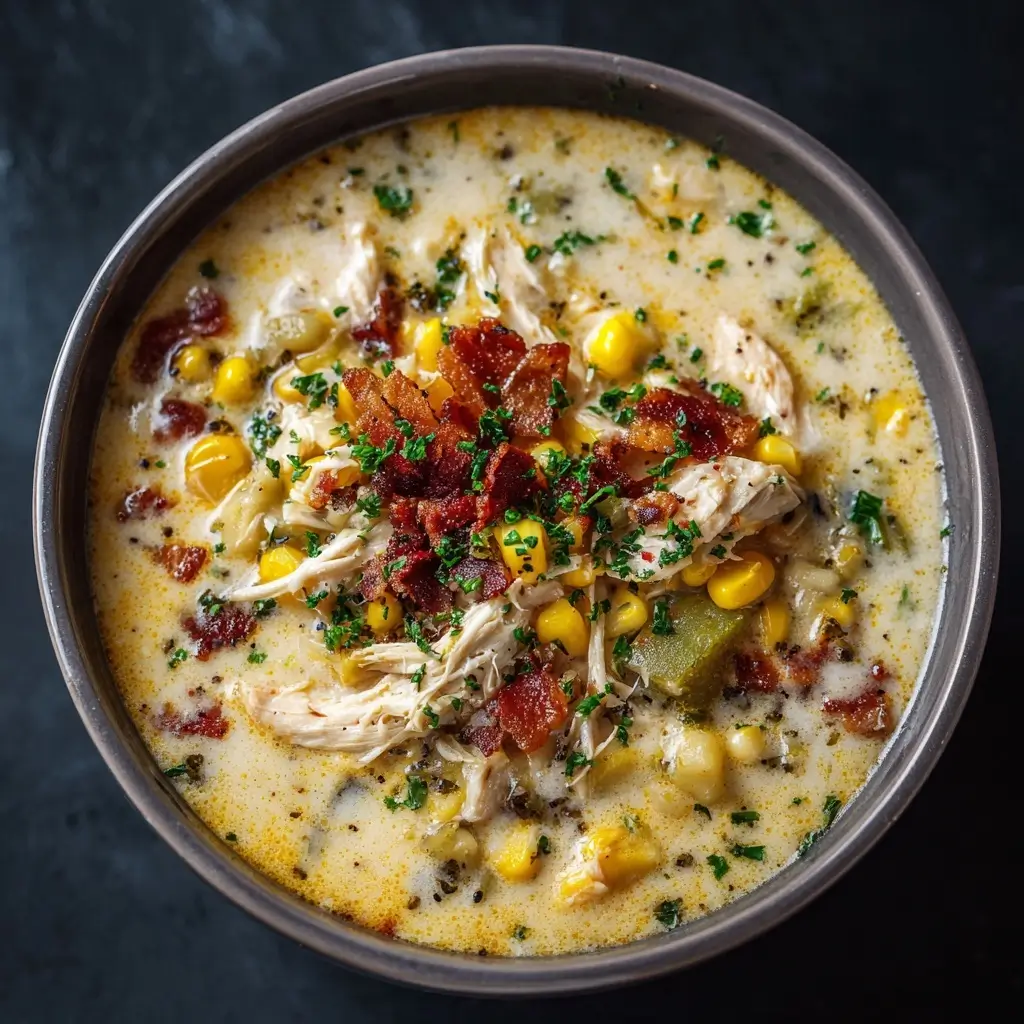
Chicken Corn Chowder is a beloved American comfort classic—creamy, hearty, and deeply satisfying. Unlike thinner soups or brothy stews, chowder occupies a special place in culinary tradition: thickened naturally with potatoes and enriched with dairy, it delivers a luscious mouthfeel and balanced warmth ideal for chilly days, family dinners, or even elegant casual entertaining. This version celebrates the humble yet vibrant synergy of tender shredded chicken, sweet golden corn (fresh, frozen, or canned), aromatic vegetables, and creamy richness—all grounded in a savory, herb-kissed broth. Whether served steaming in a rustic bowl with crusty bread on the side or ladled into mason jars for meal prep, Chicken Corn Chowder transcends seasonality; it’s equally welcome in autumn’s first chill or as a nourishing recovery meal during winter’s peak.
The History
The word “chowder” traces its roots to the French term chaudière, meaning “cauldron” or “pot”—a nod to the large kettles used by Breton fishermen along the Atlantic coast. Brought to North America by French, English, and Acadian settlers in the 17th and 18th centuries, chowder evolved regionally: New Englanders favored clam-based versions with salt pork and crackers; Manhattan developed its tomato-forward counterpart; and the Midwest and South embraced poultry and produce-driven variations reflective of local agriculture. Chicken Corn Chowder emerged prominently in the early-to-mid 20th century, buoyed by the rise of home canning, widespread availability of sweet corn varieties like Golden Bantam and later Silver Queen, and post-war innovations in dairy processing that made evaporated milk and half-and-half more accessible to home cooks. It gained further popularity through community cookbooks, church suppers, and agricultural extension services promoting economical, protein- and vegetable-rich meals. Notably, the dish reflects a broader American culinary ethos—resourceful, adaptable, and rooted in seasonal abundance—often transforming Sunday’s roasted chicken leftovers and garden-fresh or frozen corn into a new centerpiece meal within 45 minutes.
Ingredients Breakdown
Every exceptional Chicken Corn Chowder begins with intentionality—not just in selection, but in understanding *why* each ingredient matters:
- Chicken: Boneless, skinless chicken breasts or thighs (3–4 cups shredded) provide lean protein and subtle flavor. Thighs add more collagen and richness; breasts offer mildness and firmer texture. Rotisserie chicken is an excellent time-saving option—just ensure low-sodium seasoning to control overall salt content.
- Corn: Fresh corn cut from 4–5 ears (about 2 cups kernels) delivers unmatched sweetness and pop. Frozen whole-kernel corn (no salt added) is a year-round, nutritionally comparable alternative—thawed but not drained. Canned corn (preferably low-sodium, packed in water) works in a pinch, though its texture is softer and flavor slightly muted; rinse thoroughly to reduce metallic notes and excess sodium.
- Aromatics & Vegetables: Yellow onions (1 large, finely diced) build foundational sweetness and depth; celery (2 ribs, finely diced) adds herbal brightness and crunch; carrots (2 medium, small dice) contribute natural sugars, color, and beta-carotene. Garlic (3–4 cloves, minced) is essential for aromatic complexity—add it late in sautéing to preserve its pungent, fragrant oils.
- Potatoes: Yukon Gold potatoes (2 medium, peeled and ½-inch dice) are ideal—their buttery, waxy-yet-creamy texture thickens the chowder naturally without turning gluey. Russets can be used for extra thickness but risk disintegration; red potatoes hold shape well but lend less body.
- Liquid Base: Low-sodium chicken broth (4–5 cups) forms the savory backbone—homemade is unparalleled, but high-quality store-bought brands (like Swanson Unsalted or Kitchen Basics) work beautifully. A splash (¼ cup) of dry white wine (e.g., Sauvignon Blanc or Pinot Grigio) added before broth enhances umami and lifts the entire profile—optional but highly recommended.
- Dairy & Thickening Agents: Evaporated milk (1 can, 12 oz) provides concentrated creaminess without curdling, while whole milk or half-and-half (½ cup) added at the end ensures silkiness and prevents heaviness. A slurry of all-purpose flour (3 tbsp) or cornstarch (2 tbsp) mixed with cold milk controls thickness precisely—never add dry starch directly to hot liquid.
- Fats & Seasonings: Unsalted butter (3 tbsp) and olive oil (1 tbsp) together create a rich, stable sauté base—butter for flavor, oil for higher smoke point. Bay leaves (2), dried thyme (1 tsp), and smoked paprika (¼ tsp) add earthy, warm, and subtly smoky dimensions. Fresh parsley (¼ cup, chopped) and green onions (2 tbsp, sliced) are non-negotiable for bright, herbaceous finishing notes.
- Acid & Balance: Fresh lemon juice (1 tbsp, added off-heat) or apple cider vinegar (½ tsp) cuts richness and brightens sweetness—a secret step many overlook but which transforms flat chowder into layered, restaurant-worthy soup.
Step-by-Step Recipe
- Prep All Ingredients: Dice onion, celery, carrots, and garlic. Peel and cube potatoes. Shred cooked chicken (or portion rotisserie meat). Measure broth, dairy, spices, and corn. Have your whisk and slurry bowl ready.
- Sauté Aromatics: In a heavy-bottomed Dutch oven or large soup pot over medium heat, melt 2 tbsp butter with 1 tbsp olive oil. Add onions, celery, and carrots. Cook 6–8 minutes, stirring occasionally, until softened and translucent—but not browned. Stir in garlic and cook 1 minute more until fragrant.
- Bloom Spices & Deglaze: Sprinkle in flour (if using), thyme, smoked paprika, and a pinch of black pepper. Stir constantly for 1–2 minutes to toast the flour and release spice oils. Carefully pour in white wine (if using), scraping up any browned bits with a wooden spoon. Simmer 1 minute until alcohol evaporates.
- Add Liquids & Simmer Base: Gradually whisk in chicken broth, ensuring no lumps remain. Add bay leaves and bring to a gentle simmer. Reduce heat to low-medium, cover partially, and cook 10 minutes to meld flavors.
- Incorporate Potatoes & Corn: Stir in diced potatoes and corn (reserving ¼ cup fresh or frozen for garnish if desired). Return to a simmer, then reduce heat to low. Cover and cook 15–18 minutes, or until potatoes are just fork-tender—not mushy. Stir occasionally to prevent sticking.
- Integrate Chicken & Dairy: Gently fold in shredded chicken and evaporated milk. Simmer uncovered 5 minutes on low heat—do not boil vigorously, or dairy may separate.
- Thicken & Finish: In a small bowl, whisk remaining 1 tbsp butter with cold milk (or cream) and cornstarch (if using cornstarch) or flour slurry. Slowly drizzle into chowder while stirring constantly. Simmer 3–4 minutes until thickened to a velvety, spoon-coating consistency. Remove bay leaves. Stir in lemon juice, salt to taste (start with ½ tsp; adjust gradually), and freshly ground black pepper.
- Rest & Serve: Remove from heat. Let chowder rest, covered, for 10 minutes—this allows flavors to harmonize and texture to settle. Stir in half-and-half or whole milk just before serving. Garnish generously with parsley, green onions, and reserved corn kernels. Optional: a light dusting of smoked paprika or crumbled crispy bacon.
Tips
- Texture Control: For ultra-smooth chowder, use an immersion blender to pulse 2–3 times *before* adding chicken and dairy—just enough to break down some potatoes for natural thickening, but leave visible chunks for heartiness.
- Dairy Safety: Always temper dairy: never add cold milk or cream directly to boiling liquid. Warm it slightly or mix into a cool slurry first. Keep heat at low simmer (<185°F) once dairy is added.
- Salt Strategy: Salt in layers—not just at the end. Season lightly when sautéing aromatics, again after adding broth, and finally before serving. This builds dimension rather than one-note salinity.
- Leftover Magic: This chowder tastes even better the next day. As it rests, starches continue to hydrate and flavors deepen. Reheat gently on the stove with a splash of broth or milk to restore fluidity.
- Freezing Wisdom: Freeze *without* dairy for best results. Cool completely, portion into airtight containers (leave 1-inch headspace), and freeze up to 3 months. Thaw overnight in fridge, reheat gently, then stir in fresh evaporated milk and cream just before serving.
- Acid Timing: Lemon juice or vinegar must be added *off-heat* or in the final 30 seconds. Heat destroys volatile citrus compounds and dulls brightness.
- Herb Integrity: Delicate herbs like parsley, dill, or chives should always be stirred in at the end. Their volatile oils and fresh flavor vanish under prolonged heat.
- Consistency Rescue: Too thick? Whisk in warm broth, ¼ cup at a time. Too thin? Make a quick slurry (1 tsp cornstarch + 1 tbsp cold water), stir in, and simmer 2 minutes. Never add raw flour directly.
Variations and Customizations
This recipe is inherently modular—designed for pantry flexibility, dietary needs, and personal preference. Explore these inspired adaptations:
- Smoky Southwest Style: Swap smoked paprika for chipotle powder (½ tsp) and add 1 small roasted poblano (diced) with the corn. Stir in ½ cup black beans (rinsed) and top with crumbled queso fresco, avocado slices, and lime wedges.
- Lighter & Brighter (Dairy-Free): Replace evaporated milk and cream with full-fat coconut milk (1 can) and unsweetened almond milk (½ cup). Use olive oil only, and finish with lime zest + cilantro. Add 1 tsp ground cumin and ½ tsp coriander for warmth.
- Gluten-Free Chowder: Substitute cornstarch or arrowroot powder for flour in the slurry. Ensure broth and all packaged ingredients (e.g., rotisserie chicken) are certified GF. Thicken with an extra ½ cup mashed potato or 2 tbsp pureed white beans for body.
- Instant Pot / Pressure Cooker Version: Sauté aromatics using “Sauté” function. Add broth, potatoes, corn, spices, and bay leaves. Seal and pressure cook on High for 8 minutes. Quick-release, stir in chicken and evaporated milk, then use “Sauté” again to thicken with slurry (3 min). Finish with lemon and herbs.
- Creamy Vegan Option: Use hearts of palm or jackfruit (shredded, boiled until tender) instead of chicken. Replace all dairy with cashew cream (soaked + blended raw cashews + water) and unsweetened oat milk. Boost umami with 1 tbsp nutritional yeast and 1 tsp tamari.
- Breakfast Chowder: Add 2 beaten eggs whisked with 2 tbsp cream, stirring slowly into hot (not boiling) chowder off-heat for tender ribbons—like a savory egg drop. Top with crumbled breakfast sausage and cheddar.
- Gourmet Mushroom & Herb: Sauté 8 oz cremini or oyster mushrooms with the aromatics. Add 1 tbsp fresh tarragon and ½ tsp fennel seed with the spices. Finish with grated Gruyère stirred in off-heat.
- Spicy Cajun Twist: Add 1 tsp Cajun seasoning (low-sodium) with the flour, plus ¼ tsp cayenne. Stir in ¼ cup diced roasted red peppers and top with pickled jalapeños and scallions.
Health Considerations and Nutritional Value
A 1-cup (245g) serving of homemade Chicken Corn Chowder (made with low-sodium broth, evaporated milk, and skinless chicken breast) typically contains approximately:
- Calories: 220–260 kcal
- Protein: 18–22 g (excellent source; supports muscle maintenance and satiety)
- Carbohydrates: 24–28 g (primarily from corn and potatoes—includes 3–4 g dietary fiber, supporting digestive health and glycemic balance)
- Fat: 7–9 g (mostly unsaturated from olive oil and dairy; minimal saturated fat when using lean chicken and moderate dairy)
- Vitamins & Minerals: Rich in Vitamin A (from carrots and corn), Vitamin C (corn, parsley), B6 and B12 (chicken), potassium (potatoes, corn), and folate (corn, spinach if added). Contains choline (eggs optional), selenium, and zinc.
Dietary Notes:
- Lower-Sodium Adaptation: Use no-salt-added broth, skip added salt until final tasting, rinse canned corn, and avoid pre-seasoned rotisserie chicken. Flavor with lemon, herbs, smoked paprika, and garlic instead.
- Low-Carb/Keto Modification: Replace potatoes with cauliflower florets (cut small) and add extra chicken and corn (in moderation—corn is higher carb). Thicken with xanthan gum (¼ tsp) instead of flour. Net carbs drop to ~8–10g per serving.
- Diabetic-Friendly: Focus on glycemic load: pair with a side salad or whole-grain croutons for fiber. Monitor portion size (¾ cup max), choose low-GI corn varieties, and emphasize protein/fat to slow glucose absorption.
- Allergen Awareness: Naturally nut-free and soy-free (if broth is clean). For dairy allergy, use fortified oat or coconut milk + cornstarch thickener. Gluten concerns addressed via GF thickeners.
- Pregnancy & Immunity Support: High in zinc, protein, and folate—key nutrients during gestation and immune resilience. Pasteurized dairy and fully cooked chicken ensure safety.
Compared to cream-of-mushroom or potato soup, Chicken Corn Chowder offers superior macrobalance: higher protein, moderate complex carbs, and beneficial phytonutrients from colorful vegetables—making it a nutrient-dense choice over heavily processed or refined alternatives.
Ingredients
- 3 tbsp unsalted butter, divided
- 1 tbsp extra-virgin olive oil
- 1 large yellow onion, finely diced (about 1 ½ cups)
- 2 medium carrots, peeled and finely diced (about 1 cup)
- 2 celery ribs, finely diced (about 1 cup)
- 3–4 cloves garlic, minced
- 3 tbsp all-purpose flour (or 2 tbsp cornstarch for gluten-free)
- 1 tsp dried thyme
- ¼ tsp smoked paprika (sweet or hot, to taste)
- ¼ tsp freshly ground black pepper, plus more to taste
- ¼ cup dry white wine (optional but recommended)
- 4–5 cups low-sodium chicken broth (homemade preferred)
- 2 large Yukon Gold potatoes (about 1 lb), peeled and cut into ½-inch dice
- 3 cups corn kernels (fresh, frozen, or low-sodium canned—drained and rinsed)
- 2 large bay leaves
- 3–4 cups cooked, shredded chicken (breast or thigh; rotisserie OK)
- 1 (12 oz) can evaporated milk
- ½ cup half-and-half or whole milk
- 1 tbsp fresh lemon juice or apple cider vinegar
- 1 tsp kosher salt, or to taste (start low!)
- ¼ cup fresh flat-leaf parsley, finely chopped
- 2 tbsp green onions, thinly sliced (for garnish)
- Optional garnishes: crumbled cooked bacon, shredded cheddar, roasted corn kernels, smoked paprika dusting
Directions
- In a 5–6 quart heavy-bottomed Dutch oven or soup pot, melt 2 tablespoons butter with olive oil over medium heat. Add onion, carrots, and celery. Cook, stirring occasionally, until softened and beginning to turn translucent—about 6–8 minutes. Do not brown.
- Add minced garlic and cook 1 minute more, until fragrant.
- Sprinkle flour, thyme, smoked paprika, and ¼ tsp black pepper over vegetables. Stir constantly for 1–2 minutes to toast the flour and bloom the spices.
- If using wine, carefully pour it in and scrape up any browned bits from the bottom of the pot. Simmer 1 minute to evaporate alcohol.
- Gradually whisk in chicken broth, ensuring smooth integration. Add bay leaves and bring mixture to a gentle simmer.
- Reduce heat to low-medium, partially cover, and simmer for 10 minutes to develop base flavor.
- Add diced potatoes and corn. Return to a gentle simmer, then reduce heat to low. Cover and cook 15–18 minutes, or until potatoes are just tender when pierced with a fork.
- Stir in shredded chicken and evaporated milk. Simmer uncovered on low heat for 5 minutes—do not boil.
- In a small bowl, combine remaining 1 tbsp butter, cold half-and-half (or milk), and cornstarch (if using) or flour slurry. Whisk until smooth.
- Slowly drizzle slurry into the chowder while stirring continuously. Simmer gently for 3–4 minutes, stirring often, until thickened to a rich, creamy, spoon-coating consistency.
- Remove bay leaves. Stir in lemon juice, salt (start with ½ tsp), and remaining black pepper. Taste and adjust seasoning—more salt, lemon, or smoked paprika as desired.
- Remove from heat. Let rest, covered, for 10 minutes. Stir in remaining half-and-half or milk just before serving.
- Ladle into warm bowls. Garnish generously with parsley, green onions, and optional toppings. Serve immediately with crusty bread, oyster crackers, or a simple kale salad.
FAQ
- Can I make this chowder ahead of time?
- Absolutely—and it’s encouraged! Flavors deepen significantly after 12–24 hours. Cool completely, refrigerate in airtight containers for up to 4 days. Reheat gently on the stovetop over low heat, stirring frequently and adding a splash of broth or milk if needed to loosen.
- Why does my chowder look curdled or separated?
- This usually happens when dairy is added to too-high heat or when acidic ingredients (lemon/vinegar) are introduced before cooling. Always add dairy off-boil and stir in lemon juice *after* removing from heat. If separation occurs, an immersion blender pulse or vigorous whisking while warm often rescues texture.
- Can I use canned corn in water instead of frozen or fresh?
- Yes—with caveats. Choose low-sodium, no-sugar-added varieties. Drain and rinse thoroughly under cold water to remove metallic taste and excess salt. Add it in the last 5 minutes of cooking to preserve texture and sweetness.
- What’s the best potato to use—and why not russet?
- Yukon Gold is ideal: its medium starch content yields creamy tenderness without disintegrating. Russets are very high-starch and will break down excessively, creating a gluey, overly thick base that lacks pleasant bite. Red potatoes hold shape well but contribute less natural thickening.
- Is there a way to make this vegetarian or vegan?
- Easily. Omit chicken and use vegetable broth. For protein/texture, add 1 cup cooked white beans (cannellini or navy), 1 cup diced tofu (pan-seared first), or 1 cup chopped hearts of palm. Use full-fat coconut milk + unsweetened oat milk for dairy replacement, and thicken with cornstarch. Boost umami with 1 tbsp nutritional yeast and 1 tsp tamari.
- How do I fix chowder that’s too salty?
- First, dilute with unsalted broth or water (¼ cup at a time), then re-thicken with a cornstarch slurry if needed. Add ½ cup unsalted boiled potatoes—they’ll absorb excess salt. A small pinch of sugar (⅛ tsp) or splash of lemon juice can also help rebalance perception.
- Can I freeze Chicken Corn Chowder?
- Yes—with dairy removed for optimal quality. Cool completely, omit evaporated milk and cream, and freeze for up to 3 months. Thaw overnight in fridge, reheat gently, then stir in fresh dairy just before serving. Texture remains excellent.
- What can I serve with Chicken Corn Chowder?
- Classic pairings include crusty sourdough or baguette, oyster crackers, garlic toast, or cheddar biscuits. For lighter options: a crisp romaine and apple salad with lemon vinaigrette, roasted Brussels sprouts, or garlicky sautéed greens. A chilled Riesling or dry cider complements its sweetness and richness beautifully.
Summary
Chicken Corn Chowder is a time-honored, endlessly adaptable American classic—rich with tender chicken, sweet corn, creamy potatoes, and aromatic herbs, all suspended in a luxuriously thickened, savory broth.
Whether you’re seeking weeknight comfort, meal-prep practicality, or a canvas for global flavors, this chowder delivers nutrition, nostalgia, and nuanced satisfaction in every steaming spoonful—proving that humble ingredients, thoughtfully combined, create something truly extraordinary.