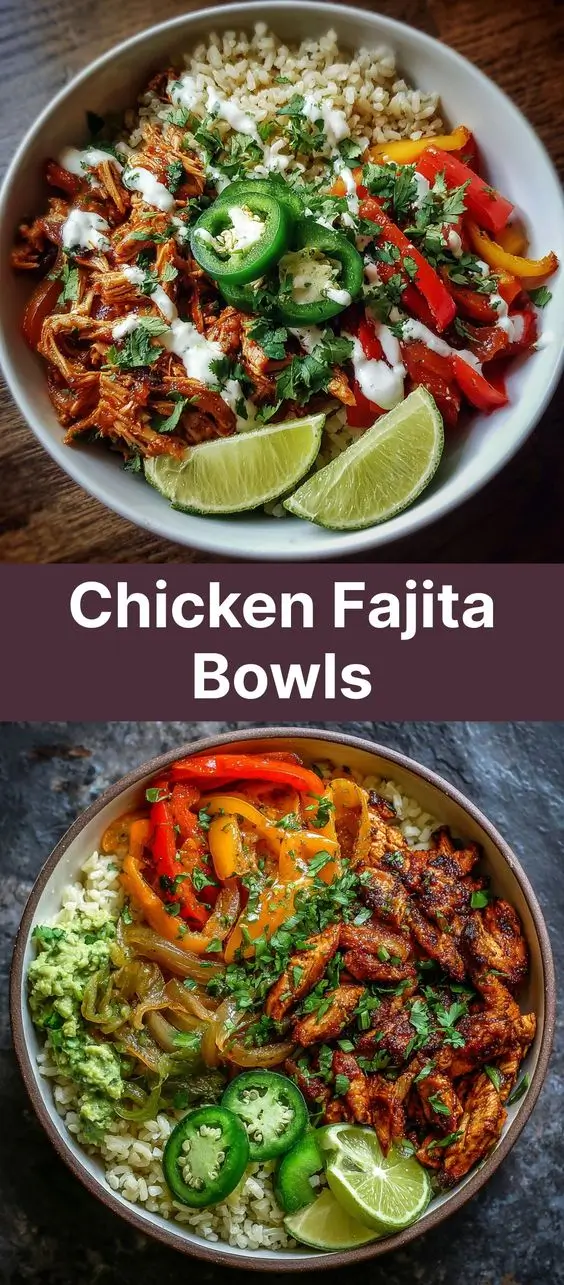
Chicken Fajita Bowls
Delicious, vibrant, and packed with flavor, Chicken Fajita Bowls are a modern twist on the classic Tex-Mex fajita experience. These bowls combine tender strips of marinated chicken, sautéed bell peppers and onions, fluffy rice or cauliflower, and an array of fresh toppings—all served in a single, easy-to-eat bowl. Whether you’re looking for a quick weeknight dinner, a healthy meal prep option, or just a satisfying dish to enjoy after a long day, this recipe delivers bold flavors, colorful ingredients, and endless customization possibilities.
The History
The roots of the fajita can be traced back to the ranching culture of South Texas in the early 20th century. Originally, “fajita” referred to the skirt steak—a cut from the cow’s diaphragm muscles—that was given to Mexican cowboys as part of their pay. Since this was a tough cut of meat, it required marinating and grilling over open flames to become tender. The term “fajita,” derived from the Spanish word faja meaning “belt” or “sash,” came to describe any grilled meat served on a flour or corn tortilla.
By the 1960s and 70s, fajitas gained popularity in Tex-Mex restaurants across Texas and eventually spread nationwide. Sizzling platters, warm tortillas, and colorful peppers became staples of the dining experience. Over time, culinary innovation led to deconstructed versions, including fajita salads and, more recently, fajita bowls—perfect for those avoiding carbs or simply wanting a more convenient way to enjoy all the flavors without the mess of wrapping.
Today’s Chicken Fajita Bowl is a celebration of this evolution—honoring tradition while embracing modern dietary preferences like gluten-free, low-carb, and high-protein lifestyles. It reflects how food adapts across cultures, generations, and kitchens, turning humble beginnings into something universally loved.
Ingredients Breakdown
The beauty of Chicken Fajita Bowls lies in their balance of textures, temperatures, and tastes. Each component plays a vital role in creating a harmonious dish:
- Chicken Breast or Thighs: Boneless, skinless chicken breasts are most commonly used for their lean texture, though thighs offer richer flavor and juiciness. Thinly sliced, they absorb marinade quickly and cook evenly.
- Bell Peppers: Red, yellow, and green bell peppers add sweetness, crunch, and vibrant color. They caramelize beautifully when sautéed, enhancing the overall flavor profile.
- Onion: Yellow or red onions provide sharpness and depth. When cooked, they soften and develop a mild sweetness that complements the spices.
- Fajita Seasoning: A blend typically includes chili powder, cumin, smoked paprika, garlic powder, onion powder, oregano, salt, and black pepper. This mix infuses the protein and vegetables with smoky, earthy warmth.
- Olive Oil or Avocado Oil: Used for marinating and cooking, these oils help distribute seasoning, promote browning, and enhance mouthfeel.
- Lime Juice: Fresh lime juice adds brightness and acidity, cutting through richness and elevating the other flavors.
- Garlic: Minced or pressed garlic contributes aromatic pungency that enhances the savory notes.
- Base (Rice, Quinoa, or Cauliflower Rice): Acts as the foundation. White or brown rice offers comfort and heartiness; quinoa boosts protein and fiber; riced cauliflower keeps things low-carb and keto-friendly.
- Toppings: Include guacamole or sliced avocado, sour cream or Greek yogurt, shredded cheese (cheddar, Monterey Jack), pico de gallo, pickled jalapeños, cilantro, and lime wedges. These add creaminess, tang, heat, and freshness.
Optional additions include black beans, corn, roasted tomatoes, or even plantains for extra dimension.
Step-by-Step Recipe
- Prepare the Marinade: In a medium bowl, whisk together 3 tablespoons olive oil, 2 tablespoons fresh lime juice, 2 teaspoons chili powder, 1½ teaspoons ground cumin, 1 teaspoon smoked paprika, 1 teaspoon garlic powder, ½ teaspoon onion powder, ½ teaspoon dried oregano, 1 teaspoon salt, and ½ teaspoon black pepper. Adjust quantities based on desired spiciness and number of servings.
- Marinate the Chicken: Slice 1.5 lbs (about 700g) of boneless, skinless chicken breasts or thighs into thin strips. Place them in a resealable plastic bag or shallow dish and pour the marinade over. Toss to coat evenly. Seal and refrigerate for at least 30 minutes, preferably 2–4 hours for maximum flavor penetration.
- Prep the Vegetables: While the chicken marinates, slice 2 bell peppers (any color) into thin strips and halve 1 large onion, then slice into half-moons. Set aside.
- Cook the Base: Prepare your chosen base—white rice, brown rice, quinoa, or riced cauliflower—according to package instructions. For added flavor, cook rice in chicken broth instead of water and season lightly with salt and a squeeze of lime. Keep warm.
- Sear the Chicken: Heat 1 tablespoon oil in a large skillet or cast-iron pan over medium-high heat. Remove chicken from marinade (shake off excess) and cook in a single layer without overcrowding. Sear for 5–7 minutes, turning occasionally, until golden brown and cooked through (internal temperature reaches 165°F / 74°C). Transfer to a plate and cover loosely with foil.
- Sauté the Peppers and Onions: In the same skillet, add another tablespoon of oil if needed. Add the sliced peppers and onions. Cook over medium-high heat for 8–10 minutes, stirring occasionally, until softened and slightly charred at the edges. Season with a pinch of salt and optional extra seasoning for depth.
- Combine or Layer: You can either return the cooked chicken to the skillet with the vegetables and toss together for 1–2 minutes, or keep them separate for individual assembly.
- Assemble the Bowls: Start with a base of warm grains or cauliflower rice. Top with the chicken and vegetable mixture. Then layer on your favorite toppings: dollops of guacamole, a spoonful of sour cream or Greek yogurt, shredded cheese, pico de gallo, jalapeños, and fresh cilantro. Serve with lime wedges on the side for squeezing.
Tips
- Don’t Skip the Marination Time: Even 30 minutes makes a difference, but longer marinating (up to 12 hours) results in deeper flavor and more tender chicken.
- Use High Heat for Searing: To achieve that authentic fajita char, make sure your pan is hot before adding the chicken and veggies. Avoid steaming by not overcrowding the skillet.
- Uniform Cutting: Cut chicken and vegetables into similar sizes so they cook evenly.
- Reserve Some Raw Veggies: For contrast, consider serving some raw bell peppers or onions alongside the sautéed ones to add crunch and freshness.
- Double the Batch: This recipe reheats well. Cook extra for meal prep—store components separately in airtight containers for up to 4 days.
- Boost Flavor with Toasted Spices: Lightly toast whole cumin seeds in a dry pan before grinding for a more aromatic seasoning blend.
- Add Umami: A splash of soy sauce or Worcestershire in the marinade deepens the savory profile without overpowering the Tex-Mex essence.
- Warm Tortillas on the Side: Even though it’s a bowl, offering warm tortillas allows guests to turn it into tacos if desired.
Variations and Customizations
One of the greatest strengths of Chicken Fajita Bowls is their adaptability. Here are creative ways to personalize your dish:
- Protein Swaps: Replace chicken with grilled shrimp, carne asada-style steak, ground turkey, tofu, tempeh, or portobello mushrooms for vegetarian or vegan options.
- Low-Carb/Keto Version: Use cauliflower rice as the base and increase healthy fats with extra avocado, full-fat cheese, and sour cream. Ensure the seasoning contains no sugar.
- Spicy Kick: Add diced fresh jalapeño to the sauté, use hot sauce in the marinade, or top with habanero salsa or sriracha crema.
- Mediterranean Fusion: Swap traditional seasonings for za’atar or sumac, serve over couscous, and top with tzatziki, olives, and feta.
- Asian-Inspired Twist: Use soy-ginger marinade, stir-fry with sesame oil, and garnish with sesame seeds, green onions, and a drizzle of hoisin or teriyaki sauce.
- Breakfast Fajita Bowl: Serve over hash browns or roasted potatoes, top with fried or scrambled eggs, and finish with cheese and salsa.
- Tex-Mex Fiesta Style: Add black beans, corn, and crushed tortilla chips for texture and heartiness. Drizzle with chipotle mayo or queso.
- Dairy-Free/Vegan: Omit cheese and sour cream; substitute with cashew crema, coconut yogurt, or avocado slices. Use plant-based proteins.
- Meal Prep Friendly: Portion into glass containers with compartments or stackable layers. Reheat gently in the microwave, adding fresh toppings after warming.
Health Considerations and Nutritional Value
Chicken Fajita Bowls can be a nutritious, balanced meal depending on ingredient choices and portion control. Here’s a general nutritional breakdown per serving (based on 1 bowl with chicken breast, mixed peppers, onion, brown rice, avocado, and light toppings):
- Calories: Approximately 450–600 kcal
- Protein: 35–45g (excellent source for muscle repair and satiety)
- Carbohydrates: 40–55g (complex carbs from whole grains or vegetables)
- Fat: 18–25g (mostly healthy unsaturated fats from avocado and olive oil)
- Fiber: 8–12g (supports digestion and gut health)
- Sodium: Varies widely (300–800mg); reduce by using low-sodium seasonings and limiting added salt
Key Health Benefits:
- High in lean protein, which supports metabolism and fullness.
- Risk of overcooking minimized due to quick sear method, preserving nutrients.
- Bell peppers are rich in vitamin C (one cup provides over 200% DV) and antioxidants like beta-carotene.
- Onions contain quercetin, an anti-inflammatory compound.
- Avocado contributes heart-healthy monounsaturated fats and potassium.
- Using whole grains like brown rice or quinoa increases fiber and B-vitamins.
Considerations:
- Those monitoring sodium intake should prepare seasoning blends at home to avoid commercial mixes with added salt.
- Individuals with acid reflux may want to limit spicy elements or acidic lime juice.
- To support weight management goals, watch portion sizes of high-calorie toppings like cheese, sour cream, and oils.
- Gluten-sensitive individuals should ensure all seasonings and sauces are certified gluten-free.
Ingredients
- 1.5 lbs (700g) boneless, skinless chicken breasts or thighs, thinly sliced
- 3 tbsp olive oil (plus extra for cooking)
- 2 tbsp fresh lime juice (about 1 large lime)
- 2 tsp chili powder
- 1½ tsp ground cumin
- 1 tsp smoked paprika
- 1 tsp garlic powder
- ½ tsp onion powder
- ½ tsp dried oregano
- 1 tsp salt
- ½ tsp black pepper
- 2 bell peppers (red, yellow, or green), sliced
- 1 large yellow or red onion, halved and sliced
- 2 cloves garlic, minced (optional)
- 2 cups cooked rice, quinoa, or cauliflower rice (per 4 servings)
- For Serving: Guacamole or sliced avocado, sour cream or Greek yogurt, shredded cheddar or Monterey Jack cheese, pico de gallo, pickled jalapeños, chopped fresh cilantro, lime wedges
Directions
- In a bowl, whisk together olive oil, lime juice, chili powder, cumin, smoked paprika, garlic powder, onion powder, oregano, salt, and pepper to create the marinade.
- Place sliced chicken in a resealable bag or container and pour marinade over. Seal and refrigerate for at least 30 minutes, up to 12 hours.
- While chicken marinates, slice bell peppers and onions. Cook rice, quinoa, or cauliflower rice according to instructions and set aside.
- Heat 1 tbsp oil in a large skillet over medium-high heat. Remove chicken from marinade and cook in batches for 5–7 minutes until browned and cooked through. Transfer to a plate.
- In the same skillet, add another tbsp oil if needed. Sauté peppers and onions for 8–10 minutes until tender and slightly charred. Add minced garlic during the last minute if using.
- Return chicken to the skillet and stir to combine with vegetables. Warm through for 1–2 minutes.
- Divide the grain base among serving bowls. Top with chicken and vegetable mixture.
- Garnish generously with guacamole, sour cream, cheese, pico de gallo, jalapeños, cilantro, and a squeeze of lime.
- Serve immediately, with extra lime wedges on the side.
FAQ
Can I make Chicken Fajita Bowls ahead of time?
Yes! You can marinate the chicken up to 24 hours in advance and chop vegetables the night before. Cook everything and store components separately in the fridge for up to 4 days. Reheat gently and assemble with fresh toppings.
Can I freeze this recipe?
Cooked chicken and vegetables freeze well for up to 3 months. Cool completely, place in freezer-safe bags, and thaw overnight in the fridge before reheating. Rice and cauliflower rice also freeze, though texture may change slightly upon thawing.
Are Chicken Fajita Bowls healthy?
They can be very healthy when made with lean protein, minimal oil, whole grains, and plenty of vegetables. Control calories and sodium by adjusting toppings and seasoning.
Can I use frozen bell peppers?
Fresh is best for texture and flavor, but frozen peppers can work in a pinch—just drain well after thawing to prevent sogginess.
What can I use instead of fajita seasoning?
You can make your own (as listed above) or substitute with taco seasoning, though note that many store-bought taco seasonings are saltier and less smoky.
How do I keep the chicken juicy?
Don’t overcook—remove from heat once it reaches 165°F. Marinating in citrus and oil helps retain moisture. Consider using chicken thighs for naturally higher fat content.
Can I grill the chicken and veggies?
Absolutely! Grill over medium-high heat for 6–8 minutes until charred and cooked through. Skewers or a grill basket work well for peppers and onions.
Is this recipe gluten-free?
Yes, provided all ingredients (especially seasoning blends and sauces) are certified gluten-free. Naturally, the core ingredients are GF.
Summary
Chicken Fajita Bowls bring the bold, zesty flavors of Tex-Mex cuisine into a wholesome, customizable, and easy-to-prepare format perfect for busy lives and diverse diets.
Packed with marinated chicken, colorful sautéed vegetables, and a choice of bases and toppings, this dish satisfies cravings while supporting health-conscious eating—making it a modern kitchen staple.