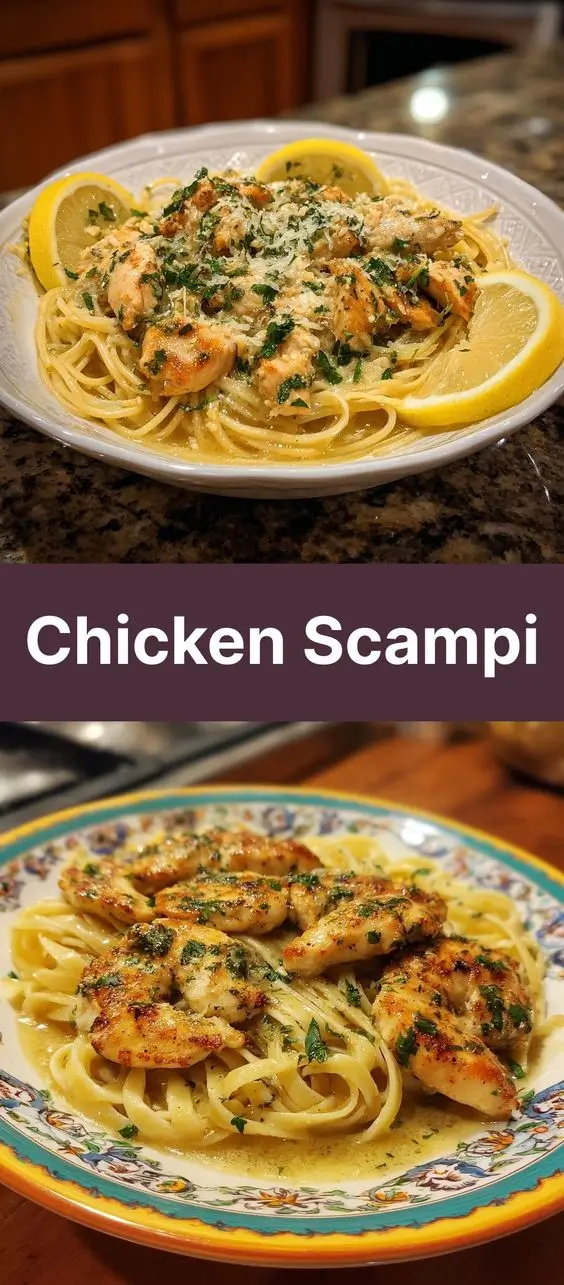
Chicken Scampi: A Delectable Fusion of Italian Flair and Seafood-Inspired Elegance
Chicken Scampi is a beloved dish that brings together the rich, buttery essence of traditional scampi sauce with tender, perfectly cooked chicken. Though not a classic Italian recipe in its original form, Chicken Scampi has become a staple in Italian-American cuisine, celebrated for its luxurious flavor profile and ease of preparation. This dish artfully borrows from the classic scampi alla busara—a Venetian preparation typically made with shellfish like langoustines—but substitutes chicken as the protein to create a heartier, more accessible meal without sacrificing taste. The result is a savory, garlicky, lemon-infused entrée that pairs beautifully with pasta, rice, or even crusty bread.
The History of Chicken Scampi
The term “scampi” originates from the Italian word for langoustine—a small, lobster-like crustacean found in the Mediterranean Sea. In Italy, true scampi refers exclusively to dishes prepared with this shellfish, often served in a white wine, garlic, and butter sauce. However, when Italian immigrants arrived in the United States, access to fresh langoustines was limited, prompting creative adaptations. Over time, American chefs began applying the same rich, aromatic sauce traditionally used for shellfish to other proteins—especially chicken and shrimp—leading to the birth of what we now know as Chicken Scampi.
This evolution reflects the broader trend of Italian-American culinary innovation, where traditional recipes were adapted using locally available ingredients while preserving the spirit of the original flavors. Chicken Scampi gained popularity in mid-20th century American restaurants and home kitchens alike, particularly along the East Coast, where Italian-American communities flourished. Today, it stands as a testament to cultural fusion—a dish rooted in Italian technique but reimagined through an American lens.
Ingredients Breakdown
The magic of Chicken Scampi lies in its simple yet high-quality ingredients, each playing a vital role in creating the dish’s signature taste. Here’s a detailed breakdown:
- Chicken Breast: Boneless, skinless chicken breasts are most commonly used for their lean texture and ability to absorb flavors. They should be sliced thinly or pounded to an even thickness for quick, uniform cooking.
- Butter: Unsalted butter is preferred so you can control the salt level. It adds richness and helps emulsify the sauce, giving it a velvety mouthfeel.
- Olive Oil: Used alongside butter to prevent burning at higher temperatures and to add a fruity, herbal depth.
- Garlic: Freshly minced garlic is essential. It provides the pungent, aromatic backbone of the scampi sauce. Be careful not to overcook it, as burnt garlic turns bitter.
- Dry White Wine: A crisp, acidic wine like Pinot Grigio, Sauvignon Blanc, or unoaked Chardonnay deglazes the pan and introduces brightness. Avoid sweet wines, which can throw off the balance.
- Lemon Juice: Freshly squeezed lemon juice adds acidity and freshness, cutting through the richness of the butter and enhancing all other flavors.
- Lemon Zest: Often overlooked but incredibly impactful, lemon zest contributes intense citrus aroma without additional moisture.
- Red Pepper Flakes: These provide a gentle heat that complements the garlic and lemon. Adjust according to spice preference.
- Fresh Parsley: Flat-leaf (Italian) parsley is used both during cooking and as a garnish for its clean, slightly peppery flavor.
- Salt and Black Pepper: For seasoning at every stage—on the chicken before cooking and to finish the sauce.
- Pasta (Optional): Linguine is the classic choice, but fettuccine, spaghetti, or gluten-free alternatives work well too. The starch from cooked pasta also helps bind the sauce.
Step-by-Step Recipe
Prep Time: 15 minutes
Cook Time: 20 minutes
Total Time: 35 minutes
Servings: 4
Ingredients
- 4 boneless, skinless chicken breasts (about 1.5 lbs)
- Salt and freshly ground black pepper (to taste)
- ½ cup all-purpose flour (for dredging; optional)
- 3 tablespoons olive oil (divided)
- 4 tablespoons unsalted butter (divided)
- 6 cloves garlic (minced)
- ¼ teaspoon red pepper flakes (adjust to taste)
- ½ cup dry white wine (such as Pinot Grigio)
- ⅓ cup freshly squeezed lemon juice (from about 2 large lemons)
- 1 tablespoon lemon zest
- ¼ cup chopped fresh parsley (plus extra for garnish)
- 8 oz linguine (or pasta of choice)
- ½ cup reserved pasta water (if serving with pasta)
Directions
- Prepare the Chicken: Place chicken breasts on a cutting board and slice each horizontally into two thin cutlets. Alternatively, place between sheets of plastic wrap and gently pound to ¼-inch thickness. Season both sides generously with salt and pepper. If desired, lightly dredge in flour, shaking off excess. This step helps create a golden crust and thickens the sauce slightly.
- Cook the Pasta (If Serving With): Bring a large pot of salted water to a boil. Cook linguine according to package instructions until al dente. Reserve ½ cup of pasta water before draining. Toss pasta with a drizzle of olive oil to prevent sticking and set aside.
- Sear the Chicken: In a large skillet over medium-high heat, warm 2 tablespoons olive oil and 2 tablespoons butter. Once hot and shimmering, add chicken cutlets in a single layer—do not overcrowd. Cook for 3–4 minutes per side, or until golden brown and cooked through (internal temperature of 165°F). Transfer to a plate, cover loosely with foil, and keep warm.
- Build the Scampi Sauce: In the same skillet, reduce heat to medium. Add remaining 1 tablespoon olive oil if needed. Stir in minced garlic and red pepper flakes. Sauté for 30–60 seconds until fragrant but not browned.
- Deglaze the Pan: Pour in white wine, scraping up any browned bits from the bottom of the pan (this adds immense flavor). Simmer for 2–3 minutes until reduced by half.
- Add Lemon and Butter: Stir in lemon juice, lemon zest, and remaining 2 tablespoons butter. Whisk until butter melts and sauce begins to emulsify. If serving with pasta, add ¼ cup of reserved pasta water and stir to combine.
- Finish and Serve: Return chicken to the skillet, along with any accumulated juices. Simmer for 2–3 minutes to reheat and allow flavors to meld. Stir in chopped parsley. Taste and adjust seasoning with salt, pepper, or a splash more lemon juice if needed.
- Final Assembly: If serving with pasta, divide cooked linguine among plates and top with chicken and generous spoonfuls of sauce. Alternatively, serve chicken over rice, mashed potatoes, or with crusty bread for dipping. Garnish with extra parsley and a lemon wedge.
Tips for Perfect Chicken Scampi
- Don’t Overcook the Chicken: Thin cutlets cook quickly. Use a meat thermometer to ensure they reach 165°F without drying out.
- Use Fresh Ingredients: Bottled lemon juice lacks the bright, vibrant flavor of fresh lemons. Similarly, pre-minced garlic often contains preservatives and has a muted taste.
- Control the Heat: Garlic burns easily. Keep the heat at medium when sautéing to avoid bitterness.
- Emulsify the Sauce: Whisk constantly when adding butter to create a smooth, cohesive sauce that clings to the chicken and pasta.
- Reserve Pasta Water: The starchy liquid helps bind the sauce and improves texture when tossed with noodles.
- Rest the Chicken: Letting the chicken rest after searing ensures juiciness when sliced or served.
- Baste for Extra Flavor: Spoon some of the finished sauce over the chicken just before serving to enhance moisture and taste.
Variations and Customizations
Chicken Scampi is highly adaptable. Consider these delicious twists:
- Shrimp Scampi Style: Replace half or all of the chicken with peeled, deveined shrimp. Add shrimp during the last 2–3 minutes of cooking until pink and curled.
- Creamy Version: Stir in ¼ to ½ cup heavy cream or half-and-half at the end for a richer, silkier sauce.
- Mushroom Addition: Sauté sliced mushrooms (like cremini or shiitake) before adding garlic for an earthy depth.
- Caper Twist: Add 2 tablespoons of drained capers when deglazing for a briny, tangy pop reminiscent of piccata.
- Gluten-Free Option: Skip the flour dredge or use a gluten-free flour blend. Ensure all other ingredients are certified GF.
- Dairy-Free Adaptation: Substitute butter with vegan butter or additional olive oil. While the texture changes slightly, the dish remains flavorful.
- Herb Variations: Try adding fresh basil, thyme, or oregano for different aromatic notes.
- Spicy Kick: Increase red pepper flakes or add a dash of hot sauce like Calabrian chili paste for more heat.
- Low-Carb/Keto: Serve over zucchini noodles (zoodles), cauliflower rice, or roasted vegetables instead of pasta.
- Wine-Free Version: Replace wine with low-sodium chicken broth and a splash of apple cider vinegar or white wine vinegar for acidity.
Health Considerations and Nutritional Value
Chicken Scampi can be a balanced meal depending on preparation methods and portion sizes. Here’s a general nutritional overview per serving (chicken + sauce + 2 oz dry pasta):
- Calories: ~450–550 kcal
- Protein: ~35–40g (excellent source of lean protein)
- Fat: ~18–22g (mostly from butter and olive oil—healthy fats when consumed in moderation)
- Carbohydrates: ~35–40g (primarily from pasta)
- Sodium: ~600–900mg (can vary based on added salt and broth/wine content)
- Vitamin C: High due to lemon juice
- B Vitamins: Present in chicken and whole grain pasta (if used)
Health Tips:
- Use less butter or replace part with broth to reduce saturated fat.
- Opt for whole wheat or legume-based pasta for increased fiber and nutrients.
- Limit sodium by using low-sodium broth and minimizing added salt.
- Balance the meal with a side salad or steamed vegetables for added vitamins and fiber.
- Pair with a glass of the same white wine used in cooking—for moderate enjoyment.
Frequently Asked Questions (FAQ)
Q: Can I make Chicken Scampi ahead of time?
A: Yes, though it’s best served fresh. You can prep ingredients in advance—slice chicken, mince garlic, juice lemons—and store separately. Fully cooked Chicken Scampi reheats well in a skillet over low heat with a splash of water or broth to revive the sauce.
Q: Can I freeze Chicken Scampi?
A: While possible, freezing may alter the texture of the sauce, especially if it contains butter (which can separate). Reheating from frozen might result in a greasy or broken sauce. For best quality, consume within 3 days of refrigeration.
Q: Why is my sauce separating?
A: Butter-based sauces can break if overheated or not emulsified properly. To fix, remove from heat and whisk in a tablespoon of warm water or lemon juice. Adding a small amount of starch (like a cornstarch slurry or pasta water) can also help stabilize it.
Q: What can I use instead of white wine?
A: Substitute with dry vermouth, unsweetened white grape juice mixed with vinegar, or simply use low-sodium chicken broth with 1 tsp vinegar for acidity.
Q: Is Chicken Scampi authentic Italian food?
A: Not exactly. Traditional Italian scampi uses shellfish. Chicken Scampi is an Italian-American invention that adapts the sauce style to chicken, reflecting regional ingredient availability and culinary creativity.
Q: Can I use chicken thighs instead of breasts?
A: Absolutely. Boneless, skinless thighs offer more flavor and stay juicier during cooking. Just adjust cooking time as they may take slightly longer to reach safe internal temperature.
Q: How do I store leftovers?
A: Store in an airtight container in the refrigerator for up to 3 days. Reheat gently on the stove, adding a bit of liquid to refresh the sauce.
Summary
Chicken Scampi is a sumptuous, restaurant-quality dish that combines tender chicken in a luxuriously buttery, garlicky, lemon-white wine sauce—simple to make yet impressive enough for special occasions. Rooted in Italian-American tradition, it’s endlessly customizable and pairs perfectly with pasta, veggies, or grains for a complete, satisfying meal.