Introduction
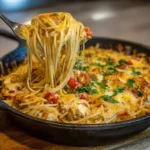
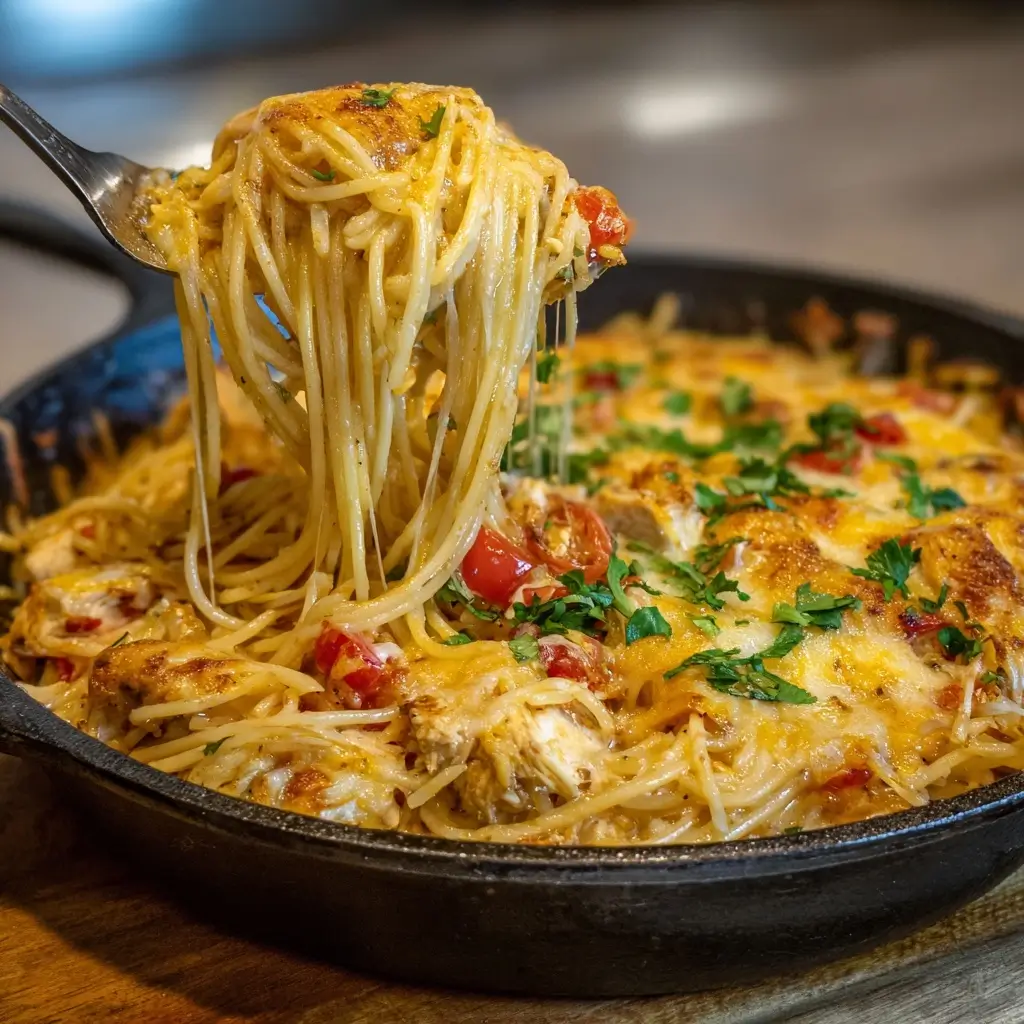
Chicken Spaghetti Bake is a beloved American comfort food classic—creamy, hearty, and endlessly adaptable. It bridges the gap between weeknight practicality and Sunday dinner indulgence, offering layers of tender pasta, savory shredded chicken, rich cheese, and aromatic seasonings baked to golden perfection. Whether served at potlucks, family dinners, or holiday side tables, this dish delivers nostalgic warmth with every forkful. Its enduring popularity stems from its forgiving nature: it’s equally delicious made with pantry staples or elevated with gourmet touches—and it reheats beautifully, making it ideal for meal prep, leftovers, and freezer-friendly batch cooking.
The History
Chicken Spaghetti Bake traces its roots to mid-20th-century American home cooking, emerging alongside the rise of convenience foods and casserole culture in the 1950s and ’60s. Influenced by wartime rationing adaptations and postwar innovations like canned soups, evaporated milk, and pre-shredded cheese, early versions often relied on condensed cream of mushroom or celery soup as a creamy binder. Regional variations soon blossomed: Southern iterations embraced sharp cheddar and a touch of cayenne; Texan versions incorporated green chiles and Monterey Jack; Midwestern families added peas or mushrooms for texture and nutrition. Though its precise origin remains unattributed to a single cookbook or chef, Chicken Spaghetti Bake gained national recognition through church cookbooks, Junior League collections (notably the iconic Texas Cookbook and Circle B Ranch Recipes), and women’s magazines like Good Housekeeping and Ladies’ Home Journal. Over decades, it evolved beyond its “soup-based” beginnings into a more sophisticated, from-scratch interpretation—embracing roux-thickened sauces, roasted chicken, artisanal cheeses, and fresh herbs—while retaining its soul: simplicity, satisfaction, and shared warmth.
Ingredients Breakdown
Understanding each component deepens both flavor and function in this layered bake:
- Pasta: Spaghetti is traditional—but linguine, bucatini, or even gluten-free brown rice spaghetti work well. Undercooking pasta by 2–3 minutes (al dente) is essential; it finishes cooking in the oven and prevents mushiness.
- Chicken: Boneless, skinless chicken breasts or thighs are ideal. Thighs offer richer flavor and superior moisture retention; breasts yield a leaner, milder profile. Rotisserie chicken is an excellent time-saving shortcut—just ensure it’s freshly shredded and not overly salty.
- Dairy & Creaminess: A trifecta of sour cream, cream cheese, and evaporated milk (or whole milk) creates luxurious body without curdling. Evaporated milk adds concentrated richness and stability during baking; heavy cream can be substituted but may increase browning risk.
- Cheese: A blend is key. Sharp cheddar provides tang and meltability; mozzarella contributes stretch and mild sweetness; Parmesan adds umami depth and golden crust formation. Optional additions include Gruyère for nuttiness or pepper jack for heat.
- Aromatics & Vegetables: Onions and garlic form the foundational flavor base. Sautéed until soft and sweet—not browned—ensures no bitterness. Optional add-ins include finely diced bell peppers (for crunch and color), sautéed mushrooms (for earthiness), or baby spinach (wilted in at the end for nutrients).
- Seasonings: Beyond salt and black pepper, dried oregano, smoked paprika, and a pinch of cayenne lend complexity. Fresh parsley or chives stirred in before baking brighten the finish. Some regional recipes include a splash of white wine or lemon juice to balance richness.
- Texture Enhancers: Panko breadcrumbs toasted in butter provide a crisp, golden topping. Crushed Ritz crackers, buttered potato chips, or even crumbled cooked bacon offer delightful textural contrast and savory depth.
Step-by-Step Recipe
- Prep & Preheat: Adjust oven rack to center position. Preheat oven to 375°F (190°C). Lightly grease a 9×13-inch baking dish with butter or nonstick spray.
- Cook Pasta: Bring a large pot of heavily salted water to a rolling boil. Add spaghetti and cook for 2 minutes less than package directions for al dente. Drain thoroughly, rinse briefly under cool water to halt cooking, then toss with 1 tbsp olive oil to prevent sticking. Set aside.
- Prepare Chicken: While pasta cooks, poach, bake, or pan-sear chicken until fully cooked (165°F internal temp). Let rest 5 minutes, then shred using two forks. Alternatively, use 3–4 cups shredded rotisserie chicken (about 1.5 lbs meat).
- Sauté Aromatics: In a large skillet or Dutch oven, melt 2 tbsp butter over medium heat. Add 1 finely diced yellow onion and 4 minced garlic cloves. Sauté 5–6 minutes until translucent and fragrant—do not brown. Optional: add ½ cup diced red bell pepper and cook 2 more minutes.
- Build Sauce Base: Stir in ¼ cup all-purpose flour to form a smooth paste (roux). Cook 1 minute, stirring constantly. Gradually whisk in 1 cup evaporated milk (or whole milk), followed by 1 cup sour cream and 4 oz softened full-fat cream cheese. Whisk continuously until smooth and slightly thickened—about 3–4 minutes. Avoid boiling vigorously to prevent separation.
- Season & Combine: Reduce heat to low. Stir in 1 tsp dried oregano, ½ tsp smoked paprika, ¼ tsp cayenne (optional), 1½ tsp kosher salt, and ½ tsp black pepper. Fold in shredded chicken, cooked pasta, 2 cups shredded sharp cheddar, 1 cup shredded mozzarella, and ½ cup grated Parmesan. Gently mix until evenly coated—do not overmix to avoid breaking pasta.
- Transfer & Top: Pour mixture into prepared baking dish. Smooth top with a spatula. Sprinkle evenly with remaining ½ cup cheddar, ¼ cup mozzarella, and 2 tbsp Parmesan. For crunch, scatter ¾ cup buttered panko (made by toasting ½ cup panko in 2 tbsp melted butter until golden).
- Bake: Cover dish tightly with aluminum foil. Bake 25 minutes. Remove foil and bake uncovered 15–20 minutes longer, until bubbly at edges, golden on top, and internal temperature reaches 165°F. Let rest 10–15 minutes before slicing—this allows sauce to reabsorb and set for cleaner portions.
Tips
- Prevent Curdling: Always bring dairy ingredients to room temperature before mixing. Never boil the sauce—low-and-slow heating preserves emulsion integrity.
- Maximize Flavor Depth: Sear chicken thighs before shredding for caramelized notes. Deglaze the pan with ¼ cup dry white wine after sautéing aromatics, reducing by half before adding dairy.
- Texture Control: If sauce seems too thin before baking, simmer 2–3 extra minutes. Too thick? Stir in 1–2 tbsp warm milk. For extra creaminess, stir in 2 tbsp mascarpone at the end of sauce prep.
- Baking Dish Matters: Use light-colored metal or ceramic dishes—dark or glass pans absorb more heat and may over-brown edges. If using glass, reduce oven temp by 25°F and extend covered time by 5 minutes.
- Resting Is Non-Negotiable: Cutting too soon releases steam and causes runny sauce. Resting lets starches relax and proteins rebind, yielding a cohesive, sliceable bake.
- Freezer-Friendly Strategy: Assemble unbaked casserole, cover tightly with double-layer foil, and freeze up to 3 months. Thaw overnight in fridge before baking (add 10–15 minutes to covered time).
- Reheating Right: Individual portions reheat beautifully in the microwave (covered, 60–90 sec), but for best texture, place in oven at 325°F for 15–20 minutes, covered with foil, until heated through.
Variations and Customizations
This recipe is a canvas—here are inspired, tested adaptations for every palate and pantry:
- Southwest Style: Add 1 (4-oz) can diced green chiles, 1 tsp ground cumin, ½ tsp chipotle powder, and top with crushed tortilla chips + crumbled queso fresco.
- Mediterranean Twist: Swap cheddar for feta and fontina; stir in ½ cup kalamata olives, ¼ cup sun-dried tomatoes (oil-packed, chopped), and 2 tbsp chopped fresh oregano. Garnish with lemon zest.
- Vegetarian Version: Replace chicken with 2 cups cooked lentils or 16 oz crumbled extra-firm tofu (pressed & sautéed with tamari and smoked paprika). Boost umami with 1 tbsp nutritional yeast in sauce.
- Keto/Low-Carb Adaptation: Substitute spaghetti with spiralized zucchini (‘zoodles’) or shirataki noodles—blot extremely dry. Reduce dairy slightly and add ¼ cup grated pecorino for saltiness. Bake uncovered only 12–15 min to avoid sogginess.
- Gourmet Mushroom & Truffle: Sauté 8 oz mixed wild mushrooms (oyster, cremini, shiitake) in butter and thyme until deeply caramelized. Fold in with chicken. Finish sauce with 1 tsp white truffle oil and top with microgreens.
- Buffalo Chicken Style: Toss shredded chicken in ⅓ cup buffalo sauce before combining. Add 4 oz crumbled blue cheese to sauce. Top with extra blue cheese crumbles and sliced scallions.
- Breakfast Bake Variation: Reduce cheese by half, omit herbs, and stir in 6 beaten eggs + ¼ cup half-and-half before baking. Top with crispy bacon and chives—bake until set (like a frittata-pasta hybrid).
Health Considerations and Nutritional Value
A standard 1-cup serving (approx. 320g) of Chicken Spaghetti Bake typically contains:
- Calories: ~420–480 kcal (varies by cheese/dairy choices)
- Protein: 28–34g (excellent source—chicken + dairy deliver complete amino acid profile)
- Fat: 20–26g (mostly unsaturated from olive oil/butter; saturated fat can be moderated with part-skim cheeses and reduced cream cheese)
- Carbohydrates: 32–38g (primarily complex carbs from enriched pasta; fiber ~2g unless whole grain pasta or veggies added)
- Sodium: 680–920mg (manageable by using low-sodium broth, unsalted butter, and limiting added salt—rotisserie chicken can contribute significantly; opt for “no salt added” versions)
- Vitamins & Minerals: Rich in calcium (cheese, dairy), vitamin B12 (chicken, dairy), selenium (chicken), and zinc. Adding spinach boosts folate and iron; bell peppers add vitamins A & C.
Dietary Modifications:
- Gluten-Free: Use certified GF spaghetti (brown rice, quinoa, or corn-based) and ensure all sauces/spices are GF-certified.
- Lactose-Sensitive: Substitute lactose-free milk/cream, full-fat coconut milk (for creaminess), and aged cheddar or Swiss (naturally lower in lactose). Lactase enzyme drops can be added to dairy components pre-mixing.
- Lower-Calorie Option: Replace half the pasta with zucchini ribbons or spaghetti squash; use 1% milk, low-fat cottage cheese instead of cream cheese, and reduce cheese by ¼ cup—compensate with smoked paprika, garlic powder, and fresh herbs.
- Heart-Healthy: Use olive oil instead of butter, skinless chicken breast, reduced-sodium cheeses, and add ½ cup cooked white beans for soluble fiber that helps manage cholesterol.
Note: While indulgent, this dish offers balanced macros and high-quality protein—making it more nutritionally robust than many casseroles. Portion control and veggie integration significantly elevate its health profile.
Ingredients
- 12 oz spaghetti (or gluten-free alternative)
- 1.5 lbs boneless, skinless chicken breasts or thighs (or 3–4 cups cooked rotisserie chicken)
- 2 tbsp unsalted butter
- 1 medium yellow onion, finely diced
- 4 garlic cloves, minced
- ¼ cup all-purpose flour (or GF 1:1 blend)
- 1 cup evaporated milk (or whole milk)
- 1 cup full-fat sour cream
- 4 oz full-fat cream cheese, softened
- 1 tsp dried oregano
- ½ tsp smoked paprika
- ¼ tsp cayenne pepper (optional)
- 1½ tsp kosher salt (adjust if using seasoned chicken)
- ½ tsp freshly ground black pepper
- 2½ cups shredded sharp cheddar cheese, divided
- 1¼ cups shredded whole-milk mozzarella, divided
- ½ cup grated Parmesan cheese, divided
- ¾ cup panko breadcrumbs
- 2 tbsp additional unsalted butter, melted (for topping)
- Fresh parsley or chives, for garnish (optional)
Directions
- Preheat oven to 375°F (190°C). Grease a 9×13-inch baking dish.
- Bring 4–5 quarts of water to a boil. Add 2 tbsp salt. Cook spaghetti 2 minutes less than package directions. Drain, rinse under cool water, toss with 1 tbsp olive oil, and set aside.
- While pasta cooks, prepare chicken: Place chicken in a saucepan, cover with broth or water, and simmer gently 12–15 min until cooked through (165°F). Drain, cool slightly, then shred. (Or use pre-cooked rotisserie chicken.)
- In a large skillet or Dutch oven, melt 2 tbsp butter over medium heat. Add onion; cook 4–5 min until soft. Add garlic; cook 1 min more until fragrant.
- Sprinkle flour over onions/garlic. Stir constantly 1 minute to cook off raw taste.
- Gradually whisk in evaporated milk, sour cream, and cream cheese until smooth. Simmer gently 3–4 min, stirring frequently, until slightly thickened. Do not boil.
- Reduce heat to low. Stir in oregano, smoked paprika, cayenne (if using), salt, and pepper.
- Fold in shredded chicken, cooked spaghetti, 2 cups cheddar, 1 cup mozzarella, and ¼ cup Parmesan. Mix gently until fully combined.
- Transfer to prepared baking dish. Smooth top. Sprinkle with remaining ½ cup cheddar, ¼ cup mozzarella, ¼ cup Parmesan, and panko tossed with melted butter.
- Cover tightly with foil. Bake 25 minutes.
- Remove foil. Bake uncovered 15–20 minutes, until top is golden and edges bubble vigorously.
- Let rest 15 minutes before serving. Garnish with fresh herbs.
FAQ
- Can I make this ahead of time?
- Absolutely. Assemble completely (unbaked), cover tightly, and refrigerate up to 24 hours. Add 5–10 minutes to covered baking time if starting cold. For longer storage, freeze unbaked (up to 3 months); thaw overnight in fridge before baking.
- Why does my sauce sometimes break or look greasy?
- This occurs when dairy overheats or temperature shock happens (e.g., cold sour cream stirred into hot sauce). Always warm dairy to room temp first, add gradually while whisking, and keep heat low. A splash of Dijon mustard (½ tsp) acts as an emulsifier to stabilize the sauce.
- Can I use canned soup instead of making sauce from scratch?
- Yes—you can substitute 2 (10.5-oz) cans condensed cream of chicken or mushroom soup + ½ cup milk for the roux-based sauce. However, homemade sauce yields superior flavor, texture, and control over sodium/fat content.
- My pasta turned mushy—what went wrong?
- Overcooking pasta before baking is the #1 culprit. Always undercook by 2–3 minutes. Also, avoid rinsing with hot water (which continues cooking) and ensure pasta is well-drained—excess water dilutes the sauce.
- What’s the best cheese blend for maximum melt and flavor?
- Sharp cheddar + whole-milk mozzarella is the gold standard. For even better melt, add 2 oz American cheese (yes, really!)—its sodium citrate prevents separation. Avoid pre-shredded cheeses with anti-caking agents (they don’t melt smoothly).
- Can I add vegetables without making it watery?
- Yes—just ensure they’re properly prepped. Sauté mushrooms until dry, squeeze excess liquid from thawed frozen spinach, or roast zucchini/eggplant first. Steamed broccoli florets (blotted dry) also integrate well.
- Is this dish safe for pregnant individuals or young children?
- Yes, when prepared with pasteurized dairy and fully cooked chicken. Avoid raw eggs or unpasteurized cheeses. For infants/toddlers, omit cayenne and reduce salt by half; cut into small, soft pieces.
- How do I scale this for a crowd (e.g., 30 people)?
- Double or triple the recipe—but bake in multiple 9×13 dishes rather than one oversized pan (uneven cooking). Or use a commercial steam table pan (12x20x2.5”) and increase covered time to 35 min, uncovered to 25 min. Stir halfway through covered bake if possible.
Summary
Chicken Spaghetti Bake is a timeless, versatile casserole that marries tender pasta, succulent chicken, and a luxuriously creamy, cheese-laden sauce—baked to golden, bubbling perfection. With thoughtful ingredient choices, smart technique, and endless customization potential, it satisfies cravings, feeds families, and adapts seamlessly to dietary needs, traditions, and occasions.
From its midcentury casserole roots to modern gourmet reinterpretations, this dish endures not just for its comfort—it endures because it’s deeply personal, generously shareable, and always, unmistakably, home.