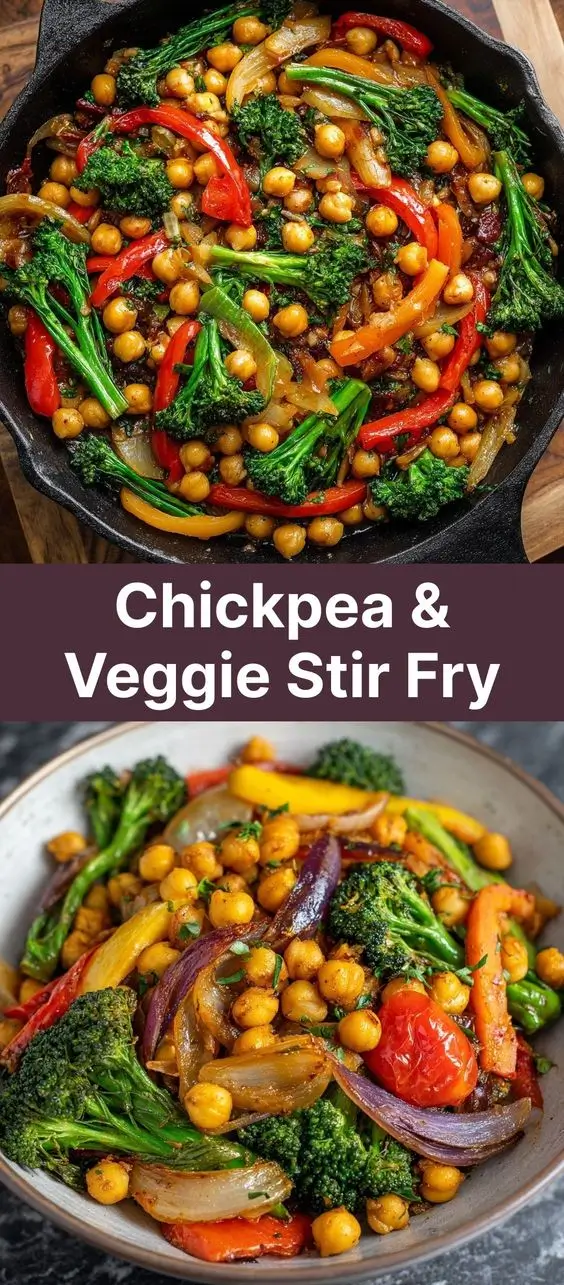
Chickpea & Veggie Stir Fry: A Flavorful, Nutritious Plant-Based Delight
Introduction
The Chickpea & Veggie Stir Fry is more than just a meal—it’s a celebration of vibrant colors, bold flavors, and wholesome nutrition. Whether you’re a committed vegetarian, exploring plant-based eating, or simply looking for a quick and satisfying dinner option, this dish offers the perfect balance of protein, fiber, and essential vitamins. With its roots in global culinary traditions and its adaptability to personal taste, it has become a staple in modern kitchens worldwide. Packed with tender chickpeas, crisp vegetables, and a savory sauce that ties everything together, this stir fry delivers comfort without compromising on health.
The History
Stir-frying as a cooking technique traces back over 1,500 years to ancient China, where woks were used to quickly cook small pieces of food over high heat—preserving texture, flavor, and nutrients. While traditional stir fries often featured meat and rice, plant-based variations have existed in various cultures, especially in regions where legumes were dietary staples. Chickpeas, also known as garbanzo beans, have been cultivated for thousands of years across the Mediterranean, Middle East, and South Asia. In Indian cuisine, chickpeas are central to dishes like chana masala; in Levantine cooking, they appear in salads and stews. The fusion of these legume-rich traditions with the stir-fry method reflects a modern culinary evolution—one that embraces both speed and sustenance. Today’s Chickpea & Veggie Stir Fry is a testament to this global journey, combining Eastern techniques with Western and Mediterranean ingredients to create a universally appealing dish.
Ingredients Breakdown
The beauty of this recipe lies in its simplicity and nutrient-dense components. Each ingredient contributes not only to flavor but also to the overall health profile of the meal.
- Chickpeas (canned or cooked from dry): A rich source of plant-based protein and dietary fiber, chickpeas help keep you full longer and support digestive health. They provide complex carbohydrates, iron, folate, and manganese.
- Olive oil or avocado oil: Healthy fats that aid in the absorption of fat-soluble vitamins and add richness to the dish. These oils have anti-inflammatory properties and are heart-healthy when used in moderation.
- Garlic and ginger: Both are natural immune boosters with antimicrobial and anti-inflammatory effects. Their pungent aromas form the flavor foundation of the stir fry.
- Onion (yellow or red): Adds sweetness and depth when sautéed. Onions are rich in antioxidants, particularly quercetin, which may support cardiovascular health.
- Colorful bell peppers (red, yellow, orange): High in vitamin C, beta-carotene, and antioxidants. Their crunch adds texture contrast to the soft chickpeas.
- Zucchini or yellow squash: Low in calories but high in water content and vitamin B6. They absorb flavors well while maintaining a tender-crisp bite.
- Broccoli florets: Packed with fiber, vitamin K, and sulforaphane—a compound studied for its potential cancer-fighting properties.
- Carrots: Contribute natural sweetness and are loaded with beta-carotene, which the body converts into vitamin A for eye and skin health.
- Soy sauce or tamari (gluten-free option): Provides umami and saltiness. Choose low-sodium versions to control salt intake.
- Rice vinegar or apple cider vinegar: Adds brightness and helps balance the richness of the oil and legumes.
- Maple syrup or agave nectar (optional): A touch of natural sweetness to round out the sauce, especially if serving to children or those who prefer milder flavors.
- Sesame oil (to finish): Imparts a nutty aroma and enhances the Asian-inspired profile of the dish.
- Red pepper flakes or fresh chili: For heat lovers, these add capsaicin, which can boost metabolism and provide anti-inflammatory benefits.
- Fresh cilantro or green onions (garnish): Add freshness and color. Cilantro may help detoxify heavy metals, while green onions contribute mild onion flavor and extra nutrients.
Step-by-Step Recipe
- Prep Your Ingredients: Drain and rinse the canned chickpeas thoroughly under cold water to remove excess sodium and the canning liquid, which can cause bloating. Chop all vegetables uniformly—about ½-inch pieces—to ensure even cooking. Mince garlic and grate fresh ginger. Have your sauce ingredients measured and ready, as stir frying moves quickly.
- Make the Sauce: In a small bowl, whisk together 3 tablespoons soy sauce (or tamari), 1 tablespoon rice vinegar, 1 teaspoon sesame oil, 1 teaspoon maple syrup, 1 teaspoon grated ginger, 1 minced garlic clove, and a pinch of red pepper flakes. Set aside.
- Heat the Wok or Skillet: Place a large wok or non-stick skillet over medium-high heat. Add 1–2 tablespoons of olive or avocado oil and swirl to coat the surface evenly.
- Sauté Aromatics: Add chopped onions and stir for 2–3 minutes until translucent. Add minced garlic and grated ginger, stirring constantly for 30 seconds to release their fragrance without burning.
- Cook Hard Vegetables First: Add carrots and broccoli florets. Stir fry for 4–5 minutes, tossing frequently, until they begin to soften but still retain a crisp texture.
- Add Softer Vegetables: Toss in bell peppers, zucchini, and any other quick-cooking veggies. Continue to stir fry for another 3–4 minutes.
- Incorporate Chickpeas: Add the drained chickpeas to the pan. Stir gently to combine and heat through for 2 minutes. Avoid excessive stirring to prevent mashing the chickpeas.
- Pour in the Sauce: Give the sauce a quick re-whisk and pour it over the vegetables and chickpeas. Stir continuously for 1–2 minutes until the sauce reduces slightly and coats all ingredients evenly.
- Finish and Garnish: Remove from heat. Drizzle with an additional ½ teaspoon of toasted sesame oil for aroma. Top with chopped green onions, fresh cilantro, and a sprinkle of sesame seeds if desired.
- Serve Immediately: Plate the stir fry warm, ideally over a bed of brown rice, quinoa, or cauliflower rice for a complete meal.
Tips
- Don’t overcrowd the pan: Cooking in batches ensures vegetables sear rather than steam, preserving their crunch and enhancing flavor through caramelization.
- Dry your chickpeas: Pat them with a paper towel after rinsing to improve browning and texture during cooking.
- Use high heat wisely: Keep ingredients moving in the pan using a spatula or tongs to prevent sticking or burning, especially when adding sauce.
- Customize doneness: Prefer softer veggies? Add a splash of vegetable broth and cover the pan for 2–3 minutes to steam slightly. Like it crisp? Reduce cook time by 1–2 minutes.
- Boost flavor before serving: A squeeze of fresh lime juice at the end brightens the entire dish and enhances nutrient absorption (especially iron).
- Batch cook smartly: Prepare double portions and store in airtight containers for up to 4 days. Reheat gently in a skillet to maintain texture.
- Freeze for later: This stir fry freezes well for up to 3 months. Thaw overnight in the refrigerator before reheating.
Variations and Customizations
This recipe is incredibly versatile and welcomes creativity. Here are some delicious ways to personalize your Chickpea & Veggie Stir Fry:
- Protein Boost: Add tofu cubes, tempeh strips, edamame, or even shredded rotisserie chicken for extra protein.
- Mediterranean Twist: Skip soy sauce and use lemon juice, oregano, and olive oil. Add cherry tomatoes, spinach, and kalamata olives. Finish with crumbled feta (optional).
- Thai-Inspired: Use coconut aminos instead of soy sauce, add red curry paste to the sauce, and garnish with crushed peanuts and Thai basil.
- Indian Fusion: Sauté with garam masala, turmeric, and cumin. Stir in tomato paste and a splash of coconut milk for a creamy chana-style dish.
- Keto-Friendly Version: Replace chickpeas with diced paneer or extra firm tofu, reduce higher-carb veggies like carrots, and serve over sautéed cabbage or zucchini noodles.
- Spicy Sriracha Kick: Mix sriracha or sambal oelek into the sauce for a fiery version that awakens the palate.
- Umami Bomb: Add a few rehydrated shiitake mushrooms or a dash of nutritional yeast for deeper savory notes.
- Seasonal Swaps: In spring, try asparagus and peas; in fall, use sweet potatoes and kale; in winter, add Brussels sprouts and parsnips.
Health Considerations and Nutritional Value
A typical serving (approximately 1.5 cups, not including grain base) of Chickpea & Veggie Stir Fry provides:
| Nutrient | Amount per Serving | Benefits |
|---|---|---|
| Calories | ~280 kcal | Balanced energy for a main meal |
| Protein | 10–12g | Supports muscle repair and satiety |
| Fiber | 8–10g | Promotes gut health and stabilizes blood sugar |
| Total Fat | 9–12g | Mainly healthy monounsaturated and polyunsaturated fats |
| Carbohydrates | 40–45g | Complex carbs from legumes and vegetables |
| Sodium | 500–700mg (varies with soy sauce) | Lower if using low-sodium soy sauce or tamari |
| Vitamin C | Over 100% DV | Immune support and collagen production |
| Vitamin A | Over 80% DV | Essential for vision and skin health |
| Iron | 20–25% DV | Plant-based iron (enhanced by vitamin C in veggies) |
| Folate | ~30% DV | Important for cell function and pregnancy |
Considerations:
- For low-sodium diets: Use reduced-sodium soy sauce or coconut aminos, and increase herbs like basil, cilantro, or lemon zest for flavor without salt.
- For digestive sensitivity: Some people find chickpeas gassy. Try soaking canned chickpeas in water with a piece of kombu seaweed while heating—it contains enzymes that help break down oligosaccharides responsible for gas.
- Allergies: Naturally gluten-free (with tamari), nut-free, and dairy-free (unless customized). Always check labels on sauces for hidden allergens.
- Blood sugar management: The fiber and protein content help slow glucose absorption, making this dish suitable for diabetics when portion-controlled.
Ingredients
- 2 cups cooked or canned chickpeas, drained and rinsed
- 2 tablespoons olive oil or avocado oil
- 1 medium onion, sliced
- 3 cloves garlic, minced
- 1 tablespoon fresh ginger, grated
- 1 red bell pepper, sliced
- 1 yellow bell pepper, sliced
- 1 medium zucchini, halved and sliced
- 1 cup broccoli florets
- 1 medium carrot, julienned or thinly sliced
- 3 tablespoons soy sauce or tamari (low sodium preferred)
- 1 tablespoon rice vinegar or apple cider vinegar
- 1 teaspoon pure maple syrup or agave nectar
- 1 teaspoon toasted sesame oil
- ½ teaspoon red pepper flakes (adjust to taste)
- 2 green onions, sliced (for garnish)
- ¼ cup fresh cilantro, chopped
- 1 teaspoon sesame seeds (optional)
- Lime wedges (for serving)
Directions
- In a small bowl, whisk together soy sauce, rice vinegar, maple syrup, sesame oil, grated ginger, minced garlic, and red pepper flakes. Set aside.
- Heat oil in a large wok or skillet over medium-high heat. Add onions and sauté for 2–3 minutes until softening.
- Add garlic and ginger; stir for 30 seconds until fragrant.
- Add broccoli and carrots. Stir fry for 4–5 minutes, stirring frequently.
- Add bell peppers and zucchini. Cook for another 3–4 minutes until vegetables are tender-crisp.
- Stir in chickpeas and cook for 2 minutes to heat through.
- Pour sauce over the mixture and stir well to coat. Cook for 1–2 minutes more, allowing the sauce to thicken slightly.
- Remove from heat. Stir in half the green onions and cilantro.
- Garnish with remaining green onions, cilantro, sesame seeds, and a drizzle of extra sesame oil if desired.
- Serve immediately with brown rice, quinoa, or your favorite grain. Offer lime wedges on the side for squeezing.
FAQ
- Can I use dried chickpeas instead of canned?
- Yes! Soak ½ cup dried chickpeas overnight, then boil for 60–90 minutes until tender. Using dried chickpeas reduces sodium and gives better texture control.
- Is this recipe gluten-free?
- Yes, as long as you use tamari instead of soy sauce and verify all other ingredients are certified gluten-free.
- How do I store leftovers?
- Store in an airtight container in the refrigerator for up to 4 days. Reheat in a skillet over medium heat with a splash of water to refresh moisture.
- Can I make it oil-free?
- Absolutely. Use vegetable broth or water for sautéing instead of oil. The dish will be lighter but still flavorful thanks to the sauce and spices.
- Why are my vegetables turning mushy?
- You may be cooking them too long or covering the pan. Stir fry over high heat without a lid, and avoid overcrowding the pan.
- Can I prep this ahead of time?
- Yes! Chop all vegetables and make the sauce up to 2 days in advance. Store separately in the fridge. Assemble and cook when ready.
- Are canned chickpeas healthy?
- Yes—they retain most nutrients of dried chickpeas. Just rinse well to reduce sodium and improve digestibility.
- What grains pair best with this stir fry?
- Brown rice, wild rice, quinoa, farro, or cauliflower rice all work beautifully. For a fun twist, try it in lettuce wraps or over massaged kale salad.
Summary
The Chickpea & Veggie Stir Fry is a nutritious, adaptable, and flavorful dish that brings together plant-powered protein, colorful vegetables, and aromatic seasonings in a quick 30-minute meal.
Perfect for weeknights, meal prep, or introducing more plant-based meals into your diet, this stir fry satisfies both the palate and the body’s nutritional needs.