Introduction
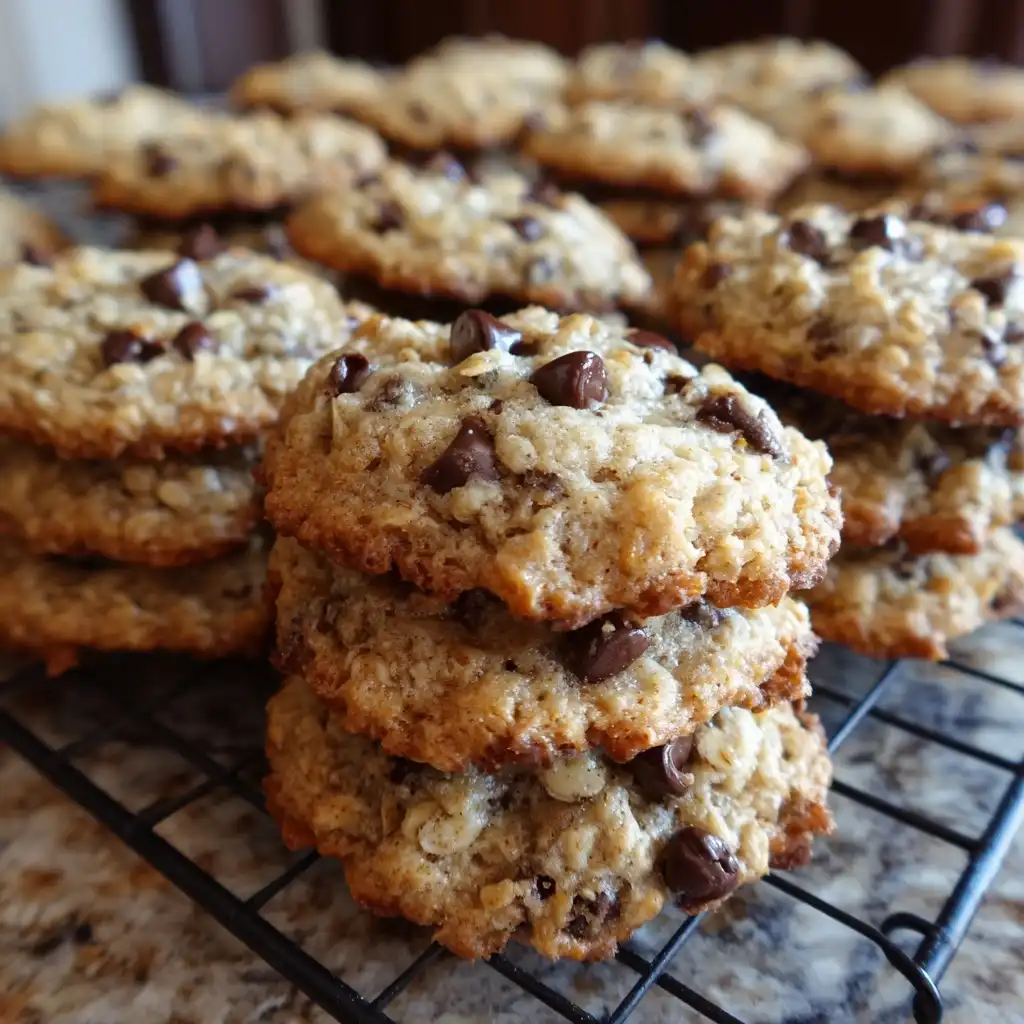
Chocolate Chip Oatmeal Cookies are the beloved, soul-warming fusion of two classic American favorites—chewy, hearty oatmeal cookies and the irresistible allure of melty, rich chocolate chips. More than just a dessert, they represent comfort, nostalgia, and homemade hospitality—evoking memories of after-school snacks, holiday baking marathons, and care packages sent with love. Their enduring popularity lies in their perfect textural harmony: tender yet chewy centers, slightly crisp edges, nutty whole-grain warmth from oats, and pockets of bittersweet or semi-sweet chocolate that bloom with flavor as they cool. Whether served warm with a glass of cold milk, packed into lunchboxes, gifted in mason jars, or frozen for spontaneous cravings, these cookies strike a rare balance between wholesome and indulgent—making them a perennial favorite across generations and dietary preferences.
The History
The origins of the Chocolate Chip Oatmeal Cookie are a delicious case study in culinary evolution—born not from a single eureka moment, but through layered innovation and cultural adaptation. While Ruth Wakefield’s 1938 invention of the chocolate chip cookie at the Toll House Inn in Whitman, Massachusetts, laid the foundational blueprint (introducing chopped Nestlé semi-sweet chocolate bars into butter drop cookies), the oatmeal variation emerged shortly thereafter as home bakers sought heartier, more economical, and nutritionally robust alternatives—especially during wartime rationing in the early 1940s. Rolled oats, already a pantry staple for breakfast porridge and wartime “Victory Baking,” were naturally folded into cookie doughs to stretch scarce butter and sugar, add fiber and satiety, and lend a rustic, golden-brown texture. By the 1950s, iconic cookbooks like The Joy of Cooking (1951 edition) and Betty Crocker’s Picture Cook Book included dedicated “Oatmeal Chocolate Chip Cookies” recipes—often featuring shortening for shelf stability and crispness, reflecting mid-century ingredient realities. The rise of quick-cooking and instant oats in the 1960s further diversified textures, while the health-conscious wave of the 1980s and ’90s spurred whole grain, low-fat, and reduced-sugar iterations. Today, the cookie stands as a globally adaptable canvas—honored in artisanal bakeries from Tokyo to Toronto, reimagined by dietitians for gluten-free and vegan diets, and celebrated on social media with viral twists like brown butter infusions, sea salt finishes, and mix-ins ranging from toasted coconut to candied ginger.
Ingredients Breakdown
Understanding each ingredient’s functional role transforms cookie-making from rote following to intuitive artistry. Below is an in-depth, chef-level breakdown:
- Old-Fashioned Rolled Oats (not instant or quick-cooking): The structural and sensory anchor. Their coarse cut retains moisture and chew without turning gummy; they absorb liquid slowly, contributing to spread control and a signature rustic craggy surface. Steel-cut oats are too dense and won’t soften sufficiently; instant oats dissolve into paste, yielding flat, cakey cookies.
- All-Purpose Flour: Provides gluten network for structure and lift. Too much leads to toughness; too little causes excessive spread. A small portion can be substituted with whole wheat flour (up to 25%) for nuttiness and fiber—but expect denser results.
- Baking Soda: Not baking powder—the sole leavener here. It reacts with the acidic components (brown sugar’s molasses, yogurt if used) to create carbon dioxide bubbles, encouraging lift and spread while promoting browning via Maillard reaction. Freshness is non-negotiable; test by mixing ¼ tsp with 2 tsp vinegar—if no vigorous fizz, replace it.
- Unsalted Butter: Delivers richness, tenderness, and flavor. Its water content steams during baking, creating air pockets for chew. Melted butter yields flatter, crisper cookies; softened (room-temp) butter creamed with sugar creates more air and height. European-style butter (82–84% fat) enhances browning and depth.
- Brown Sugar (packed): The secret to chewiness and complexity. Molasses adds acidity (activating soda), moisture retention, and deep caramel notes. Dark brown sugar intensifies flavor and softness; light brown offers milder sweetness and slightly firmer texture.
- Granulated Sugar: Contributes to crisp edges, structural stability, and balanced sweetness. It competes with brown sugar for moisture, so the ratio directly controls chew vs. crunch.
- Eggs: Act as emulsifiers and binders. The yolk adds fat and richness; the white contributes structure and slight lift. Room-temperature eggs incorporate more evenly into the batter. For extra chew, some bakers add an extra yolk; for cakey texture, an extra white.
- Vanilla Extract (pure, not imitation): Enhances all other flavors—particularly the caramelized notes of brown sugar and toasted oats. Bourbon-vanilla or Tahitian vanilla adds floral nuance.
- Salt (fine sea or kosher): Not just for seasoning—it sharpens sweetness, balances bitterness in chocolate, and strengthens gluten slightly. Under-salting dulls flavor; over-salting overwhelms. Always use fine salt for even distribution.
- Chocolate Chips or Chunks: Quality matters profoundly. Semi-sweet (52–60% cacao) offers classic balance. Bittersweet (65–70%) delivers sophistication and less sweetness. Milk chocolate provides nostalgic creaminess but burns more easily. Real chocolate chunks (chopped bars) melt more luxuriously than chips, which contain stabilizers to hold shape. Mini chips distribute more evenly; jumbo chunks create dramatic melty pools.
- Optional Add-Ins & Enhancers: Ground cinnamon (¼–½ tsp) complements oats’ earthiness; espresso powder (1 tsp) deepens chocolate flavor without adding coffee taste; a tablespoon of molasses boosts chew and complexity; a splash of heavy cream or sour cream adds tenderness and tang.
Step-by-Step Recipe
This meticulously tested method prioritizes texture control, flavor development, and foolproof consistency—even for first-time bakers:
- Prep & Weigh: Line two large baking sheets with parchment paper (do not grease—this causes excessive spread). Preheat oven to 350°F (175°C). Weigh all ingredients using a digital scale for precision—volume measurements of flour and oats vary wildly.
- Toast the Oats (Highly Recommended): Spread 3 cups rolled oats on a dry rimmed baking sheet. Bake at 350°F for 10–12 minutes, stirring halfway, until fragrant and lightly golden. Cool completely. Toasting deepens nuttiness, reduces raw grain taste, and improves moisture absorption.
- Cream Butter & Sugars: In a large bowl, beat 1 cup (2 sticks / 227g) unsalted butter (softened to 65°F—not oily or melted) with 1 cup (200g) packed dark brown sugar and ½ cup (100g) granulated sugar using a stand mixer fitted with paddle attachment (or hand mixer) on medium speed for 3–4 minutes until light, fluffy, and pale. Scrape bowl thoroughly.
- Add Wet Ingredients: Beat in 2 large room-temperature eggs (one at a time, fully incorporated before adding next), followed by 2 tsp pure vanilla extract. Mix just until smooth—do not overbeat.
- Whisk Dry Ingredients: In a separate medium bowl, whisk together 1¾ cups (220g) all-purpose flour, 1 tsp baking soda, 1 tsp fine sea salt, and optionally 1 tsp ground cinnamon or 1 tsp instant espresso powder.
- Combine Gradually: On low speed, gradually add dry ingredients to wet mixture in three additions, mixing only until *just* combined after each. Overmixing develops gluten = tough cookies. Fold in cooled toasted oats by hand with a silicone spatula—do not overfold.
- Add Chocolate Last: Gently fold in 2 cups (340g) chocolate chips or chopped chocolate. For best distribution and minimal melting, chill chips briefly before folding.
- Chill Dough (Non-Negotiable for Texture Control): Cover bowl tightly and refrigerate dough for *minimum 2 hours, ideally 24–72 hours*. This hydrates oats and flour, solidifies butter (preventing runaway spread), concentrates flavors, and allows sugars to partially caramelize. Dough will firm significantly—this is ideal.
- Portion & Rest: Use a 2-tablespoon ice cream scoop (≈40g per dough ball) to portion onto parchment-lined sheets, spacing 3 inches apart. Gently roll each into a smooth ball. Let rest at room temperature for 15 minutes before baking—this takes the chill off the exterior for even baking.
- Bake Strategically: Bake one sheet at a time on center rack for 11–13 minutes. Rotate pan halfway. Cookies are done when edges are deeply golden and set, centers look *slightly underbaked* (soft, puffed, with faint cracks), and tops lose their raw shine. They will continue to set as they cool. Do not overbake—this is the #1 cause of dryness.
- Cool Completely on Sheet: Remove from oven and let cookies rest on hot baking sheet for 5 full minutes—this allows carryover cooking and structural setting. Then, carefully transfer with a thin spatula to a wire rack to cool completely (≈30 minutes). They firm up dramatically as they cool—patience is essential.
Tips
- Butter Temperature Mastery: Softened butter should yield slightly under gentle finger pressure—like softened cream cheese—not greasy or shiny. If too warm, chill for 10 minutes. If too cold, grate it and let sit 5 minutes.
- Oat Hydration Hack: For ultra-chewy cookies, soak 1 cup oats in 2 tbsp hot water or strong coffee for 10 minutes before adding to dough—adds moisture without altering texture.
- Freeze for Future Joy: Portion unbaked dough balls onto a tray, freeze solid (2 hrs), then transfer to freezer bag. Bake straight from frozen—add 1–2 minutes to bake time. Never thaw first.
- Uniformity is Key: Use a kitchen scale for dough portions—±5g variance prevents uneven baking. A cookie scoop ensures consistent size and appearance.
- Rotate & Position: Always bake on the center rack. If your oven has hot spots, rotate pans front-to-back and top-to-bottom halfway through.
- Underbake Intentionally: Remove cookies when centers still look soft and glossy—they’ll firm up perfectly upon cooling. Set a timer and trust it.
- Rest Before Scooping: If dough is sticky after chilling, let sit at room temp 5–10 minutes before scooping—it handles better.
- Parchment > Silicone Mats: Parchment yields crisper bottoms and easier release. Silicone mats can cause excess spread and softer bases.
- Flour Measurement Precision: Spoon flour into measuring cup and level with a knife—never scoop directly from bag (compacts flour, adding up to 25% extra).
- Revive Stale Cookies: Place in a sealed container with a slice of apple or bread overnight—the moisture migrates back, restoring chew.
Variations and Customizations
The Chocolate Chip Oatmeal Cookie is endlessly adaptable—here are 12 rigorously tested variations, each with specific adjustments to maintain structural integrity and flavor balance:
- Gluten-Free: Substitute 1:1 gluten-free all-purpose flour blend (with xanthan gum). Add 1 tsp psyllium husk powder to improve chew. Ensure certified GF oats.
- Vegan: Replace butter with 1 cup vegan butter (Miyoko’s or Earth Balance); eggs with 2 flax eggs (2 tbsp ground flax + 6 tbsp water, rested 10 mins); use dairy-free chocolate. Add 1 tbsp almond milk if dough seems dry.
- Whole Grain Boost: Replace ½ cup AP flour with white whole wheat flour. Increase brown sugar by 2 tbsp and add 1 tbsp molasses for moisture compensation.
- Protein-Packed: Add ¼ cup unflavored whey or plant-based protein powder. Reduce flour by 2 tbsp and add 1 tbsp milk to prevent dryness.
- Maple-Brown Butter: Brown 1 cup butter, cool to room temp, then use in place of regular butter. Replace ¼ cup brown sugar with pure maple syrup (reduce other liquids by 1 tbsp).
- Spiced Chai: Add 1 tsp ground ginger, ½ tsp cardamom, ¼ tsp cloves, and 1 tbsp loose-leaf chai steeped in 2 tbsp hot milk (cooled) to wet ingredients.
- Double Chocolate: Add ¼ cup unsweetened cocoa powder to dry ingredients; reduce flour by ¼ cup. Use dark chocolate chunks and mini chips for layered melt.
- Tropical Twist: Fold in ¾ cup toasted coconut, ½ cup dried pineapple bits, and ¼ cup macadamia nuts. Reduce chocolate to 1½ cups.
- Savory-Sweet: Add 1 tsp flaky sea salt to dough; sprinkle extra on tops pre-bake. Include ½ cup toasted pecans and a pinch of cayenne (⅛ tsp).
- Overnight Oatmeal Style: Soak 1 cup oats in ½ cup buttermilk + 1 tbsp lemon juice overnight; drain excess, then add to dough. Adds tang and tenderness.
- Mini Cookies: Portion 1-teaspoon dough balls. Bake at 375°F for 7–9 minutes. Perfect for parties or portion control.
- Stuffed Surprise: Flatten dough balls, place 1 square of caramel or peanut butter cup in center, seal tightly. Chill 15 mins before baking.
Health Considerations and Nutritional Value
A standard Chocolate Chip Oatmeal Cookie (approx. 40g, based on this recipe) delivers approximately 180–200 calories, 9–11g total fat (5–6g saturated), 22–25g carbohydrates (14–16g sugars), 2–3g protein, and 1–1.5g dietary fiber. While undeniably a treat, its nutritional profile compares favorably to many bakery cookies due to the inclusion of whole-grain oats—a rich source of beta-glucan soluble fiber proven to support heart health by lowering LDL cholesterol and improving blood sugar response. Oats also provide B vitamins (especially B1/thiamine), magnesium, zinc, and antioxidant avenanthramides, unique to oats and linked to reduced inflammation and improved skin health. To enhance wellness alignment without sacrificing joy:
- Sugar Reduction: Reduce granulated sugar by 25% (to 3/8 cup) with no texture loss—brown sugar’s moisture compensates. Or use coconut sugar (1:1 swap) for lower glycemic impact.
- Healthy Fat Swaps: Replace half the butter with mashed ripe banana (½ cup) or unsweetened applesauce (½ cup) for added potassium and pectin—but expect slightly denser, cake-like texture.
- Nutrient Density Boost: Stir in 2 tbsp ground flax or chia seeds (omega-3s, fiber), 2 tbsp wheat germ (vitamin E, folate), or ¼ cup finely grated carrot or zucchini (moisture + vitamins).
- Dietary Accommodations: Naturally lower in sodium than many processed sweets (≈150mg per cookie). Easily made nut-free, soy-free (check chocolate), and refined-sugar-free (using date paste or monk fruit blends).
- Mindful Enjoyment: Pair with Greek yogurt or a handful of almonds for protein/fat synergy that slows sugar absorption. Savor slowly—research shows mindful eating enhances satisfaction and reduces overall intake.
Note: Claims about “healthy cookies” should be approached with nuance—these remain calorie-dense treats. However, thoughtful ingredient choices transform them from empty calories into nutrient-enhanced moments of pleasure rooted in real food.
Ingredients
- 3 cups (270g) old-fashioned rolled oats (not instant or quick-cooking), toasted and cooled
- 1¾ cups (220g) all-purpose flour
- 1 teaspoon baking soda
- 1 teaspoon fine sea salt
- 1 cup (227g / 2 sticks) unsalted butter, softened to 65°F
- 1 cup (200g) packed dark brown sugar
- ½ cup (100g) granulated sugar
- 2 large eggs, room temperature
- 2 teaspoons pure vanilla extract
- 2 cups (340g) semi-sweet chocolate chips or chopped chocolate (60% cacao)
Directions
- Preheat oven to 350°F (175°C). Line two large baking sheets with parchment paper.
- In a single layer on a rimmed baking sheet, toast oats at 350°F for 10–12 minutes, stirring once, until fragrant and golden. Cool completely (≈20 minutes).
- In a large bowl, beat softened butter, brown sugar, and granulated sugar with a stand or hand mixer on medium speed for 3–4 minutes until light, fluffy, and pale.
- Add eggs one at a time, beating well after each. Beat in vanilla until combined.
- In a separate bowl, whisk together flour, baking soda, salt, and optional spices.
- On low speed, gradually add dry ingredients to wet mixture in three parts, mixing only until no dry streaks remain. Scrape bowl thoroughly.
- Fold in cooled toasted oats by hand with a spatula until evenly distributed.
- Gently fold in chocolate chips or chunks.
- Cover bowl tightly and refrigerate dough for minimum 2 hours, up to 72 hours.
- Portion dough using a 2-tablespoon scoop (≈40g) onto prepared sheets, spaced 3 inches apart. Roll gently into smooth balls.
- Let dough balls rest at room temperature for 15 minutes.
- Bake one sheet at a time on center rack for 11–13 minutes, until edges are deeply golden and set, and centers appear soft and slightly underbaked.
- Let cookies cool on baking sheet for 5 minutes, then transfer to wire rack to cool completely (≈30 minutes).
FAQ
- Why did my cookies spread too much?
- Likely causes: butter too warm, insufficient chilling time, too much granulated sugar, or under-measured flour. Ensure butter is cool-room-temp (65°F), chill dough ≥2 hours, and spoon-and-level flour.
- Can I use quick oats instead of old-fashioned?
- Not recommended—quick oats absorb liquid too rapidly, yielding dense, pasty, cakey cookies with poor chew. Old-fashioned rolled oats are essential for texture.
- How do I make them crispier?
- Use all granulated sugar (no brown), bake longer (14–15 min), flatten dough balls slightly before baking, and cool completely on wire rack (not sheet).
- Why do my cookies taste bland?
- Common culprits: expired baking soda (test it!), imitation vanilla, under-toasted oats, or insufficient salt. Always use pure vanilla and fine sea salt.
- Can I substitute oil for butter?
- You can use ¾ cup neutral oil (like avocado or grapeseed) but expect flatter, greasier, less flavorful cookies with diminished chew. Butter is irreplaceable for structure and taste.
- How long do they stay fresh?
- Store in an airtight container at room temperature for up to 1 week. Freeze baked cookies for up to 3 months—or freeze unbaked dough balls for up to 6 months.
- Can I double the recipe?
- Yes, but mix in two separate batches to ensure even creaming and folding. Doubling in one bowl risks overmixing and inconsistent texture.
- What’s the best chocolate for these?
- High-quality 60% semi-sweet chocolate bars (like Valrhona, Ghirardelli, or Callebaut), chopped into irregular chunks. The cocoa butter content ensures luxurious melt and gloss.
- Why do you recommend chilling the dough?
- Chilling solidifies butter to prevent spread, hydrates oats/flour for even baking, concentrates flavors, and allows subtle caramelization of sugars for deeper taste.
- Can I add nuts? Which ones work best?
- Absolutely—½ cup toasted walnuts, pecans, or almonds add crunch and richness. Chop coarsely and fold in with chocolate. Toasting prevents bitterness and enhances aroma.
Summary
Chocolate Chip Oatmeal Cookies are a masterclass in balanced indulgence—where the earthy heartiness of toasted oats meets the decadent melt of premium chocolate, all bound by buttery richness and chewy, caramel-kissed sweetness.
With precise technique—from proper oat toasting and butter tempering to mandatory dough chilling and intentional underbaking—every batch delivers irresistibly soft centers, crisp golden edges, and deep, complex flavor that satisfies both nostalgia and modern culinary expectations.