Introduction
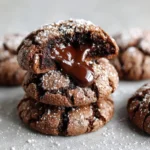
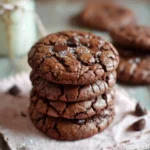
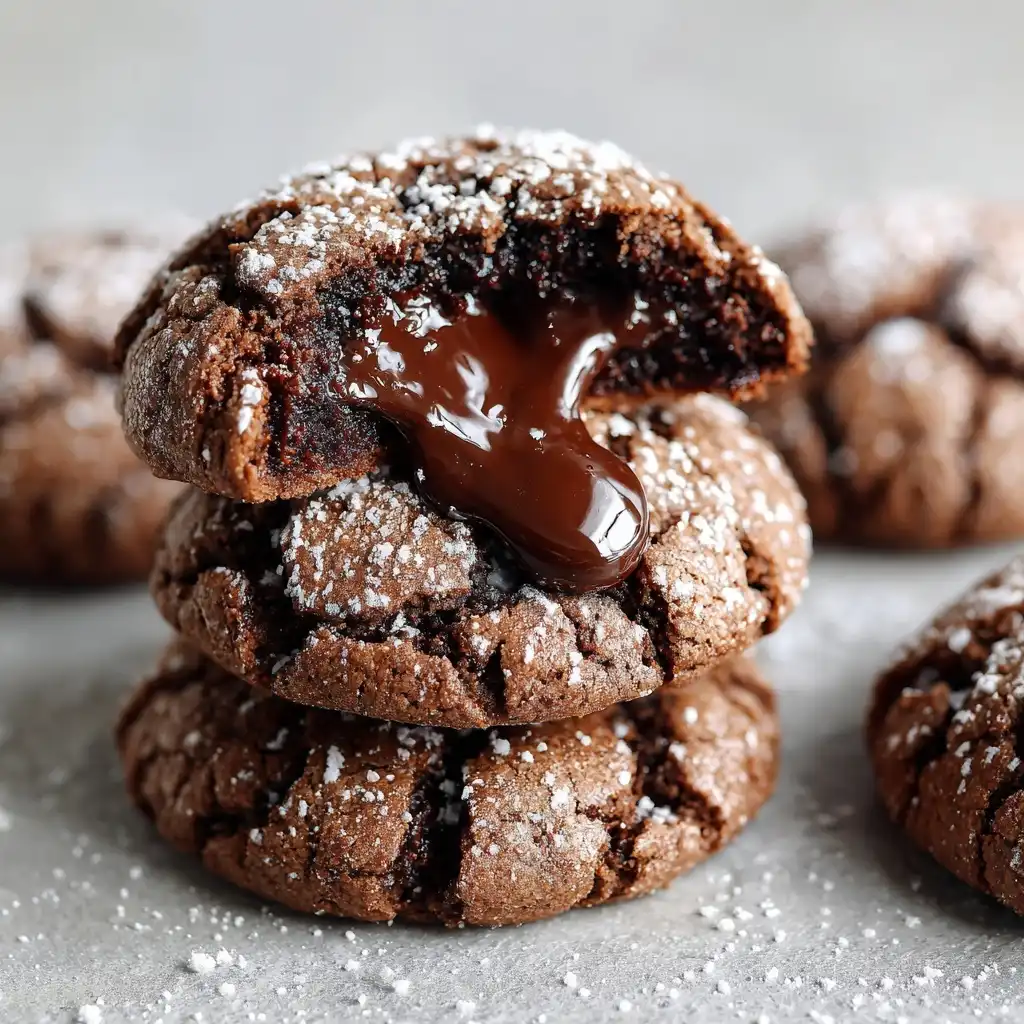
Chocolate Lava Cookies are the decadent, crowd-pleasing fusion of a classic chocolate chip cookie and a molten lava cake—delivering that irresistible contrast of crisp, golden edges with a luxuriously warm, gooey, semi-liquid chocolate center. Unlike traditional cookies that bake through completely, these are intentionally underbaked at their core to preserve a rich, flowing chocolate “lava” that oozes out with every bite. They’re not just dessert—they’re an experience: indulgent, theatrical, deeply comforting, and surprisingly accessible to bakers of all skill levels. Whether served fresh from the oven with a scoop of vanilla bean ice cream, dusted with flaky sea salt, or elegantly plated for a dinner party finale, Chocolate Lava Cookies redefine everyday baking with restaurant-worthy allure and home-kitchen practicality.
The History
While the exact origin of the Chocolate Lava Cookie remains undocumented in culinary archives, its evolution is unmistakably rooted in two iconic desserts: the American chocolate chip cookie (invented by Ruth Wakefield in 1938 at the Toll House Inn) and the French fondant au chocolat (chocolate fondant cake), popularized in the 1980s by chef Jean-Georges Vongerichten—though contested by several European pastry traditions dating back to the early 20th century. The lava cookie concept emerged organically in the early 2000s as professional bakers and food innovators began experimenting with controlled underbaking techniques, portion-controlled batter scoops, and high-ratio chocolate-to-dough ratios. Early iterations appeared on menus at upscale cafés in New York, Paris, and Tokyo, often labeled “molten chocolate cookies,” “lava drop cookies,” or “center-filled chocolate bombs.” Social media accelerated their rise—particularly Instagram and food blogs—where the dramatic “cut-and-ooze” moment became viral shorthand for dessert excellence. By the mid-2010s, grocery chains introduced frozen lava cookie dough pucks, and major brands like Ghirardelli and Valrhona released proprietary recipes targeting home bakers seeking gourmet results without pastry-school training. Today, the Chocolate Lava Cookie stands as a beloved hybrid icon—a testament to global dessert cross-pollination, modern baking science, and our enduring love affair with controlled chaos in chocolate form.
Ingredients Breakdown
Every element in a Chocolate Lava Cookie serves a precise functional and sensory role—no ingredient is arbitrary. Below is a comprehensive, chef-level breakdown of each component and why it matters:
- Unsalted Butter (100g, cubed & chilled): Provides richness, tenderness, and steam during baking. Chilling prevents premature melting and ensures structural integrity while allowing slow, even fat dispersion for optimal spread control and edge crispness.
- Granulated Sugar (75g): Adds sweetness, aids in caramelization for golden-brown edges, and contributes to cookie spread and light crunch. Its lower moisture content compared to brown sugar helps prevent excessive softening of the outer shell.
- Brown Sugar (75g, packed light or dark): Introduces molasses notes, moisture retention, and chewiness. Dark brown sugar yields deeper caramel and slight acidity; light offers milder warmth. The hygroscopic nature of brown sugar helps maintain a tender crumb around the molten core.
- Large Egg (1, cold): Acts as binder and leavening agent (via steam and protein coagulation). Cold egg slows initial emulsification, preserving air pockets that expand into delicate micro-structure—critical for supporting the lava pool without collapse.
- Vanilla Extract (1 tsp, pure): Enhances aromatic complexity and rounds out chocolate’s bitterness. Alcohol content also slightly inhibits gluten formation, promoting tenderness.
- All-Purpose Flour (115g, spooned & leveled): Provides essential gluten structure—but only *just enough*. Too much leads to toughness and sealed centers; too little causes spreading and leakage. Protein content (~10–11%) strikes ideal balance between stability and yielding texture.
- Unsweetened Cocoa Powder (30g, natural or Dutch-process): Natural cocoa delivers bright, fruity acidity that cuts through fat; Dutch-process offers smoother, earthier depth and higher pH—enhancing leavening when paired with baking soda. Both intensify chocolate flavor *without* adding extra liquid or sugar that could destabilize the lava core.
- Baking Soda (¼ tsp): Reacts with acidic components (cocoa, brown sugar, vanilla) to generate carbon dioxide *early* in baking—creating lift and airy pockets near the surface while leaving the center minimally aerated and fluid-prone.
- Fine Sea Salt (½ tsp): Not just for seasoning—salt suppresses bitterness, heightens sweetness perception, and strengthens gluten bonds subtly for improved dough cohesion during thermal shock.
- High-Quality Semi-Sweet Chocolate (150g, finely chopped, 54–62% cacao): The *true* lava source. Finely chopped bars (not chips) ensure rapid, uniform melting due to thinner geometry and absence of stabilizers (like soy lecithin in chips, which can impede flow). Couverture-grade chocolate with high cocoa butter content (32–38%) guarantees silkiness, sheen, and temperature-responsive viscosity.
- Mini Chocolate Chips (optional, 30g): Added for textural contrast—melting pockets *within* the lava core or creating secondary “micro-lava” bursts. Use high-cacao chips or chopped milk chocolate for layered flavor dimension.
- Flaky Sea Salt (for finishing): Applied post-bake to amplify contrast—cool salinity against hot, sweet, bitter chocolate—and trigger saliva response for enhanced flavor release.
Step-by-Step Recipe
- Prepare Your Workspace: Line two large baking sheets with parchment paper (do NOT use silicone mats—they retain too much heat and over-bake bottoms). Chill a wire rack on a cool countertop. Preheat oven to 375°F (190°C) with convection off—standard bake mode ensures gentle, even heat distribution critical for core retention.
- Make the Base Dough: In a medium bowl, whisk together flour, cocoa powder, baking soda, and salt. Set aside. In a stand mixer fitted with paddle attachment, beat chilled cubed butter, granulated sugar, and brown sugar on medium-low for 2 minutes until sandy and cool—not creamy. Add cold egg and vanilla; mix 45 seconds until just combined. Scrape bowl. Gradually add dry ingredients on low speed; mix only until *no streaks remain* (≈20 seconds). Overmixing develops gluten and seals the center—avoid at all costs.
- Incorporate the Lava Core: Transfer dough to a clean surface. Divide into 12 equal portions (≈65g each) using a digital scale for precision. Roll each into a tight ball. Using your thumb or the back of a small spoon, gently press a 1.5-inch deep well into the center of each ball. Fill each cavity with 12g (≈1 tbsp) of finely chopped chocolate—pack lightly but do not overfill. Carefully fold dough over filling, sealing seams completely by rolling between palms into smooth, taut spheres. Place seam-side down on prepared sheet. Chill shaped cookies for *exactly* 15 minutes—this re-firms butter, sets gluten, and prevents premature lava migration during oven spring.
- Bake with Precision: Arrange 6 cookies per sheet, spaced 3 inches apart (they spread significantly). Bake—*one sheet at a time*, centered on middle rack—for 11 minutes and 30 seconds *exactly*. Rotate sheet 180° at 6 minutes. Cookies are done when edges are puffed, deeply golden, and set to the touch—but centers remain soft, glossy, and visibly jiggly (like loose Jell-O). A toothpick inserted ½ inch from edge should come out with moist crumbs; *never* test center—it will leak and ruin texture.
- Cool Strategically: Immediately upon removal, let cookies rest on sheet for 90 seconds—this allows residual heat to finish setting the outer shell while keeping interior molten. Then, carefully slide parchment with cookies onto wire rack. Let cool 3 more minutes—this critical window allows internal temperature to stabilize at ~125–135°F: hot enough to flow, cool enough to hold shape. Do not skip or rush this step.
- Serve Immediately: Transfer to serving plates using thin offset spatula. Sprinkle each with 2–3 flakes of Maldon sea salt. Serve with spoons—not forks—to encourage scooping and dipping. For ultimate luxury, add a quenelle of Madagascar bourbon-vanilla ice cream beside each cookie; the contrast of temperatures creates a spontaneous ganache swirl as it melts.
Tips
- Chill Everything: Butter, eggs, dough portions, and even baking sheets should be cold before shaping and baking. Warm ingredients accelerate fat melting, leading to flat, greasy cookies with no defined lava channel.
- Weigh, Don’t Scoop: Volume measurements for flour and chocolate vary wildly. A gram-scale ensures consistent size, bake time, and lava volume. Target ±2g tolerance per cookie.
- Chop, Don’t Chip: Chocolate chips contain anti-staling agents that hinder melting. Always use a sharp chef’s knife to finely dice high-cacao chocolate bars on a chilled marble slab.
- Oven Thermometer Required: Built-in oven thermostats are notoriously inaccurate (+/- 25°F). An oven thermometer placed at rack level prevents under- or over-baking—the 15°F difference between 120°F and 135°F core temp determines flow vs. firmness.
- No Peek Policy: Opening the oven door before 8 minutes drops internal temperature drastically, collapsing steam pockets and causing uneven set. Trust the timer.
- Batch Timing Matters: If baking multiple batches, chill unbaked cookies for full 15 minutes *each time*. Re-chill sheet pans for 2 minutes between loads—they retain heat that scorches bottoms.
- Altitude Adjustment: Above 3,000 ft? Reduce baking soda to ⅛ tsp, increase flour by 5g, and bake at 385°F for 10 minutes—lower air pressure accelerates evaporation and weakens structure.
- Freezing Hack: Shape and fill cookies, then freeze solid on parchment-lined tray. Transfer to airtight freezer bag for up to 3 months. Bake straight from frozen—add 1 minute 15 seconds to bake time. Never thaw—moisture condensation ruins texture.
- Rescue Underbaked Cookies: If lava is too runny and leaks excessively, next batch: chill dough balls 20 minutes, reduce chocolate filling by 2g, or add 1 tsp cornstarch to dry ingredients for gentle thickening.
- Rescue Overbaked Cookies: If centers are set, next batch: lower oven temp by 10°F, verify thermometer accuracy, reduce bake time by 45 seconds, or use slightly cooler (but still room-temp) eggs.
Variations and Customizations
Chocolate Lava Cookies are a masterclass in adaptable luxury—here’s how to elevate them across cuisines, seasons, and dietary preferences—without compromising the signature molten integrity:
- Espresso-Infused Lava: Dissolve 1 tsp instant espresso powder into vanilla extract before adding to dough. Replace 15g of chocolate with finely ground dark chocolate + espresso nibs for aromatic intensity and subtle bitterness.
- Spiced Mexican Hot Chocolate: Add ½ tsp ground cinnamon, ¼ tsp chipotle powder, and a pinch of clove to dry ingredients. Use 70% dark chocolate with ancho chile infusion. Finish with cinnamon sugar and candied pepitas.
- White Chocolate–Raspberry Swirl: Substitute white chocolate (32% cocoa butter) for semi-sweet. Fold in 2 tbsp freeze-dried raspberry powder into dough. Fill centers with white chocolate + 3 crushed raspberries—acid balances sweetness, fruit pectin adds subtle viscosity.
- Double-Layer Lava: Fill primary cavity with dark chocolate, then embed a 5g cube of salted caramel or peanut butter inside *that*. Creates sequential flavor explosions—chocolate → salt → nut → sweet.
- Gluten-Free Version: Replace AP flour with 100g brown rice flour + 15g tapioca starch + 10g almond flour + ¼ tsp xanthan gum. Increase baking soda to ⅓ tsp for lift. Chill dough 20 minutes—GF blends hydrate slower.
- Vegan Adaptation: Use cold coconut oil (refined for neutral taste) instead of butter; flax egg (1 tbsp ground flax + 2.5 tbsp water, chilled 10 min); coconut sugar (equal weight); and vegan dark chocolate (≥60% cacao, certified). Add 1 tsp apple cider vinegar to activate soda.
- Boozy Lava: Soak 30g dark chocolate chunks in 1 tbsp bourbon or Grand Marnier for 1 hour, then drain and pat dry before filling. Infuses sophisticated warmth and reduces perceived sweetness.
- Matcha-White Chocolate Fusion: Replace 10g cocoa powder with ceremonial-grade matcha. Fill with white chocolate + ½ tsp matcha paste. Earthy umami contrasts creamy sweetness—finish with black sesame seeds.
- Savory-Sweet Umami Boost: Add 1 tsp nutritional yeast + ⅛ tsp smoked paprika to dry mix. Use 85% dark chocolate with sea salt crystals. Unexpected depth that pairs brilliantly with aged cheddar ice cream.
- Seasonal Citrus Zest: Add 1 tsp orange or yuzu zest to dough. Fill with dark chocolate + 1 tsp orange marmalade (microwaved 5 sec to soften). Bright acidity cuts fat and lifts aroma.
Health Considerations and Nutritional Value
A single Chocolate Lava Cookie (approx. 125g, made with standard ingredients) contains roughly:
- Calories: 385–420 kcal
- Total Fat: 22–25g (14–16g saturated, primarily from cocoa butter and butter)
- Carbohydrates: 44–48g (32–36g sugars, including naturally occurring from chocolate)
- Protein: 4–5g
- Fiber: 2.5–3g (from cocoa and whole-grain flours if substituted)
- Iron: ~15% DV (cocoa is rich in non-heme iron)
- Magnesium: ~20% DV (dark chocolate is one of nature’s top sources)
- Antioxidants: High ORAC value—epicatechin, procyanidins, and theobromine support vascular health and cognitive function when consumed in moderation.
Key Considerations:
- Portion Control is Paramount: These are dessert items—not snacks. One cookie satisfies intensely due to fat/sugar satiety signals. Serving two doubles calorie load without proportional pleasure gain.
- Quality Over Quantity: Choosing 70%+ dark chocolate increases flavonoid density while reducing added sugar. Organic, fair-trade cocoa supports ethical sourcing and avoids pesticide residues.
- Dietary Restrictions: Naturally nut-free and soy-free (if using soy-free chocolate). Easily adapted for dairy-free/vegan (see Variations). Not suitable for strict keto (too many net carbs) unless reformulated with erythritol, almond flour, and sugar-free chocolate—though texture suffers.
- Gut Health Note: Cocoa’s polyphenols feed beneficial Bifidobacteria. However, excessive saturated fat may impair microbiome diversity—balance with fiber-rich meals throughout the day.
- Diabetes-Friendly Tweaks: Reduce granulated sugar to 40g, use all brown sugar (lower glycemic impact), add 10g ground flaxseed (slows glucose absorption), and pair with Greek yogurt instead of ice cream.
- Heart Health Perspective: Moderate dark chocolate intake (1–2 servings/week) correlates with reduced blood pressure and improved endothelial function in clinical studies—but butter and refined sugar counteract benefits if overconsumed.
- Allergen Alert: Always verify chocolate labels for shared equipment warnings (peanut, tree nut, dairy, gluten).
Ingredients
- 100g unsalted butter, cubed and chilled
- 75g granulated sugar
- 75g light brown sugar, firmly packed
- 1 large egg, cold
- 1 teaspoon pure vanilla extract
- 115g all-purpose flour, spooned and leveled
- 30g unsweetened natural or Dutch-process cocoa powder
- ¼ teaspoon baking soda
- ½ teaspoon fine sea salt
- 150g high-quality semi-sweet chocolate (54–62% cacao), finely chopped
- Flaky sea salt (Maldon or similar), for finishing
Directions
- Preheat oven to 375°F (190°C). Line two large baking sheets with parchment paper. Place a wire rack nearby.
- In a medium bowl, whisk together flour, cocoa powder, baking soda, and salt. Set aside.
- In the bowl of a stand mixer fitted with paddle attachment, combine chilled butter, granulated sugar, and brown sugar. Beat on medium-low for 2 minutes until mixture resembles damp sand and holds shape when squeezed—do not cream.
- Add cold egg and vanilla. Mix on low for 45 seconds until just incorporated. Scrape bowl thoroughly.
- Gradually add dry ingredients on lowest speed. Mix only until no dry streaks remain—about 20 seconds. Do not overmix.
- Turn dough onto clean surface. Divide into 12 equal portions (≈65g each) using a digital scale. Roll each into a smooth ball.
- Using your thumb or back of a small spoon, press a 1.5-inch-deep well into the center of each ball. Fill each well with 12g (≈1 tablespoon) finely chopped chocolate. Fold dough over filling, pinching seams closed. Roll gently between palms to seal completely and form smooth spheres. Place seam-side down on prepared sheet.
- Chill shaped cookies on sheet for exactly 15 minutes.
- Bake one sheet at a time on center rack for 11 minutes 30 seconds. Rotate sheet at 6 minutes. Cookies are done when edges are puffed, deeply golden, and set—but centers remain soft and visibly jiggly.
- Let cookies rest on sheet for 90 seconds. Slide parchment with cookies onto wire rack. Cool 3 more minutes.
- Transfer to plates. Sprinkle each with 2–3 flakes of flaky sea salt. Serve immediately with spoons.
FAQ
- Can I make these ahead of time?
- Yes—shape and fill cookies, then freeze solid on parchment-lined tray. Transfer to airtight container and store up to 3 months. Bake straight from frozen, adding 1 minute 15 seconds to bake time. Never thaw before baking.
- Why did my lava leak out during baking?
- Most common causes: dough wasn’t chilled long enough before baking; chocolate pieces were too large (preventing full melt integration); overfilling the cavity; or oven temperature was too high. Next time: chill 20 minutes, chop chocolate finer, use 10g filling per cookie, and verify oven temp.
- Can I use chocolate chips instead of chopped chocolate?
- Technically yes—but strongly discouraged. Chips contain stabilizers (soy lecithin, additional cocoa butter) that resist full melting and create a waxy, grainy “lava” rather than silky flow. Chopped couverture chocolate delivers authentic texture and depth.
- My cookies spread too much and became thin discs. What went wrong?
- Over-creaming the butter/sugar, using melted or softened butter instead of chilled cubes, insufficient chilling of shaped dough, or too much granulated sugar relative to brown sugar. Also check expiration date on baking soda—it loses potency after 6 months.
- Can I double the recipe?
- Absolutely—but scale *all* ingredients precisely by weight, not volume. When mixing larger batches, mix dough in two separate bowls to avoid overworking. Chill each batch separately. Never exceed 12 cookies per sheet.
- Are these safe for kids or pregnant people?
- Yes—egg is fully cooked at the outer edges and the brief, high-heat bake raises internal temperature sufficiently to pasteurize the egg yolk (reaching >160°F at the rim and holding residual heat). No raw egg remains uncooked in food-safe context.
- Can I substitute oil for butter?
- Not recommended. Butter’s water content creates essential steam for lift and structure; oil produces greasy, dense, non-spreading cookies with no crisp edge. For dairy-free, use cold refined coconut oil (solid at room temp) as 1:1 replacement.
- What’s the best way to store leftovers?
- They’re best enjoyed within 2 hours of baking. If needed, store cooled cookies airtight at room temperature up to 24 hours. To refresh: place on parchment in 350°F oven for 3 minutes—just until warmed through. Do not microwave (causes explosive, uneven melting).
- Why does the recipe use both granulated and brown sugar?
- Granulated sugar promotes spreading and crispness; brown sugar adds moisture, chew, and complex molasses notes. Together they create the perfect textural duality—crisp exterior, tender-yet-stable crumb surrounding molten center.
- Can I add nuts or dried fruit?
- Yes—with caveats. Toasted walnuts or pecans (finely chopped, 30g) add crunch—fold into dough *after* adding dry ingredients. Avoid dried fruit unless rehydrated and patted dry, as excess moisture disrupts lava viscosity and causes steaming instead of flowing.
Summary
Chocolate Lava Cookies are a triumph of intentional imperfection—where precise chilling, controlled underbaking, and premium chocolate converge to deliver a luxurious, molten-center experience wrapped in a crisp, caramelized shell. They honor tradition while embracing innovation, offering endless customization without sacrificing their soul: that unforgettable, warm, flowing moment of pure chocolate revelation.
Beyond technique, they embody joy in restraint—proof that sometimes the most profound satisfaction lies not in completion, but in the beautiful, delicious tension of what’s held just barely within reach.