Introduction
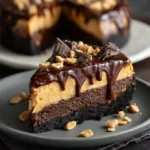
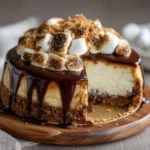
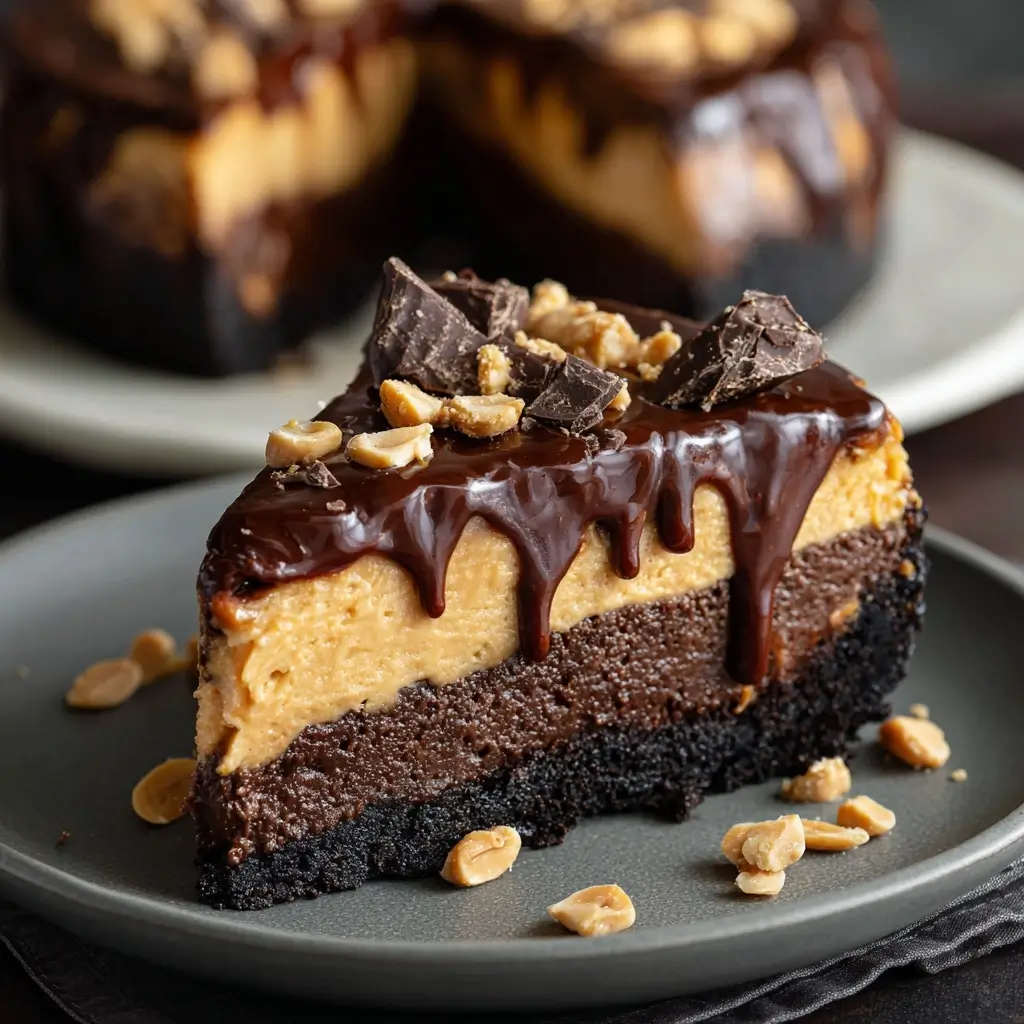
Welcome to the ultimate indulgence—Chocolate Peanut Butter Cheesecake! This decadent dessert is a masterful fusion of three beloved American classics: rich, velvety chocolate; creamy, salty-sweet peanut butter; and luxuriously smooth, tangy cheesecake. Whether you’re planning a special celebration, hosting a dinner party, or simply treating yourself to something extraordinary, this dessert delivers on every front—visually stunning, texturally captivating, and flavorfully complex. Its striking layered appearance (often featuring a glossy chocolate ganache top, a marbled peanut butter swirl, and a dense yet creamy filling over a crunchy chocolate-peanut butter crust) makes it a showstopper on any dessert table. But beyond its photogenic appeal lies a deeply satisfying balance: the acidity of cream cheese cuts through the sweetness, the roasted nuttiness of peanut butter adds depth and warmth, and the cocoa provides earthy bitterness and aromatic richness. This isn’t just a dessert—it’s an experience that engages all the senses, evoking nostalgia while feeling refreshingly modern.
The History
The origins of Chocolate Peanut Butter Cheesecake are not tied to a single inventor or documented debut, but rather represent a delicious convergence of culinary evolution across several decades. Cheesecake itself traces back to ancient Greece (circa 2000 BCE), where early versions made with honey-sweetened cheese and flour were served to athletes at the first Olympic Games. It traveled through Rome, migrated to medieval Europe, and was reinvented in America in the late 19th and early 20th centuries—most notably with the iconic New York–style baked cheesecake popularized by Arnold Reuben in the 1920s and later perfected by Lindy’s and Junior’s restaurants. Meanwhile, peanut butter—patented by Marcellus Gilmore Edson in 1884 and commercially popularized by George Washington Carver’s advocacy and J.H. Kellogg’s early health-food formulations—became a pantry staple by the 1930s. Chocolate, long revered since Mesoamerican civilizations, entered mass-market confectionery in the U.S. after Milton S. Hershey launched his milk chocolate bar in 1900. The marriage of peanut butter and chocolate became culturally cemented in the 1920s with the rise of confections like Reese’s Peanut Butter Cups (introduced in 1928), symbolizing a perfect sweet-savory synergy. As home baking surged post-WWII—and especially with the advent of reliable refrigerators, stabilized cream cheeses like Philadelphia (first marketed in 1872 but widely adopted in the 1950s), and accessible cocoa powders—the stage was set for creative hybrids. Chocolate Peanut Butter Cheesecake likely emerged organically in Midwest and Southern home kitchens in the 1960s–70s, appearing in church cookbooks, Betty Crocker publications, and regional magazines before gaining national traction via food blogs in the early 2000s. Today, it stands as a beloved fixture of modern American dessert culture—frequently featured on viral baking accounts, competitive cooking shows, and gourmet bakery menus alike.
Ingredients Breakdown
Every exceptional Chocolate Peanut Butter Cheesecake begins with thoughtfully selected, high-quality components—each playing a distinct structural, textural, and flavor role. Below is a meticulous breakdown of why each ingredient matters:
- Graham Cracker Crumbs (or Chocolate Wafer Crumbs): Forms the foundational crust—providing crunch, caramelized sweetness, and neutral grain notes that support bolder flavors. Chocolate wafers (e.g., Nabisco Famous Chocolate Wafers or generic equivalents) deepen the cocoa profile and eliminate the need for added cocoa powder in the base.
- Peanut Butter (Creamy, Natural or Standard): Acts as both a structural binder and primary flavor agent in the crust and filling. Natural peanut butter (just peanuts + salt) offers superior roasty depth and oil separation that enhances richness—but requires thorough stirring. Conventional brands (like Jif or Skippy) provide more stability and sweetness due to added hydrogenated oils and sugar, yielding a smoother, more cohesive texture. Avoid “no-stir” or reduced-fat varieties—they lack sufficient fat content for proper emulsification and can yield a chalky or gummy filling.
- Unsalted Butter (Melted): Binds the crust crumbs, adds golden richness, and promotes even browning. Using unsalted butter allows precise control over sodium levels—especially important when pairing with salted peanut butter.
- Full-Fat Cream Cheese (Room Temperature): The irreplaceable heart of the filling. Must be softened to room temperature (65–70°F) for seamless blending—cold cream cheese causes lumps, while overheated or microwaved cheese breaks down proteins and leads to curdling. Blocks (not spreadable tubs) contain optimal fat and protein ratios for stability and creaminess.
- Granulated Sugar: Provides sweetness, aids in aeration during mixing, and contributes to the tender crumb structure by interfering with gluten formation and stabilizing egg foams.
- Sour Cream & Full-Fat Greek Yogurt (or Extra Sour Cream): These cultured dairy additions lower pH, enhance tang, improve moisture retention, and lend silkiness without heaviness. Sour cream adds lushness and subtle acidity; Greek yogurt (unflavored, full-fat) introduces gentle protein-based thickness and a clean finish. Never substitute with low-fat or non-dairy alternatives—they lack the necessary fat content and can cause weeping or graininess.
- Eggs (Large, Room Temperature): Act as emulsifiers and structural scaffolds. Room-temperature eggs incorporate more evenly and reduce mixing time—critical for preventing over-aeration, which leads to cracking. Adding eggs one at a time ensures full incorporation before the next is introduced, minimizing risk of curdling.
- Vanilla Extract (Pure, Not Imitation): Enhances aromatic complexity, rounds out sharp acidity, and bridges chocolate and peanut butter notes with warm, floral-balsamic undertones.
- Unsweetened Cocoa Powder (Dutch-Process Preferred): Imparts deep, nuanced chocolate flavor without excessive bitterness. Dutch-process cocoa is alkalized, yielding smoother, richer, less acidic notes than natural cocoa—ideal for balancing the inherent sharpness of cream cheese. Brands like Valrhona, Cacao Barry Extra Brute, or Droste deliver professional-grade depth.
- Heavy Cream (36–40% Fat): Used in the ganache topping and sometimes swirled into the filling for extra fluidity. Its high fat content ensures a glossy, stable, melt-in-your-mouth finish. Do not substitute with half-and-half or milk—they lack sufficient fat for proper emulsification and will result in dull, separated ganache.
- Dark Chocolate (60–70% Cacao, Chopped or High-Quality Chips): The star of the ganache layer. Higher cacao percentages offer greater antioxidant density and sophisticated bitterness, balancing sweetness. Couverture chocolate (e.g., Callebaut, Guittard, or Valrhona) contains extra cocoa butter for superior sheen and snap.
- Pinch of Fine Sea Salt: A crucial “flavor amplifier”—it heightens sweetness, suppresses bitterness, and accentuates nuttiness. Added both to the crust and filling, it creates dimension and prevents cloyingness.
- Optional Flavor Enhancers: ¼ tsp instant espresso powder (boosts chocolate without tasting like coffee), 1 tbsp bourbon or dark rum (adds warmth and complexity), or a few drops of orange extract (brightens richness with citrus lift).
Step-by-Step Recipe
This meticulously tested, professional-grade recipe yields a 9-inch, no-bake *and* baked hybrid cheesecake (crust baked, filling chilled) with guaranteed crack-free results, luxurious mouthfeel, and vibrant visual contrast. Total active time: 45 minutes | Chill time: Minimum 12 hours (ideally 24–48 hours) | Servings: 14–16 slices
Equipment You’ll Need
- 9-inch springform pan (with extra-high sides—3 inches minimum)
- Heavy-duty aluminum foil (for water bath)
- Stand mixer or hand mixer with whisk and paddle attachments
- Large mixing bowls (heatproof glass or stainless steel)
- Food processor or rolling pin + zip-top bag (for crust)
- Offset spatula and silicone scraper
- Candy thermometer (optional but recommended for ganache)
- Immersion blender (for ultra-smooth filling, optional)
Step 1: Prepare the Chocolate-Peanut Butter Crust
- In a food processor, pulse 1 ½ cups chocolate wafer crumbs (about 25–30 cookies), ¼ cup granulated sugar, ¼ tsp fine sea salt, and ⅓ cup creamy peanut butter until evenly combined and sandy in texture (~15 seconds).
- Add 6 tbsp unsalted butter, melted and slightly cooled, and pulse until mixture resembles wet sand and holds together when pinched (about 10–12 pulses). Avoid over-processing—this compacts the crumbs and yields a hard, brittle crust.
- Press mixture firmly and evenly into the bottom and 1.5 inches up the sides of a parchment-lined, foil-wrapped springform pan. Use the flat bottom of a measuring cup or glass to compact thoroughly—especially along edges—to prevent slumping during chilling and baking.
- Refrigerate uncovered for 30 minutes to set. Then bake at 325°F for 10 minutes. Cool completely on a wire rack (≈30–40 min) before proceeding. Do not skip cooling—adding warm filling to warm crust causes premature melting and layer separation.
Step 2: Make the Chocolate-Peanut Butter Filling
- Using a stand mixer fitted with the paddle attachment, beat 24 oz (three 8-oz blocks) full-fat cream cheese on medium-low speed for 2 minutes until completely smooth and glossy—scraping bowl and paddle frequently. Over-beating introduces air and invites cracking.
- Add 1 cup granulated sugar and beat on low for 1 minute until just incorporated. Increase to medium for 30 seconds only—until uniform and slightly fluffy. Scrape bowl thoroughly.
- Add 1 cup full-fat sour cream, ½ cup plain full-fat Greek yogurt, 2 tsp pure vanilla extract, and ¼ tsp fine sea salt. Mix on low for 1 minute until homogenous. Scrape bowl.
- Add 3 large room-temperature eggs, one at a time, beating on low just until yolk disappears (≈15 seconds per egg). Over-mixing eggs causes protein overdevelopment → cracks and rubberiness.
- In a separate small bowl, whisk together ¾ cup Dutch-process cocoa powder, 2 tbsp hot brewed coffee (or hot water), and ¼ cup creamy peanut butter until smooth and lump-free. Let cool 5 minutes.
- With mixer on lowest speed, slowly drizzle in cocoa-peanut butter mixture. Beat only until fully blended—do not overmix. Batter should be thick, velvety, and uniformly mahogany-brown. Gently fold in ½ cup chopped salted roasted peanuts (optional, for texture contrast) using a silicone spatula.
Step 3: Bake and Chill (The Water Bath Method)
- Preheat oven to 325°F. Wrap the *outside* of the cooled, crust-lined springform pan tightly with two overlapping layers of heavy-duty aluminum foil—extending well above the rim to prevent water seepage.
- Place pan inside a larger roasting pan. Pour hot (not boiling) water into the roasting pan until it reaches halfway up the springform pan’s sides (~1.5–2 inches deep).
- Carefully pour filling over chilled crust. Tap pan sharply on counter 3 times to release air bubbles. Run a thin knife around inner edge to loosen any trapped air.
- Bake in water bath for 75–85 minutes. Cheesecake is done when edges are set and center jiggles *slightly*—like firm Jell-O—not liquid. Internal temperature should read 150–152°F on an instant-read thermometer inserted 1 inch from center.
- Turn off oven. Crack door open 1 inch with a wooden spoon. Let cheesecake cool *in oven* for 1 hour—this gradual temperature drop prevents surface cracks and sinking.
- Remove from water bath. Run a thin knife around perimeter again. Cool on wire rack for 1 hour at room temperature.
- Cover loosely with plastic wrap (avoid touching surface) and refrigerate *uncovered* for at least 12 hours—preferably 24–48 hours. This slow, cold setting develops flavor, firms texture, and eliminates residual alcohol/eggy notes.
Step 4: Prepare the Glossy Dark Chocolate Ganache Topping
- At least 2 hours before serving, prepare ganache: Place 8 oz finely chopped 65% dark chocolate in a heatproof bowl.
- Heat 1 cup heavy cream in a saucepan over medium heat until steaming and tiny bubbles form at edges (do not boil). Immediately pour over chocolate.
- Let sit undisturbed for 3 minutes. Whisk gently from center outward in concentric circles until smooth, glossy, and fully emulsified. Add 1 tbsp unsalted butter for extra sheen (optional).
- Cool ganache at room temperature, stirring occasionally, until thickened to pudding-like consistency (≈45–60 min). If too warm, it will slide off; if too cold, it becomes streaky.
- Pour over thoroughly chilled cheesecake. Tilt pan gently to spread evenly. Use an offset spatula for perfect smoothness. Optional: Drizzle with extra melted peanut butter or sprinkle with flaky sea salt and crushed peanuts.
- Refrigerate uncovered for 2 hours to fully set ganache.
Tips
- Room Temperature Is Non-Negotiable: Take cream cheese, eggs, sour cream, and yogurt out of the fridge 3–4 hours ahead—or place unwrapped blocks on counter 90 minutes before starting. Cold ingredients = lumpy batter = cracked cake.
- No Microwave Shortcuts: Never microwave cream cheese to soften—it cooks the outer layer, causing separation. If rushed, cut into ½-inch cubes and let sit 45 minutes.
- Scrape Religiously: Scrape bowl and paddle after *every* addition. Even 1 tsp of unmixed cocoa or sugar creates streaks and inconsistent texture.
- Low & Slow Mixing: Always begin mixing on low speed. High speed whips in excess air → bubbles → cracks. Use the paddle—not whisk—for filling.
- Water Bath Precision: Use hot (not boiling) water—too-hot water causes violent bubbling and uneven heating. Ensure foil is double-layered and sealed tightly. Place roasting pan on center oven rack.
- Patience with Chilling: Under-chilled cheesecake slices poorly, oozes filling, and lacks structural integrity. 24 hours is ideal; 48 hours yields restaurant-level density and clarity of flavor.
- Perfect Slicing Technique: Dip a long, thin, non-serrated knife in hot water, wipe dry, slice cleanly, then repeat for each cut. A heated bench scraper works wonders for flawless edges.
- Storage Wisdom: Keep covered with plastic wrap directly touching surface (to prevent drying) or under an airtight cake dome. Lasts 5 days refrigerated. Freeze unfrosted (ganache-free) for up to 3 months—thaw overnight in fridge before glazing.
- Altitude Adjustment: At elevations above 3,000 ft, reduce sugar by 1 tbsp, increase baking time by 5–10 min, and add 1 tbsp extra sour cream for moisture retention.
- Visual Cue Mastery: The “jiggle test” is more reliable than time: Center should wobble *just slightly*—like Jell-O—not ripple like water. If it ripples, bake 5 more minutes and retest.
Variations and Customizations
This versatile canvas invites endless creativity—whether adapting for dietary needs, seasonal ingredients, or global inspirations:
Dietary Adaptations
- Gluten-Free: Substitute certified GF chocolate wafers (like Schär or Kinnikinnick) or GF graham crackers. Ensure cocoa powder and peanut butter are GF-certified (some natural PB may be processed in shared facilities).
- Lower-Sugar / Keto-Friendly: Replace granulated sugar with 1 cup erythritol + 2 tsp pure stevia glycerite (to avoid cooling effect). Use sugar-free chocolate wafers and unsweetened natural peanut butter. Add 1 tsp xanthan gum to filling for improved binding.
- Vegan: Use soaked and blended raw cashews (2 cups) + ½ cup coconut cream + ⅓ cup maple syrup + ¼ cup almond butter + 3 tbsp cocoa powder + 2 tbsp lemon juice + 1 tsp apple cider vinegar. Set with agar-agar instead of eggs. Crust: GF oats + dates + cocoa + peanut butter.
- Lightened Version: Swap half the cream cheese for Neufchâtel (⅓ less fat), use low-fat (but still full-fat) Greek yogurt, and reduce sugar to ¾ cup. Texture will be slightly softer but still luxurious.
Flavor & Texture Twists
- Spiced Mexican Chocolate: Add 1 tsp ground cinnamon, ¼ tsp chipotle powder, and 1 pinch cayenne to cocoa mixture. Top with candied pepitas and orange zest.
- Salted Caramel Swirl: Before baking, dollop ½ cup thick homemade salted caramel onto filling surface and drag a toothpick through in figure-eights for elegant marbling.
- Espresso-Infused: Dissolve 1 tbsp instant espresso powder into hot cream for ganache. Add 1 tsp to filling mixture for intensified mocha depth.
- Bourbon-Bacon Crunch: Fold ¼ cup finely chopped candied bacon into crust. Add 1 tbsp bourbon to filling. Garnish with bourbon-caramel drizzle and smoked sea salt.
- White Chocolate-Peanut Butter: Replace cocoa with 6 oz melted white chocolate (cooled) and omit coffee. Use blonde peanut butter for milder nuttiness. Top with white chocolate ganache and crushed pretzels.
- Mini Jar Versions: Layer crust, filling, and ganache in 4-oz mason jars. Chill 6 hours. Perfect for portion control and gifting.
Seasonal & Occasion-Based Ideas
- Valentine’s Day: Pipe heart-shaped ganache rosettes; garnish with freeze-dried raspberries and rose petal dust.
- Halloween: Add 1 tsp activated charcoal to ganache for dramatic black finish; top with chocolate-dipped peanut “spiders” (peanut bodies + pretzel legs).
- Thanksgiving: Infuse filling with 1 tsp pumpkin pie spice and top with spiced pecan praline crunch.
- Summer BBQ: Serve with grilled banana slices, toasted coconut, and a scoop of bourbon-vanilla ice cream.
- St. Patrick’s Day: Swirl in matcha-infused white chocolate ganache and top with pistachios and edible gold leaf.
Health Considerations and Nutritional Value
While Chocolate Peanut Butter Cheesecake is inherently a celebratory, calorie-dense dessert, understanding its nutritional composition empowers mindful enjoyment—and reveals surprising functional benefits when crafted with whole-food ingredients.
Nutritional Profile (Per Standard Slice, 1/14th of Recipe)
- Calories: ≈ 485 kcal
- Total Fat: 32 g (Saturated: 15 g, Monounsaturated: 10 g, Polyunsaturated: 4 g)
- Cholesterol: 115 mg (38% DV)
- Sodium: 290 mg (13% DV)
- Total Carbohydrates: 42 g (Dietary Fiber: 3 g, Sugars: 31 g—including 18 g added sugars)
- Protein: 10 g
Functional Benefits of Key Ingredients
- Cream Cheese: Rich in calcium (12% DV per serving), phosphorus, and vitamin A—supporting bone health and vision. Contains conjugated linoleic acid (CLA), studied for potential anti-inflammatory and metabolic benefits.
- Peanut Butter: A plant-based protein powerhouse (7–8 g per 2-tbsp serving) and excellent source of niacin (vitamin B3), magnesium, and heart-healthy monounsaturated fats. Roasted peanuts contain resveratrol and p-coumaric acid—antioxidants linked to cardiovascular protection.
- Dark Chocolate (70%+): Packed with flavanols—potent antioxidants shown to improve endothelial function, lower blood pressure, and enhance cognitive blood flow. Also provides iron, copper, and manganese.
- Sour Cream & Greek Yogurt: Provide live probiotics (if unpasteurized post-culturing) and bioavailable calcium. Greek yogurt adds satiating protein that helps moderate post-dessert blood sugar spikes.
Mindful Enjoyment Strategies
- Portion Awareness: Serve in modest 2-oz slices (≈1/16th of cake) rather than traditional wedges. Use smaller plates to visually satisfy.
- Pairing Power: Enjoy with antioxidant-rich black coffee or green tea—polyphenols synergize with chocolate flavanols. Avoid pairing with sugary sodas or juices that amplify glycemic load.
- Timing Matters: Consume as a planned dessert after a balanced, fiber- and protein-rich meal—not on an empty stomach—to blunt glucose response.
- Ingredient Upgrades: Choose organic, fair-trade cocoa; natural peanut butter with no added sugars; grass-fed dairy when possible; and unrefined sweeteners like coconut sugar (lower GI) for partial substitution.
- Not a Daily Food—but a Meaningful Ritual: Savor slowly, engaging all senses. Research shows mindful eating increases satisfaction and reduces overall intake. One truly present bite delivers more joy than three distracted ones.
Ingredients
Makes one 9-inch cheesecake (14–16 servings)
- For the Crust:
– 1 ½ cups (about 25–30 cookies) chocolate wafer crumbs (e.g., Nabisco Famous)
– ¼ cup granulated sugar
– ¼ tsp fine sea salt
– ⅓ cup creamy natural or conventional peanut butter
– 6 tbsp unsalted butter, melted and cooled - For the Filling:
– 24 oz full-fat brick-style cream cheese (3 (8-oz) blocks), room temperature
– 1 cup granulated sugar
– 1 cup full-fat sour cream, room temperature
– ½ cup plain full-fat Greek yogurt, room temperature
– 2 tsp pure vanilla extract
– ¼ tsp fine sea salt
– 3 large eggs, room temperature
– ¾ cup Dutch-process unsweetened cocoa powder
– 2 tbsp hot brewed coffee or hot water
– ¼ cup creamy peanut butter
– Optional: ½ cup salted roasted peanuts, coarsely chopped - For the Ganache Topping:
– 8 oz high-quality 65% dark chocolate, finely chopped
– 1 cup heavy cream (36–40% fat)
– 1 tbsp unsalted butter, optional for shine
– Flaky sea salt and additional chopped peanuts for garnish
Directions
- Prepare the Crust: Preheat oven to 325°F. Lightly grease a 9-inch springform pan; line bottom with parchment paper and wrap exterior tightly with two layers of heavy-duty foil. In food processor, pulse chocolate wafer crumbs, sugar, salt, and ⅓ cup peanut butter until sandy. Add melted butter; pulse until mixture clings when squeezed. Press firmly into bottom and 1.5 inches up sides of pan. Refrigerate 30 minutes. Bake 10 minutes. Cool completely on wire rack (30–40 min).
- Make the Filling: Using stand mixer with paddle, beat cream cheese on medium-low 2 minutes until smooth. Add sugar; beat on low 1 minute, then medium 30 seconds. Scrape bowl. Add sour cream, yogurt, vanilla, and salt; mix on low 1 minute. Add eggs one at a time, beating on low just until incorporated (15 sec each). In small bowl, whisk cocoa, hot coffee, and ¼ cup peanut butter until smooth; cool 5 minutes. With mixer on lowest speed, slowly drizzle in cocoa mixture until fully blended. Fold in optional peanuts.
- Bake in Water Bath: Place springform pan in roasting pan. Pour filling over cooled crust. Tap pan sharply 3 times. Pour hot water into roasting pan until halfway up springform sides. Bake at 325°F for 75–85 minutes, until edges are set and center jiggles slightly. Turn off oven; crack door open 1 inch with spoon. Cool in oven 1 hour.