Introduction
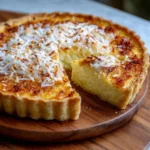
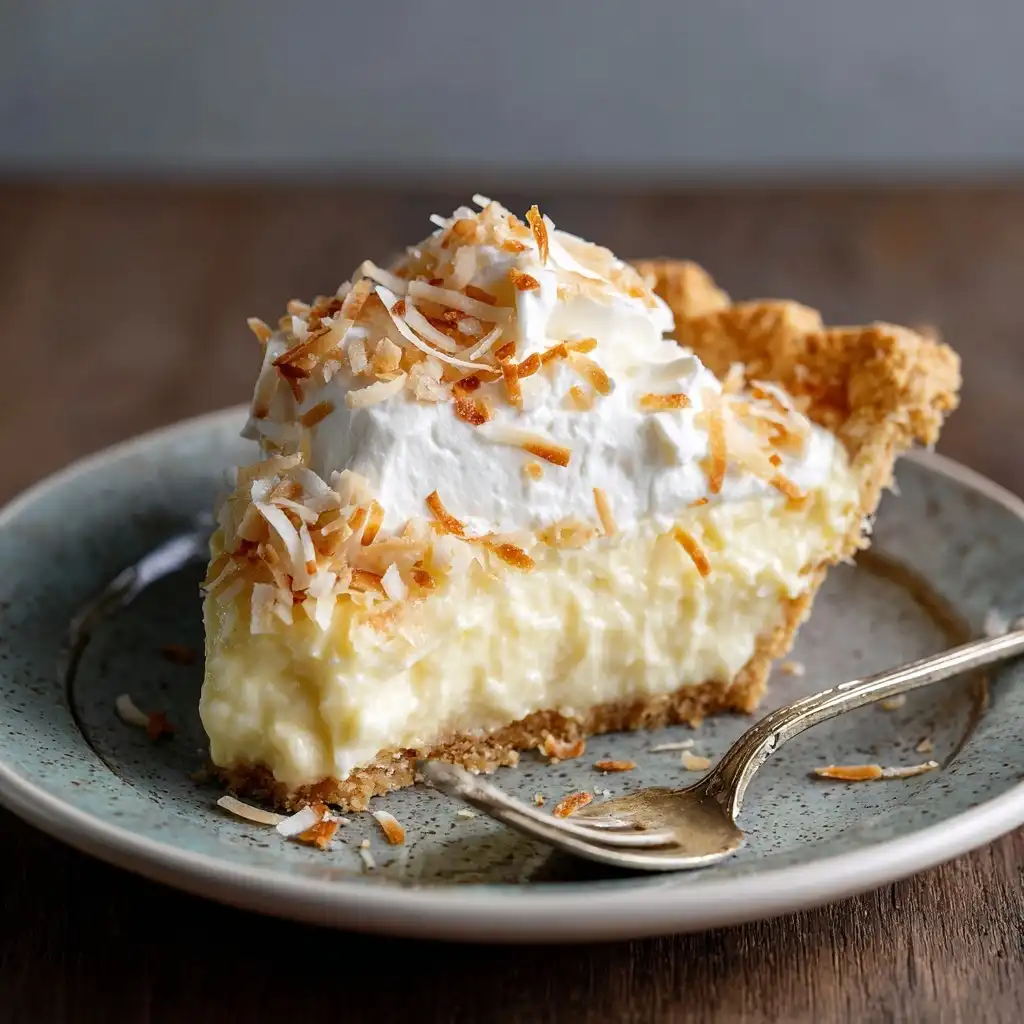
Coconut Cream Pie is a luscious, velvety dessert that embodies tropical elegance and nostalgic comfort in every bite. With its silky coconut-infused custard, flaky golden crust, and billowy clouds of whipped cream crowned with toasted coconut shavings, this pie strikes the perfect balance between rich indulgence and refreshing lightness. Revered across generations and celebrated in diners, family reunions, and holiday tables alike, it’s more than just a dessert—it’s a sensory experience that transports you to sun-drenched shores with its aromatic warmth and creamy decadence. Whether served chilled on a humid summer afternoon or as a festive centerpiece during holiday feasts, Coconut Cream Pie remains an enduring symbol of homemade love, culinary tradition, and the simple joy of well-balanced sweetness.
The History
The origins of Coconut Cream Pie trace back to the early-to-mid 20th century in the United States—a time when canned goods, refrigeration, and home economics were transforming American kitchens. While coconut had been used in desserts for centuries—especially in Caribbean, Southeast Asian, and Pacific Island cuisines—the modern American version emerged alongside innovations like canned coconut milk (first commercially available in the U.S. in the 1940s) and stabilized whipped toppings. The earliest known printed recipe appeared in the 1950 edition of The Joy of Cooking, though variations began appearing in regional community cookbooks and women’s magazines as early as the late 1930s. Notably, the pie gained widespread popularity after being featured in Betty Crocker’s 1955 *Picture Cook Book*, where it was hailed as “a taste of paradise in a pastry shell.” Its rise coincided with post-war optimism, increased accessibility of tropical ingredients via improved shipping infrastructure, and the cultural fascination with “exotic” flavors—all filtered through a distinctly Midwestern lens of simplicity and reliability. Over the decades, it evolved from a novelty into a staple, often distinguished from its cousin Key Lime Pie by its mellow sweetness, creamy texture, and unmistakable toasted coconut aroma—making it not only a dessert but a delicious artifact of culinary globalization and domestic innovation.
Ingredients Breakdown
Every exceptional Coconut Cream Pie begins with intentionality—each ingredient playing a precise, harmonious role in structure, flavor, mouthfeel, and stability. Below is a meticulous breakdown of why each component matters:
- Unsalted Butter (for crust): Provides flakiness and richness; unsalted allows full control over sodium levels and avoids masking delicate coconut notes.
- All-Purpose Flour: The structural backbone of the crust; its gluten content ensures tenderness without toughness when handled correctly.
- Granulated Sugar (in crust): Adds subtle sweetness and promotes browning and crispness during blind baking.
- Salt (in crust): Enhances all other flavors and balances sweetness while strengthening gluten for better cohesion.
- Ice Water: Keeps fat cold to prevent melting before baking—critical for achieving flaky layers; minimal water prevents sogginess.
- Full-Fat Coconut Milk (canned, not “light”): The soul of the filling—its high-fat content (typically 17–22%) delivers intense coconut flavor, luxurious viscosity, and natural emulsification. Shake the can vigorously before opening to reincorporate separated cream and water.
- Heavy Cream or Half-and-Half (optional enrichment): Used in premium versions to deepen richness, improve gloss, and add a subtle dairy roundness that complements—not competes with—coconut.
- Granulated Sugar (in filling): Sweetens while also interfering with egg protein coagulation, helping yield a smoother, less rubbery custard.
- Cornstarch: The primary thickener—creates a stable, glossy, non-weeping filling that holds its shape when sliced. Arrowroot or tapioca starch may be substituted, but cornstarch offers superior heat tolerance and clarity.
- Egg Yolks (not whole eggs): Provide essential fat, emulsification, and velvety texture; yolks thicken at lower temperatures than whites and contribute to the signature golden hue and satiny mouthfeel.
- Vanilla Extract (pure, not imitation): Deepens complexity with warm, floral undertones; Madagascar Bourbon vanilla is ideal for its rich, creamy profile.
- Coconut Extract (optional but highly recommended): A concentrated essence that amplifies aromatic intensity without adding liquid—crucial for bridging the gap between subtle canned coconut milk and bold toasted flavor.
- Salt (in filling): A pinch heightens sweetness perception and balances the inherent richness—often overlooked but indispensable.
- Unsweetened Whipped Cream (topping): Must be freshly whipped from cold heavy cream with powdered sugar and vanilla; stabilizers like cream cheese or mascarpone can be added for longer hold, but pure whipped cream offers clean contrast to the dense filling.
- Toastable Sweetened or Unsweetened Coconut Flakes/Shreds: Toasted under low heat until golden-brown, releasing nutty, caramelized oils that provide textural crunch and olfactory depth. Sweetened coconut adds extra sparkle; unsweetened offers purer coconut flavor and better control over overall sweetness.
Step-by-Step Recipe
- Prepare the Pie Dough: In a food processor or large bowl, combine 1¼ cups all-purpose flour, ½ tsp salt, and 1 tbsp granulated sugar. Add ½ cup (1 stick) very cold unsalted butter, cut into small cubes. Pulse or cut in until mixture resembles coarse meal with pea-sized butter pieces. Gradually add 3–4 tbsp ice water, 1 tbsp at a time, pulsing or mixing gently just until dough begins to clump. Do not overwork. Gather into a disc, wrap in plastic, and chill for at least 1 hour (or up to 3 days).
- Roll and Blind-Bake the Crust: Preheat oven to 375°F (190°C). On a lightly floured surface, roll chilled dough into a 12-inch circle. Transfer to a 9-inch pie dish, trim edges, crimp decoratively, and prick bottom generously with a fork. Line with parchment paper and fill with pie weights or dried beans. Bake for 18 minutes. Carefully remove weights and parchment, then bake 12–15 more minutes until golden and dry-looking. Cool completely on a wire rack—this step is non-negotiable for preventing a soggy bottom.
- Infuse the Coconut Milk: In a medium saucepan, combine 1¾ cups full-fat canned coconut milk (well-shaken), ½ cup heavy cream (optional but recommended), ⅔ cup granulated sugar, and ¼ tsp fine sea salt. Warm over medium-low heat, stirring occasionally, until steaming gently (do not boil). Remove from heat and stir in 1 tsp pure vanilla extract and ½ tsp pure coconut extract. Set aside.
- Whisk the Slurry: In a separate bowl, whisk together ⅓ cup cornstarch, 3 large egg yolks, and 2 tbsp cold water until completely smooth and lump-free. This slurry ensures even dispersion and prevents clumping when added to hot liquid.
- Cook the Custard: Return coconut mixture to medium heat. Once simmering steadily (small bubbles breaking at edges), slowly pour in the cornstarch-yolk slurry while whisking constantly. Continue whisking vigorously and without pause as mixture thickens—about 3–5 minutes—until it reaches a full, rolling boil and becomes translucent, glossy, and coats the back of a spoon (200–205°F on an instant-read thermometer). Reduce heat to low and cook 1 additional minute to fully activate cornstarch and eliminate raw starch taste.
- Strain and Chill: Immediately pour hot custard through a fine-mesh sieve into a clean bowl to remove any potential lumps or cooked egg bits. Stir in 1 tbsp unsalted butter for extra sheen and silkiness. Press plastic wrap directly onto the surface to prevent skin formation. Refrigerate for at least 4 hours—or preferably overnight—for complete set and maximum flavor development.
- Whip the Topping: Just before assembling, whip 1½ cups very cold heavy cream with 2 tbsp powdered sugar and ½ tsp vanilla until soft peaks form. Avoid over-whipping—firm peaks are ideal, but stiff peaks will weep and deflate quickly.
- Assemble the Pie: Spoon chilled, fully set custard into the cooled crust, smoothing evenly with an offset spatula. Gently pipe or spread whipped cream over the top in generous rosettes or a rustic blanket. Finish with a generous scattering of toasted coconut—ideally done just before serving for optimal crunch and aroma.
- Final Chill & Serve: Refrigerate assembled pie for 30–45 minutes to allow whipped cream to firm and flavors to marry. Serve chilled with a sharp, thin-bladed knife dipped in hot water for clean slices. Garnish individual servings with extra toasted coconut, edible flowers, or a delicate mint sprig for visual flair.
Tips
- Chill Everything: Cold butter, cold water, cold bowls, and even chilled utensils dramatically improve crust flakiness and prevent gluten overdevelopment.
- Don’t Skip the Blind Bake: Underbaked or unbaked crusts will absorb moisture from the filling and turn gummy. Fully pre-baking ensures structural integrity and a crisp counterpoint to creamy filling.
- Toast Coconut Separately: Never toast coconut directly on the pie—it burns easily and loses texture. Instead, spread flakes on a parchment-lined baking sheet and bake at 325°F for 5–8 minutes, stirring every 2 minutes, until fragrant and golden. Cool completely before sprinkling.
- Temper the Yolks Correctly: Always add hot liquid to yolks slowly while whisking—never the reverse—to avoid scrambling. If using a double boiler, ensure the bottom of the bowl never touches simmering water.
- Use a Thermometer: Custard is perfectly cooked at 200–205°F. Below that, it risks weeping; above 210°F, egg proteins tighten excessively, causing graininess.
- Straining Is Essential: Even the most careful cooking can yield tiny lumps or flecks of cooked yolk. Straining guarantees velvety smoothness—don’t skip this step.
- Plastic Wrap Contact: Pressing plastic wrap directly onto the warm custard surface creates an impermeable barrier against skin formation and oxidation.
- Whip Cream Last Minute: Freshly whipped cream holds better than stabilized versions—and tastes infinitely cleaner. If making ahead, whip just before assembly and keep refrigerated in a covered bowl.
- Rest Before Slicing: Allowing the finished pie to chill 30+ minutes after topping helps the whipped cream integrate slightly and provides cleaner, more elegant slices.
- Freeze for Future Use: Unwhipped, fully chilled custard freezes beautifully for up to 3 months. Thaw overnight in the fridge, re-whisk if needed, then proceed with whipping and assembly.
Variations and Customizations
Coconut Cream Pie is wonderfully adaptable—serving as a canvas for seasonal, dietary, and creative reinterpretations without compromising its soul. Here are thoughtfully curated variations, each preserving the core identity while offering exciting new dimensions:
- Vegan Coconut Cream Pie: Substitute traditional crust with a blend of almond flour, oat flour, and coconut oil; replace egg yolks with silken tofu or cornstarch-only thickening (increase to ½ cup); use full-fat coconut cream (the solid part scooped from chilled cans) instead of coconut milk; sweeten with maple syrup or coconut sugar; top with coconut whipped cream made from chilled coconut cream and powdered sugar.
- Gluten-Free Version: Use a certified GF 1:1 baking blend (like Bob’s Red Mill or King Arthur) for the crust, adding ½ tsp xanthan gum if not included. Ensure cornstarch is certified GF (most are, but verify). For extra tenderness, add 1 tbsp almond flour to the crust mix.
- Tropical Fusion Pie: Infuse the coconut milk with 2 strips of lemon zest and 1 star anise pod (removed before adding yolks); fold in ¼ cup finely diced fresh mango or passionfruit pulp into the cooled custard; garnish with lime zest and pomegranate arils.
- Chocolate-Coconut Layer Pie: After blind-baking, spread ½ cup melted dark chocolate (70% cacao) into the warm crust and chill until set. Proceed with coconut custard. Optional: swirl melted white chocolate into the whipped cream before piping.
- Boozy Coconut Cream Pie: Add 1½ tbsp dark rum, coconut rum, or spiced rum to the warm custard just before straining. Reduce coconut extract slightly to avoid overpowering. Garnish with candied ginger or rum-soaked raisins.
- Crème de Coco Martini Pie: Replace ¼ cup coconut milk with crème de coco liqueur (like Coco Lopez), add a pinch of ground cardamom to the custard, and top with a delicate dusting of edible gold leaf and crushed amaretti cookies.
- Mini Mason Jar Pies: Prepare crust in greased ½-pint mason jars (pre-baked), layer with custard, chill, then top with piped whipped cream and toasted coconut. Perfect for portion control, gifting, or elegant dessert bars.
- Coconut-Almond Crunch Pie: Mix ½ cup toasted sliced almonds and 2 tbsp brown sugar into the crust dough before rolling. Finish with almond brittle shards alongside toasted coconut.
- Matcha-Coconut Harmony Pie: Whisk 1 tsp high-quality ceremonial matcha into the cornstarch slurry before adding to hot milk. The earthy bitterness beautifully offsets coconut’s sweetness—garnish with white chocolate matcha curls.
- Smoked Coconut Pie (Chef’s Secret): Lightly smoke unsweetened coconut flakes over applewood chips for 5–7 minutes before toasting. Infuse coconut milk with a single drop of natural liquid smoke (use sparingly!) and finish with smoked sea salt fleur de sel.
Health Considerations and Nutritional Value
While Coconut Cream Pie is undeniably a treat—not a health food—it can be enjoyed mindfully within a balanced diet. Understanding its nutritional composition empowers informed choices without sacrificing pleasure:
Nutritional Snapshot (per standard slice, approx. 1/8 of 9-inch pie):
- Calories: ~420–480 kcal (varies by crust richness, cream volume, and sweetener type)
- Total Fat: 28–32g (of which 18–22g saturated fat—primarily from coconut milk and butter)
- Carbohydrates: 42–48g (including 32–36g sugars—mostly added)
- Protein: 4–6g (mainly from egg yolks and dairy)
- Fiber: ~0.5g (low unless GF crust includes whole-grain flours or added psyllium)
- Sodium: 220–280mg (moderate; easily reduced by omitting salt in crust/filling)
Key Health Notes:
- Coconut Fat Profile: Contains medium-chain triglycerides (MCTs), particularly lauric acid, which some studies suggest may support metabolic function and immune response—but evidence remains inconclusive for significant weight-loss or cholesterol benefits in typical dietary amounts.
- Sugar Awareness: Traditional recipes rely heavily on refined sugar. Substituting part of the granulated sugar with coconut sugar, monk fruit blend, or erythritol can reduce glycemic impact—though texture and browning may shift slightly.
- Dairy Sensitivity Options: Easily adapted for lactose intolerance using lactose-free heavy cream or full-fat coconut cream throughout—no compromise on richness.
- Added Nutrition Boosters: Stirring in 1 tbsp ground flaxseed or chia seeds into the cooled custard adds omega-3s and fiber (note: may slightly thicken further upon chilling). A sprinkle of crushed macadamia nuts contributes healthy monounsaturated fats and vitamin E.
- Mindful Enjoyment Strategy: Savor one thoughtful slice rather than multiple smaller portions—research shows slower, intentional eating enhances satisfaction and reduces overall intake. Pairing with herbal tea (like lemongrass or ginger) aids digestion and balances richness.
- Notable Absences: Naturally free of common allergens like soy, eggs (if vegan version used), and gluten (if GF adaptations followed)—making it highly customizable for diverse dietary needs.
Ultimately, Coconut Cream Pie belongs in the category of “nutrient-sparse but joy-dense” foods—a celebration food best reserved for special moments, shared with loved ones, and appreciated with gratitude for its craftsmanship and comfort.
Ingredients
Makes one 9-inch pie (8 servings)
- For the Flaky All-Butter Crust:
– 1¼ cups (150g) all-purpose flour
– ½ teaspoon fine sea salt
– 1 tablespoon granulated sugar
– ½ cup (1 stick / 113g) unsalted butter, very cold, cubed
– 3–4 tablespoons ice water - For the Luxurious Coconut Custard Filling:
– 1¾ cups (420ml) full-fat canned coconut milk (shake can vigorously before opening)
– ½ cup (120ml) heavy cream or half-and-half (optional, for extra richness)
– ⅔ cup (135g) granulated sugar
– ¼ teaspoon fine sea salt
– 1 teaspoon pure vanilla extract
– ½ teaspoon pure coconut extract
– ⅓ cup (40g) cornstarch
– 3 large egg yolks (reserve whites for meringue cookies or omelets)
– 2 tablespoons cold water
– 1 tablespoon unsalted butter, at room temperature - For the Cloud-Like Whipped Cream Topping:
– 1½ cups (360ml) heavy cream, very cold
– 2 tablespoons powdered sugar
– ½ teaspoon pure vanilla extract - For the Signature Toasted Coconut Garnish:
– 1 cup (80g) unsweetened or sweetened coconut flakes or shreds
– Optional: flaky sea salt for finishing
Directions
- Make the crust: In a food processor, pulse flour, salt, and sugar to combine. Add cold butter and pulse until mixture resembles coarse crumbs with visible pea-sized butter pieces. Drizzle in ice water, 1 tablespoon at a time, pulsing just until dough begins to clump together. Turn out onto a lightly floured surface, gather into a disc, flatten slightly, wrap in plastic, and refrigerate for at least 1 hour (up to 3 days).
- Preheat oven to 375°F (190°C). Roll out dough: On a floured surface, roll chilled dough into a 12-inch circle about ⅛-inch thick. Carefully transfer to a 9-inch pie plate. Trim overhang to ½ inch, tuck under, and crimp edges decoratively. Prick bottom all over with a fork. Freeze for 15 minutes.
- Blind bake: Line crust with parchment paper and fill with pie weights or dried beans. Bake for 18 minutes. Carefully lift out parchment and weights. Return crust to oven and bake 12–15 minutes more, until golden brown and dry-looking. Cool completely on a wire rack—minimum 1 hour.
- Prepare coconut infusion: In a medium saucepan, combine coconut milk, heavy cream (if using), sugar, and salt. Warm over medium-low heat, stirring occasionally, until steaming and tiny bubbles form at edges (do not boil). Remove from heat. Stir in vanilla and coconut extract. Set aside.
- Make slurry: In a small bowl, whisk together cornstarch, egg yolks, and cold water until completely smooth—no lumps.
- Cook custard: Return coconut mixture to medium heat. When simmering steadily, gradually whisk in slurry. Continue whisking constantly as mixture thickens. Bring to a full, rolling boil and cook 3–4 minutes more, whisking vigorously, until thick, glossy, and coats the back of a spoon (200–205°F). Reduce heat to low and cook 1 more minute. Remove from heat.
- Strain and enrich: Immediately pour hot custard through a fine-mesh sieve into a clean bowl. Whisk in room-temperature butter until fully incorporated and glossy. Press plastic wrap directly onto surface. Refrigerate for at least 4 hours—or preferably overnight—until completely cold and firmly set.
- Toast coconut: Preheat oven to 325°F (165°C). Spread coconut on a parchment-lined baking sheet. Bake 5–8 minutes, stirring every 2 minutes, until golden and fragrant. Cool completely.
- Whip cream: In a chilled bowl with chilled beaters, whip heavy cream, powdered sugar, and vanilla on medium-high speed until soft peaks form—about 2 minutes. Do not overbeat.
- Assemble: Spoon chilled custard into cooled crust, smoothing top. Pipe or spread whipped cream evenly over filling. Sprinkle generously with toasted coconut. Refrigerate 30–45 minutes before serving.
- Serve: Slice with a sharp, thin-bladed knife dipped in hot water. Wipe clean between cuts. Serve chilled. Store leftovers covered in refrigerator for up to 3 days (custard may soften slightly; whipped cream may weep after Day 2).
FAQ
- Can I use light coconut milk?
- No—light coconut milk contains too much water and insufficient fat to create a stable, rich custard. It will result in a runny, bland, and overly diluted filling. Always use full-fat canned coconut milk, shaken well before measuring.
- Why did my filling weep or release liquid?
- Weeping usually occurs due to undercooking (not reaching 200°F), overmixing after cooking, or cooling too rapidly. Ensure full boiling for at least 1 minute, strain thoroughly, cool gradually, and always cover the surface directly with plastic wrap.
- Can I make this pie ahead of time?
- Absolutely. The crust can be baked and stored airtight at room temperature for 2 days. The custard can be made up to 3 days ahead and kept refrigerated. Assemble with whipped cream no more than 4 hours before serving for optimal texture.
- How do I prevent a soggy bottom crust?
- Thorough blind baking is the #1 safeguard. Also, ensure the crust is completely cool before adding filling, and consider brushing the baked crust interior with a thin layer of melted white chocolate or egg wash and rebaking for 2 minutes to create a moisture barrier.
- My whipped cream deflated—what went wrong?
- Over-whipping, using warm cream, or adding sugar too late can cause collapse. Whip only until soft-to-firm peaks form; chill bowl and beaters for 10 minutes beforehand; add sugar at the beginning of whipping for stabilization.
- Is there a way to stabilize whipped cream for longer hold?
- Yes. Add 1 tablespoon softened cream cheese or ½ teaspoon unflavored gelatin (bloomed in 1 tsp cold water, then microwaved 5 seconds) to the cream before whipping. Or use 1 tbsp instant clearjel mixed with powdered sugar before adding to cream.
- Can I freeze Coconut Cream Pie?
- The baked crust and chilled custard freeze exceptionally well (up to 3 months). However, do not freeze assembled pie with whipped cream—it will separate and become watery. Freeze custard separately in the crust, thaw overnight in the fridge, then top with fresh whipped cream before serving.
- What’s the difference between coconut cream and coconut milk?
- Coconut cream is the ultra-thick, high-fat solid layer that separates and rises to the top of full-fat canned coconut milk when refrigerated. Coconut milk is the liquid suspension—including both cream and water. For this pie, “full-fat coconut milk” refers to the whole, unseparated can—shaken well. Do not substitute store-bought “coconut cream” beverages—they’re diluted and contain stabilizers.
- Can I use sweetened shredded coconut in the filling?
- No—sweetened coconut adds unwanted moisture, inconsistent texture, and excess sugar that throws off the custard’s balance. Reserve sweetened coconut exclusively for garnish, and toast it separately.
- My pie tastes bland—how can I boost flavor?
- Ensure you’re using high-quality, aromatic coconut milk (Thai or Filipino brands like Chaokoh or Aroy-D often have superior flavor). Increase coconut extract to ¾ tsp. Add a pinch of freshly grated nutmeg or cardamom to the custard. Toast the coconut garnish until deeply golden—not just pale yellow—for maximum aroma.
Summary
Coconut Cream Pie is a timeless, tropically inspired classic