Introduction
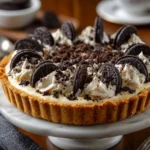
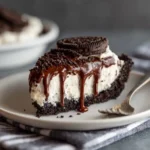
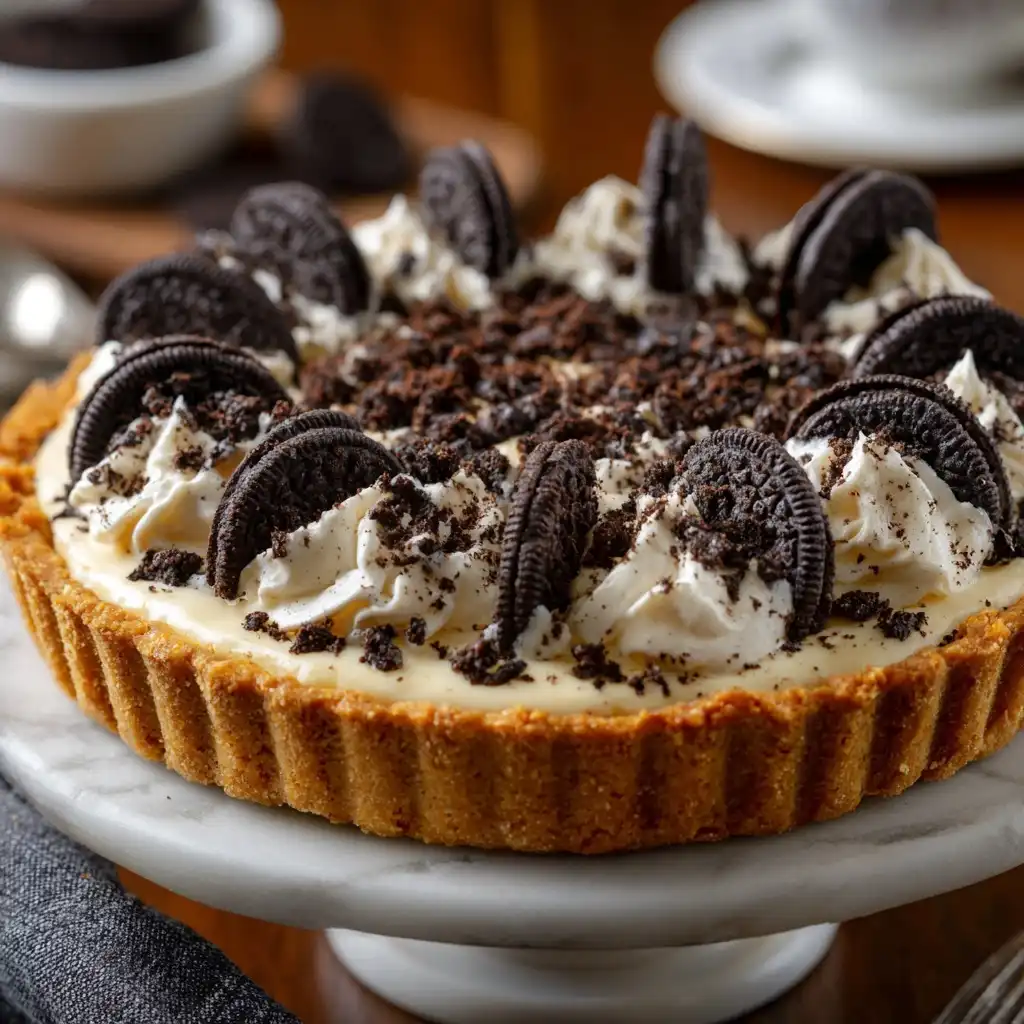
The Cookies and Cream Tart is a decadent, no-bake (or lightly baked) dessert that marries the nostalgic crunch of chocolate sandwich cookies with the luxuriously smooth, velvety richness of white chocolate or vanilla cream filling—encased in a buttery, crumbly cookie crust. Unlike traditional layered cakes or drop cookies, this elegant tart offers refined presentation, textural contrast, and crowd-pleasing flavor in every slice. Its visual appeal—streaked with dark cookie shards against snowy-white filling and often finished with glossy ganache or fresh garnishes—makes it ideal for dinner parties, holiday tables, bridal showers, or even as a gourmet gift. Though it appears sophisticated, its preparation is approachable for bakers of all levels, requiring minimal equipment and no oven time for many versions—making it especially beloved during warm summer months or when kitchen heat must be minimized.
The History
The origin of the Cookies and Cream Tart traces back indirectly to two iconic American innovations: the invention of the Oreo cookie in 1912 by Nabisco and the rise of “cookies and cream” as a standalone ice cream flavor in the early 1970s. While the exact genesis of the tart remains undocumented in culinary archives, food historians point to the late 1980s and early 1990s as the era when home cooks and pastry chefs began experimenting beyond ice cream and milkshakes—transforming the beloved duo into layered parfaits, frozen mousse cakes, and eventually, elegant tarts. Early iterations appeared in regional bakery menus across the Midwest and Southern U.S., where bakers repurposed leftover crushed Oreos from ice cream production into crusts. The concept gained wider traction in the 2000s via food blogs and television baking competitions, notably after Martha Stewart featured a variation on her syndicated show in 2005. Internationally, Australian and Canadian patisseries elevated the format using local biscuit equivalents—such as Arnott’s Iced VoVos or Christie’s Crème de Menthe—and incorporated stabilized whipped creams and gelatin-free alternatives for dietary inclusivity. Today, the Cookies and Cream Tart stands as a global dessert archetype—a testament to how simplicity, cultural nostalgia, and creative reinterpretation can yield timeless confections.
Ingredients Breakdown
Understanding each ingredient’s functional role ensures consistent success and empowers customization:
- Chocolate Sandwich Cookies (e.g., Oreos, Hydrox, or generic equivalents): Provide structural integrity for the crust, deep cocoa-molasses flavor, and signature crunch in the filling. Their high fat and sugar content bind the crust when pulsed finely and contribute emulsifiers that stabilize the cream layer.
- Unsalted Butter (melted): Acts as the binding agent for the crust—melting the cookie crumbs into a cohesive, pressable base. Clarified butter may be used for enhanced shelf stability; vegan alternatives like refined coconut oil or European-style plant-based margarine maintain optimal texture without dairy.
- Full-Fat Cream Cheese: Serves as the foundational acidulated base for the filling—adding tang, body, and richness while preventing excessive sweetness. Must be at true room temperature (68–72°F) to avoid lumps and ensure silky incorporation.
- Heavy Whipping Cream (36–40% fat): Whipped to soft or medium peaks, it provides airiness, lightness, and mouth-coating texture. Ultra-pasteurized cream may require longer whipping times; cold cream (35–40°F) and chilled bowl/whisk are non-negotiable for volume retention.
- Pure Vanilla Extract (or Madagascar Bourbon Vanilla Bean Paste): Enhances aromatic complexity and rounds out the sweetness. Alcohol-based extract aids in emulsification; paste adds visual speckling and deeper floral notes.
- Powdered Sugar (confectioners’ sugar): Offers rapid dissolution and fine texture versus granulated sugar. Contains cornstarch (typically 3%), which contributes subtle thickening and anti-crystallization properties in the filling.
- White Chocolate (high-cocoa-butter, 28–35% minimum): Adds creamy sweetness, glossy sheen, and stabilizing cocoa butter—critical for heat resistance and structure. Low-quality “white baking chips” (with vegetable oils instead of cocoa butter) yield greasy, grainy fillings and poor setting.
- Pinch of Fine Sea Salt: A crucial flavor amplifier that balances sweetness, sharpens cocoa notes, and heightens overall perception of richness—especially important in high-sugar desserts.
- Optional Additions: Espresso powder (½ tsp), crumbled toasted marshmallows, freeze-dried raspberry powder, edible gold leaf, or a splash of crème de cacao for adult variations.
Step-by-Step Recipe
- Prepare the Tart Pan: Lightly grease a 9-inch (23 cm) fluted tart pan with removable bottom. Line the bottom with parchment paper cut to fit precisely—this guarantees clean release and prevents sticking during unmolding.
- Make the Crust: In a food processor, pulse 24 standard chocolate sandwich cookies (about 270 g, including filling) until reduced to fine, uniform crumbs—no larger than coarse sand (approx. 15–20 one-second pulses). Transfer to a medium bowl; stir in 6 tbsp (85 g) melted unsalted butter and ¼ tsp fine sea salt until all crumbs are evenly moistened and hold together when pinched. Press firmly and evenly into the bottom and up the sides of the prepared tart pan using the back of a measuring cup or flat-bottomed glass. Chill uncovered for at least 45 minutes—or freeze for 20 minutes—to fully set the butter and prevent slumping during filling.
- Temper the White Chocolate (if using): Finely chop 8 oz (225 g) high-quality white chocolate. Place two-thirds in a heatproof bowl set over a saucepan of barely simmering water (double boiler), stirring constantly with a silicone spatula until melted and smooth (110–115°F / 43–46°C). Remove from heat; stir in remaining one-third of chopped chocolate until fully melted and cooled to 88–90°F (31–32°C)—this temp ensures proper crystallization and glossy finish. Let cool slightly but remain fluid (do not let harden).
- Prepare the Filling Base: In the bowl of a stand mixer fitted with the paddle attachment (or large mixing bowl + hand mixer), beat 16 oz (455 g) full-fat, room-temperature cream cheese on medium speed for 2 minutes until completely smooth and free of lumps. Scrape down bowl thoroughly. Gradually add ¾ cup (90 g) powdered sugar and 1½ tsp pure vanilla extract; beat on medium-low for 1 minute until combined. Add ¼ tsp fine sea salt and beat 30 seconds more.
- Incorporate White Chocolate: With mixer on low, slowly drizzle in the tempered white chocolate in a thin, steady stream. Once fully incorporated, increase speed to medium and beat for 45 seconds until homogeneous and slightly thickened.
- Whip the Cream: In a separate chilled stainless-steel or glass bowl, combine 1½ cups (360 ml) very cold heavy cream, 2 tbsp (15 g) powdered sugar, and ½ tsp vanilla. Whip on medium-high until medium-stiff peaks form—just before dry or grainy (about 2–3 minutes). Do not over-whip.
- Fold & Layer: Using a large silicone spatula, gently fold one-third of the whipped cream into the chocolate-cream cheese mixture to lighten. Then, carefully fold in the remaining whipped cream in two additions, rotating the bowl and using slow, sweeping motions from bottom to top—stopping as soon as no streaks remain. Over-folding deflates air and yields dense, gummy texture.
- Add Cookie Inclusions: Fold in ¾ cup (90 g) finely crushed chocolate sandwich cookies—pulsed separately until pea-sized pieces remain (not dust). Reserve 2 tbsp for garnish.
- Fill & Chill: Pour filling into the chilled crust. Smooth the top with an offset spatula or bench scraper. Sprinkle reserved crushed cookies evenly over surface. Refrigerate uncovered for at least 6 hours—or preferably overnight (12+ hours)—to allow full set, flavor melding, and optimal slice integrity.
- Unmold & Finish: Just before serving, run a thin knife around inner edge of pan. Release the outer ring, then slide a thin metal spatula under the parchment to lift tart onto a serving platter. Peel off parchment. Optional finishing touches: drizzle with melted dark chocolate, garnish with fresh mint, crumbled cookies, or edible flowers.
Tips
- Cookie Consistency Matters: Use cookies with creamy, stable fillings—not overly soft or excessively dry varieties. Stale cookies produce dusty crusts; overly fresh ones may bleed moisture into the filling. For best results, use cookies 2–3 weeks past purchase date.
- Chill Every Component: Cold cream, chilled bowl, cold mixer attachments, and a refrigerated crust all dramatically improve whip stability and prevent separation. Even chilling the folded filling for 15 minutes before pouring helps reduce air bubbles.
- Avoid Overmixing: Cream cheese should be beaten *only* until smooth—excess aeration introduces unwanted air pockets. Likewise, folding whipped cream requires patience: under-folded = streaky; over-folded = deflated and heavy.
- Temperature Precision: Room-temperature cream cheese must feel cool to the touch but yield slightly under finger pressure—never warm or oily. If too cold, microwave in 5-second bursts; if too warm, chill for 10 minutes.
- Crust Reinforcement Trick: For ultra-clean slices, brush the chilled crust with a thin layer of melted white chocolate before adding filling—this creates a moisture barrier and prevents sogginess.
- Cut Clean Slices: Use a long, thin, non-serrated knife dipped in hot water and wiped dry between each cut. Wipe and reheat the blade after every 2 slices for flawless edges.
- Storage Wisdom: Store covered in refrigerator for up to 5 days. Do not freeze the fully assembled tart—it causes condensation, textural breakdown, and weeping. However, unbaked crust and unwhipped filling components freeze well for up to 3 months.
- Humidity Hack: In humid climates, add ½ tsp unflavored gelatin (bloomed in 1 tbsp cold water, then microwaved 5 seconds) to the warm white chocolate before incorporating—this prevents weeping and enhances slice stability without altering flavor.
Variations and Customizations
This versatile tart serves as a canvas for endless creativity—catering to dietary needs, seasonal ingredients, global flavors, and special occasions:
- Vegan Version: Substitute dairy-free cream cheese (Kite Hill or Miyoko’s), full-fat coconut cream (chilled overnight, solid cream only), coconut oil–based white chocolate, and certified vegan cookies (e.g., Newman-O’s or Back to Nature). Add 1 tbsp maple syrup and ½ tsp apple cider vinegar to brighten flavor.
- Gluten-Free: Use certified GF chocolate sandwich cookies (like Glutino or Schär), GF graham-style crackers for hybrid crusts, and verify all extracts and chocolates are GF-certified. Add 1 tsp xanthan gum to filling for improved cohesion.
- Protein-Enhanced: Blend 2 scoops unflavored or vanilla whey/collagen protein powder into powdered sugar before adding to cream cheese. Reduce powdered sugar by 2 tbsp to balance sweetness.
- Decadent Dark Twist: Replace half the white chocolate with high-percentage (68–72%) dark chocolate for a bittersweet contrast. Garnish with espresso-dusted cookies and orange zest.
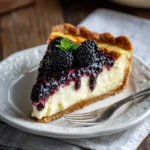
- Seasonal Fruit Infusion: Swirl in ¼ cup strained blackberry coulis or roasted pear purée just before final fold—adds acidity and visual marbling. Top with fresh figs or pomegranate arils.
- Mini Tartlettes: Press crust into 3-inch (7.5 cm) tartlet pans or muffin tin liners. Fill and chill. Perfect for weddings, baby showers, or tasting menus—yields ~24 mini tarts.
- Boozy Adult Variation: Add 2 tbsp crème de cacao or Kahlúa to cream cheese mixture; infuse whipped cream with 1 tsp orange blossom water. Garnish with dark chocolate curls and candied orange peel.
- Matcha Elegance: Whisk 1½ tsp ceremonial-grade matcha into powdered sugar before adding to cream cheese. Use plain shortbread cookies for crust and garnish with white chocolate matcha drizzle.
- Spiced Holiday Edition: Add ½ tsp ground cinnamon, ¼ tsp ground cardamom, and a pinch of freshly grated nutmeg to crust crumbs. Infuse cream with star anise and top with candied ginger.
- Salvage-Friendly “Deconstructed” Version: If filling separates or crust cracks, layer components in glasses: crumbled crust, broken cookie pieces, cream mixture, and whipped cream—serve as individual parfaits with caramelized banana slices.
Health Considerations and Nutritional Value
While indulgent by nature, mindful formulation can enhance nutritional profile without sacrificing enjoyment. Per standard slice (1/12 of 9-inch tart, approx. 185 g), values vary based on brands and substitutions—but typical estimates are:
- Calories: 340–390 kcal
- Total Fat: 22–26 g (13–16 g saturated)
- Carbohydrates: 34–39 g (26–30 g sugars)
- Protein: 4–6 g
- Fiber: 1–1.5 g (increases to 3–4 g with high-fiber GF cookies or added psyllium)
- Sodium: 180–220 mg
- Calcium: 45–60 mg (enhanced with calcium-fortified cream cheese or almond milk–based alternatives)
Key Considerations:
- Allergens: Naturally contains dairy, wheat/gluten (unless substituted), soy (in most chocolate and cream cheese), and eggs (if using egg-based stabilizers). Always verify labels for shared facility warnings (nuts, sesame, etc.).
- Sugar Awareness: Traditional versions rely heavily on refined sugar. Substitutes like monk fruit–erythritol blends (1:1 ratio) work well in crust and filling—though texture may be slightly drier; add 1 tsp extra melted butter or coconut oil to compensate.
- Saturated Fat Source: Cocoa butter (from white chocolate) and dairy fat provide satiety and mouthfeel—but those monitoring intake may opt for lower-fat cream cheese (note: higher water content risks weeping) or blended cashew cream bases.
- Gut Health Friendly: Adding 1 tbsp inulin or resistant dextrin to powdered sugar supports prebiotic fiber goals without aftertaste. Probiotic-rich cultured coconut cream also boosts gut-supportive microbes.
- Blood Sugar Impact: The high glycemic load warrants portion control for diabetics or insulin-resistant individuals. Pairing with a protein- and fiber-rich snack (e.g., almonds + apple slices) slows glucose absorption.
- Antioxidant Potential: Cocoa solids in chocolate cookies offer flavanols—enhanced by using high-cocoa-content cookies or adding raw cacao nibs as garnish.
As with all desserts, moderation, ingredient quality, and personal health context determine overall impact. When crafted with intention and enjoyed mindfully, this tart delivers both pleasure and purpose.
Ingredients
- 24 standard chocolate sandwich cookies (e.g., Oreos), about 270 g, including filling
- 6 tablespoons (85 g) unsalted butter, melted and slightly cooled
- ¼ teaspoon fine sea salt
- 16 ounces (455 g) full-fat brick-style cream cheese, at true room temperature (68–72°F)
- ¾ cup (90 g) powdered sugar, sifted
- 1½ teaspoons pure vanilla extract
- ¼ teaspoon fine sea salt
- 8 ounces (225 g) high-quality white chocolate (minimum 28% cocoa butter), finely chopped
- 1½ cups (360 ml) heavy whipping cream (36–40% fat), very cold
- 2 tablespoons (15 g) powdered sugar
- ½ teaspoon pure vanilla extract
- ¾ cup (90 g) finely crushed chocolate sandwich cookies (pea-sized pieces)
- 2 tablespoons (15 g) additional crushed cookies, for garnish
Directions
- Lightly grease a 9-inch (23 cm) fluted tart pan with removable bottom and line the bottom with parchment paper.
- In a food processor, pulse cookies until reduced to fine, uniform crumbs. Transfer to a bowl; stir in melted butter and ¼ tsp salt until fully moistened. Press firmly and evenly into pan bottom and up sides. Chill uncovered for 45 minutes.
- Set up double boiler. Melt two-thirds of white chocolate over barely simmering water, stirring constantly until smooth (110–115°F). Remove from heat; stir in remaining chocolate until fully melted and cooled to 88–90°F. Set aside, covered, to retain warmth.
- In stand mixer bowl with paddle attachment, beat cream cheese on medium for 2 minutes until perfectly smooth. Scrape bowl. Add ¾ cup powdered sugar, 1½ tsp vanilla, and ¼ tsp salt; beat 1 minute on medium-low.
- With mixer on low, slowly drizzle in tempered white chocolate. Increase speed to medium; beat 45 seconds until homogeneous.
- In chilled bowl, whip cold heavy cream, 2 tbsp powdered sugar, and ½ tsp vanilla to medium-stiff peaks (2–3 min). Do not over-whip.
- Fold one-third of whipped cream into cream cheese mixture to lighten. Gently fold in remaining whipped cream in two additions until fully incorporated and no streaks remain.
- Fold in ¾ cup crushed cookies (pea-sized). Reserve 2 tbsp for garnish.
- Pour filling into chilled crust. Smooth top. Sprinkle reserved crushed cookies evenly over surface.
- Refrigerate uncovered for at least 6 hours—or ideally 12–24 hours—for full set and flavor development.
- Before serving, run knife around inner edge. Release outer ring. Slide metal spatula under parchment to lift tart onto platter. Peel off parchment. Serve chilled with optional garnishes.
FAQ
- Can I make this tart ahead of time?
- Yes—this tart improves with time. It can be fully assembled and refrigerated for up to 5 days. For best texture, add final garnishes (fresh fruit, delicate herbs, or chocolate drizzle) within 2 hours of serving.
- Why did my filling separate or become grainy?
- Most commonly due to temperature mismatch: cold cream cheese mixed with warm white chocolate, or vice versa. Also occurs if cream cheese wasn’t fully softened or if white chocolate seized from moisture or overheating. Always ensure all components are within 10°F of each other before combining.
- Can I use Cool Whip or store-bought whipped topping?
- Not recommended. These contain stabilizers, gums, and hydrogenated oils that inhibit proper emulsion and result in rubbery, artificial-tasting texture. Real heavy cream delivers superior mouthfeel, stability, and clean flavor.
- My crust is crumbly and won’t hold together—what went wrong?
- Insufficient butter (too dry), over-processing into dust (loss of binding fat), or inadequate pressing pressure. Ensure butter is fully melted—not pooled—and press firmly using a flat-bottomed tool. Chill thoroughly before filling.
- Can I bake the crust for extra crispness?
- Absolutely. Pre-bake at 350°F (175°C) for 10–12 minutes until fragrant and set. Cool completely before filling. Baking deepens flavor and improves structural integrity—especially helpful in humid environments.
- How do I prevent condensation on the surface after refrigeration?
- Always chill uncovered initially to allow surface to set before covering. After 6 hours, loosely tent with parchment or wax paper (not plastic wrap, which traps moisture). Alternatively, glaze top with thin white chocolate shell before chilling.
- Is there a substitute for white chocolate?
- For strict dairy-free needs, use high-fat coconut milk–based white chocolate. For allergy reasons, omit entirely and increase cream cheese by 2 oz and powdered sugar by 1 tbsp—but expect less richness and shine. Never substitute “white baking chips”—they lack cocoa butter and will split.
- Can I freeze individual slices?
- Yes—with caveats. Wrap tightly in parchment + freezer-safe wrap; freeze up to 2 months. Thaw overnight in fridge—not at room temperature—to preserve texture. Note: whipped cream may soften slightly but remains delicious.
- What’s the best way to transport this tart?
- Use a rigid cake carrier with nonslip base. Chill fully before transport. Place on chilled gel pack or frozen blue ice underneath insulated tote. Avoid stacking or jostling. Slice on-site for best appearance.
- Why does my tart taste overly sweet?
- Omit the ¼ tsp salt in filling, or add ½ tsp lemon juice or ⅛ tsp cream of tartar to the cream cheese mixture before adding sugar. Salt and acidity are essential counterpoints—don’t skip them!
Summary
The Cookies and Cream Tart is a masterclass in balance—melding nostalgic flavor, luxurious texture, and elegant simplicity into a make-ahead dessert that delights both eye and palate. With its buttery cookie crust, cloud-like white chocolate–cream cheese filling, and signature cookie crunch, it transforms childhood comfort into sophisticated celebration fare.
Backed by precise technique, thoughtful substitutions, and centuries of dessert evolution, this tart proves that the most memorable sweets aren’t defined by complexity—but by intention, quality, and the joyful alchemy of a few perfect ingredients.