Introduction
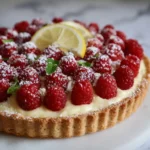
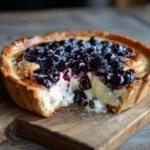
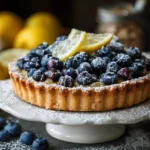
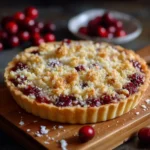
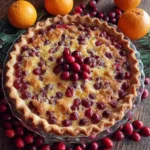
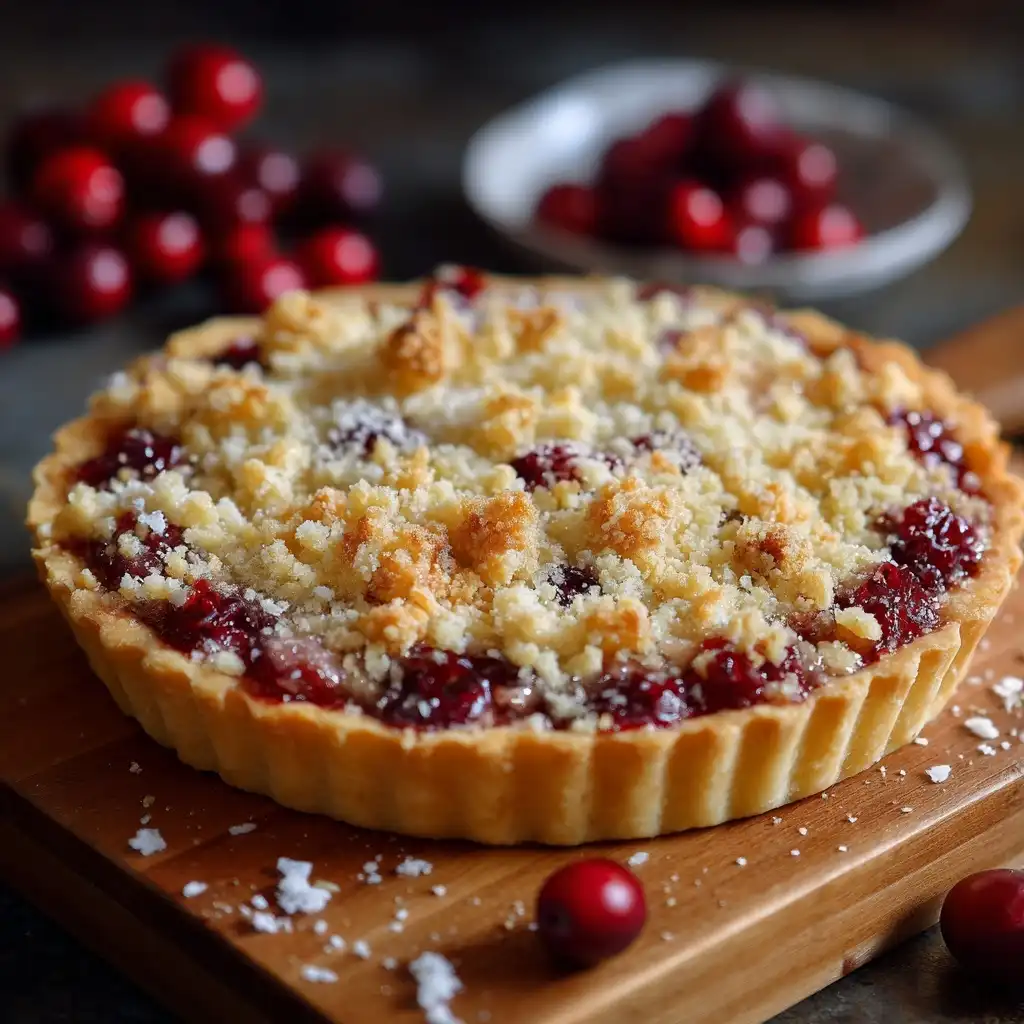
The Cranberry Crumble Tart is a stunning fusion of tart, sweet, and buttery—elegantly balancing the bold, ruby-red vibrancy of fresh cranberries with the comforting warmth of a golden, oat-and-brown-sugar crumble topping. Unlike traditional pies that rely on a double crust or custard fillings, this tart celebrates simplicity and texture: a crisp, shortbread-like base anchors a luscious, lightly gelled cranberry layer, crowned with a rustic, crunchy crumble that bakes to caramelized perfection. It’s a dessert that feels both nostalgic and refreshingly modern—equally at home on a holiday table alongside gingerbread and eggnog as it is served with vanilla bean ice cream on a quiet autumn evening. Whether you’re drawn to its jewel-toned appearance, its bright yet balanced flavor profile, or its forgiving, make-ahead-friendly structure, the Cranberry Crumble Tart embodies seasonal sophistication without fuss.
The History
While no single documented “origin story” pins down the exact birth of the Cranberry Crumble Tart, its lineage is deeply rooted in two rich culinary traditions: the American cranberry pie and the British crumble. Native to North America, cranberries were used by Indigenous peoples for food, medicine, and dye long before European colonization. By the 17th century, colonists adopted them into preserves and baked goods—early versions of cranberry tarts appeared in New England cookbooks as early as the 1800s, often baked in shallow pans with pastry linings and spiced with cinnamon and orange zest. Meanwhile, across the Atlantic, the British crumble emerged during WWII as a practical, ration-friendly alternative to pies—using oats, flour, butter, and sugar to create a tender, crumbly topping over stewed fruit. The convergence of these traditions likely occurred in mid-20th-century American home kitchens, where bakers began layering crumble toppings over open-faced fruit tarts instead of enclosed pies—valuing ease, visual appeal, and textural contrast. Modern iterations gained traction in food magazines and blogs in the 2000s, especially as interest in heirloom ingredients, whole grains, and seasonal baking surged. Today, the Cranberry Crumble Tart stands as a beloved hallmark of fall and winter dessert culture—a testament to cross-cultural adaptation, pantry ingenuity, and the timeless allure of tart-sweet harmony.
Ingredients Breakdown
Every element of this tart plays a distinct, intentional role—no ingredient is filler; each contributes to structure, flavor balance, moisture control, or textural contrast.
- Tart Shell (Shortbread Base): All-purpose flour provides gluten structure for tenderness without toughness; confectioners’ sugar ensures fine, melt-in-the-mouth crumbliness and enhances browning; cold unsalted butter delivers flakiness and richness; a pinch of sea salt deepens all other flavors and balances sweetness; vanilla extract adds aromatic complexity; and a small amount of cold water hydrates the dough just enough to bind—never enough to activate excess gluten.
- Cranberry Filling: Fresh or frozen cranberries supply natural pectin (essential for gentle setting), vibrant acidity, and antioxidant-rich polyphenols; granulated sugar not only sweetens but also draws out juices and aids gel formation; light brown sugar adds molasses notes that complement cranberry’s sharpness and boost caramelization; orange zest and juice introduce bright citrus oils and acidity to lift the filling’s depth; cornstarch acts as a precise, clear thickener—unlike flour, it won’t cloud the filling or impart starchy taste; a tiny pinch of ground cinnamon adds warmth without overpowering; and a splash of apple cider vinegar (optional but recommended) heightens brightness and helps preserve the cranberries’ vivid red hue during baking.
- Crumble Topping: Old-fashioned rolled oats lend chewy-nutty substance and structural integrity; all-purpose flour reinforces binding; light brown sugar contributes moisture, color, and deep caramel notes; granulated sugar adds sparkle and crunch; cold unsalted butter binds the mixture while creating pockets of flakiness; chopped pecans or walnuts (optional) add buttery richness and textural variation; a generous grating of orange zest and a pinch of flaky sea salt finish the topping with aromatic lift and savory balance.
Step-by-Step Recipe
- Prepare the Tart Pan: Lightly grease a 9-inch round tart pan with removable bottom. Line the bottom with parchment paper, ensuring it extends slightly above the rim for easy removal later. Chill the pan in the freezer for 10 minutes—this helps prevent shrinkage during blind baking.
- Make the Shortbread Base: In a food processor, pulse 1 ¼ cups all-purpose flour, ½ cup confectioners’ sugar, and ¼ tsp fine sea salt until combined. Add ½ cup (1 stick) very cold, cubed unsalted butter and pulse in 1-second bursts until the mixture resembles coarse meal with some pea-sized butter pieces remaining. Add 1 tsp pure vanilla extract and 2–3 tbsp ice-cold water, one tablespoon at a time, pulsing just until the dough begins to clump. Do not overmix. Transfer dough to the chilled tart pan, pressing evenly across the bottom and ½ inch up the sides using the back of a spoon or your fingertips. Prick the base all over with a fork. Freeze for 20 minutes.
- Blind Bake the Shell: Preheat oven to 350°F (175°C). Line the chilled crust with parchment paper and fill with pie weights or dried beans. Bake for 18 minutes. Carefully remove weights and parchment, then bake uncovered for another 12–15 minutes—until golden, dry-looking, and just beginning to turn pale tan at the edges. Cool completely on a wire rack (at least 45 minutes).
- Prepare the Cranberry Filling: In a medium saucepan, combine 3 cups fresh or frozen (unthawed) cranberries, ¾ cup granulated sugar, ¼ cup light brown sugar, 1 tbsp finely grated orange zest, 3 tbsp fresh orange juice, 2 tbsp cornstarch, and a pinch of ground cinnamon. Stir gently to coat berries. Let sit 10 minutes to macerate. Place over medium heat and bring to a gentle simmer, stirring frequently. Cook for 8–10 minutes, until cranberries burst, liquid thickens to a glossy, jammy consistency, and large bubbles pop steadily. Remove from heat and stir in ½ tsp apple cider vinegar (if using). Cool to lukewarm (about 20 minutes)—do not pour hot filling into cooled crust, or the base may soften.
- Make the Crumble Topping: In a medium bowl, whisk together 1 cup old-fashioned rolled oats, ½ cup all-purpose flour, ⅓ cup light brown sugar, ¼ cup granulated sugar, and ¼ tsp flaky sea salt. Using a pastry cutter or your fingertips, work in 6 tbsp very cold, cubed unsalted butter until the mixture forms moist clumps and small pebbles—some pieces should be the size of peas, others slightly larger. Fold in ¼ cup chopped toasted pecans and 1 tsp additional orange zest. Refrigerate while filling cools.
- Assemble & Bake: Pour the lukewarm cranberry filling into the fully cooled tart shell, spreading evenly with an offset spatula. Sprinkle crumble topping evenly over the surface, gently pressing some larger clusters into place for visual appeal. Place tart on a parchment-lined baking sheet (to catch potential bubbling overflow). Bake at 350°F (175°C) for 35–42 minutes—rotating halfway—until the crumble is deeply golden brown, fragrant, and set (no visible liquid seeping from edges), and the filling is bubbling vigorously at the center. A toothpick inserted into the crumble should come out with moist crumbs—not wet batter.
- Cool & Set: Let tart cool completely in the pan on a wire rack—minimum 3 hours, ideally overnight. This is non-negotiable: the filling needs time to fully set via pectin and starch retrogradation. Rushing this step results in a runny slice. Once cool, carefully run a thin knife around the inner edge, then release the springform ring. Lift off the outer metal frame and slide the tart onto a serving platter using the parchment overhang.
Tips
- Butter Temperature Is Everything: Whether making the crust or crumble, butter must be *very cold*—nearly icy. Warm butter melts too quickly, leading to greasy, dense textures. Cube and chill butter for 15 minutes before use; even chill your mixing bowls and pastry cutter.
- Don’t Skip the Blind Bake: Underbaking the base leads to sogginess. Fully pre-baking ensures a crisp, sturdy foundation that resists moisture migration—even if the filling is juicy.
- Cool the Filling Before Pouring: Hot filling will steam the crust and weaken its structure. Let it cool to lukewarm (not room temp, not hot) for optimal adhesion and texture integrity.
- Freeze the Crumble Before Baking: For extra-defined clusters and less spreading, spread the crumble topping on a parchment-lined tray and freeze for 15 minutes before sprinkling over the filling.
- Use a Tart Pan With Removable Bottom: Essential for clean slicing and presentation. A standard pie dish lacks the clean vertical edge and makes removal nearly impossible without crumbling.
- Chill Before Slicing: For razor-sharp slices, refrigerate the fully cooled tart for 30–45 minutes before cutting. Use a hot, thin-bladed knife—dip in hot water and wipe dry between cuts.
- Orange Zest First, Juice Second: Always zest the orange before juicing—it’s infinitely easier on a whole fruit, and you’ll avoid bitter pith contamination.
- Test Cranberry Freshness: Fresh cranberries should bounce when dropped—they’re naturally dense and firm. If shriveled or soft, they’ll break down too much during cooking.
- Adjust Sweetness Thoughtfully: Taste your cranberries raw—if unusually tart, add 1–2 tbsp extra sugar to the filling. If milder (common with late-season or certain cultivars), reduce granulated sugar by 1–2 tbsp.
- Prevent Overflow: Cranberries bubble vigorously. Always bake on a parchment-lined sheet—and consider placing a second sheet on the oven rack below to catch drips.
Variations and Customizations
- Gluten-Free Version: Substitute the all-purpose flour in both crust and crumble with a 1:1 certified gluten-free baking blend (like Bob’s Red Mill or King Arthur). Ensure oats are certified GF (standard oats are often cross-contaminated). Add ½ tsp xanthan gum to the crust flour mix for elasticity.
- Vegan Adaptation: Replace butter with high-fat, cultured vegan butter (e.g., Miyoko’s or Melt Organic) in equal measure. Use maple syrup (reduce other sugars by 2 tbsp) in the filling and ensure cornstarch is non-GMO and vegan-certified. For egg-free binding in crust, add 1 tsp apple cider vinegar + 1 tsp plant milk to the water.
- Spiced Cranberry: Infuse the filling with ¼ tsp freshly grated ginger, ⅛ tsp ground cardamom, or a 1-inch cinnamon stick steeped in the warm orange juice (remove before adding to cranberries).
- Maple-Cranberry: Replace brown sugar in filling with ⅓ cup pure maple syrup (reduce granulated sugar to ½ cup) and add 1 tsp bourbon or brandy for depth.
- Nut-Free Crumble: Omit nuts entirely—or substitute toasted sunflower or pumpkin seeds for crunch and nutrition.
- Chocolate-Dotted: Press ¼ cup finely chopped dark chocolate (70% cacao) into the warm, just-baked crumble before cooling—creates delightful melty pockets.
- Herb-Infused: Stir 1 tsp finely chopped fresh rosemary or thyme into the crumble topping for an elegant, earthy counterpoint.
- Mini Tartlets: Press crust into 12 standard muffin tin cups lined with parchment. Fill ¾ full with cranberry mixture, top with 1 tbsp crumble per cup. Bake at 350°F for 22–26 minutes.
- Double-Crust Hybrid: Roll out extra crust dough, cut into lattice strips, and weave over the filled tart before adding crumble—creating a layered textural experience.
- Brunch-Friendly Savory-Sweet: Add 2 tbsp crumbled goat cheese or feta to the crumble topping before baking, and garnish finished tart with microgreens and cracked black pepper.
Health Considerations and Nutritional Value
While inherently a dessert, the Cranberry Crumble Tart offers meaningful nutritional highlights—especially when prepared with mindful ingredient choices. Cranberries are among the most antioxidant-dense fruits available, rich in proanthocyanidins (PACs) linked to urinary tract health, quercetin for anti-inflammatory support, and vitamin C for immune resilience. Their natural acidity also promotes healthy digestion and may modestly support blood sugar regulation due to low glycemic impact—though added sugars moderate this benefit. The inclusion of rolled oats in the crumble contributes soluble fiber (beta-glucan), clinically shown to support heart health by lowering LDL cholesterol and improving satiety. When made with minimal added sugar and nut additions like pecans, the tart provides monounsaturated fats, magnesium, and zinc. That said, portion awareness remains key: a standard slice (1/12 of the tart) contains approximately 320–360 calories, 45–50g carbohydrates (of which 28–32g are sugars), 4–5g fiber, 3–4g protein, and 14–16g total fat (mostly unsaturated). To enhance nutritional density, consider reducing granulated sugar by 2–3 tbsp and boosting orange zest for flavor without calories; using half whole wheat pastry flour in the crust for added B vitamins and fiber; or incorporating chia or ground flaxseed into the crumble for omega-3s and extra fiber. Those managing diabetes should pair a modest slice with Greek yogurt or a handful of almonds to slow glucose absorption. As always, consult a registered dietitian for personalized guidance—especially regarding dietary restrictions, allergies, or therapeutic nutrition goals.
Ingredients
For the Shortbread Tart Shell:
- 1 ¼ cups (155g) all-purpose flour, plus more for dusting
- ½ cup (60g) confectioners’ sugar
- ¼ teaspoon fine sea salt
- ½ cup (115g) cold unsalted butter, cubed (1 stick)
- 1 teaspoon pure vanilla extract
- 2–3 tablespoons ice-cold water
For the Cranberry Filling:
- 3 cups (330g) fresh or frozen unsweetened cranberries
- ¾ cup (150g) granulated sugar
- ¼ cup (50g) light brown sugar, packed
- 1 tablespoon finely grated orange zest (from 1 large orange)
- 3 tablespoons fresh orange juice (about 1 orange)
- 2 tablespoons cornstarch
- Pinch of ground cinnamon (optional)
- ½ teaspoon apple cider vinegar (optional but recommended)
For the Crumble Topping:
- 1 cup (90g) old-fashioned rolled oats (not quick-cooking or instant)
- ½ cup (60g) all-purpose flour
- ⅓ cup (70g) light brown sugar, packed
- ¼ cup (50g) granulated sugar
- ¼ teaspoon flaky sea salt (such as Maldon)
- 6 tablespoons (85g) cold unsalted butter, cubed
- ¼ cup (30g) chopped toasted pecans or walnuts (optional)
- 1 teaspoon additional finely grated orange zest
For Serving (Optional):
- Vanilla bean ice cream or crème fraîche
- Fresh orange segments or candied orange peel
- Mint leaves or edible flowers for garnish
Directions
- Prep & Chill: Lightly grease a 9-inch round tart pan with removable bottom. Line bottom with parchment paper, letting excess hang over edges. Chill pan in freezer for 10 minutes. Meanwhile, cube and chill butter for both crust and crumble. Measure and prep all ingredients.
- Make Crust: In food processor, pulse flour, confectioners’ sugar, and salt. Add cold butter; pulse until coarse crumbs form with pea-sized butter bits. Add vanilla and 2 tbsp ice water; pulse until dough begins to clump. If too dry, add 1 more tsp water. Transfer to pan; press evenly into bottom and ½” up sides. Prick base. Freeze 20 minutes.
- Blind Bake: Preheat oven to 350°F (175°C). Line chilled crust with parchment; fill with pie weights. Bake 18 minutes. Remove weights/parchment; bake 12–15 minutes more until golden and dry. Cool completely on wire rack (≥45 min).
- Make Filling: In saucepan, combine cranberries, granulated sugar, brown sugar, orange zest, orange juice, cornstarch, and cinnamon. Let sit 10 minutes. Bring to gentle simmer over medium heat; cook 8–10 min, stirring, until thick, glossy, and jammy. Off heat, stir in vinegar. Cool to lukewarm (~20 min).
- Make Crumble: In bowl, whisk oats, flour, brown sugar, granulated sugar, and salt. Cut in cold butter with pastry cutter or fingers until mixture forms moist clumps and pea-sized pieces. Fold in nuts and extra orange zest. Refrigerate.
- Assemble: Pour lukewarm filling into cooled crust. Evenly sprinkle crumble over top, gently pressing larger clusters in place. Place on parchment-lined baking sheet.
- Bake: Bake at 350°F (175°C) for 35–42 minutes—until crumble is deep golden, fragrant, and set; filling bubbles vigorously at center. Rotate pan halfway.
- Cool & Set: Cool completely in pan on wire rack—minimum 3 hours, preferably overnight. Run thin knife around edge; release springform. Slide tart onto serving platter using parchment.
- Serve: Slice with hot, thin knife (wipe between cuts). Serve at room temperature or slightly chilled. Pair with vanilla ice cream or crème fraîche.
FAQ
- Can I use dried cranberries instead of fresh or frozen?
- No—dried cranberries lack the necessary moisture, pectin, and acidity to create the proper gel and vibrant flavor. They’ll become overly chewy and cloyingly sweet. Stick with fresh or frozen unsweetened.
- Why did my crumble sink into the filling?
- This usually occurs if the filling was still hot when topped—or if the crumble wasn’t chilled before baking. Always let filling cool to lukewarm, and consider freezing crumble for 15 minutes before sprinkling.
- Can I make this ahead of time?
- Absolutely. The crust can be blind-baked and stored airtight at room temperature for 2 days. The filling keeps refrigerated for up to 4 days or frozen for 3 months. Assemble and bake within 2 hours of serving for best texture—but fully baked, cooled tart stays delicious refrigerated for 5 days.
- My filling is too runny after cooling—what went wrong?
- Likely undercooked filling (needs full 8–10 min simmer), insufficient cornstarch, or premature slicing before full cooling. Reheat gently on stove with 1 tsp extra cornstarch slurry if needed—or embrace it as a “cranberry compote tart” and serve with extra crumble on the side!
- Is there a lower-sugar version?
- Yes—with caveats. Reduce granulated sugar to ½ cup and omit brown sugar (relying on orange juice and zest for sweetness). Add 1–2 tbsp erythritol or monk fruit blend if desired. Note: sugar aids thickening and texture—expect softer set and paler color.
- Can I freeze the whole baked tart?
- Yes—but only after full cooling. Wrap tightly in plastic wrap, then aluminum foil; freeze up to 2 months. Thaw overnight in fridge, then bring to room temperature 30 minutes before serving. Crumble may soften slightly but remains delicious.
- What’s the best way to store leftovers?
- Refrigerate uncovered (to prevent condensation) or loosely covered with parchment—not plastic—for up to 5 days. Avoid airtight containers unless sliced—the crust softens faster.
- Can I use a different thickener instead of cornstarch?
- Arrowroot works 1:1 and yields a glossier finish. Tapioca starch also works but may create slight stringiness. Flour requires ~3x the amount and clouds the filling—avoid unless necessary.
- Why does my crust shrink during baking?
- Overworking dough, insufficient chilling, or stretching dough while pressing into pan causes shrinkage. Always chill dough-lined pan for 20+ minutes and avoid pulling or stretching.
- Can I add other fruits to the cranberry filling?
- Yes—sparingly. ½ cup diced apple or pear adds subtle sweetness and body. Avoid watery fruits like strawberries or peaches unless reduced first—they dilute pectin and cause weeping.
Summary
The Cranberry Crumble Tart is a masterclass in seasonal balance—where the bold, tangy intensity of ruby-red cranberries meets the buttery richness of a shortbread base and the rustic crunch of a spiced oat crumble, all bound by natural pectin and thoughtful technique. With make-ahead flexibility, endless customization options, and surprising nutritional merit, it’s as functional for weeknight dessert as it is showstopping for holiday entertaining.
Whether you honor its historical roots in New England orchards and wartime kitchens or reimagine it with maple, herbs, or gluten-free grains, this tart remains a timeless celebration of autumn’s brightest, boldest fruit—transformed into something deeply comforting, visually arresting, and utterly unforgettable.