Introduction
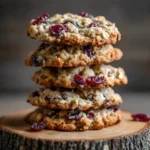
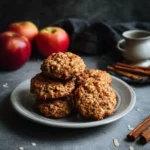
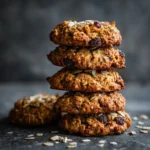
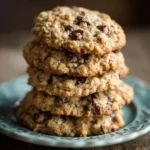
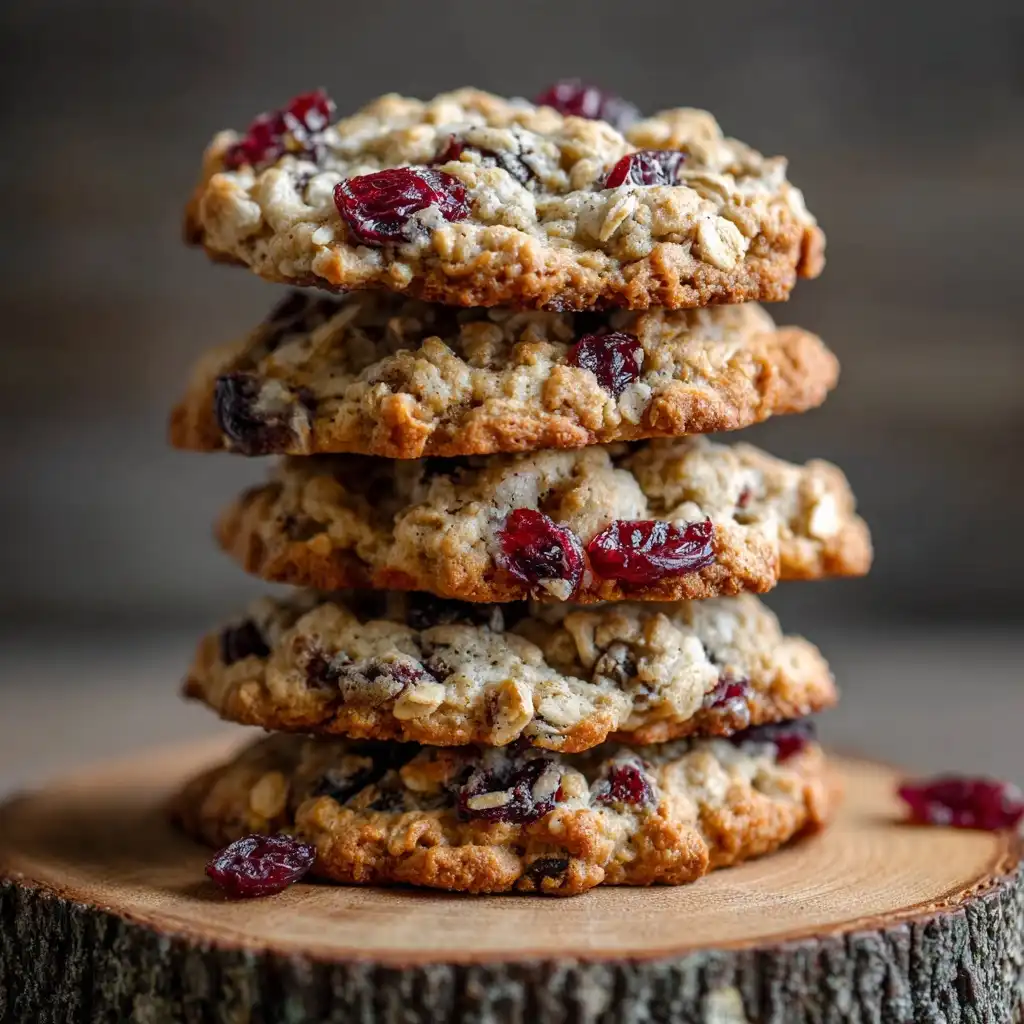
Cranberry oatmeal cookies are a beloved classic—a harmonious blend of chewy, hearty, and tart-sweet flavors that evoke comfort, nostalgia, and wholesome indulgence. More than just a seasonal treat, these cookies bridge the rustic simplicity of old-fashioned oatmeal cookies with the vibrant pop of dried cranberries—adding both visual appeal and a bright, tangy counterpoint to the deep, toasty notes of brown sugar and oats. Whether enjoyed with morning coffee, packed into lunchboxes, gifted in holiday tins, or served alongside afternoon tea, cranberry oatmeal cookies offer a versatile, crowd-pleasing balance of texture, flavor, and nutrition. Their enduring popularity stems not only from their deliciousness but also from their remarkable adaptability—easily scaled for batch baking, modified for dietary needs, and elevated with gourmet touches without sacrificing approachability.
The History
The origins of the cranberry oatmeal cookie trace back through two rich culinary lineages: the American oatmeal cookie and the indigenous use of cranberries by Native peoples of the Northeastern United States and Eastern Canada. Oatmeal cookies themselves emerged in the late 19th and early 20th centuries as home bakers adapted British oatcakes and Scottish porridge-based treats to American pantries—leveraging readily available rolled oats, butter, and brown sugar. The first widely published oatmeal cookie recipe appeared in the 1896 edition of Fannie Farmer’s Boston Cooking-School Cook Book, though it lacked raisins or fruit. Cranberries, meanwhile, were cultivated commercially beginning in the 1810s in Massachusetts—and by the 1930s, Ocean Spray had pioneered the cranberry juice cocktail and later, sweetened dried cranberries (first introduced in 1961 under the brand name “Craisins” by Ocean Spray in partnership with General Foods). It was this innovation—making cranberries shelf-stable, portable, and pleasantly sweet-tart—that catalyzed their integration into baked goods. By the 1970s and 1980s, cranberry oatmeal cookies began appearing in church cookbooks, women’s magazines like Good Housekeeping and Family Circle, and regional bakery menus—particularly across New England and the Midwest. Over time, the cookie evolved from a simple addition of dried cranberries to a carefully calibrated composition where acidity, sweetness, fat, fiber, and moisture all play intentional roles—transforming it from a humble pantry staple into a modern baking icon celebrated for both its heritage and its endless potential for reinvention.
Ingredients Breakdown
Every exceptional cranberry oatmeal cookie begins with intentionality—not just in measurement, but in understanding how each ingredient functions chemically and sensorially:
- Old-Fashioned Rolled Oats (not instant or quick-cooking): Provide signature chewiness, nutty flavor, and structural integrity. Their intact groats absorb moisture slowly, preventing spread while contributing soluble fiber (beta-glucan) linked to heart health.
- All-Purpose Flour: Adds gluten structure for lift and cohesion. Too much leads to toughness; too little causes excessive spreading. A modest amount (typically 1–1¼ cups) ensures tenderness without compromising shape.
- Baking Soda: The sole leavening agent in most traditional versions—it reacts with the acidity in brown sugar and molasses to create carbon dioxide bubbles, yielding a light yet dense crumb. It also promotes browning via the Maillard reaction.
- Ground Cinnamon & Nutmeg (optional but highly recommended): Warm spices enhance the natural fruitiness of cranberries and complement the caramelized notes of brown sugar. Freshly grated nutmeg adds floral depth often missing in pre-ground versions.
- Salted Butter (unsalted preferred, with added salt): Delivers richness, flakiness, and mouthfeel. Its water content creates steam during baking, aiding lift; its milk solids contribute browning and flavor. European-style butter (82–84% fat) yields even more tenderness and depth.
- Brown Sugar (packed): The cornerstone of moisture and chew. Its molasses content provides acidity (for leavening), hygroscopicity (retaining moisture), and complex caramel, toffee, and rum-like notes. Dark brown sugar intensifies these qualities versus light brown.
- Granulated Sugar: Contributes to crisp edges and structural stability. It competes with brown sugar for moisture, helping achieve the ideal contrast between chewy centers and slightly crisp exteriors.
- Eggs (large, room temperature): Act as emulsifiers, binders, and moisture reservoirs. The yolks add fat and richness; the whites provide structure and slight lift. Room temperature ensures uniform incorporation and prevents seizing of melted butter.
- Pure Vanilla Extract: Not merely flavoring—vanilla’s phenolic compounds interact with sugars and proteins to deepen aroma and round out sharpness. Bourbon-vanilla or Madagascar bean paste can elevate complexity further.
- Dried Cranberries (sweetened): The star accent—tart, chewy, and jewel-toned. Look for those packed with apple juice concentrate or grape juice rather than high-fructose corn syrup for cleaner flavor. Soaking them for 10–15 minutes in warm orange juice, rum, or even strong brewed chai tea before mixing enhances plumpness and infuses subtle nuance.
- Pinch of Flaky Sea Salt (added just before baking or as finishing salt): Enhances all other flavors, balances sweetness, and adds textural interest. Maldon or Fleur de Sel are ideal for their delicate crunch and clean finish.
Note: While optional, many bakers include chopped walnuts, pecans, or slivered almonds for toasted nuttiness and crunch—or a tablespoon of orange zest to amplify brightness and cut richness. These additions are explored in depth under Variations.
Step-by-Step Recipe
- Preheat & Prep: Position oven racks in upper and lower thirds. Preheat oven to 350°F (175°C). Line two large baking sheets with parchment paper or silicone baking mats—do not grease, as excess fat encourages spreading.
- Toast the Oats (Highly Recommended): Spread 3 cups of old-fashioned rolled oats evenly on a rimmed baking sheet. Toast in preheated oven for 10–12 minutes, stirring once halfway, until fragrant and lightly golden. Let cool completely—this step deepens flavor, reduces raw oat taste, and improves texture. Skipping it results in blander, less cohesive cookies.
- Cream Butter & Sugars: In a large bowl using a stand mixer fitted with paddle attachment (or hand mixer), beat 1 cup (2 sticks / 227g) unsalted butter, 1 cup (200g) packed dark brown sugar, and ½ cup (100g) granulated sugar on medium-high speed for 3–4 minutes until very light, fluffy, and pale—scraping bowl frequently. Proper creaming incorporates air, which translates directly to lift and tenderness.
- Add Wet Ingredients: Beat in 2 large room-temperature eggs, one at a time, fully incorporating each before adding the next (~30 seconds per egg). Add 2 tsp pure vanilla extract and mix just until combined. Avoid overmixing at this stage to prevent gluten development.
- Whisk Dry Ingredients: In a separate medium bowl, whisk together 1¼ cups (160g) all-purpose flour, 1 tsp baking soda, 1 tsp ground cinnamon, ¼ tsp freshly grated nutmeg (if using), and ½ tsp fine sea salt. Ensure even distribution—especially of leavener and spices—to avoid bitter pockets or uneven rise.
- Combine Dry & Wet: With mixer on low speed, gradually add dry mixture to wet mixture in three additions, mixing only until no dry streaks remain after each—about 15–20 seconds per addition. Overmixing develops gluten and yields tough, dense cookies.
- Fold in Oats & Cranberries: Using a sturdy silicone spatula, gently fold in the cooled toasted oats and 1½ cups (165g) dried cranberries (pre-soaked and well-drained, if using). If adding nuts or zest, incorporate here. Fold until evenly distributed—no more than 20–25 gentle turns. Batter will be thick, sticky, and malleable.
- Chill the Dough (Non-Negotiable for Best Results): Cover bowl tightly with plastic wrap and refrigerate for *at least 2 hours*, preferably 4–24 hours. Chilling solidifies butter, slows spread, allows flour to fully hydrate (improving texture), and concentrates flavor. It also makes dough easier to scoop and yields thicker, more bakery-style cookies.
- Scoop & Shape: Using a 2-tablespoon ice cream scoop (or #30 disher), portion chilled dough into rounded mounds (~40g each). Place 3 inches apart on prepared sheets—cookies will spread. Optional: Gently flatten each mound slightly with palm or bottom of glass for more even baking. Sprinkle tops with flaky sea salt immediately before baking.
- Bake Strategically: Bake one sheet at a time for optimal air circulation. Place sheet on center rack and bake for 12–14 minutes—rotating halfway—for even browning. Cookies are done when edges are set and lightly golden, centers appear soft and slightly underbaked (they’ll firm as they cool), and bottoms are a rich amber—not pale or blonde. Overbaking leads to dryness; underbaking preserves chew. Remove from oven and let rest on sheet for 5 full minutes—this allows structure to set. Then transfer to wire racks to cool completely.
Tips
- Measure Flour Correctly: Spoon flour into measuring cup and level with straight edge—never scoop directly from bag (compacts flour, adding up to 25% extra). Better yet: weigh flour (120g per cup) for precision.
- Butter Temperature Matters: Use cold-to-cool butter (60–65°F) for creaming—too warm yields greasy, flat cookies; too cold won’t cream properly. If butter softens too much during mixing, chill bowl briefly before proceeding.
- Don’t Skip the Toast: Toasted oats add unmistakable depth and prevent mushiness. Even 5 minutes in a skillet over medium-low heat works in a pinch—just cool completely before folding in.
- Soak Cranberries Intelligently: Rehydrate dried cranberries in warm liquid (orange juice, apple cider, maple syrup, or even bourbon) for 10–15 minutes, then drain *thoroughly* on paper towels. Excess moisture introduces steam and encourages spreading.
- Chill Dough in Discs or Logs for Efficiency: For future batches, divide chilled dough into 2 equal discs or roll into logs, wrap in parchment + foil, and freeze up to 3 months. Slice ½-inch rounds straight from freezer and bake—add 1–2 minutes to bake time.
- Rotate & Swap Racks: When baking multiple sheets, swap top/bottom positions halfway through—and always allow sheets to cool completely between batches to prevent premature melting of dough.
- Cool Completely Before Storing: Warm cookies trap steam, leading to sogginess. Let cool fully on wire racks (minimum 1 hour) before layering in airtight containers with parchment between layers.
- Revive Stale Cookies: Place in a 300°F oven for 3–5 minutes, or microwave for 5–8 seconds wrapped in damp paper towel—restores chew and aroma.
- Use an Oven Thermometer: Most home ovens run hot or cold—calibrating ensures consistent results batch after batch.
- Keep a Baking Journal: Note ambient humidity, flour brand, butter type, chilling time, and exact bake time/temp. Small variables compound—tracking helps replicate success.
Variations and Customizations
Cranberry oatmeal cookies serve as a brilliant canvas for creativity—whether adapting to dietary restrictions, elevating with gourmet ingredients, or tailoring to seasonal inspiration. Below is an exhaustive catalog of proven, tested variations—each preserving the core texture and balance while offering distinct character:
Dietary Adaptations
- Gluten-Free: Substitute 1:1 gluten-free all-purpose flour blend (with xanthan gum included, e.g., King Arthur Measure for Measure or Bob’s Red Mill 1-to-1). Add 1 tbsp ground flaxseed or psyllium husk to improve binding. Ensure certified GF oats (cross-contamination is common).
- Vegan: Replace butter with 1 cup (225g) vegan butter (Miyoko’s or Earth Balance); eggs with 2 flax eggs (2 tbsp ground flax + 6 tbsp water, rested 10 min); use maple syrup or coconut sugar instead of brown sugar (reduce liquid elsewhere if needed). Add 1 tsp apple cider vinegar to react with baking soda.
- Reduced-Sugar: Cut granulated sugar by ¼ cup and brown sugar by ⅓ cup; boost flavor with 1 tsp molasses, extra ½ tsp cinnamon, and orange zest. Texture remains excellent—just slightly less chewy.
- Low-Fat: Replace half the butter with unsweetened applesauce or mashed banana—but expect softer, cakier cookies. Best paired with extra toasted oats and longer chill time.
Flavor & Texture Elevations
- Citrus-Infused: Add 1 tbsp finely grated orange zest + 1 tsp orange extract to wet ingredients; soak cranberries in fresh orange juice.
- Spiced Chai: Steep 2 chai tea bags in ¼ cup hot water for 5 min; cool and use to soak cranberries. Add ½ tsp ground cardamom + ¼ tsp ground ginger to dry ingredients.
- Maple-Bourbon: Replace 1 tbsp vanilla with 1 tbsp real maple extract; soak cranberries in 2 tbsp bourbon + 1 tbsp maple syrup.
- White Chocolate-Cranberry: Fold in 1 cup (175g) high-quality white chocolate chips (Valrhona, Guittard) along with cranberries—adds creamy sweetness and visual contrast.
- Nutty Delight: Add 1 cup (115g) toasted walnuts, pecans, or hazelnuts—coarsely chopped. Toasting is essential to prevent bitterness and maximize aroma.
- Oat Flour Boost: Replace ¼ cup of AP flour with certified GF oat flour—enhances oat flavor and adds silkiness without heaviness.
Seasonal & Occasional Twists
- Thanksgiving Spice: Add ¼ tsp ground cloves + ¼ tsp ground allspice; fold in 2 tbsp chopped crystallized ginger.
- Winter Citrus: Add 1 tsp lemon zest + 1 tsp lime zest; garnish with candied citrus peel before baking.
- Spring Floral: Infuse butter with 1 tsp culinary lavender (steep 10 min off heat, strain); add 1 tbsp dried rose petals (food-grade) with cranberries.
- Holiday Sparkle: Press 2–3 whole dried cranberries + 1 crushed pistachio onto each dough ball before baking; finish with edible gold dust.
- Breakfast Cookie: Reduce sugar by ¼ cup; add 2 tbsp chia seeds + 2 tbsp hemp hearts + ¼ tsp ground turmeric for earthy warmth and nutrition.
Shape & Presentation Ideas
- Thumbprint Style: Press thumb into center of each dough ball before baking; fill warm cookies with orange-cranberry jam or lemon curd.
- Bar Version: Press dough evenly into a parchment-lined 9×13″ pan; bake 25–30 min until edges pull away. Cool completely before cutting into squares.
- Stuffed Cookies: Flatten dough, place 1 tsp cranberry-orange compote inside, seal, and reshape—creates juicy surprise centers.
- Mini Cookies: Use #60 disher for bite-sized versions—bake 9–10 minutes. Perfect for parties or portion control.
Health Considerations and Nutritional Value
While cranberry oatmeal cookies are a treat—not a health food—their ingredient profile offers meaningful nutritional advantages over many conventional cookies, especially when thoughtfully prepared. A standard 3-inch cookie (approx. 40g, based on this recipe yielding ~36 cookies) contains roughly:
- Calories: 155–170 kcal
- Total Fat: 8–9g (mostly unsaturated from oats and nuts, plus saturated from butter)
- Carbohydrates: 20–22g (including 2–3g dietary fiber and 11–13g sugars—naturally occurring + added)
- Protein: 2–3g
- Fiber: 2–3g (primarily beta-glucan from oats—clinically shown to reduce LDL cholesterol and support gut microbiota)
- Key Micronutrients: Manganese (25% DV), Iron (8% DV), Magnesium (6% DV), Vitamin B1 (Thiamin, 10% DV), and small amounts of copper and zinc.
Functional Benefits:
- Oats contain soluble fiber that forms a gel in the digestive tract, slowing glucose absorption—helping moderate blood sugar response compared to refined-flour cookies (though still best enjoyed in moderation by those managing diabetes).
- Cranberries are rich in proanthocyanidins (PACs), potent antioxidants associated with urinary tract health, cardiovascular protection, and anti-inflammatory activity. Drying concentrates some compounds but may reduce vitamin C; pairing with citrus zest restores freshness and bioavailability.
- Brown Sugar & Molasses provide trace minerals (calcium, potassium, iron) absent in white sugar—though quantity per cookie remains small.
- Unsalted Butter, in moderate amounts, supplies fat-soluble vitamins (A, D, E, K2) and butyrate—a short-chain fatty acid beneficial for colon health.
Considerations & Mitigations:
- Sugar Content: While natural, added sugars still contribute to daily intake limits (American Heart Association recommends ≤25g/day for women, ≤36g for men). To reduce: opt for unsweetened dried cranberries (toss with 1 tsp maple syrup per ½ cup), use coconut sugar (lower glycemic index), or replace ¼ cup brown sugar with date paste.
- Sodium: Controlled via measured salt—most recipes stay under 100mg per cookie. Use low-sodium butter if needed.
- Gluten Sensitivity: Standard recipe contains gluten; see Gluten-Free variation above for safe alternatives.
- Portion Awareness: Larger cookies increase calorie density significantly—using a #30 scoop ensures consistency and mindful enjoyment.
- Pairing Strategy: Serve with Greek yogurt, a handful of almonds, or green tea to slow digestion and enhance satiety—turning a snack into a balanced mini-meal.
Ultimately, these cookies exemplify the principle of “nutrient density within indulgence”—prioritizing whole-food ingredients, functional fibers, and antioxidant-rich components without sacrificing pleasure. They’re proof that mindful baking doesn’t mean compromise—it means choosing wisely, preparing intentionally, and savoring deliberately.
Ingredients
- 3 cups (270g) old-fashioned rolled oats (certified gluten-free if needed)
- 1¼ cups (160g) all-purpose flour (or 1:1 GF blend)
- 1 tsp baking soda
- 1 tsp ground cinnamon
- ¼ tsp freshly grated nutmeg (optional but recommended)
- ½ tsp fine sea salt
- 1 cup (227g / 2 sticks) unsalted butter, cold-to-cool (60–65°F)
- 1 cup (200g) packed dark brown sugar
- ½ cup (100g) granulated sugar
- 2 large eggs, room temperature
- 2 tsp pure vanilla extract
- 1½ cups (165g) sweetened dried cranberries, soaked & drained (see Tips)
- Flaky sea salt (Maldon or Fleur de Sel), for finishing
Directions
- Preheat oven to 350°F (175°C) with racks in upper and lower thirds. Line two large baking sheets with parchment paper or silicone mats.
- Toast oats: Spread oats on a rimmed baking sheet. Bake 10–12 minutes, stirring once, until fragrant and golden. Cool completely (30+ minutes).
- In a stand mixer with paddle attachment, beat butter, brown sugar, and granulated sugar on medium-high for 3–4 minutes until pale, fluffy, and creamy—scraping bowl often.
- Beat in eggs one at a time, fully incorporating each (~30 sec). Add vanilla; mix just to combine.
- In separate bowl, whisk flour, baking soda, cinnamon, nutmeg, and fine salt.
- With mixer on low, gradually add dry ingredients in three parts, mixing just until no flour streaks remain (15–20 sec per addition).
- Fold in cooled toasted oats and drained cranberries with silicone spatula until evenly distributed (~25 folds).
- Cover bowl tightly and refrigerate dough for minimum 2 hours, ideally 4–24 hours.
- Portion chilled dough using #30 scoop (~40g each) onto prepared sheets, spaced 3″ apart. Gently flatten slightly. Sprinkle tops with flaky salt.
- Bake one sheet at a time for 12–14 minutes, rotating halfway, until edges are golden and centers look soft but set. Cool on sheet 5 minutes, then transfer to wire racks to cool completely.
FAQ
- Can I use quick oats or steel-cut oats?
- No—quick oats become gummy and cause excessive spread; steel-cut oats remain unpleasantly gritty and won’t hydrate properly. Old-fashioned rolled oats are non-negotiable for ideal texture and chew.
- Why did my cookies spread too much?
- Most common causes: butter too warm during creaming, insufficient chilling time (<2 hours), using too much granulated sugar relative to brown sugar, skipping oat toasting, or baking on warm/uncooled sheets. Also check oven temperature—many run hot, causing premature melt.
- Can I freeze the baked cookies?
- Absolutely. Cool completely, layer in airtight container with parchment between layers, and freeze up to 3 months. Thaw at room temperature or warm in 300°F oven for 4–5 minutes.
- My cookies turned out dry/crumbly. What went wrong?
- Overbaking is the #1 culprit—pull them out when centers still look soft. Other causes: too much flour (measured incorrectly), overmixing after adding dry ingredients, using only granulated sugar (no brown), or skipping the brown sugar’s moisture-retaining molasses.
- Can I make these dairy-free?
- Yes—substitute high-fat vegan butter (like Miyoko’s) 1:1. Avoid margarine or low-fat spreads—they contain too much water and won’t deliver proper texture.
- How long do they stay fresh?
- Stored airtight at room temperature: 5–7 days. Refrigerated: up to 10 days (may firm up slightly but retain flavor). Frozen (dough or baked): up to 3 months.
- Can I substitute fresh cranberries?
- Not directly—they’re extremely tart and watery. However, you can make a quick cranberry compote (simmer 1 cup fresh cranberries + ¼ cup sugar + 2 tbsp water until burst and thickened), cool completely, and fold in ¾ cup—reducing dried cranberries accordingly.
- Do I need a mixer?
- A hand mixer or stand mixer is strongly recommended for proper creaming. Doing it by hand is possible but requires 5+ minutes of vigorous beating—difficult to achieve same air incorporation and texture.
- Can I add chocolate?
- Yes! Fold in ¾–1 cup semi-sweet or dark chocolate chips/chunks along with cranberries. White chocolate pairs exceptionally well—just reduce granulated sugar by 2 tbsp to offset added sweetness.
- Why does the recipe call for chilling the dough overnight?
- Chilling transforms the dough: it solidifies butter (preventing spread), allows flour to fully hydrate (improving tenderness), concentrates flavors, and makes scooping effortless. Skipping it sacrifices thickness, chew, and nuanced flavor development.
Summary
Cranberry oatmeal cookies are a masterclass in balanced baking—where toasted oats lend chewy substance, brown sugar delivers moist richness, and tart-sweet dried cranberries provide vibrant contrast and antioxidant power—all elevated by smart techniques like toasting, soaking, and extended chilling.