Introduction
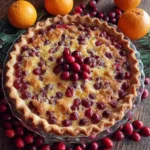
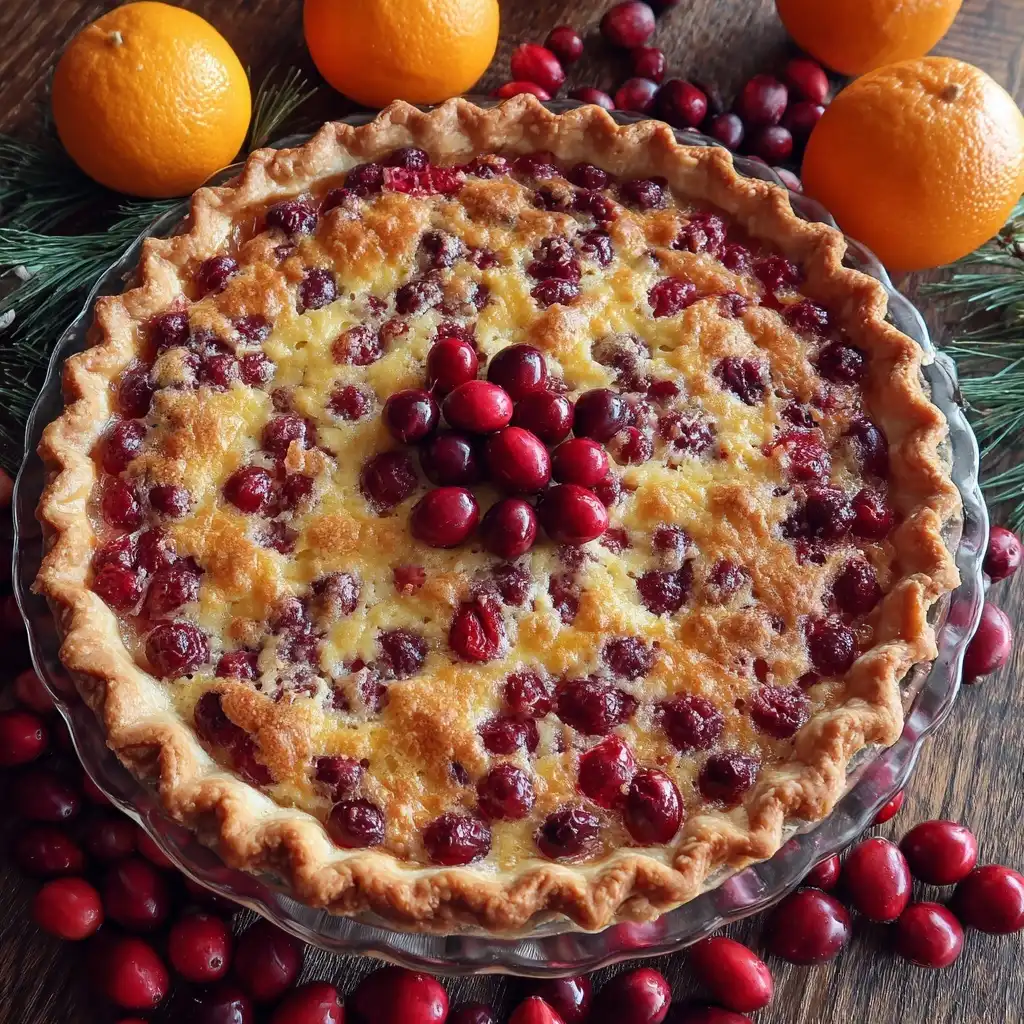
Cranberry Orange Pie is a vibrant, tart-sweet celebration of seasonal flavors that bridges the gap between classic American pie tradition and bold, zesty sophistication. Far more than a holiday novelty, this dessert strikes a perfect balance—bright citrus acidity from freshly squeezed orange juice and zest cuts through the deep, complex tartness of whole cranberries, while a buttery, flaky crust grounds the experience with rich, comforting warmth. Its jewel-toned filling glistens like stained glass when sliced, releasing aromatic steam infused with orange oil and cranberry essence—a sensory prelude to its layered, nuanced taste. Whether served chilled with a dollop of crème fraîche or warmed with vanilla bean ice cream melting into its glossy surface, Cranberry Orange Pie delivers both nostalgia and refreshment, making it equally at home on a Thanksgiving table, a spring brunch buffet, or an elegant winter dinner party.
The History
The origins of Cranberry Orange Pie trace back to the confluence of Indigenous North American foodways and colonial adaptation. Native Wampanoag and other Eastern Woodlands peoples had long harvested wild cranberries (Vaccinium macrocarpon) for food, medicine, and dye—often combining them with maple syrup or dried fruits. Early European settlers adopted cranberries but struggled with their intense astringency until they discovered sugar as a transformative agent. By the 18th century, boiled “cranberry sauce” appeared in cookbooks like American Cookery (1796) by Amelia Simmons—but pies remained rare due to cranberries’ high pectin and low natural sweetness, which made traditional fruit-pie thickeners unreliable.
The citrus connection emerged gradually: oranges—once luxury imports—became more accessible in the 19th century via steamship trade, and their bright acidity was empirically recognized as an ideal counterpoint to cranberry’s tannins. Regional New England farmhouse kitchens began experimenting with orange zest and juice in preserves and cobblers; by the early 1900s, community cookbooks from Maine and Massachusetts documented “Cranberry-Orange Tarts” using rudimentary cornstarch-thickened fillings. The modern pie format gained national traction after World War II, boosted by the rise of commercial cranberry growers (notably Ocean Spray’s cooperative model founded in 1930) and mid-century home economics education emphasizing balanced flavor profiles. Julia Child’s 1961 Mastering the Art of French Cooking didn’t include it—but her emphasis on acid balance inspired countless home bakers to refine the ratio of orange to cranberry. Today, Cranberry Orange Pie stands as a testament to culinary resilience: a dish born of necessity, elevated by science (pectin chemistry), and perfected through generations of intuitive, ingredient-driven experimentation.
Ingredients Breakdown
Every element in Cranberry Orange Pie serves a precise functional and sensory role—no component is arbitrary. Below is a meticulous analysis of each ingredient’s contribution:
- Fresh Cranberries (12 oz / ~3 cups): Provide intense tartness, natural pectin for gel structure, anthocyanin pigments for ruby-red color, and subtle earthy-floral notes. Frozen cranberries work identically (no thawing required), but avoid canned or sweetened versions—they destabilize texture and flavor balance.
- Granulated Sugar (1 to 1¼ cups): Not merely for sweetness—it modulates tartness, enhances cranberry aroma volatiles, aids in pectin activation during cooking, and contributes to caramelized depth during baking. Adjust within range based on cranberry variety (wild berries are tarter) and personal preference.
- Orange Zest (from 2 large navel oranges): Contains essential oils (limonene, myrcene) that deliver concentrated citrus perfume. Must be finely grated without white pith (bitter). Zest added *before* cooking infuses oil into fat; added *after* preserves volatile top notes.
- Fresh Orange Juice (½ cup, strained): Supplies citric acid for brightness and pH control (critical for pectin gel strength), natural sugars, and subtle floral undertones. Bottled juice lacks enzymatic complexity and often contains preservatives that dull flavor.
- Unbleached All-Purpose Flour (¼ cup): A secondary thickener that adds body and silkiness without cloudiness. Unlike cornstarch, flour tolerates prolonged baking and contributes mild nuttiness. Pastry flour may be substituted for extra tenderness.
- Ground Cinnamon (¼ tsp) & Ground Ginger (⅛ tsp): Warm, aromatic spices that complement—not compete with—cranberry-orange synergy. Cinnamon enhances fruit sweetness perception; ginger adds a clean, peppery lift that prevents cloying. Omit for purist versions, but they’re traditional in New England iterations.
- Salted Butter (2 tbsp, cold and cubed): Added to the hot filling before pouring into crust. Enriches mouthfeel, creates glossy sheen, and tempers sharp acidity. Unsalted butter works, but a pinch of fine sea salt must be added separately for flavor balance.
- Vanilla Extract (1 tsp, pure Madagascar bourbon): Adds creamy, woody depth that rounds edges. Imitation vanillin lacks complexity and can taste medicinal against bright fruit.
- Pinch of Fine Sea Salt: Amplifies all flavors, suppresses bitterness, and balances sweetness—a non-negotiable “flavor catalyst.”
- Pie Crust: Double-crust (top and bottom) made from 2¼ cups flour, 1 cup cold unsalted butter, ½ tsp salt, ½ cup ice water + 1 tbsp vinegar. The vinegar inhibits gluten formation for tenderness; butter provides flakiness and rich flavor. Blind-baked bottom crust ensures crispness against juicy filling.
Step-by-Step Recipe
- Prepare the Dough (Day Before or Morning Of): In a food processor, pulse flour and salt. Add chilled, cubed butter; pulse until pea-sized crumbs form. Drizzle in ice water mixed with vinegar; pulse just until dough begins to clump. Divide into two unequal disks (⅔ for bottom crust, ⅓ for top), wrap in parchment, refrigerate ≥2 hours (or freeze up to 1 month).
- Blind-Bake the Bottom Crust: Preheat oven to 425°F (220°C). Roll larger disk into 12-inch circle; fit into 9-inch pie plate. Trim edges, crimp decoratively. Line with parchment, fill with pie weights or dried beans. Bake 17 minutes. Remove weights and parchment; prick base with fork. Reduce heat to 375°F (190°C); bake 8–10 more minutes until golden and dry. Cool completely on wire rack.
- Make the Filling: In heavy-bottomed 3-quart saucepan, combine cranberries, sugar, orange zest, cinnamon, ginger, and salt. Stir over medium-low heat 5 minutes until berries begin popping and syrup forms. Add orange juice; simmer gently 8–10 minutes, stirring frequently, until mixture thickens slightly and reduces by ~¼ cup. Remove from heat.
- Finish the Filling: Whisk flour into cold butter until smooth paste forms. Whisk paste vigorously into hot cranberry mixture until fully incorporated and glossy (≈1 minute). Stir in vanilla. Transfer to heatproof bowl; cool uncovered 30 minutes—stirring every 10 minutes to prevent skin formation. Refrigerate 1 hour until lukewarm (not cold—prevents crust sogginess).
- Assemble & Bake: Preheat oven to 375°F (190°C) with rack in lower third. Roll smaller dough disk into 11-inch circle. Pour cooled filling into pre-baked crust. Cover with top crust; seal edges, crimp, and cut 4 steam vents. Brush top with egg wash (1 egg + 1 tsp water) and sprinkle with coarse turbinado sugar.
- Bake to Perfection: Place pie on baking sheet (to catch spills). Bake 45 minutes. Rotate front-to-back. Tent crust edges with foil if browning too fast. Continue baking 15–25 minutes until crust is deep golden, filling bubbles thickly through vents, and internal temperature reaches 205–210°F (96–99°C) on instant-read thermometer. Cool on wire rack ≥4 hours—ideally overnight—for optimal sliceability.
Tips
- Cranberry Selection Matters: Choose plump, firm, deeply red berries with a slight bounce when dropped. Avoid shriveled, soft, or purple-tinged ones—they’re overripe and lack pectin integrity.
- Zest First, Juice Second: Always zest oranges before juicing—they’re easier to grip and yield more oil when firm and cold.
- Control the Simmer: Never boil the filling vigorously—high heat breaks down pectin chains, causing weeping or graininess. Maintain a gentle, steady bubble.
- Cooling Is Non-Negotiable: Skipping the full cooling period guarantees a runny slice. The pectin network sets only as it cools below 140°F (60°C). Overnight chilling yields crystalline clarity and clean cuts.
- Prevent Soggy Bottoms: Besides blind baking, brush the *hot* pre-baked crust interior with beaten egg white before adding filling—it creates a moisture barrier.
- Steam Vents Are Strategic: Cut vents in the top crust *before* baking—not after. Position them in a star pattern near the center to encourage even bubbling and prevent dome collapse.
- Rotate for Even Browning: Ovens have hot spots. Rotating halfway ensures uniform crust color and prevents undercooked filling in one quadrant.
- Thermometer Precision: Visual cues alone are misleading. Use a digital thermometer inserted through a vent—205°F signals pectin’s gel point has been reached.
- Knife Technique: Dip a sharp, thin-bladed knife in hot water and wipe dry before each cut. This ensures seamless slices with glossy, intact filling surfaces.
- Storage Wisdom: Store covered at room temperature up to 2 days, refrigerated up to 5 days, or frozen (unbaked or baked) up to 3 months. Reheat slices gently at 325°F (165°C) for 12 minutes before serving.
Variations and Customizations
This pie is a masterclass in adaptable elegance—each variation honors the core tart-sweet-acid triad while introducing new dimensions:
- Maple-Cranberry Orange: Replace ¼ cup granulated sugar with Grade B maple syrup (added with orange juice). Adds smoky-sweet depth and amber hue. Reduce juice by 1 tbsp to compensate for added liquid.
- Ginger-Lavender: Infuse orange juice with 1 tsp culinary lavender buds (steep 10 mins off heat, strain) and increase fresh grated ginger to 1 tbsp. Delicate floral note elevates without overpowering.
- Nutty Streusel Top: Skip top crust. Mix ½ cup rolled oats, ¼ cup chopped toasted walnuts or pecans, 3 tbsp brown sugar, 2 tbsp cold butter, and ¼ tsp cinnamon. Sprinkle thickly over filling pre-bake.
- Spiced Rum Swirl: After filling cools to lukewarm, stir in 2 tbsp aged dark rum and 1 tsp molasses. Creates warm, caramelized complexity—ideal for adult gatherings.
- Vegan Adaptation: Use coconut oil or vegan butter in crust; replace egg wash with almond milk + maple syrup glaze. Thicken filling with arrowroot instead of flour (use 3 tbsp) and add 1 tsp lemon juice for pH balance.
- Mini-Tart Version: Press dough into 12 muffin tin cups. Fill ¾ full. Bake at 375°F for 22–25 minutes. Perfect for portion control or elegant dessert tables.
- Deconstructed Parfait: Layer chilled filling with crumbled shortbread, whipped coconut cream, and candied orange peel in glasses. A no-bake, textural alternative.
- Herbal Accent: Stir 1 tsp finely minced fresh rosemary into filling *after* removing from heat. Rosemary’s piney resonance pairs surprisingly well with cranberry’s forest-floor notes.
- Chocolate-Dipped Crust: After blind baking, brush bottom crust interior with melted dark chocolate (70% cacao). Cool completely before adding filling—adds bitter contrast and richness.
- Gluten-Free Option: Substitute 1:1 gluten-free flour blend (with xanthan gum) in both crust and filling. Add 1 tsp psyllium husk powder to crust dough for elasticity.
Health Considerations and Nutritional Value
Cranberry Orange Pie, when prepared mindfully, offers notable nutritional benefits beyond indulgence—though portion awareness remains key. Per standard slice (1/8 of 9-inch pie, approx. 240g), values average:
- Calories: 385 kcal — primarily from complex carbohydrates (crust) and natural sugars (fruit), with moderate healthy fats (butter).
- Dietary Fiber: 3.2g — 12% DV, mainly from cranberries (pectin) and whole-grain crust variations. Supports gut health and satiety.
- Vitamin C: 48mg — 53% DV, sourced almost entirely from orange zest/juice and raw cranberries. Enhances iron absorption and immune function.
- Anthocyanins & Flavonoids: Cranberries rank among the highest antioxidant foods (ORAC score ~9,500 μmol TE/100g). These compounds combat oxidative stress and support urinary tract health (proanthocyanidins inhibit bacterial adhesion).
- Low Glycemic Impact: Despite sugar content, the high fiber and organic acid profile slows glucose absorption—GI estimated at 42 (low), especially when paired with protein-rich accompaniments like Greek yogurt.
- Considerations: Sodium is modest (180mg) unless salted butter is overused. Saturated fat (14g) comes from butter—reducing to ¾ cup butter or substituting half with avocado oil in crust lowers this by 25%. For diabetics, reducing sugar to ¾ cup and adding 1 tsp cinnamon (shown to improve insulin sensitivity) is evidence-based.
- Functional Upgrades: Boost nutrition by using spelt or oat flour in crust (higher magnesium, B vitamins), adding ground flaxseed to filling (omega-3s, lignans), or incorporating a tablespoon of chia seeds (soluble fiber, calcium).
Importantly, this pie avoids refined additives, artificial colors, or high-fructose corn syrup—making it a far cleaner choice than most commercial desserts. Its health value lies not in being “low-calorie,” but in delivering phytonutrient density, digestive support, and mindful eating satisfaction that discourages overconsumption.
Ingredients
For the Flaky All-Butter Pie Crust (Double Crust)
- 2¼ cups (280g) unbleached all-purpose flour, plus extra for dusting
- 1 cup (227g) unsalted butter, very cold, cut into ½-inch cubes
- ½ teaspoon fine sea salt
- ½ cup (120ml) ice water
- 1 tablespoon (15ml) distilled white vinegar
For the Cranberry-Orange Filling
- 12 ounces (340g / ~3 cups) fresh or frozen whole cranberries, picked over
- 1 to 1¼ cups (200–250g) granulated cane sugar (start with 1 cup; adjust to taste)
- Zest of 2 large navel oranges (finely grated, no pith)
- ½ cup (120ml) freshly squeezed orange juice, strained
- ¼ cup (30g) unbleached all-purpose flour
- ¼ teaspoon ground cinnamon
- ⅛ teaspoon ground ginger
- 2 tablespoons (28g) unsalted butter, cold and cubed
- 1 teaspoon pure vanilla extract
- ¼ teaspoon fine sea salt
For Assembly & Finishing
- 1 large egg + 1 teaspoon water (for egg wash)
- 1 tablespoon turbinado or demerara sugar (for sparkling crust)
- Optional: 1 teaspoon coarse flaky sea salt (for finishing)
Directions
- Make the Crust Dough: In a food processor fitted with a steel blade, pulse flour and salt to combine. Add cold butter cubes; pulse 12–15 times in 1-second bursts until mixture resembles coarse meal with visible pea-sized butter pieces. In a small bowl, whisk ice water and vinegar. With processor running, slowly drizzle liquid through feed tube until dough just begins to clump together (≈20 seconds). Turn dough onto lightly floured surface; divide into two uneven portions (one ~12 oz / 340g for bottom crust, one ~6 oz / 170g for top). Shape each into a flat disk, wrap tightly in parchment paper, and refrigerate ≥2 hours (or freeze up to 1 month).
- Blind-Bake the Bottom Crust: Preheat oven to 425°F (220°C). On a lightly floured surface, roll larger disk into a 12-inch circle, ⅛-inch thick. Carefully transfer to a 9-inch deep-dish pie plate. Gently press into bottom and sides without stretching. Trim overhang to ½ inch beyond rim. Fold edge under itself to create a reinforced rim; flute decoratively with fingers or a fork. Line crust with parchment paper; fill with ceramic pie weights or dried beans. Bake 17 minutes. Carefully remove weights and parchment. Prick bottom and sides with a fork. Reduce oven temperature to 375°F (190°C). Return crust to oven and bake 8–10 minutes more, until golden and dry to touch. Transfer to wire rack; cool completely (≥1 hour).
- Prepare the Filling: In a heavy-bottomed 3-quart Dutch oven or saucepan, combine cranberries, sugar, orange zest, cinnamon, ginger, and salt. Stir over medium-low heat for 5 minutes, until berries soften slightly and release juices. Add orange juice; increase heat to medium and bring to a gentle simmer. Cook, stirring frequently with a heat-resistant spatula, for 8–10 minutes—until mixture thickens noticeably, reduces by about ¼ cup, and coats the back of a spoon. Do not boil rapidly.
- Thicken & Finish Filling: Remove pan from heat. In a small bowl, mash cold butter into flour with a fork until a smooth, lump-free paste forms. Whisk paste vigorously into hot cranberry mixture until fully incorporated and glossy (≈60 seconds). Stir in vanilla. Transfer to a wide, shallow heatproof bowl. Cool uncovered at room temperature for 30 minutes, stirring every 10 minutes. Refrigerate 1 hour—until lukewarm (≈85°F / 30°C) but not cold.
- Assemble the Pie: Preheat oven to 375°F (190°C) with rack in lower third. Place baking sheet on rack to preheat. On floured surface, roll smaller dough disk into an 11-inch circle. Pour cooled filling into pre-baked, cooled crust. Carefully drape top crust over filling. Trim excess dough, leaving ½-inch overhang. Tuck top edge under bottom crust edge; crimp decoratively. Cut four 2-inch slits in top crust in a star pattern. Brush entire top crust with egg wash. Sprinkle generously with turbinado sugar. Optional: sprinkle flaky salt over sugar.
- Bake to Golden Perfection: Place pie on preheated baking sheet. Bake 45 minutes. Rotate pie front-to-back. If crust edges brown too quickly, cover loosely with foil. Continue baking 15–25 minutes—until crust is deep golden brown, filling bubbles thickly and steadily through vents, and internal temperature reads 205–210°F (96–99°C) when measured through a vent. Total bake time: 60–70 minutes.
- Cool Completely: Transfer pie to wire rack. Cool undisturbed for minimum 4 hours—ideally overnight. This allows pectin network to fully set and flavors to harmonize. Cutting too soon results in weeping and loss of structural integrity.
- Serve: Slice with hot, wiped knife. Serve at room temperature or gently warmed. Classic pairings: unsweetened crème fraîche, bourbon-spiked whipped cream, or high-quality vanilla bean ice cream. Garnish with additional orange zest or candied cranberries.
FAQ
- Can I use dried cranberries instead of fresh or frozen?
- No—dried cranberries (often sweetened with apple juice concentrate) lack the water content, pectin structure, and tart acidity essential for proper gel formation and authentic flavor. They will turn mushy and overly sweet. Stick with fresh or frozen whole berries.
- Why does my pie weep or leak juice after slicing?
- Weeping usually indicates incomplete cooling (pectin hasn’t fully set) or over-thickening (too much flour creates weak gel). Ensure full 4+ hour cool time and verify internal temperature hit 205°F during baking. Also, avoid cutting with a serrated knife—it ruptures gel strands.
- Can I make this pie ahead and freeze it?
- Yes—two excellent options: (1) Assemble unbaked pie, wrap tightly in plastic + foil, freeze up to 3 months. Bake frozen—add 15–20 minutes to total time, tenting crust as needed. (2) Bake fully, cool completely, then freeze sliced or whole (wrap tightly). Thaw overnight in fridge, reheat slices at 325°F for 12 minutes.
- Is there a way to reduce the sugar without ruining the texture?
- Absolutely. Cranberries require sugar for pectin activation, but you can safely reduce to ¾ cup if using very ripe, less-tart berries. Compensate with 1 tsp lemon juice (boosts acidity for gel strength) and 1 tbsp honey (adds fructose, which enhances perceived sweetness at lower concentrations).
- My crust shrank during blind baking—what went wrong?
- Most commonly: dough wasn’t sufficiently chilled before baking, was stretched while fitting into pan (causing gluten recoil), or lacked adequate resting time. Always chill shaped crust 30 minutes before weights go in—and never stretch dough; ease it in gently.
- Can I substitute another citrus for orange?
- Lemon works beautifully (use zest + juice of 3 lemons), yielding a sharper, brighter profile. Grapefruit adds intriguing bitterness—use zest of 1 pink grapefruit + juice of 1. Avoid lime—it overwhelms cranberry’s subtler notes. Always maintain ½ cup total citrus juice volume.
- What’s the best way to store leftovers?
- Cover tightly with plastic wrap or place under an inverted bowl. Store at room temperature up to 48 hours (the sugar acts as preservative). For longer storage, refrigerate up to 5 days. Re-crisp crust by warming slices at 350°F for 8 minutes on parchment-lined sheet.
- Can I make a lattice-top version?
- Yes—and highly recommended for visual appeal! Roll top dough ⅛-inch thick. Cut into 10–12 strips (½-inch wide). Weave lattice over filling, pressing ends to bottom crust edge. Crimp and finish as directed. Lattice allows more evaporation, so check pie 5 minutes earlier.
- Why do some recipes use cornstarch while this uses flour?
- Flour creates a more opaque, velvety, and stable gel that withstands prolonged baking without breaking down or becoming slimy—critical for a double-crust pie. Cornstarch yields clearer filling but risks weeping or “weeping” if overheated or stirred excessively. Flour also contributes subtle nuttiness that complements butter crust.
- How do I prevent the bottom crust from getting soggy?
- Three proven methods: (1) Blind bake thoroughly until deep golden and dry, (2) Brush hot pre-baked crust with egg white before adding filling, (3) Ensure filling is lukewarm—not cold—when poured in (cold filling condenses steam, creating moisture).
Summary
Cranberry Orange Pie is a masterful interplay of nature’s sharpest tartness and sunniest citrus, bound by science-backed pectin chemistry and centuries of culinary wisdom—yielding a dessert that is simultaneously nostalgic, sophisticated, and nutritionally resonant.
With its jewel-toned, glossy filling nestled in a shatteringly flaky crust, this pie transcends seasonal expectations to become a year-round emblem of balance: where boldness meets brightness, tradition embraces innovation, and every slice tells a story of soil, sun, and careful hands.